

The term après has transcended its humble linguistic origins to become a global shorthand for relaxation, celebration, and the art of unwinding after a period of intense activity. While many people encounter the word while browsing high-end winter catalogs or planning a mountain getaway, its true meaning is deeply rooted in the concept of transition. At its core, the word is a direct French translation of the English preposition after.
However, in the context of modern social rituals, it represents much more than a simple temporal marker. It signifies the shift from exertion to leisure, marking the moment when the work or the sport ends and the camaraderie begins. Understanding the nuances of this term requires looking beyond the dictionary definition to appreciate how a simple preposition became a defining pillar of Alpine culture and, increasingly, a broader lifestyle movement.
The Etymological Roots and Linguistic Evolution of Apres
To truly grasp what does apres mean, one must look at the etymology of the word within the French language. Derived from the Old French apres, which itself stems from the Latin ad pressum (meaning “close to”), the word has functioned for centuries as a functional bridge between events. In standard French, you might use it to say après le travail (after work) or après le dîner (after dinner).
It is a linguistic workhorse, plain and simple. However, the transformation of this word into a standalone noun or prefix in English-speaking countries is a classic example of linguistic adaptation.
As loanwords go, après is unique because it carries a specific emotional weight. When it migrated into the English vernacular, it shed its purely functional role and took on a descriptive quality. It stopped being just a word for “after” and started describing the feeling of being after something.
This is why we don’t typically say “after-office” or “after-movie” in the same way we use the term in specialized contexts. The word suggests a sense of earned satisfaction.
By adopting this French term, English speakers imported a piece of continental European lifestyle that prioritizes the quality of the downtime that follows a strenuous effort. It is a testament to how language evolves to fill gaps in cultural expression, providing a name for a feeling that previously lacked a concise, elegant descriptor.
The Cultural Phenomenon of Après-Ski
The most common association with this term is undoubtedly après-ski. This cultural phenomenon refers to the social activities that take place after a day of skiing or snowboarding.
Historically, this tradition emerged in the early 20th century as ski resorts in the Alps began to develop into structured destinations. It wasn’t just about the sport; it was about the communal experience of gathering in a warm lodge, sharing stories of the day’s runs, and enjoying drinks and food while the sun set behind the peaks.
In mountain resorts across the globe, this period is considered sacred. It is a time when the barriers of social status or skill level often dissolve; whether you are an expert skier or a novice, the post-activity socializing remains the same. The atmosphere is typically characterized by a blend of exhaustion and exhilaration, fueled by the physical release of dopamine and endorphins from the day’s exercise.
This ritual has become so ingrained in winter sports that many resorts now design their infrastructure specifically to facilitate it. From expansive outdoor decks with fire pits to cozy indoor bars with live music, the environment is engineered to transition the guest from the cold, high-intensity slopes to a warm, inviting social space. It is a vital part of the mountain experience, proving that the value of a trip is often determined as much by what happens after the lifts close as what happens during the day.
Decoding Apres-Ski Fashion and Luxury Apparel
A significant part of the modern appeal of this term is its inextricable link to après-ski fashion. Because the transition from the slopes to the lounge happens in public view, the aesthetic associated with this time of day has become a massive sector of the luxury apparel industry. When people ask what does apres mean in the context of a sweater or a pair of boots, they are referring to a specific style of resort wear that balances technical performance with high-end comfort and elegance.
This fashion category is defined by its duality. It must be warm enough to handle the transition from the mountain air to a village square, yet stylish enough to be appropriate for a cocktail lounge or a high-end restaurant. Think chunky knit sweaters, tailored insulated trousers, shearling-lined boots, and sophisticated accessories that signal both wealth and comfort.
The branding of “après” clothing has turned the term into a lifestyle badge. Wearing an item labeled as “après-ski” tells the world that you are someone who enjoys the finer things in life—specifically, the leisure that comes after a hard day of work or play. It is a marketing triumph that has successfully tied a linguistic term to a visual identity, making the term recognizable even to those who have never stepped foot on a pair of skis.
The Expansion to Après Sea and Coastal Lifestyle
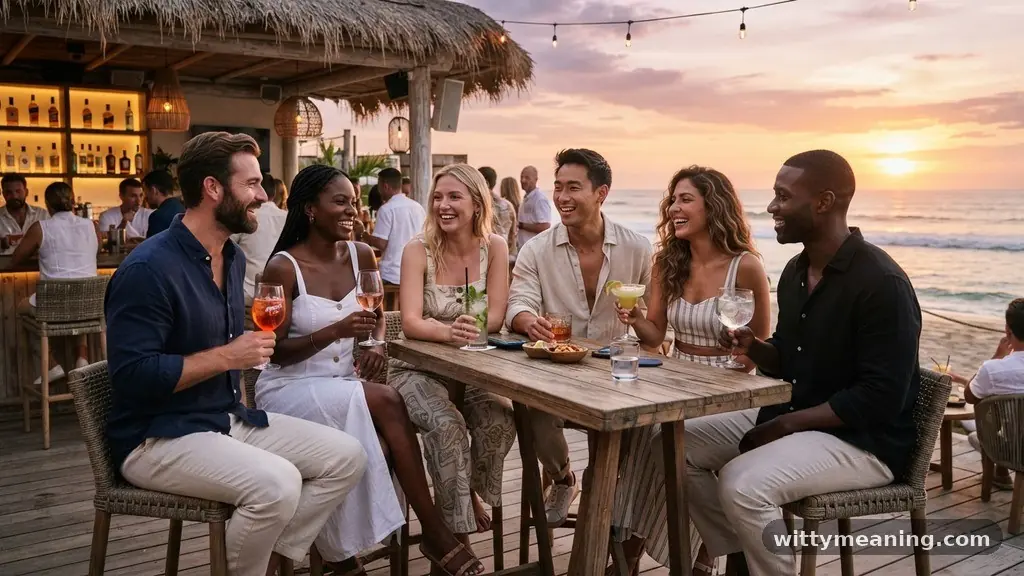
In recent years, the term has undergone a fascinating evolution, moving away from its exclusive home in the snowy mountains. We now see the emergence of après sea, a concept that applies the same logic of leisure and relaxation to beach and coastal environments. Just as a skier feels the need to unwind after a day on the slopes, a surfer or a boater feels a similar need to transition after a day spent in the ocean.
This represents a broader trend of applying the “après” mindset to any high-intensity activity. It is the coastal lifestyle version of the mountain ritual. After a long day of sun, salt, and water sports, the “après sea” period involves cooling down with a drink, enjoying a sunset, and gathering with friends to recount the day’s adventures.
This expansion demonstrates that the term is no longer tethered to snow; it is now a conceptual framework for how we structure our recreation. It is about honoring the transition from “doing” to “being.”
By coining terms like “après sea,” we are essentially creating new social rituals that allow us to process our daily experiences in a communal, relaxed setting. This linguistic flexibility proves that the meaning of the word has shifted from a literal translation of “after” to a symbolic representation of the “reward” phase of our daily lives.
Comparing Traditional and Modern Social Rituals
The way we interpret this term has changed significantly over the last several decades. To understand the shift, it is helpful to look at how these rituals functioned in the past versus how they are perceived today.
| Aspect | Traditional Perspective | Modern Perspective |
|---|---|---|
| Context | Exclusively mountain/skiing | Universal, including “après sea” |
| Primary Driver | Physical exhaustion | Social status and lifestyle branding |
| Setting | Rustic mountain lodges | Upscale lounges, beach clubs, and urban bars |
| Fashion | Functional, rugged gear | Curated luxury apparel |
As the table above illustrates, the concept has become more commodified and diversified. While the original intent—unwinding after an activity—remains the same, the execution has moved from rustic, spontaneous gatherings to highly curated, brand-conscious events.
The happy hour culture, which has long existed in cities, has essentially co-opted the “après” aesthetic to make the act of grabbing a drink after work feel more like a vacation ritual. This shift highlights a deeper human desire to segment our lives into clearly defined chapters, where the “activity” is the labor and the “après” is the restorative phase that makes the labor worthwhile.
Slang Usage and the Vernacular of Relaxation
In the realm of slang usage, the word has become a synonym for “hanging out” or “winding down.” If you hear someone say they are “going on an après,” they aren’t necessarily talking about skiing; they are talking about the act of socializing in a relaxed, post-event atmosphere.
This vernacular shift is typical of how foreign words enter the English language. They begin as specific, descriptive terms and eventually become generalized descriptors for a mood or a vibe.
The phrase après all day is perhaps the most extreme example of this linguistic drift. It is often used on clothing or in social media captions to suggest that the person is in a state of perpetual relaxation. While technically an oxymoron (you cannot have an “after” that lasts all day), the phrase highlights the aspirational quality of the term.
It is no longer about the activity that precedes the rest; it is about the rest itself. In this sense, the term has become a shorthand for luxury, ease, and the prioritization of enjoyment over productivity. It is a powerful piece of marketing and social signaling that implies the speaker has the time and resources to live in a state of constant, earned leisure.
Addressing Topical Gaps: Beyond the Dictionary
One common gap in existing explanations of this term is the lack of focus on why it specifically persists in English rather than being translated. Many people ask, “Why don’t we just say ‘after-ski’?”
The answer lies in the cultural weight of the French language in the context of leisure and sophistication. Using the French word adds a layer of “European chic” that the English word “after” simply cannot provide.
Furthermore, there is a gap regarding the psychological impact of these rituals. We often overlook the fact that these “après” moments serve as essential psychological buffers. They allow us to process the physical and mental exertion of our activities, providing a transition period that prevents burnout.
Whether it is après soccer, après hike, or après work, the act of naming this period gives it legitimacy. It transforms a simple drink or a conversation into a “ritual,” which elevates the experience from a mundane habit to a meaningful part of our day. By identifying these moments, we are essentially reclaiming our time from the pressures of constant productivity and dedicating it to the human need for connection and rest.
The Role of Environment in Shaping Social Rituals
The physical environment plays a massive role in how we experience these moments. In the mountains, the architecture of the lodges is designed to foster intimacy—low ceilings, fireplaces, and communal seating all encourage people to huddle together.
This environment is crucial to the success of the ritual. When we move these concepts to other settings, like the beach or the city, we often try to recreate that sense of “cocooning.”
This is why après-ski fashion and decor are so influential. They create a “vibe” that can be exported. Even if you are in a flat city hundreds of miles from the nearest mountain, if you are sitting in a room with warm lighting, wood accents, and a group of friends, you are effectively participating in the “après” experience.
It is a psychological state as much as a physical one. The environment acts as a trigger, signaling to our brains that the work is done and that it is time to shift gears. This is why the aesthetic associated with this term is so consistent; it is a visual language that helps us set the stage for relaxation, regardless of our actual geographic location.
Summary and Cultural Significance
Ultimately, the answer to what does apres mean is that it is a linguistic vessel for the human desire for balance. It captures the essential transition from effort to ease, from the individual to the collective, and from the task-oriented to the experience-oriented. While it began as a simple French translation for “after,” it has evolved into a global symbol for the rewards of hard work and the importance of leisure.
Whether you are enjoying a drink in a mountain resort, relaxing at a beach club, or simply unwinding after a long day at the office, the concept of “après” provides a framework for acknowledging the value of your downtime. It reminds us that our activities are only as meaningful as the rest we take after them.
As the term continues to permeate our culture, appearing in everything from high-end fashion to casual conversation, it serves as a permanent reminder to slow down, connect with others, and savor the moments of stillness that follow our pursuits. It is, in every sense, a celebration of the “after.”
Frequently Asked Questions
Is it correct to use the word apres outside of skiing?
Yes, it is perfectly acceptable in modern English to use the term in other contexts. It has evolved into a general term for any social activity that follows a period of exertion, such as “après soccer” or “après work,” representing the transition into relaxation.
Why do people use the French word instead of saying after?
Using the French word adds a specific cultural connotation of sophistication and leisure that the English word “after” lacks. It signals that the event is a ritualized, enjoyable period of downtime rather than just a simple chronological marker in the day.
What does the phrase apres all day actually mean?
“Après all day” is an aspirational slogan often found on apparel. It is an oxymoron that suggests a lifestyle of constant leisure and enjoyment. It implies that the person is prioritizing relaxation and socializing over productivity, essentially living in a perpetual state of “after-work” reward.
How does apres-ski fashion differ from regular winter wear?
The key difference is that this fashion is designed for the transition from the slopes to the lounge. While it includes functional elements like insulation, it emphasizes style, luxury materials, and social appropriateness, allowing the wearer to transition seamlessly from outdoor sport to indoor socializing.