
When you encounter the word spiffy in a message or digital conversation, it usually signals a lighthearted, positive assessment of someone’s appearance or a situation. Understanding the spiffy meaning in text helps you navigate informal social cues, as the term serves as a classic, slightly retro descriptor for looking sharp or pulled together.
While it might sound like something from a mid-century film, it remains a functional piece of modern vernacular. This article dives into the history, connotations, and practical applications of this enduring descriptor to ensure you grasp its nuance in any conversation.
The Roots and Historical Context of Spiffy

The word carries a distinct sense of charm that traces back to early 19th-century British origins. Etymologists often link the term to the act of sprucing up, which implies a deliberate effort to improve one’s presentation.
It emerged as a quintessential piece of vintage slang, evolving from a regional expression into a widely recognized term across English-speaking cultures. By the mid-1900s, it had cemented its place in the lexicon as a way to describe someone who took pride in their sartorial choices.
Unlike many other historical terms that faded into total obscurity, this word maintained a presence because of its rhythmic, upbeat sound. It feels inherently positive and clean, which explains why it survives in contemporary digital communication.
When you look at how it has transitioned from formal literature to casual texting, you see that its fundamental definition—an elegant or neat presentation—has remained remarkably stable. It acts as a bridge between the formality of the past and the casual speed of modern typing.
Deciphering the Spiffy Meaning in Text Messages
In the context of a text, receiving a comment that you look spiffy is almost exclusively a compliment. It suggests that the sender appreciates your aesthetic, noting that you appear polished, clean, or particularly stylish that day.
Because it is a slightly older term, it often carries a playful or affectionate tone rather than a cold, fashion-industry assessment. Using it in a message can soften the delivery of a compliment, making it feel more genuine and less like a generic social media remark.
Digital communication often lacks the vocal inflection needed to convey sincerity, so using specific adjectives can help. Where terms like “hot” or “cool” are broad and sometimes ambiguous, this specific descriptor targets a well-groomed, intentional look.
If a friend tells you that your outfit is looking spiffy, they are acknowledging that you put effort into your ensemble. It signifies a level of respect for your style choices, emphasizing that the result is both smart and pleasing to the eye.
Comparing Slang Terms for Personal Style
Language is rarely static, and people often swap between various adjectives to describe a sharp appearance. Understanding how this term stacks up against other common descriptors can help you choose the right word for the right moment. The following table breaks down how different terms convey slightly different shades of meaning in casual conversation.
| Term | Primary Nuance | Tone |
|---|---|---|
| Spiffy | Neat, clean, and well-organized | Playful, vintage, positive |
| Dapper | Sophisticated, formal, tailored | Classic, respectful, refined |
| Stylish | Trendy, fashionable, current | Neutral, appreciative |
| Sharp | Crisp, alert, high-impact | Assertive, modern |
Each of these words serves a purpose in your vocabulary. While a dapper look might be reserved for a wedding or a gala, a spiffy look is often what you achieve on a regular day when you’ve taken extra care with your grooming. Recognizing these subtle shifts ensures you don’t use a highly formal word in a completely relaxed setting, or vice versa.
The Role of Positive Connotation in Communication
One of the main reasons this term persists is its inherently positive connotation. It is difficult to use the word in a way that sounds aggressive or mean-spirited.
In an era where online discourse can often turn cynical or critical, maintaining a vocabulary of lighthearted, encouraging words is a useful skill. When you describe a project, a room, or an outfit as spiffy, you are projecting an optimistic attitude that reflects well on your own personality.
This term also functions as a tool for building rapport. Because it is slightly quirky and unexpected, it can break the ice in a text thread, shifting the mood toward something more friendly. It doesn’t carry the heavy baggage of modern slang, which can sometimes be exclusionary or confusing to different generations.
Instead, it acts as a neutral, accessible way to express approval. You can learn more about how language evolves and remains relevant through resources like the Oxford English Dictionary which tracks the life cycle of such words.
Spiffy as a Reflection of Sartorial Effort
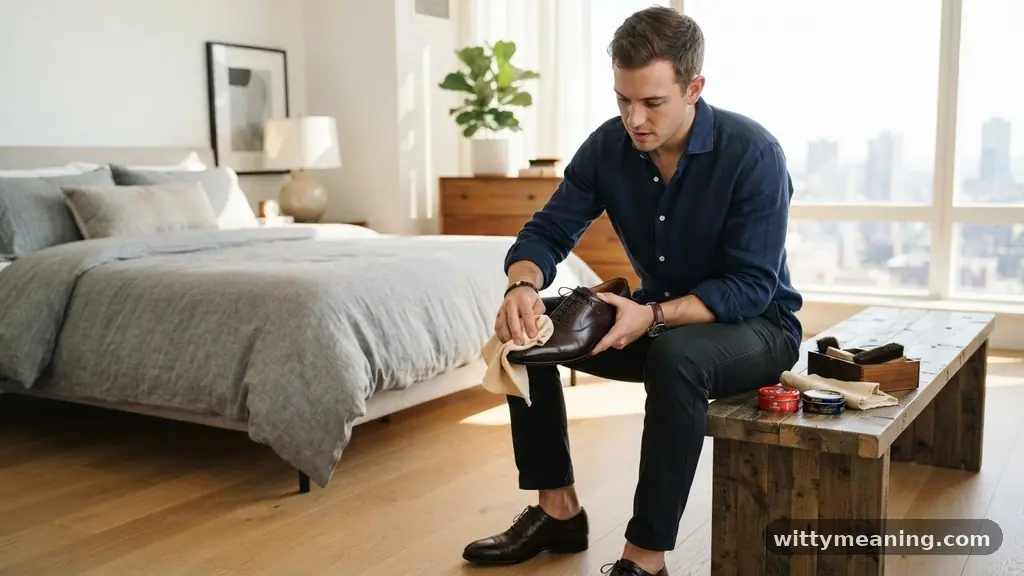
When someone uses this term, they are usually acknowledging the effort behind the appearance. It implies that the person didn’t just throw on the first thing they found in the closet; they made a choice to be well-dressed.
This is why it is often associated with the concept of being spruce or tidy. It suggests a level of self-respect and attention to detail that is commendable in both professional and social settings.
Think of it as the verbal equivalent of a well-pressed shirt or polished shoes. It isn’t necessarily about following the latest high-fashion trends, but rather about presenting the best version of yourself.
In the world of textiles and clothing, the term highlights a clean aesthetic. Whether you are wearing a vintage suit or a well-fitted casual outfit, the label applies when the execution is flawless and the presentation is neat.
Addressing Topical Gaps and Common Misconceptions
Many users search for the meaning of this word expecting a complex definition, yet the reality is quite simple. A common misconception is that the word implies a specific type of wealth or status, but this is inaccurate.
It refers to the state of being neat rather than the price tag of the items worn. You can look incredibly spiffy in a thrifted outfit just as easily as you can in a designer one, provided the fit and grooming are on point.
Another gap in common understanding involves the geographic usage. While it has roots in British English, it has been fully adopted into American English and other global variations. Some might assume it is exclusively reserved for men, but it is gender-neutral.
Anyone can sport a spiffy look. By removing these assumptions, you can use the word more freely and accurately in your daily interactions, knowing that it simply denotes a high level of care and neatness.
The Impact of Retro Terminology on Modern Texting
Why do we keep using words from the past? Retro terminology adds texture to our digital lives. When everything is written in shorthand, emojis, or acronyms, using a full word like this one stands out.
It adds a touch of personality to your messages. It shows that you have a sense of history and an appreciation for the nuance of language, which can be an attractive quality in a conversational partner.
Incorporating these words also helps avoid the monotony of current slang. If everyone is using the same five buzzwords to describe something good, the language loses its impact. By reaching back for a term that is slightly out of time, you create a more memorable interaction.
It’s a subtle way to elevate your communication style without coming across as overly formal or pretentious. It is simply about choosing a word that fits the vibe of the moment perfectly.
Contextual Usage in Professional vs Casual Settings
Knowing when to use the word is just as important as knowing what it means. In a strictly formal professional setting, you might lean toward words like professional or polished.
However, in a creative office or a casual team-messaging environment, calling a colleague’s presentation or outfit spiffy can be a great way to offer a compliment that feels personal and warm. It bridges the gap between being friendly and being respectful.
* Casual texts with friends: “That jacket looks spiffy on you!”
* Workplace feedback: “The new design for the slides looks quite spiffy.”
* General observations: “The garden is looking really spiffy after the cleanup.”
* Self-assessment: “I feel pretty spiffy in this new outfit.”
These examples show the versatility of the word. It isn’t tied to one specific domain of life.
As long as the situation involves something that is neat, clean, or well-presented, you are safe to use this term. It is a reliable, versatile adjective that has stood the test of time for a reason.
The Aesthetic Link Between Grooming and Language
There is a deep connection between the words we use to describe ourselves and the way we actually present ourselves. When we use words like dapper or spiffy, we are subconsciously reinforcing the importance of being well-groomed.
Language shapes our reality. If you use positive, sharp language to describe your surroundings and your style, you are more likely to prioritize those qualities in your daily life.
This is the power of a well-chosen adjective. It doesn’t just describe a thing; it frames it in a specific light. By choosing to call an outfit spiffy, you are focusing on the neatness and the intentionality of the look.
You are choosing to see the effort and the care. This kind of intentionality is what makes the difference between someone who is simply dressed and someone who is stylishly composed.
Common Questions About the Term
What does spiffy mean in slang?
In modern slang, it is an informal, positive descriptor for someone or something that looks neat, stylish, or well-groomed. It is often used as a playful compliment to suggest that a person has taken extra care with their appearance or that an object is particularly sharp.
Is spiffy a compliment?
Yes, it is almost always a positive compliment. Calling someone or something spiffy highlights a clean, attractive, and polished quality. It is widely understood as a friendly acknowledgment of effort and style, making it a safe and effective way to offer praise in both text and conversation.
What is another word for spiffy?
Synonyms include dapper, sharp, neat, spruce, stylish, and polished. Depending on the context, you might choose one of these to convey a slightly different vibe; for example, dapper is often more formal, while sharp implies a more modern or striking impact.
Does spiffy imply a vintage aesthetic?
While the word has vintage origins, it does not necessarily mean the subject is retro. It simply refers to the quality of being clean and well-arranged. You can use it to describe modern clothing or contemporary technology, as the word focuses on the state of being polished rather than a specific era.
Final Thoughts on Using Spiffy
Mastering the spiffy meaning in text is all about recognizing the value of positive, descriptive language in a digital age. By integrating this word into your vocabulary, you gain a tool that is both friendly and precise, capable of cutting through the noise of generic compliments. Whether you are describing a sharp new outfit or a well-organized project, this term provides a touch of classic charm that enhances your message.
Remember that language is a tool for connection. When you use words that are thoughtful and upbeat, you invite that same energy back into your conversations. Don’t be afraid to reach for a slightly older term to add character to your texts.
It is the small, intentional choices in how we express ourselves that make our digital relationships feel more human and engaging. Start using it naturally, and watch how it adds a bit of polish to your own daily communication.