
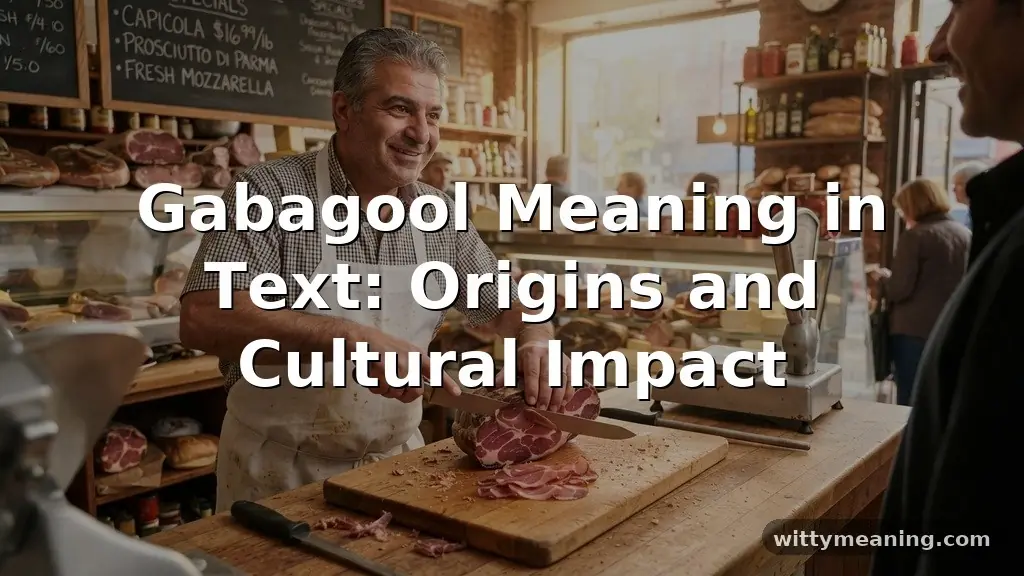

When you encounter the term “gabagool” in a text message, social media post, or meme, it often feels like a secret code if you aren’t familiar with Italian-American culinary history. Many people searching for the gabagool meaning in text are actually looking for the cultural context behind why a simple cured meat has become such a recognizable piece of pop culture shorthand. Understanding this word requires a journey through the linguistic evolution of the Italian diaspora in the United States, specifically focusing on how regional dialects from Southern Italy transformed into the distinct vernacular heard in New York City and New Jersey.
Tracing the Linguistic Origins of Gabagool
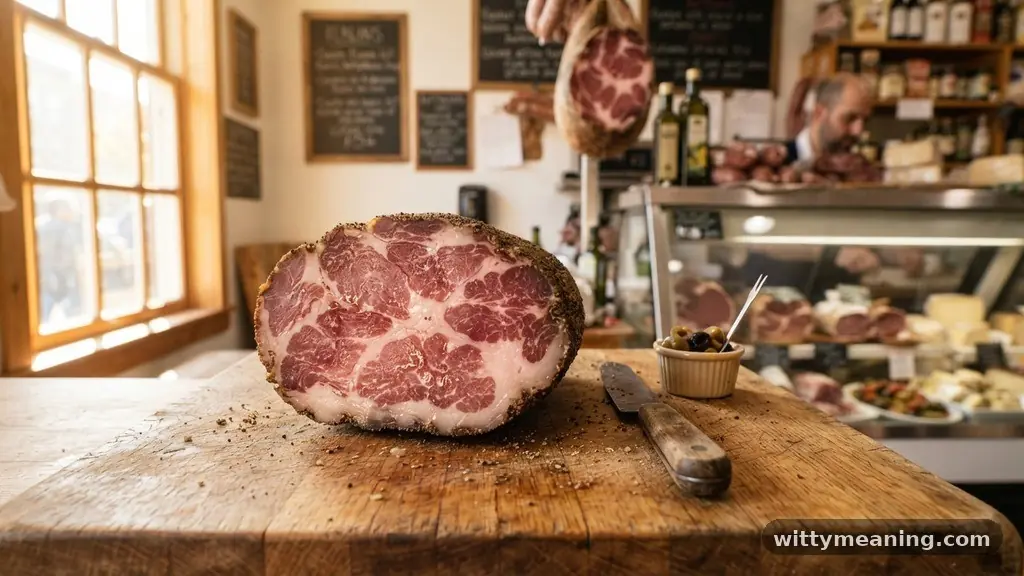
The term is a classic example of phonological shift within the Italian-American dialect. It originates from the word “capicola,” which refers to a traditional Italian pork cold cut made from the dry-cured muscle running from the neck to the fourth or fifth rib of the pig. In Southern Italian dialects, particularly those spoken around Naples, the final vowels of words were often dropped or muffled, and hard consonants were frequently softened.
This process of vowel-dropping and consonant shifting is a hallmark of the linguistic assimilation that occurred when immigrants settled in urban centers like New York. Because “capicola” sounds like “cappicola” in standard Italian, the specific dialectal influence of the Campania region turned the initial “c” into a “g” sound and dropped the final vowel.
Over generations, “capicola” morphed into “gabagool,” a word that became a badge of identity for Italian-American communities. It isn’t just a mispronunciation; it represents a specific historical moment where two languages collided and created a new, localized way of speaking.
The Sopranos and Pop Culture Significance
While the word existed in local delis for decades, its explosion into the mainstream is almost entirely tied to the television show The Sopranos. When fans look up the gabagool meaning in text, they are frequently referencing the way Tony Soprano, played by the late James Gandolfini, would ask for the meat. The show leaned heavily into the Italian-American vernacular of North Jersey, using these specific speech patterns to ground the characters in a very real, very specific cultural environment.
The character of Tony Soprano using this term turned it into a shorthand for a certain type of tough, suburban, Italian-American masculinity. It moved beyond the deli counter and into the lexicon of anyone who watched the show. Because the series was so influential, the word became a widely recognized pop culture reference, often used ironically or affectionately to denote a love for Italian-American food or an appreciation for the show’s gritty aesthetic.
How Vowel-Dropping Shapes Italian-American Dialects
The phonology behind the word is fascinating for linguists and casual observers alike. In many Southern Italian dialects, including those from Naples and Sicily, the “o” and “u” sounds at the end of words often become indistinguishable. When these speakers arrived in the United States, they were interacting with a dominant English-speaking culture, which forced their native speech patterns to adapt.
This linguistic evolution isn’t limited to just this one word. You see similar patterns in words like “ricotta” becoming “rigott” or “mozzarella” becoming “mozzarell.” The “gabagool” phenomenon is simply the most famous example because the word itself is fun to say.
When someone uses it in a text, they are often signaling an awareness of this specific history, even if they aren’t linguistically trained. It serves as a marker of shared cultural knowledge, separating those who know the origin from those who are hearing it as a bizarre-sounding slang term for the first time.
Understanding the Context of Deli Meat Culture
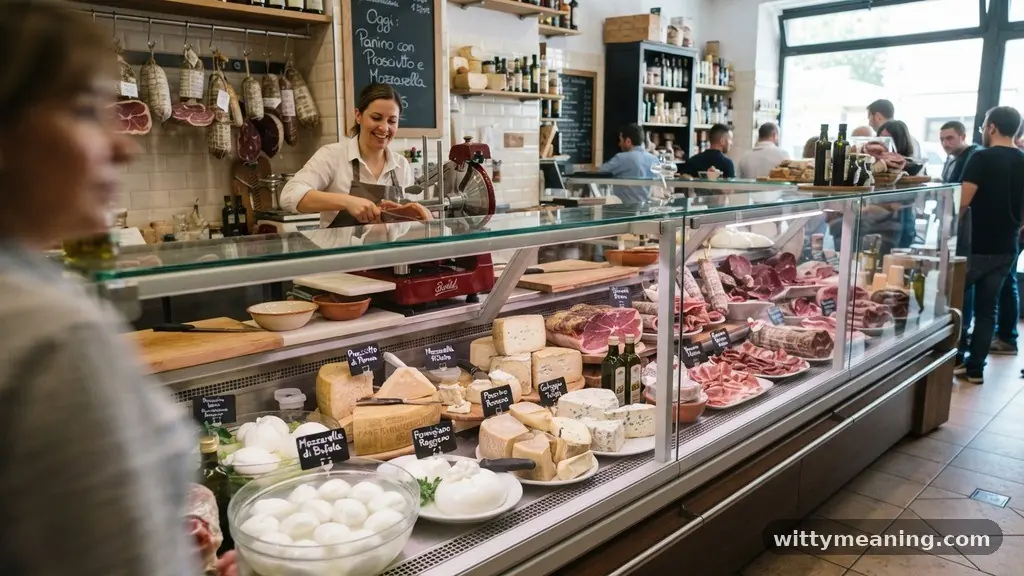
In the context of a deli meat platter, gabagool is a staple. It is a highly seasoned, dry-cured meat that is often thinly sliced and served alongside prosciutto, salami, and provolone.
In the Northeast United States, asking for this specific item at a deli counter is a routine transaction. The term is so embedded in the regional identity of the Italian diaspora that it carries a sense of nostalgia.
When you see it used in casual text conversations, it often implies a connection to this specific culinary experience. A text saying “we need some gabagool for the party” is more than just a request for food; it is a request for a specific type of cultural comfort. It evokes images of large family gatherings, Sunday dinners, and the specific, high-quality deli culture that defines many neighborhoods in New Jersey and New York.
Is the Term Offensive or Appropriated?
A common question is whether the use of this term constitutes cultural appropriation. Generally, the word is viewed as an affectionate nod to a specific heritage rather than a malicious slur.
However, the line can blur depending on how it is used. If the term is used to mock the accent or the socioeconomic status of Italian-Americans, it can certainly be perceived as derogatory.
Most of the time, however, the usage is celebratory. It acknowledges the unique history of the Italian-American experience.
Because the term was born out of the immigrant experience—a group trying to maintain their culinary traditions while adapting to a new language—it is deeply rooted in the identity of the community. Using the word in a text is typically an act of cultural signaling, showing that the sender identifies with or respects the specific slice of history that the word represents.
Comparing Regional Italian Terms and Their Americanized Forms
To better understand how these words shift, it is helpful to look at how other Italian staples have been altered through the same processes of linguistic assimilation. The table below highlights some of the most common shifts that occur between standard Italian and the Italian-American vernacular.
| Standard Italian | Italian-American Vernacular | Primary Linguistic Shift |
|---|---|---|
| Capicola | Gabagool | Consonant softening and vowel-dropping |
| Mozzarella | Mozzarell | Final vowel-dropping |
| Ricotta | Rigott | Consonant softening and vowel-dropping |
| Prosciutto | Proshoot | Final vowel-dropping |
Why the Term Persists in Modern Communication
The reason this word persists in text messages and social media is partly due to its phonetic quality. It is punchy, memorable, and rhythmically interesting.
In an age of rapid-fire digital communication, terms that carry a lot of cultural weight in just three syllables are highly valued. It acts as a shortcut to express a specific mood or aesthetic.
Furthermore, the “Sopranos” effect hasn’t faded. Even years after the show concluded, new generations are discovering it on streaming platforms, ensuring that the term remains part of the cultural zeitgeist.
It has become a meme-worthy word, often appearing in GIF captions or social media comments whenever someone posts a photo of an impressive meat platter. The word has transcended its origins as a regional dialect marker to become a permanent fixture of internet slang.
The Role of the Italian Diaspora in Shaping American Food
The existence of words like this is a testament to the massive influence of the Italian diaspora on American foodways. Italian immigrants didn’t just bring recipes; they brought a way of life that was eventually adopted by the broader American public. The fact that “gabagool” is a recognizable term, even to those who aren’t Italian, shows how deeply these culinary traditions have been woven into the American fabric.
When you analyze the gabagool meaning in text, you are really analyzing a much larger story about integration. It represents the way immigrants held onto their identity by preserving the names of the foods they loved, even as those names were reshaped by their new surroundings. It is a linguistic relic of a time when the Italian-American community was establishing its permanent place in the cities of the Northeast, turning immigrant enclaves into the cultural hubs they are today.
Common Misconceptions About the Term
One of the biggest misconceptions is that “gabagool” is a universal Italian word. It is not. If you traveled to Rome, Florence, or even Naples today and asked for “gabagool” at a deli, you might get a confused look.
The term is strictly a product of the American experience. It is important to remember that this is an American dialect, not a standard Italian one.
Another misconception is that the word is inherently “low-class” or “trashy.” While it has been used in media to characterize certain stereotypes, the word itself is just a reflection of history. It is a legitimate linguistic development.
Dismissing it as merely a “slang” word ignores the complex phonology and social history that created it. It is a valid part of the English language as spoken in specific American regions.
How to Use the Term Appropriately in Text
If you want to use the word in a text, context is everything. Because it is so closely tied to the “tough guy” persona from The Sopranos, using it can often come across as humorous or ironic. It works best in casual, lighthearted settings where the recipient understands the reference.
* Use it when discussing a deli platter or a charcuterie board.
* Use it when referencing the show The Sopranos or the character Tony Soprano.
* Use it in a joking manner to describe a love for “authentic” Italian-American food.
* Avoid using it in professional or overly formal settings, as it may be misunderstood by those who aren’t familiar with the cultural nuance.
FAQ
What is the literal definition of gabagool?
Gabagool is an Italian-American dialectal term for capicola, a traditional Italian cured pork cold cut. It is derived from the Southern Italian pronunciation of the word, which involves dropping the final vowel and softening the hard ‘c’ consonant to a ‘g’ sound.
Is gabagool considered an offensive term?
Generally, it is not offensive. It is an affectionate term used within Italian-American communities to describe a specific food. However, like any dialect-based slang, it can be used mockingly; context and intent are the most important factors in determining if the usage is respectful.
Why do people say gabagool instead of capicola?
People say it because it is the natural evolution of the word as it moved from Southern Italian dialects into the speech patterns of the Italian diaspora in the United States. It reflects the specific linguistic assimilation that occurred in New York and New Jersey.
How did the word become so popular?
The word gained massive mainstream popularity through the HBO series The Sopranos. The show frequently featured the characters eating and discussing the meat, which cemented the term in the American lexicon and turned it into a recognizable pop culture reference for millions of viewers.
Conclusion
The journey of the word gabagool is a fascinating look at how language and culture intersect. What began as a regional pronunciation in Southern Italy evolved through the immigrant experience in the United States to become a hallmark of Italian-American identity. Whether you are using it to reference a deli platter or simply nodding to the cultural legacy of The Sopranos, the gabagool meaning in text remains a powerful example of how words carry history.
Understanding the context behind the term allows you to appreciate the nuance of the Italian-American vernacular. It reminds us that language is fluid, constantly changing to reflect the people who speak it.
Next time you see the word pop up in a conversation, you will know exactly where it came from and why it continues to hold such a unique place in our modern, digital, and very delicious world. Feel free to share this insight with others who might be curious about the history behind their favorite deli meat.