


When you encounter the acronym CCD, the specific context usually dictates which definition applies. From the classrooms of the Roman Catholic Church to the complex circuitry of high-end digital cameras, understanding the ccd meaning requires looking at the field in which the term is being used. It is rarely the same thing twice, and confusion often stems from the fact that these three letters are heavily used in vastly different industries.
Whether you are troubleshooting an email, setting up a camera, or discussing parish education, knowing the nuance helps you communicate more effectively. This overview breaks down the primary interpretations so you can identify exactly what is being discussed in any given situation.
Religious Foundations and the Confraternity of Christian Doctrine

In a religious context, the ccd meaning is almost exclusively tied to Catholic religious education. It stands for the Confraternity of Christian Doctrine, an organization that has been around since the late 16th century.
Historically, it was established to provide religious instruction to both children and adults who were not enrolled in formal Catholic schools. Today, the term is synonymous with the parish education programs that take place after school or on weekends.
For many families, these catechism classes represent a vital component of spiritual development. The program focuses on teaching the core tenets of the faith, preparing youth for sacraments like First Communion and Confirmation.
Because these programs are often managed by volunteers and parish staff, the schedule and curriculum can vary significantly from one diocese to another. Understanding this religious usage is essential if you are interacting with church communications or community schedules.
Digital Imaging and the Charge-Coupled Device
If you are working in photography or videography, the ccd meaning shifts entirely toward hardware. A charge-coupled device is a type of sensor used in digital imaging sensors to capture light and convert it into electronic data.
Before the widespread adoption of CMOS sensors, these chips were the gold standard for high-quality digital photography. They function by utilizing the photo-electric effect, where light hitting the surface of the sensor is converted into electrical charges.
These sensors are composed of dense pixel arrays that accumulate charge based on the intensity of light hitting each individual site. Once the exposure is complete, the charge is shifted across the chip and read out as a signal, which is then processed into a digital image. While modern smartphones have largely moved toward different sensor architectures, high-end scientific equipment, medical imaging devices, and specialized astronomy cameras still rely on the unique properties of the CCD chip.
Email Protocols and the Carbon Copy Abbreviation
In the realm of electronic communication, you have likely seen “CC” or “Cc” at the top of your inbox. The term is a direct descendant of the physical carbon copy abbreviation used in the age of typewriters.
When you CC someone on an email, you are sending them a copy of the message for their information, even if they are not the primary recipient. This practice is a staple of electronic communication etiquette in professional settings.
It is important to distinguish between the various fields in your email client, specifically CC vs BCC. While a CC’d recipient is visible to everyone on the thread, a Blind Carbon Copy (BCC) recipient is hidden from other participants.
Misusing these fields can lead to privacy leaks or awkward social situations, making it a critical skill for anyone working in an office or collaborative environment. You can read more about the history of this practice through the Britannica entry on office technology.
Technical Differences in Sensor Technology
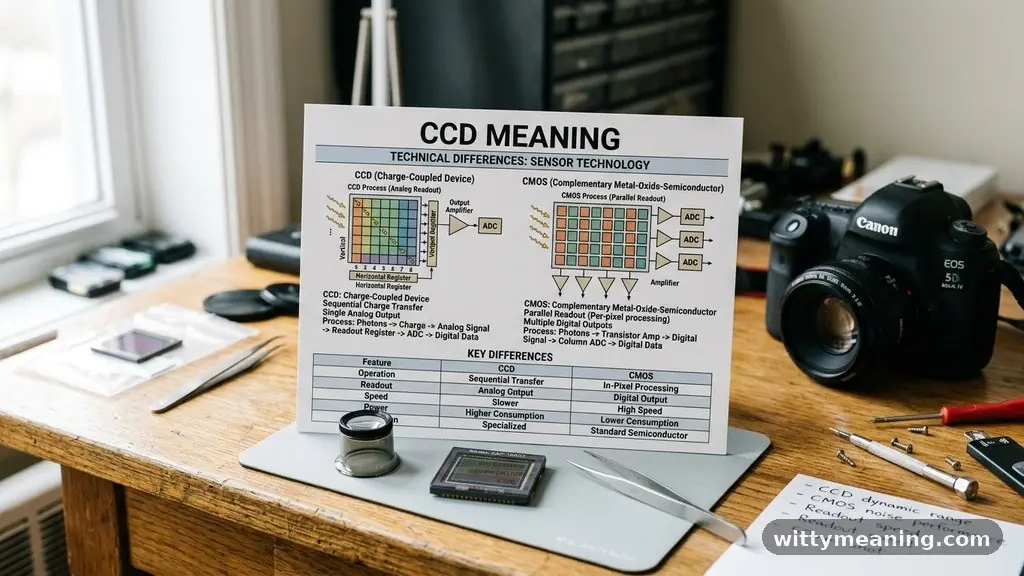
The shift from analog to digital capture was driven largely by advancements in semiconductors. A CCD chip operates quite differently from its modern counterparts.
In a standard CCD, the charge is moved through the chip to a single output amplifier, which creates a highly uniform image quality with very little noise. However, this process is relatively slow and power-hungry compared to newer technologies.
Comparing Imaging Sensor Types
| Feature | CCD Sensor | CMOS Sensor |
|---|---|---|
| Power Consumption | High | Low |
| Speed | Slower readout | Very fast |
| Noise Levels | Very low | Variable |
| Primary Application | Scientific/Medical | Consumer electronics |
The table above illustrates why you might still find these sensors in professional environments. While consumer cameras have largely abandoned them for the speed and battery efficiency of CMOS, the low noise floor of these older sensors remains a significant advantage for long-exposure photography and precise scientific measurement.
Medical Contexts and Diagnostic Criteria
In a clinical setting, the acronym can occasionally appear in reports related to pediatric medical diagnosis. Specifically, some literature refers to “Congenital Central Hypoventilation Syndrome” or similar conditions where respiratory control is impaired.
However, the term is not as universally standardized in medicine as it is in theology or engineering. When you see it in a medical chart, it is vital to verify the specific context, as medical diagnostic criteria are highly specialized and vary by sub-specialty.
If you encounter this term in a health-related document, it is best to look for the full phrase rather than assuming it refers to the religious or technical definitions. Clinical documentation often uses specific abbreviations, and relying on general knowledge can lead to misunderstandings. Always consult with a healthcare professional to clarify the meaning within the scope of a specific patient’s file or diagnostic report.
The Evolution of Religious Instruction
Parish education programs have evolved significantly over the last several decades. Where once these lessons were strictly lecture-based, modern programs often incorporate digital media and interactive activities to keep students engaged. Despite these changes, the core mission remains the same: to provide a consistent framework for learning the teachings of the Church.
* Weekly sessions held after school hours.
* Sacramental preparation for First Reconciliation.
* Volunteer training for catechists.
* Integration of service projects into the curriculum.
These programs serve as a social hub for many families, fostering a sense of community that extends beyond the classroom. For parents, the primary goal is often ensuring their children have a solid grounding in their faith, which is why these programs continue to see high enrollment in many regions.
Signal Processing in Modern Hardware
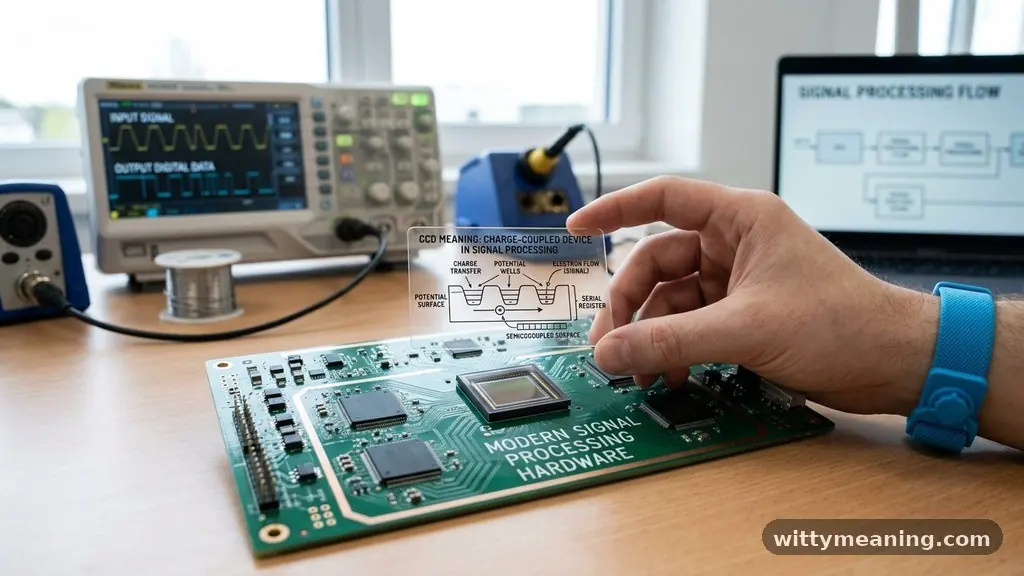
The signal processing chain in a digital camera is a marvel of engineering. When light hits the pixel arrays, the resulting analog signal must be digitized.
In older CCD systems, this required external circuitry to convert the voltage into binary data. Modern designs have integrated much of this logic onto the sensor itself, but the fundamental concepts of charge transfer remain relevant.
Engineers look at these sensors as the bridge between the physical world and the digital realm. The ability to accurately map a photon count to a digital value is what makes high-fidelity imaging possible. Even as we move toward computational photography, the underlying physics of how we capture that initial data remains rooted in the principles that defined early imaging sensors.
Electronic Communication Etiquette
Using email effectively requires an understanding of how to include others without cluttering their inboxes. The CC field is intended for those who need to stay in the loop but are not expected to take action. Overusing this feature can lead to “email fatigue,” where stakeholders stop paying attention to important threads because they are being copied on too many irrelevant messages.
When deciding who to include, consider the following:
- Is the recipient a decision-maker on this specific issue?
- Does the recipient need the information for their own workflow?
- Will the recipient be annoyed by the volume of follow-up emails?
- Is privacy a concern that necessitates the use of BCC instead?
By being intentional with your communications, you maintain professional respect and ensure that when you do send a message, it is treated with the appropriate level of urgency.
Addressing Topical Gaps and Common Misconceptions
A common point of confusion is the assumption that CCD always refers to a singular, universal concept. In reality, the term is highly context-dependent.
Some people confuse the religious program with the technical sensor, leading to strange search results or misunderstood conversations. Another gap is the confusion between “CC” and “CCD” in email; while they are related, they are not interchangeable.
Furthermore, many people assume that because a technology is “older,” it is inherently inferior. This is a misconception in the imaging world.
While these sensors have limitations regarding speed, their image quality remains superior for certain specialized applications. Recognizing that “old” does not always mean “obsolete” is key to understanding why certain industries continue to rely on this specific hardware.
CCD Slang Usage and Linguistic Flexibility
Language is fluid, and you may occasionally hear the term used as slang in specific subcultures. In some online gaming or chat communities, acronyms are repurposed to fit the needs of fast-paced typing. While there is no single, widely accepted “slang” definition for this particular acronym, it is common for users to adopt it as a shorthand for various local or group-specific terms.
When you see it used in an informal chat or text message, check for the context clues. If the conversation is about technology, it is likely the sensor. If it is about planning a meeting, it is almost certainly the email protocol.
If the context is entirely absent, it is acceptable to ask for clarification. Never assume a specialized meaning when a general one might suffice, and always prioritize clear communication over the use of jargon.
FAQ
What does CCD mean in the Catholic Church?
In the Catholic Church, it stands for the Confraternity of Christian Doctrine. It refers to religious education programs for children, often provided at the parish level, to teach the faith and prepare them for sacraments like First Communion and Confirmation.
Is a CCD the same as a CMOS sensor?
No, they are different types of digital imaging sensors. While both convert light into digital data, CCD sensors use a process of shifting charge across the chip, whereas CMOS sensors process the signal at each pixel site, generally allowing for faster speeds and lower power usage.
What is the difference between CC and BCC in emails?
CC stands for Carbon Copy, and all recipients can see the email addresses of everyone else on the thread. BCC stands for Blind Carbon Copy, which keeps the recipient’s address hidden from all other people who receive the message.
Why is the term CCD used in photography?
It is used to describe the Charge-Coupled Device, a sensor technology that was historically the industry standard for high-quality digital photography. It is prized for its excellent image quality, low noise, and unique way of handling light-to-voltage conversion in scientific imaging.
Final Thoughts
Understanding the ccd meaning requires a bit of detective work to identify the context, but the distinction between religious education, digital imaging, and email protocols is usually clear once you look at the setting. Whether you are navigating the nuances of parish education programs, evaluating the technical specifications of a high-end camera sensor, or simply trying to master your email etiquette, you are now equipped to distinguish between these common uses.
By paying attention to the environment in which the term appears, you can avoid confusion and ensure that your communication remains precise. As technology and language continue to evolve, staying aware of these multiple definitions will help you stay informed and articulate in any professional or personal discussion.