


The wfh meaning is straightforward on the surface, but its implications for modern professional life are vast. Simply put, it stands for “work from home,” a term that gained universal recognition as organizations shifted away from traditional, centralized office structures. While it once felt like a niche perk for specific roles, it has become a defining characteristic of the contemporary labor market.
Understanding this acronym is the first step toward grasping how businesses operate today and why the traditional nine-to-five is undergoing such a significant transformation. By exploring the nuances of this shift, you’ll gain clarity on how professional expectations and personal boundaries are being redrawn in real-time.
The Evolution of Remote Employment
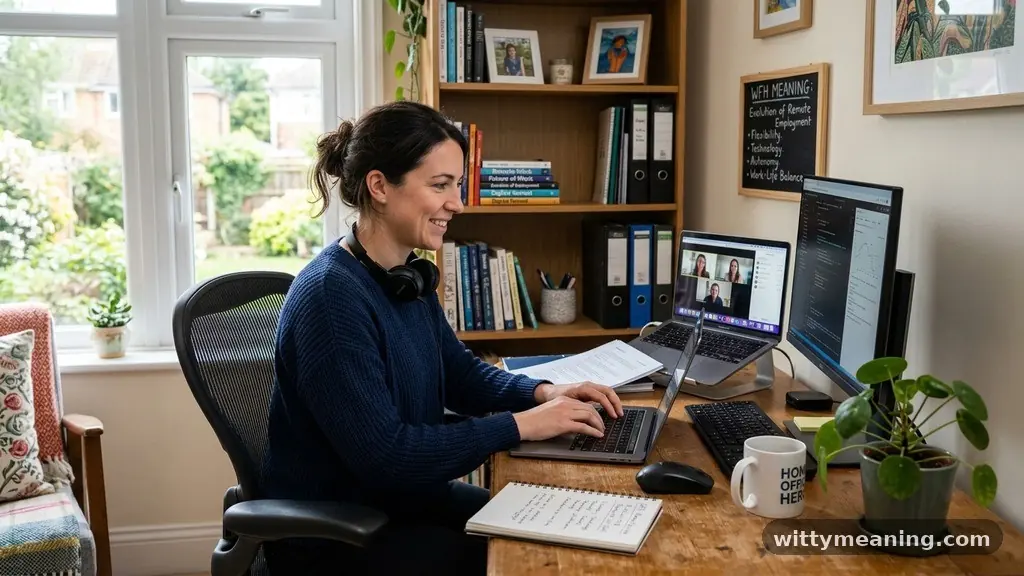
When we talk about the wfh meaning, we are really discussing the broader evolution of remote employment. Decades ago, telecommuting was a rare luxury, often restricted to sales representatives or high-level consultants who needed to travel.
Technology was the primary barrier; without high-speed internet or cloud-based software, physical proximity was non-negotiable for most tasks. Today, the infrastructure is so advanced that your location is largely irrelevant to your output.
This change wasn’t just a sudden pivot during global health events; it was the result of a long-term technological trajectory. As companies began to realize that physical presence didn’t always equate to employee productivity, they started experimenting with more flexible arrangements. This shift forced a reevaluation of what constitutes a “real” office.
Is it a desk in a corporate high-rise, or is it a space where you can produce high-quality work? The answer has increasingly tilted toward the latter, leading to the rise of the distributed team model, where colleagues may be separated by thousands of miles but connected by digital tools.
Distinguishing Between WFH, WFO, and Hybrid Models
To truly master the wfh meaning, you have to understand it in the context of its counterparts, like WFO (work from office) and the increasingly popular hybrid work model. These acronyms aren’t just jargon; they represent fundamentally different philosophies regarding how a company should be run. WFO represents the traditional school of thought, where face-to-face interaction is viewed as the primary driver of innovation and company culture.
On the other hand, the hybrid work model attempts to bridge the gap between these two worlds. It recognizes that while some tasks benefit from in-person collaboration—like brainstorming sessions or complex project launches—other tasks are better suited for deep, focused work that happens best in a quiet, isolated environment.
Many organizations are now settling into this middle ground, requiring employees to be physically present on specific days while allowing for flexibility during the rest of the week. This balance is often seen as the “gold standard” for companies trying to retain talent while maintaining a sense of community.
| Work Model | Primary Location | Key Benefit |
|---|---|---|
| WFH | Private Residence | Flexibility and time savings |
| WFO | Corporate Headquarters | Direct, spontaneous collaboration |
| Hybrid | Split between home and office | Balanced professional and personal life |
The Rise of the Digital Nomad and Work From Anywhere
Beyond the basic wfh meaning lies the concept of the digital nomad and the “work from anywhere” movement. If WFH is about staying at your residence, “work from anywhere” (WFA) takes it a step further.
It implies that as long as you have a stable internet connection, your physical coordinates do not matter. This has opened up the world to professionals who want to travel while maintaining their career trajectories.
This lifestyle is supported by the normalization of asynchronous communication. In a traditional office, you might expect an immediate answer to a question. In a distributed, global team, you might send a message at 9:00 AM and receive a reply at 4:00 PM when your colleague in a different time zone logs on.
This requires a shift in how teams manage tasks. Instead of constant status meetings, managers rely on clear documentation and project management platforms to keep everyone aligned. It’s a culture that rewards results over “visibility” or time spent sitting in a chair.
Managing Your Home Office Setup
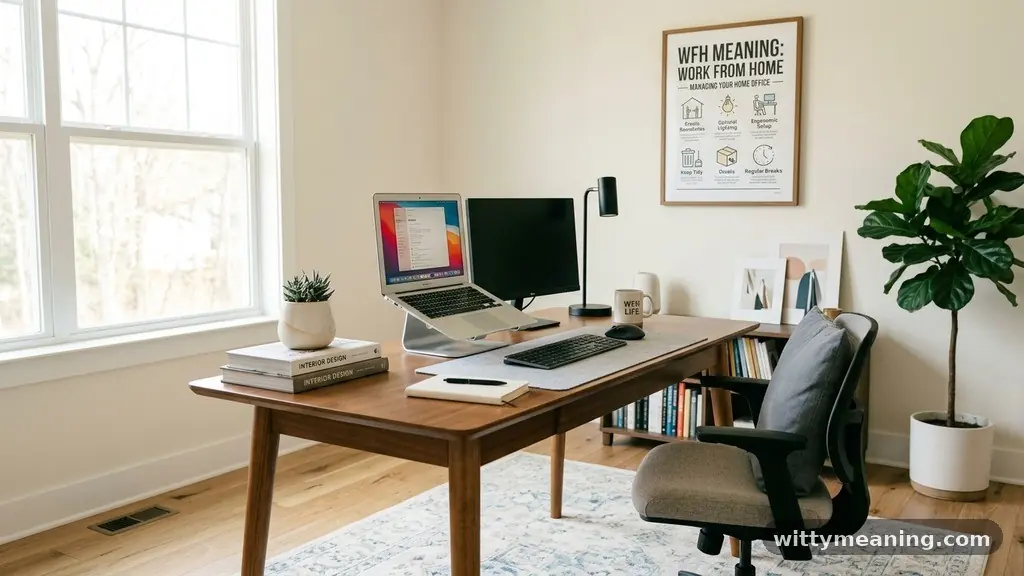
One of the most practical applications of the wfh meaning is the creation of a functional home office setup. When your living room becomes your headquarters, the line between “home” and “work” can blur dangerously.
If you don’t have a dedicated space, you might find that you never truly “clock out” mentally. This is why ergonomics and spatial boundaries are so critical for long-term success.
A proper setup isn’t just about a desk and a chair; it’s about creating a psychological trigger that tells your brain it’s time to focus. Even in a small apartment, you can designate a specific corner as your workspace. Once you leave that corner, you are officially “off the clock.”
This separation is vital for maintaining work-life balance. Without it, you risk burnout, as your brain constantly associates your leisure spaces with the stress of pending deadlines and emails. Investing in a good chair, proper lighting, and a reliable internet connection is not just an expense; it’s an investment in your mental health and professional longevity.
The Hidden Costs: Zoom Fatigue and Social Isolation
While the convenience of working remotely is undeniable, it comes with specific challenges that are often omitted from the conversation. Zoom fatigue is a very real phenomenon. Staring at a screen for hours, trying to read social cues through a pixelated window, is significantly more draining than an in-person conversation. The human brain isn’t wired to interpret body language through a grid of faces, and the constant effort to do so causes cognitive overload.
Beyond the screen, there is the issue of social isolation. Humans are inherently social creatures, and the incidental “water cooler” conversations—the quick chats about weekend plans or shared frustrations—are often where bonds are formed.
When these are replaced by scheduled, agenda-driven video calls, the sense of camaraderie can suffer. Some professionals combat this by visiting a coworking space a few times a week, providing a middle ground where they can get the social interaction of an office without the commute or the rigid structure of a traditional corporate environment.
The Role of Task Management Tools
In a remote environment, your output is your primary currency. Because your manager can’t see you working, they need to see the results of your work.
This has led to an explosion in the use of sophisticated task management tools. These platforms allow teams to track progress, assign responsibilities, and keep documentation in one central hub.
When you understand the wfh meaning, you realize that it isn’t about “doing less.” It is often about doing more in less time. Because you don’t have the interruptions of an office—the impromptu meetings or the noisy open-plan floor—you can achieve a “flow state” much faster.
The challenge is ensuring that this efficiency doesn’t lead to an “always-on” culture. When your office is in your pocket, it’s tempting to check emails at 9:00 PM. Setting strict digital boundaries is essential for ensuring that the flexibility of remote work remains a benefit rather than a trap.
Shifting Workplace Trends
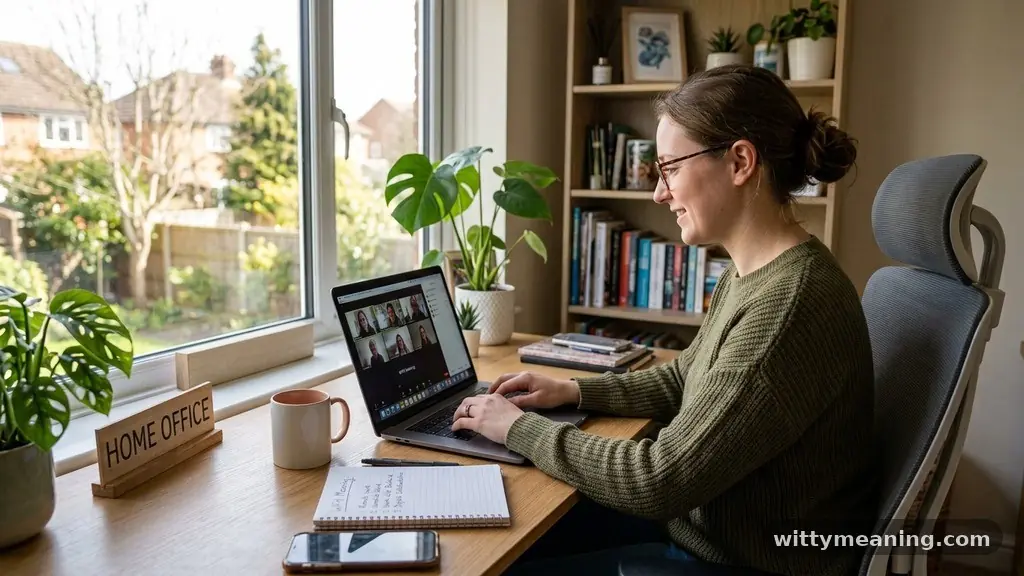
The workplace trends of the last few years have shown that employees value occupational flexibility almost as much as salary. The ability to control one’s own schedule and environment is a powerful incentive for workers, and companies that refuse to offer these options often struggle to attract top talent.
This has forced a reckoning in corporate culture. The “remote-first culture” is no longer just for tech startups; it is becoming a standard expectation in industries ranging from finance to education.
This shift has also changed how we define “professionalism.” In the past, wearing a suit was a sign of a professional. Today, professionalism is defined by reliability, clear communication, and the ability to meet deadlines without supervision.
This is a positive development for many, as it levels the playing field, focusing on what you contribute rather than how you look or how long you sit at your desk. It’s a more meritocratic way of working, provided that the company culture supports it with clear expectations.
Addressing Topical Gaps: The Psychological Impact of WFH
A common gap in discussions about the wfh meaning is the psychological transition involved in moving from a collective space to a solitary one. We often talk about the tools and the logistics, but we rarely address the loss of identity that can occur when you no longer have a physical office to go to.
Your office is often a place where you feel like a “professional.” When that is gone, and you are working in your pajamas, that sense of professional identity can feel fragile.
To maintain your professional mindset, it helps to establish rituals. Some people find that dressing for work—even if they are staying home—helps them shift into a productive headspace. Others use a specific morning routine to “commute” to their desk, perhaps by taking a walk around the block before they start their day.
These small actions serve as a bridge between your personal life and your professional responsibilities. Recognizing that these psychological hurdles are normal is part of mastering the art of remote success.
The Future of Distributed Teams
Looking ahead, the remote-first culture is only going to become more ingrained in the global economy. As companies get better at hiring globally, the competition for talent will increase, and the geographic limitations of the past will continue to erode.
This is great news for workers who live in areas where job opportunities were once scarce. They can now access high-paying roles without having to move to expensive urban centers.
However, this also means that you are now competing in a global talent pool. To stand out, you need to be proficient in digital communication and self-management.
The ability to document your work, communicate clearly in writing, and manage your own time has become a core competency. If you can master these skills, you will find that the flexibility offered by remote work is a massive competitive advantage for your own career growth.
FAQ Section
What is the difference between WFH and remote work?
While often used interchangeably, WFH typically implies working specifically from your residence. Remote work is a broader term that encompasses any location outside of a traditional office, including coworking spaces, cafes, or even while traveling, provided the work is performed outside of the company’s central headquarters.
Does WFH mean I am always available?
No, WFH does not mean you are on call 24/7. It simply describes the location of your work. Professional boundaries are just as important in a remote setting as they are in an office. It is vital to set clear “working hours” and stick to them to avoid burnout.
What is the biggest challenge of working from home?
The most common challenges are the blurring of boundaries between work and personal life, and the potential for social isolation. Without the natural structure of an office, it takes significant self-discipline to stay productive while ensuring you don’t work excessive, unhealthy hours that lead to fatigue.
Are there specific tools required for WFH?
Most remote roles require a reliable high-speed internet connection, a quiet workspace, and proficiency with digital communication platforms like Slack, Zoom, or Microsoft Teams. Project management software like Trello, Asana, or Jira is also standard for coordinating tasks within a distributed team.
Final Thoughts
Understanding the wfh meaning is about more than just knowing what the acronym stands for; it’s about recognizing the fundamental shift in how we conceive of our professional lives. The transition toward remote and hybrid models has democratized opportunity and forced us to focus on output and clear communication rather than physical presence. While it presents unique challenges—such as the need for better digital boundaries and the struggle to maintain social connections—the benefits of autonomy and flexibility are significant.
By intentionally designing your environment and mastering the tools of the trade, you can thrive in this new landscape. Whether you are a full-time remote worker or navigating a hybrid schedule, the key is to remain proactive in your communication and diligent in your self-care. Take the time to refine your setup and set your boundaries today.