
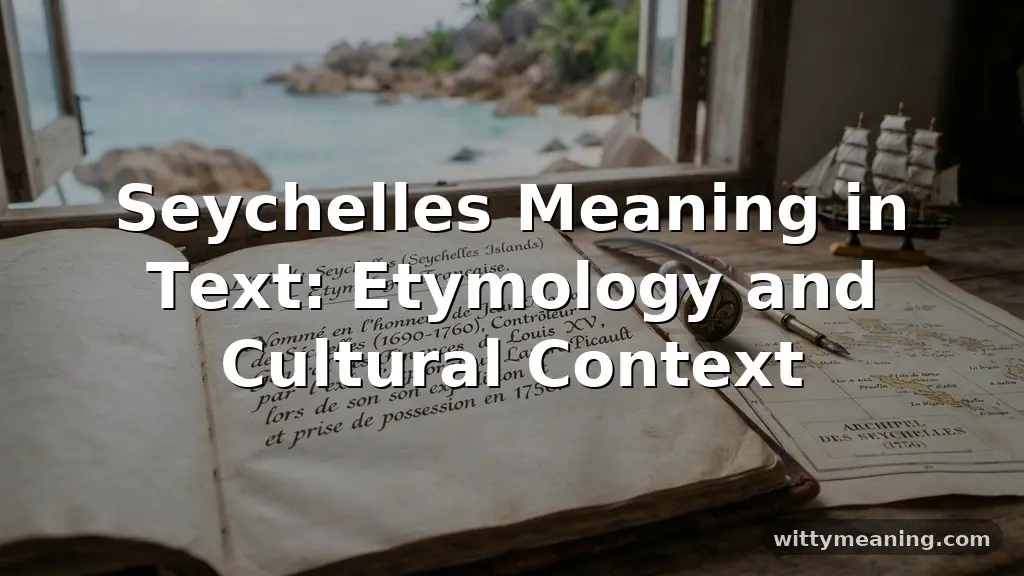

When you encounter the term Seychelles in a digital conversation or a piece of literature, the reference almost always points toward the sovereign island nation in the Indian Ocean. While some users search for the Seychelles meaning in text to see if it carries hidden slang or coded connotations, the word is firmly rooted in geography and colonial history rather than internet jargon.
Understanding its true origins helps clarify why this name pops up in travel writing, financial news, and cultural discussions. By looking at the name’s history and its modern usage, you can better grasp how this specific entity functions in global discourse.
Historical Etymology and French Origins

The name Seychelles carries a distinct weight that traces back to 18th-century colonial navigation. Many people assume the name was indigenous to the archipelago, but it was actually bestowed by the French in honor of Jean Moreau de Séchelles.
He served as the Minister of Finance under King Louis XV during the mid-1700s. The islands were claimed for the French crown, and they retained the French name long after the British took administrative control of the territory in the early 19th century.
This linguistic legacy is a classic example of how European colonial power structures left a permanent mark on the global map. Even after the transition to British rule, the local government and the population chose to keep the title, which had become synonymous with the islands themselves. When you see the word in a text, you are looking at a remnant of a specific geopolitical era where naming conventions were used to assert ownership and pay homage to patrons back in Europe.
Demonym and Linguistic Identity
If you are wondering what to call someone from this nation, the term is Seychellois. This demonym is used for both the singular and plural forms, and it reflects the unique linguistic landscape of the region.
The people of the islands primarily speak Seychellois Creole, which is a French-based creole language, alongside English and French as official languages. This trilingual environment is a fundamental aspect of their national identity.
In written texts, you will often find authors emphasizing the multilingual nature of the culture. Because the islands were a crossroads for sailors and traders, the language evolved to incorporate a wide variety of sounds and vocabularies.
When you read about the Seychelles in a text, it is often in the context of this rich, layered heritage. Recognizing the demonym helps you understand that the word isn’t just a location; it represents a specific community with its own distinct history and social norms.
Cultural Fusion in the Indian Ocean
The culture found on these islands is a vibrant tapestry, blending African, French, British, Indian, and Chinese influences. This diversity is not just a footnote; it is the defining characteristic of the archipelago’s social fabric. When the name appears in academic or sociological texts, it is frequently used to discuss how isolated island nations maintain their distinct traditions while engaging with the wider world.
You can observe this fusion in everything from the local cuisine to the traditional music known as Moutya. The culinary scene, for instance, relies heavily on fresh seafood, tropical fruits, and a spice palette that reflects the Indian and Chinese diaspora.
In a text, the mention of this location often serves as a shorthand for exotic, high-end, or culturally rich environments. It is a place where different civilizations met, mixed, and created something entirely new.
Geopolitical Significance in Global Trade
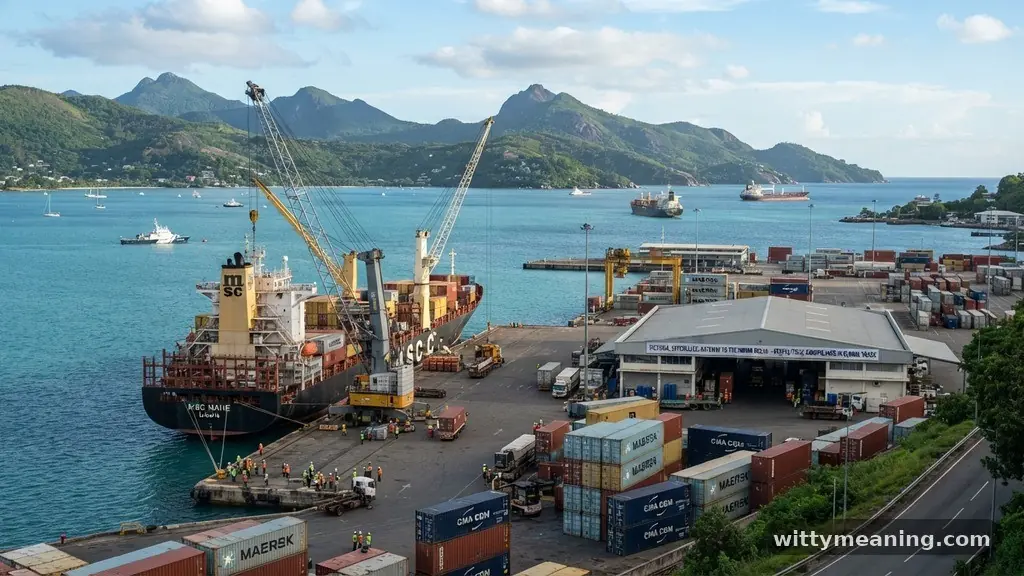
Beyond its etymology, the nation holds substantial weight in international affairs. Its location in the western Indian Ocean makes it a vital point for monitoring maritime traffic and protecting regional stability. In news articles or policy documents, the Seychelles meaning in text often relates to its role in the blue economy, which focuses on the sustainable use of ocean resources.
The government has been particularly proactive in promoting ocean conservation, which has earned them respect on the global stage. They are often cited as a model for how small island developing states can manage their exclusive economic zones effectively.
When you read reports involving this country, you are usually seeing an analysis of how it balances its small size with its massive maritime responsibilities. This geopolitical standing makes the name a frequent fixture in discussions about environmental law and international diplomacy.
High-End Ecotourism and Luxury Branding
In modern digital spaces, a luxury vacation destination is the most common association people have with the archipelago. When the name appears in travel blogs, social media, or high-end lifestyle magazines, it is almost exclusively linked to images of pristine beaches and exclusive resorts. This branding has been incredibly successful, positioning the islands as one of the world’s premier spots for seclusion and natural beauty.
The tourism strategy focuses heavily on high-end ecotourism, ensuring that the influx of visitors does not damage the very environment they come to see. This approach is central to the country’s economic strategy.
By limiting the number of tourists and focusing on quality over quantity, they have maintained the allure of the islands for decades. When you see the term in a travel context, it is a marker of premium quality and an emphasis on environmental stewardship.
Biodiversity Hotspots and Environmental Protection
The archipelago is home to some of the most important biodiversity hotspots on the planet. From the unique flora of the Vallée de Mai to the giant tortoises that roam the islands, the natural world here is unmatched.
Many scientific texts highlight the islands as a living laboratory for evolution. The isolation of the landmass allowed species to develop in ways that are not seen anywhere else on Earth.
Conservation efforts are a major part of the national agenda. The government has protected large swaths of land and water to ensure that these endemic species do not face extinction.
If you encounter the name in a scientific journal or an environmental report, it is likely highlighting these efforts. The preservation of this biodiversity is not just a local concern; it is viewed by international bodies as a critical piece of the global environmental puzzle.
Coral Reefs and Marine Conservation
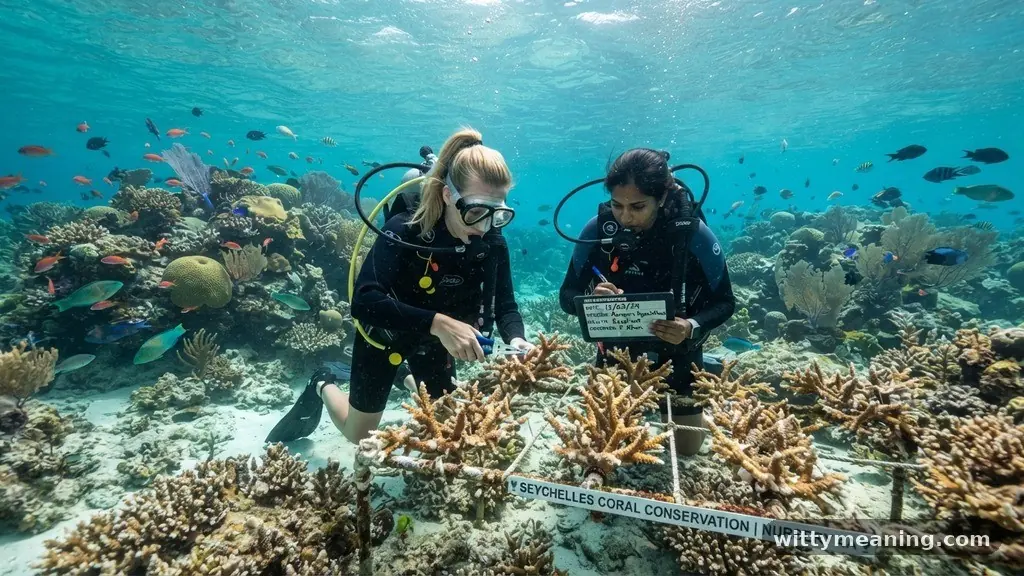
The underwater landscape of the islands is just as significant as the land. The coral reefs surrounding the archipelago are vital for the health of the Indian Ocean.
These reefs are currently the subject of intense study due to the effects of climate change and rising water temperatures. When you read about these reefs in a professional context, you are often looking at data regarding ocean health and the resilience of marine ecosystems.
| Feature | Importance |
|---|---|
| Coral Reefs | Supports marine life and coastal protection |
| Biodiversity | Home to endemic species found nowhere else |
| Maritime Zone | Crucial for regional security and fishing rights |
The protection of these reefs is a collaborative effort between local agencies and international environmental groups. You can learn more about these initiatives through the official Seychelles tourism board, which provides insights into how the nation manages its natural assets. This type of information helps readers understand why the archipelago is so frequently mentioned in debates about global climate policy.
The Language of Luxury Travel
It is interesting to note how the word has become a synonym for perfection in the hospitality industry. When marketing copy uses the name, it is almost always to evoke a sense of calm, exclusivity, and beauty.
This is a form of linguistic branding where the name itself does more work than the adjectives surrounding it. It is a powerful tool in the travel sector.
This phenomenon shows how a geographic name can transcend its literal meaning to become a concept in the public imagination. People don’t just see a location; they see a lifestyle.
This is why the term is so frequently used in advertisements for watches, cruises, and high-end real estate. The Seychelles meaning in text, in this specific context, is shorthand for a life of leisure and refined taste.
Addressing Misconceptions and Internet Slang
Occasionally, people search for the name expecting to find a hidden or slang-based meaning, perhaps because they have seen it used in a specific online community. However, in the vast majority of cases, there is no secondary meaning.
The word is not a common piece of slang in English-speaking internet culture. If you see it used in a strange or nonsensical way, it is likely either an autocorrect error or an attempt by a user to reference the exotic nature of the islands.
It is helpful to be skeptical when encountering such terms in informal chats. Unless the context clearly points to a specific private joke or a niche gaming reference, you should assume the author is simply referring to the country. Distinguishing between genuine geographic references and potential, albeit rare, slang helps you avoid confusion when interpreting online content.
Summary of Usage and Context
When you look at how the word is used across various platforms, the consistency is striking. Whether it is in a travel brochure, a geopolitical analysis, or an environmental study, the reference remains tethered to the physical reality of the archipelago. The term serves as a bridge between the historical legacy of the islands and their modern role as a global leader in conservation and luxury travel.
By understanding the different lenses through which we view this location—historical, ecological, and economic—you gain a much better grasp of why the name carries such weight. It is not just a spot on a map; it is a complex entity with a story that continues to evolve. As global interest in sustainable travel and marine conservation grows, the prominence of this name in written media is only likely to increase.
Frequently Asked Questions
What does the word Seychelles actually mean?
The name is not a descriptive term but a proper noun derived from Jean Moreau de Séchelles, a French Minister of Finance. It was given to the islands during the French colonial era in the 18th century and has remained the official name ever since.
Is there a slang meaning for the word Seychelles?
No, there is no widely recognized slang meaning for the word. In digital spaces, it almost exclusively refers to the island nation. If you encounter it in an unusual context, it is likely a misinterpretation of a travel reference or a simple typo.
What is the correct demonym for people from the islands?
The correct term is Seychellois. It is used for both the singular and plural forms. The identity is deeply tied to the islands’ history as a cultural crossroads, which is why the term often carries connotations of a rich, blended heritage in text.
Why is the name so common in travel writing?
The name is synonymous with high-end ecotourism and luxury, making it a powerful branding tool. Because the islands are known for their pristine beaches and strict environmental preservation, the word itself acts as a shorthand for beauty, exclusivity, and natural wonder in marketing content.
Conclusion
Grasping the Seychelles meaning in text requires looking past the surface and appreciating the historical and cultural layers of the word. From its origins as a tribute to a French official to its current status as a beacon for environmental conservation, the name carries a significant amount of context. Whether you are reading about international maritime law or browsing for a dream vacation, the word acts as a signifier for a unique, protected, and culturally vibrant region.
By staying aware of these different contexts, you will have no trouble identifying how the term is being used in any given conversation or article. We invite you to share your own experiences or questions about this fascinating topic in the comments below.