
The name Mérida carries a weight that transcends mere nomenclature, acting as a bridge between the ancient Roman world and the modern cultural landscapes of Spain, Mexico, and Venezuela. At its core, the merida meaning is deeply rooted in the Latin term emeritus, which historically denoted a soldier who had completed their service and earned their discharge.
This etymological foundation provides a crucial window into how place names evolve from functional military designations into symbols of regional identity. By exploring the linguistic threads that connect the Iberian Peninsula to the Americas, we can uncover how a single name came to define distinct, vibrant, and historically significant cities across multiple continents.
Etymological Roots and the Roman Legacy
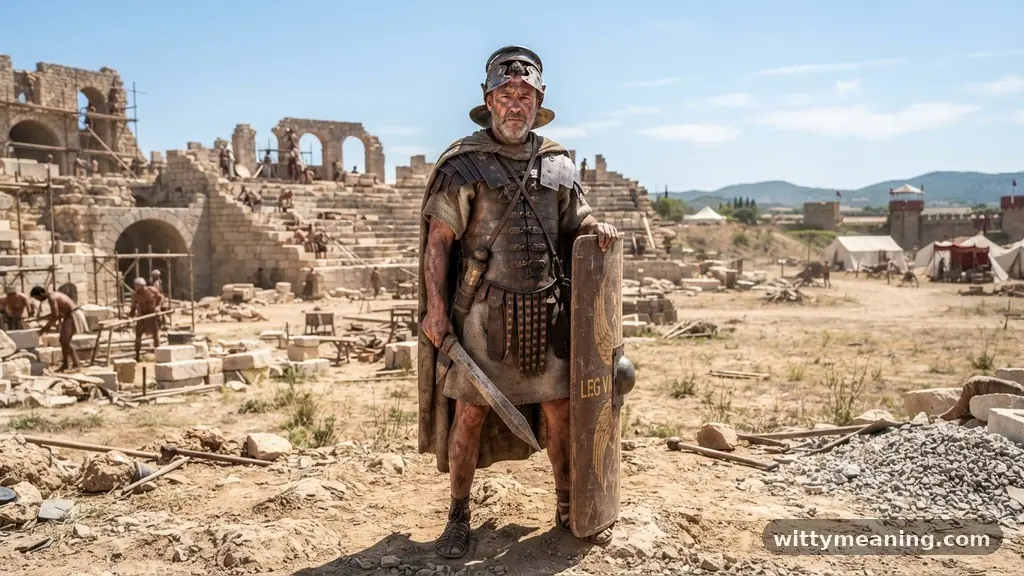
The historical trajectory of the name begins in the heart of the Roman Empire. The primary origin of Mérida is inextricably linked to the city of Emerita Augusta, founded in 25 BC by order of Emperor Augustus.
The linguistic evolution here is straightforward: Emerita refers to the emeriti, or the retired soldiers who were granted land in the region as a reward for their long and loyal service to the empire. This naming convention was not merely functional; it was a way for the Roman state to assert permanence and control over conquered territories by establishing settlements of veterans who were highly disciplined and invested in the success of the colony.
Understanding the merida meaning requires us to recognize that these Roman colonies were essentially military outposts designed to radiate influence. The name served as a badge of honor for the inhabitants.
When we look at the Spanish colonial history that followed centuries later, we see a deliberate effort by explorers and administrators to replicate this sense of order and legacy in the New World. By bestowing the name Mérida upon new settlements in the Americas, Spanish conquistadors were not just choosing a name; they were invoking the prestige of the Roman past and signaling that these new territories were now part of a broader, established civilization.
Mérida, Spain: The Original Foundation
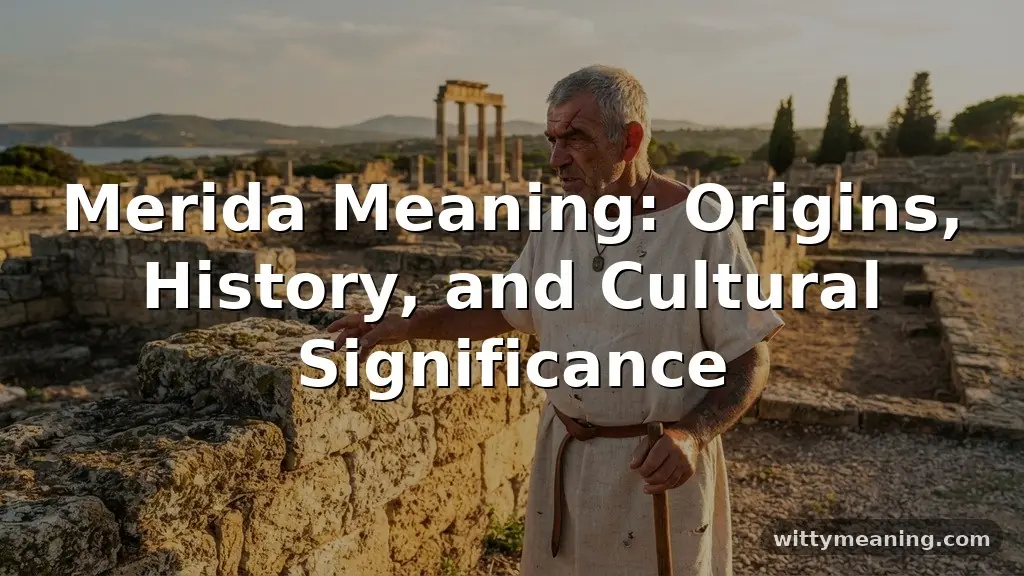
To fully grasp the significance of the name, one must look at Mérida, Spain, the original namesake that sits in the Extremadura region. This city stands as a living museum, housing some of the most well-preserved Roman ruins in the world, including a massive theater and an amphitheater that still host performances today.
The name here acts as a constant reminder of the city’s endurance. Throughout the Middle Ages and into the Renaissance, the city maintained its status as a nexus of culture and administration.
The legacy of the original site provides the blueprint for why the name became so popular in the Spanish-speaking world. It represents a connection to the classical world, a sense of “earned” status, and a link to the foundational history of the Iberian Peninsula. When European settlers arrived in the Americas, they looked to their home regions for names that carried weight, stability, and a sense of belonging.
Mérida was a natural choice, as it evoked a history of survival, military excellence, and imperial reach. Even today, the Spanish city serves as a reference point for all other locations sharing the name, anchoring the merida meaning in a concrete, physical history of stone and governance.
Mérida, Mexico: The Jewel of the Yucatan Peninsula
Moving across the Atlantic, Mérida, Mexico, offers a fascinating study in how names can be repurposed to define a new regional identity. Founded in 1542 by Francisco de Montejo the Younger, the city was built upon the ruins of the ancient Mayan city of T’hó.
The Spanish chose the name Mérida because the ancient stone structures they encountered reminded them of the Roman ruins back in Spain. This is a quintessential example of how the colonial history of Mexico played a role in shaping the nomenclature of the territory.
In the context of the Yucatan Peninsula, the name Mérida represents the meeting point of two worlds. While the Spanish intended to impose their own cultural markers, the city eventually evolved into a unique blend of Mayan and Spanish influences. Today, it is recognized as a UNESCO World Heritage site, not just for its colonial architecture but for the way it preserves the cultural continuity of the region.
The merida meaning in Mexico has shifted from a symbol of colonial conquest to a symbol of cultural richness and regional pride. It is a city defined by its vibrant markets, its distinctive cuisine, and its role as a center for the preservation of indigenous languages and traditions, proving that a name can transcend its original intent to become something entirely new.
Mérida, Venezuela: Situated in the Andes
The third major pillar in our understanding of the name is Mérida, Venezuela: Situated in the Andes. Founded in 1558 by Juan Rodríguez Suárez, this city takes its name from the founder’s birthplace in Extremadura, Spain.
Unlike the coastal or lowland settlements, this city is defined by its dramatic high-altitude geography. The name here feels almost heroic, clinging to the side of the mountains, reflecting the rugged determination of those who settled in such a challenging environment.
The Geographical Presence Across the Globe of the name Mérida is perhaps best illustrated by the contrast between the flat, arid plains of the Spanish original, the humid, limestone-rich environment of the Mexican city, and the high-altitude, mountainous terrain of the Venezuelan city. In Venezuela, the name carries a connotation of academic and cultural prestige, as the city is home to one of the country’s oldest and most respected universities.
Here, the merida meaning is linked to intellectual pursuit and the preservation of history against the backdrop of the towering Andean peaks. It demonstrates how a name can adapt to different topographies while maintaining a consistent sense of historical continuity and weight.
Linguistic Variations and Global Contexts

While the name is most famously associated with Spanish-speaking regions, it is worth examining its presence in other variations and linguistic contexts. One might ask if the name exists in Italian, or Hebrew, or other global languages.
While the name is primarily of Latin-Spanish origin, its components—emeritus—have cognates in many languages that share a Latin root. In Italian, for instance, the word emerito is still used to describe someone who has retired with honor.
However, it is important to distinguish between the proper noun “Mérida” and the common noun “emeritus.” The name Mérida is a specific signifier, a proper noun that carries the weight of its history. In other parts of the world, the name has been adopted due to the influence of the Spanish language and its colonial reach.
When people encounter the name outside of the Spanish sphere, they often interpret it as a symbol of elegance or historical depth. Whether it is appearing in literature or as a name for a business or a character, the name evokes a sense of traditional authority. It is rarely used in a flippant way; rather, it commands a degree of respect due to its association with long-standing, established cities that have weathered the centuries.
Addressing Misconceptions and Cultural Overlaps
One common area of confusion involves the name’s association with independence and Celtic folklore, often stemming from the popular animated character from the film “Brave.” It is vital to note that in this specific pop-culture context, the name Mérida is used as a stand-in for a Scottish Gaelic-inspired identity.
This is a complete divergence from the Latin, Roman, and Spanish origins discussed previously. In this fictional context, the name is intended to sound ancient, strong, and connected to the wild, rugged landscape of Scotland.
This creates a fascinating semantic gap. While the merida meaning in the real world is tied to Emerita Augusta and the Roman military, the popular cultural meaning is tied to Celtic legends and individual agency. This dual reality of the name—the scholarly, historical version and the modern, fictional version—shows how names can become “empty vessels” that are filled with different meanings by different generations.
As an SEO strategist, it is important to distinguish between these two so that users searching for the historical city are not conflated with those looking for the character. The following table helps summarize the different geographical and historical anchors of the name.
| Location | Foundation | Primary Significance |
|---|---|---|
| Mérida, Spain | 25 BC | Roman administrative center; Roman ruins |
| Mérida, Mexico | 1542 AD | Colonial hub; Mayan cultural integration |
| Mérida, Venezuela | 1558 AD | Andean academic and cultural center |
Beyond its Spanish Origins
To truly understand how this name functions in the modern world, we must look at how it operates in contemporary society. Today, Mérida is not just a place name; it is a brand. Cities named Mérida are often marketed as tourist destinations that offer a “step back in time.”
This is a deliberate utilization of the name’s history. When a city promotes itself as “Mérida,” it is implicitly promising the visitor a connection to history, architecture, and a slower, more deliberate way of life.
This branding exercise is a far cry from the original Roman intent of military administration, but it is a direct descendant of the name’s prestige. The name has become a shorthand for cultural depth. In the globalized world, having a name with deep historical roots is a significant asset.
It separates these cities from newer, utilitarian-named settlements. The Summary of Cultural Context here is simple: the name has been successfully “re-branded” by every generation that has occupied it, moving from a Roman military term to a Spanish colonial marker, and finally to a modern symbol of cultural tourism and historical pride.
Topical Gaps: Exploring the Name’s Nuances
Many articles focus solely on the cities, but they often miss the linguistic nuances that define the name’s endurance. One major gap is the lack of connection between the “retired soldier” meaning and the “enduring city” meaning. The link is permanence.
A retired soldier in the Roman era was given land because he was a permanent fixture of the state. Similarly, the cities named Mérida are intended to be permanent fixtures of the landscape. They are not transient camps; they are cities built to last.
Another gap is the lack of discussion regarding how the name is perceived by those who live there today. For a resident of Mérida, Mexico, the name is not just a reminder of the Spanish, but a part of their daily identity. It is the name of their schools, their streets, and their local government.
It is a living, breathing identity. By looking at the name through the lens of those who live in these cities, we add a layer of human experience that is often missing from purely historical or etymological accounts. This human-centric approach is essential for any comprehensive understanding of a name that covers so much ground.
FAQ Section
What is the core origin of the name Mérida?
The name originates from the Latin term emeritus, which refers to a retired Roman soldier who has completed their service. It was first used for the city of Emerita Augusta in Spain, founded by Emperor Augustus to provide land for his veteran troops.
Does the name Mérida mean the same thing in Mexico and Venezuela?
While the name shares the same etymological root in both countries, it has taken on unique local meanings. In Mexico, it represents a synthesis of colonial Spanish and indigenous Mayan cultures, while in Venezuela, it is associated with its high-altitude Andean location and academic heritage.
Is there a connection between the name Mérida and Celtic folklore?
There is no historical or linguistic connection between the real-world city name and Celtic folklore. The association arises solely from modern pop culture, where the name is used in fiction to evoke a sense of ancient, rugged, and independent identity, independent of its Latin origins.
Why are there multiple cities named Mérida?
The recurrence of the name is due to the influence of the Spanish Empire. Conquistadors and settlers often named new cities after their hometowns or significant cities in Spain to maintain a sense of continuity, authority, and historical prestige in the newly colonized territories.
Conclusion
The merida meaning is a profound example of how language, history, and geography intersect to create a lasting identity. From its origins as a Roman designation for honorably discharged soldiers to its evolution into a series of iconic cities in Spain, Mexico, and Venezuela, the name has consistently signaled a commitment to permanence and status. By tracing these threads, we see that the name is far more than a simple label; it is a historical marker that connects modern citizens to the ancient world.
Whether one is walking through the ruins of Emerita Augusta, exploring the colonial streets of the Yucatan Peninsula, or looking out over the Andes from a balcony in Venezuela, the name serves as a constant reminder of the endurance of human civilization. Understanding the depth behind this name allows us to appreciate not just the cities themselves, but the way our global history continues to shape our modern, everyday lives.