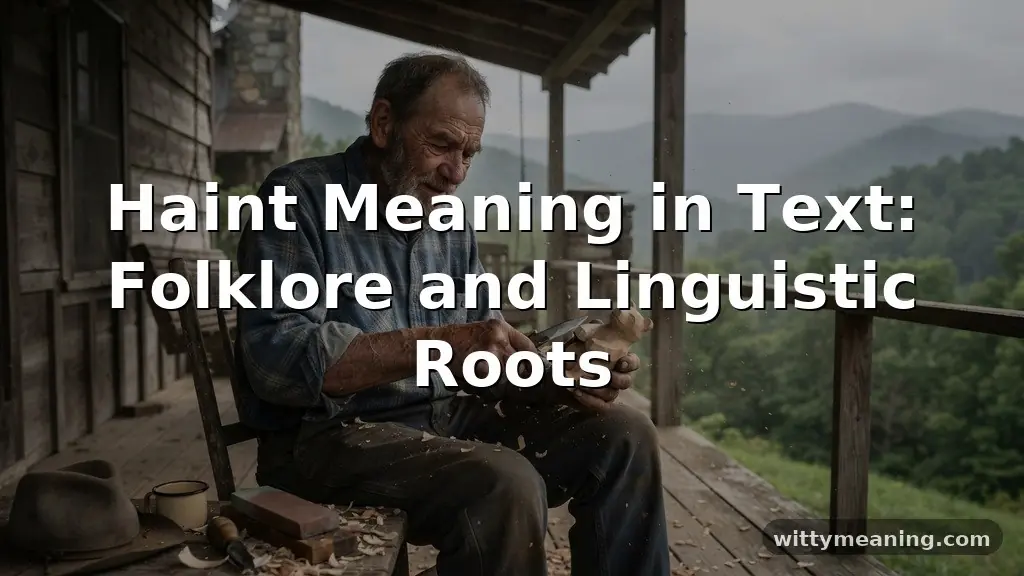

When you encounter the word “haint” in literature or regional dialogue, you are stepping into a rich linguistic tradition that extends far beyond a simple synonym for a ghost. Understanding the haint meaning in text requires looking at how language evolves from oral traditions into written narratives, particularly within the American South.
This term carries a specific weight, often implying a more visceral, lingering presence than a standard spectral encounter might suggest. By exploring its origins in Appalachian dialect and its deep connections to Southern folklore, we can better decode how authors use this evocative term to build atmosphere and character in their storytelling.
The Linguistic Origins of Haint

The word “haint” is a classic example of a linguistic variant that has managed to survive centuries of standardization. Primarily recognized as a pronunciation variation of the word “haunt,” it functions as both a verb and a noun.
In many rural communities, particularly throughout the Appalachian mountains and parts of the Deep South, the pronunciation shifted to reflect a distinct, localized cadence. This is not merely a mispronunciation; it is a hallmark of a regional dialect that prioritizes oral delivery and narrative flair.
When you see it used in literature, the spelling is often a deliberate choice by the author to signal the speaker’s background or geographic origin. By choosing “haint” over “haunt,” a writer immediately establishes a setting that is grounded in local tradition.
It acts as an auditory cue, forcing the reader to hear the voice of the character rather than just reading the words on the page. This linguistic marker serves to anchor the narrative in a specific place, making the setting feel authentic and lived-in.
Haint as a Supernatural Entity
In the context of Southern folklore, a haint is distinctly different from the generic concept of a ghost. While a ghost might be a polite, lingering memory, a haint is often viewed as a supernatural entity with a specific, sometimes malicious, agenda. The term implies a restless soul that has been unable to move on, often tethered to the physical world by unfinished business, a violent death, or a deep-seated grudge.
When a character in a story claims to be “hainted,” they are describing a state of being pursued or oppressed by a force that refuses to let go. This distinction is vital for understanding the stakes in a narrative.
A character dealing with a ghost might be experiencing a haunting that is more atmospheric or melancholic, but a character facing a haint is often in a struggle for their own peace of mind or safety. It suggests a more aggressive form of interaction, where the spirit is actively encroaching on the living.
Haint in Literature and Harper Lee
Perhaps the most famous instance of this term entering the mainstream lexicon is through the pages of To Kill a Mockingbird. Harper Lee masterfully uses the term to ground the story in the specific cultural landscape of Alabama. In the novel, the fear of haints is presented as a mixture of childish superstition and the genuine, underlying anxieties of a community navigating complex social and racial tensions.
For the children in Lee’s narrative, the threat of a haint is a tangible, albeit abstract, fear. It represents the unknown dangers that lurk in the dark corners of their town.
By utilizing this term, Lee highlights how the characters interpret their world through the lens of local beliefs. The haint becomes a metaphor for the societal “ghosts” of the past that continue to haunt the present, reflecting the way folk magic and local superstitions often mirror the deeper, more serious conflicts within a society.
Gullah Geechee Culture and African Diaspora Influences
The concept of the haint is deeply intertwined with the Gullah Geechee culture, which has preserved many elements of West and Central African spiritual traditions. Within this context, the belief in spirits and the methods used to interact with them are far more structured than simple ghost stories. The African diaspora brought with them a complex understanding of the spirit world, where the boundaries between the living and the dead are permeable and require careful management.
In these traditions, the haint is not always an evil force, but it is certainly one that must be respected or appeased. Rituals involving conjure or protective measures are often employed to keep these entities at bay.
When reading texts that draw from this heritage, understanding the haint meaning in text requires acknowledging that these spirits are part of a broader metaphysical framework. They represent ancestral connections, warnings, and the lingering energy of those who have passed on, requiring a different level of interaction than the standard Western “haunted house” trope.
The Protective Power of Haint Blue
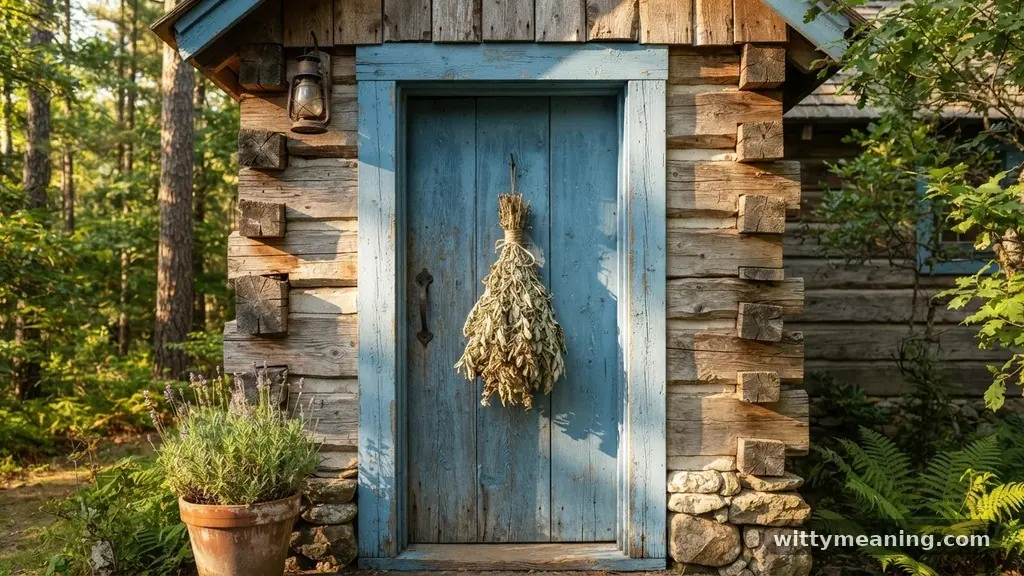
One of the most fascinating aspects of haint-related folklore is the practice of painting porch ceilings a specific shade known as haint blue. This tradition, prevalent in the coastal South and low-country regions, is a form of folk magic designed to protect a home. The logic behind this practice is that the color mimics the sky or water, effectively tricking the spirit into thinking it is looking at the heavens or a body of water, which it cannot cross.
This use of protective paint serves as a physical manifestation of a belief system. When you encounter a reference to this color in a book or screenplay, it is almost always a signifier of the character’s desire to ward off unwanted spiritual influence.
It acts as a silent, architectural defense against the supernatural. The prevalence of this practice demonstrates how deeply ingrained the fear of haints was—and remains—in the domestic lives of those who live in these regions.
Distinguishing Between a Haint and a Ghost
While the terms are often used interchangeably in casual conversation, there are subtle differences in their connotations. The following table highlights how these terms often diverge in literary and cultural usage:
| Feature | Ghost | Haint |
|---|---|---|
| Origin | General Western/Victorian | Southern/Appalachian/Gullah |
| Intent | Usually passive or sorrowful | Often active or malevolent |
| Interaction | Manifests as a visual apparition | Manifests as a hex or bad luck |
| Defense | Exorcism or acknowledgement | Warding, charms, or haint blue |
This table illustrates that while both are classified as a supernatural entity, the haint is a more localized, specific, and often more aggressive presence. When a writer uses “haint,” they are consciously opting for a term that carries historical baggage, regional identity, and a specific set of cultural responses that “ghost” simply does not possess.
The Role of Superstition in Narrative
Superstition plays a massive role in character development, particularly in stories set in rural or historically isolated areas. When a character expresses a belief in haints, it tells the reader volumes about their education, their upbringing, and their worldview. It is a way of showing, rather than telling, that a character is deeply connected to their environment and the oral traditions of their ancestors.
The presence of a haint in a story can also serve as a narrative catalyst. Whether it is a literal spirit or a psychological manifestation of guilt, the “haint” forces characters to confront their fears.
This is a common trope in folklore studies, where the spirit represents a trauma that has not been processed. By focusing on the haint meaning in text, we can see how writers use these entities to push their characters toward a breaking point, ultimately leading to a necessary resolution or a tragic downfall.
Regional Dialect and Authenticity
The use of “haint” is a powerful tool for establishing regional dialect. Authors like Zora Neale Hurston or William Faulkner often used localized language to ensure their settings felt authentic. By including terms that might be unfamiliar to a national audience, they force the reader to immerse themselves in the world of the characters.
* It establishes a sense of place.
* It provides insight into the character’s social standing.
* It builds a bridge to historical oral traditions.
* It creates a specific, eerie atmosphere that standard English cannot replicate.
When you see a dialogue snippet containing “haint,” pay attention to the surrounding prose. Is the author using it to create a sense of humor, or is it used to build genuine dread? The context is almost always the key to understanding the intent behind the word choice.
Warding Off and Dealing with the Supernatural
In many narratives, the story doesn’t just introduce the haint; it introduces the methods for dealing with it. This is where the concept of warding off becomes central to the plot. Whether it’s carrying a specific charm, reciting a prayer, or painting a threshold, these actions provide a sense of agency to the characters.
The act of trying to rid oneself of a haint is a classic struggle. It represents the battle between the rational mind and the intuitive, often irrational, fears of the human experience.
Even in stories where the haint is eventually revealed to be a hoax, the fear of the haint is real. This psychological aspect is what makes the term so enduring in literature—it captures the universal human tendency to see patterns and spirits in the shadows, especially when we feel vulnerable.
Addressing Topical Gaps in Folklore
Many readers often ask if a haint is the same as a demon or a poltergeist. While there is overlap, the haint meaning in text is strictly rooted in the American Southern experience. Unlike a demon, which has specific theological connotations, or a poltergeist, which is a term imported from German folklore regarding “noisy spirits,” the haint is a uniquely American construct born of a melting pot of cultures.
Another common point of confusion is whether the term is derogatory. While it originated in specific rural dialects, it is generally not considered offensive today. However, it is a marker of socioeconomic status in many literary contexts.
It is frequently associated with rural, working-class, or historically marginalized communities. Recognizing this helps in analyzing power dynamics within a story, as the “haint” is often a concern of the common folk rather than the elite. For further reading on the history of these terms, you can consult the American Folklife Center at the Library of Congress, which documents the oral traditions that kept these terms alive.
FAQ
Is a haint the same thing as a ghost?
While both are supernatural, a haint is specifically a term from Southern and Appalachian folklore. It often implies a more malicious or persistent presence than the traditional ghost, which is frequently portrayed as a sad or neutral spirit trapped in the physical world.
Why is haint blue used on houses?
Haint blue is a traditional paint color used on porch ceilings to protect the home. Folklore suggests that the color mimics the sky or water, which confuses or traps the spirit, preventing it from entering the home or causing harm to the inhabitants.
What does it mean if a character is hainted?
If a character is described as being “hainted,” it means they are being haunted or pursued by a spirit. In a metaphorical sense, it can also mean that a person is being tormented by a past event, a memory, or a lingering sense of guilt that they cannot shake.
Is the word haint considered offensive?
The word is not inherently offensive; it is a regional dialect term. However, because it is strongly associated with rural, historically uneducated, or lower-socioeconomic populations in literature, it should be used with an understanding of its cultural weight and the potential for stereotyping if used improperly.
Conclusion
Decoding the haint meaning in text is about more than just defining a word; it is about understanding the intersection of language, culture, and fear. Whether you are reading a classic Southern novel or a contemporary thriller, recognizing the nuances of this term allows you to see how authors use local traditions to create depth and atmosphere. The haint serves as a bridge between the physical world and the world of belief, reflecting the complex history of the American South.
By appreciating the metaphysical and historical contexts behind this word, you gain a richer, more nuanced reading experience. The next time you encounter a reference to a haint or a blue-painted ceiling, you will understand that you are not just reading a ghost story—you are engaging with a long-standing tradition of protecting one’s home and sanity against the shadows of the past. If you found this exploration of folklore interesting, feel free to share your own experiences with regional terms that have shaped your reading.