

If you have ever been mid-conversation on a platform like Snapchat or Instagram and seen someone drop a quick two-letter acronym, you might have found yourself wondering what wb mean in text. Digital communication is constantly evolving, and keeping up with the latest shorthand can feel like learning a second language. While some abbreviations remain static, others shift based on the platform and the specific social dynamic of the conversation.
Understanding these small cues is essential for maintaining a natural flow in your digital interactions. In this article, we will break down the most common interpretations of this term and how you can use it effectively in your own messages.
The Primary Meaning: Welcome Back
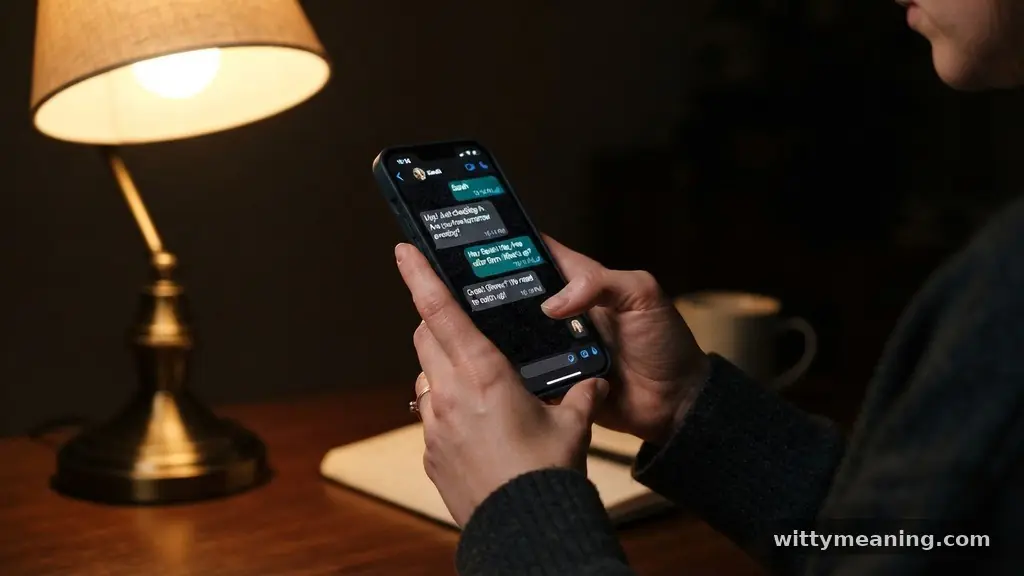
The most common interpretation of wb in modern digital discourse is “welcome back.” This is a quintessential example of how social media shorthand simplifies our daily interactions.
When a user has been away from a chat, a group, or even a platform for a significant period, their friends or peers often use this acronym as a casual, low-effort greeting. It acknowledges the person’s return without requiring a long-winded or formal “I am so happy to see that you have returned to this online space.”
Using this acronym in this context is almost always positive. It signals that the sender noticed your absence and is glad to see your status update or your presence in a group chat again.
It is particularly prevalent in gaming communities or on platforms like Discord, where users might jump in and out of voice channels or text threads frequently throughout the day. By using this shorthand, the sender maintains the casual, rapid-fire pace that defines most instant messaging today.
The Secondary Meaning: Write Back
Beyond the welcoming sentiment, wb is frequently used as a direct request for a response. In this iteration, it stands for “write back.” This is often employed when the sender is waiting for information, a confirmation, or simply wants to keep the momentum of a conversation going.
Unlike the “welcome back” usage, which is purely social and friendly, this version is functional and task-oriented. It serves as a nudge to the recipient to acknowledge the previous message.
This specific usage is common in fast-paced environments where people have dozens of notifications competing for their attention. If someone sends a question and you do not reply within a few minutes, they might follow up with a simple “wb?” to prompt you.
It is a way to say, “I am waiting for your input,” without sounding overly demanding or aggressive. It keeps the interaction light while clearly stating that a reply is expected.
Context Matters in Digital Communication
Because the acronym is ambiguous, the context of your chat is the only way to determine the intended meaning. If you have been offline for three hours and you open your phone to see a “wb” from a friend, they are almost certainly telling you they noticed you are back online. However, if you are in the middle of a heated debate or a planning session and the same person sends “wb,” they are likely asking for your input or a status update on the current topic.
Analyzing the timing of the message is a great way to decode the intent. If the message arrives shortly after you have been silent for a long stretch, assume it is a greeting. If it arrives immediately after you have sent a message that required an answer, it is a prompt for a reply.
Misinterpreting these cues is common, but because both meanings are relatively benign, even a minor misunderstanding rarely causes social friction. Most people will naturally clarify if their intent was misinterpreted by the recipient.
Usage Trends Across Social Media Platforms
Different platforms tend to foster different levels of formality, which influences how people use abbreviations. On Snapchat, for example, the culture is built around streaks and rapid, ephemeral photo exchanges.
Here, “wb” is almost exclusively used as a “welcome back” signal when someone returns to the app after a long period of inactivity. The platform’s interface encourages this type of quick, non-verbal acknowledgment of presence.
Conversely, on platforms like Twitter or LinkedIn, you are less likely to see this abbreviation used in a professional capacity. It is firmly rooted in informal language and personal social circles.
If you are communicating with a colleague or a client, it is usually safer to avoid these kinds of internet culture abbreviations. Using them in a professional context can sometimes be misinterpreted as being dismissive or unprofessional, regardless of your actual intent.
The Evolution of Gen Z Slang
It is helpful to view these acronyms as part of a broader shift in how younger generations approach text message analysis. Gen Z slang often prioritizes efficiency above all else. When you can convey a sentiment with two letters rather than ten, the digital native will almost always choose the shorter path.
This is not about laziness; it is about respecting the speed of the medium. Instant messaging is meant to be instant, and long sentences can sometimes feel like an obstacle to that speed.
This trend is not limited to just one or two acronyms. The entire landscape of digital communication is littered with these shortcuts.
From “rn” for “right now” to “tbh” for “to be honest,” these terms are designed to mimic the cadence of spoken speech. They allow the user to type at a speed that matches their thoughts, which is vital when you are juggling multiple conversations across several different apps simultaneously.
Common Variations and Related Terms

While “wb” is popular, it does not exist in a vacuum. It is often used alongside other chat abbreviations that serve similar functions.
Understanding the ecosystem of these terms helps you grasp the nuance of the conversation. For instance, if someone asks you to “wb,” they might also be using other shorthand to keep the conversation efficient.
Common Chat Abbreviations Table
| Acronym | Meaning | Typical Usage |
|---|---|---|
| WB | Welcome Back / Write Back | Greeting or prompt |
| RN | Right Now | Current status |
| TTYL | Talk To You Later | Ending a session |
| HMU | Hit Me Up | Requesting future contact |
| NVM | Never Mind | Retracting a previous point |
This table illustrates that “wb” is just one part of a larger, unspoken set of rules governing chat etiquette. When you master these terms, you are not just learning slang; you are learning the rhythm of modern digital interaction. It is about knowing which tools to use to keep the dialogue moving smoothly without unnecessary friction.
The Role of Reply Speed
The pressure to maintain a high reply speed is a major driver behind the adoption of abbreviations like “wb.” In a world of instant notifications, a delay in responding can sometimes be interpreted as a lack of interest.
By using shorthand, users can acknowledge a message instantly, even if they do not have the time to craft a lengthy or detailed response. It acts as a placeholder or a conversational anchor.
When someone sends a “wb” as a nudge for a reply, they are often expressing a need for closure on a specific topic. If you are someone who struggles with high volumes of messages, using these abbreviations can actually help you manage your inbox more effectively. A quick “wb” or “checking on this” can satisfy the other person’s need for a response while you gather the information you need to provide a more comprehensive answer later.
Navigating Potential Misunderstandings
While these acronyms are widely understood, they are not universal. An older user or someone less active on social media might genuinely not know what “wb” means in text.
If you use it with someone and they seem confused or offended, the best approach is to be direct and clear. You can simply say, “Oh, sorry, that’s just shorthand for welcome back.”
Most people will appreciate the clarification. The goal of using slang is to facilitate communication, not to create barriers. If the slang starts to get in the way of the message, it has lost its purpose.
Always gauge the technical literacy of the person you are talking to before relying heavily on obscure internet acronyms. Being adaptable in your communication style is the true mark of a skilled digital communicator.
Integrating Acronyms into Natural Speech
The best way to use these terms is to let them appear naturally. Do not force them into sentences where they do not fit. If you are having a deep or serious conversation, using “wb” might feel jarring or dismissive.
Save these shortcuts for light, casual, or rapid-fire exchanges where efficiency is the primary goal. You want your text messages to sound like you, not like a collection of internet buzzwords.
Think of these abbreviations as the “punctuation” of the digital age. Just as you use commas and periods to pace your writing, you use acronyms to pace your messaging.
They add a specific tone to your digital presence—one that is informal, accessible, and quick. When used correctly, they make you seem more in tune with the medium you are using, which can actually help strengthen your social connections.
Addressing Topical Gaps in Digital Slang
Many people look for a single, definitive definition for these terms, but as we have explored, that is rarely possible. One of the biggest gaps in current online resources is the lack of context-aware explanations.
Most sites simply list definitions without explaining the social mechanics behind why someone would choose to use one term over another in a specific scenario. By looking at the Urban Dictionary approach—which catalogs community-driven definitions—we see that these terms are living, breathing entities that change based on user intent.
The key takeaway is that these acronyms are tools. You are the architect of your own communication style. Whether you choose to use “wb” to welcome a friend back to a server or to nudge a colleague for a project update, the meaning is defined by the context you create.
Do not be afraid to experiment with how you communicate, but always keep the person on the other end of the screen in mind. Being understood is always more important than being trendy.
FAQ Section
What does wb mean in a gaming chat?
In gaming, wb almost exclusively means “welcome back.” It is a standard way to greet a player who has just rejoined a voice channel or returned to the game after being AFK (away from keyboard). It is a friendly, quick way to acknowledge their return without disrupting the flow of the game.
Is it rude to use wb as a prompt for a reply?
It depends on your relationship with the person. If you use it with a close friend to keep a conversation moving, it is generally not considered rude. However, using it with someone you do not know well or in a professional setting can come across as impatient or demanding.
Can wb mean anything other than welcome back or write back?
While those are the two primary meanings, acronyms can occasionally change based on niche communities. For example, in very specific technical or regional groups, it could potentially stand for something else entirely, such as a product name or a local organization. Always look at the surrounding context to be sure.
How do I know which meaning the sender intended?
Look at the timing and the preceding messages. If you have been gone, it is “welcome back.” If you have been silent after a question was asked, it is “write back.” If you are still unsure, a simple “Did you mean welcome back or write back?” is perfectly acceptable and clears up any confusion instantly.
Conclusion
Decoding modern shorthand like knowing what wb mean in text is a useful skill for navigating today’s fast-paced digital landscape. Whether it is being used as a friendly greeting after an absence or a gentle nudge to keep a conversation flowing, this acronym exemplifies the efficiency that defines our current era of communication. By paying attention to the context and the relationship you have with the person you are messaging, you can easily determine the intent behind these two simple letters.
Remember that digital communication is meant to be a bridge, not a barrier. Use these shortcuts to enhance your interactions, but do not hesitate to revert to full sentences if the situation calls for more clarity or a more personal touch.
Keep your messages authentic, stay mindful of your audience, and enjoy the ease of staying connected in the digital age. If you found this breakdown helpful, feel free to share it with friends who might also be curious about the ever-changing world of social media shorthand.