

When people encounter the term Nickelodeon in text, they are often navigating the intersection of cinema history and modern mass media. While most associate the word with the colorful television network, the actual linguistic roots trace back to the early days of the twentieth century.
Understanding the nickelodeon meaning in text requires stripping away decades of corporate branding to look at the specific etymology of a word that once defined the American movie-going experience. By exploring how this term evolved from a humble storefront theater concept into a global entertainment powerhouse, you gain a clearer perspective on how language adapts to shifting cultural landscapes.
The Etymology and Linguistic Structure of the Word
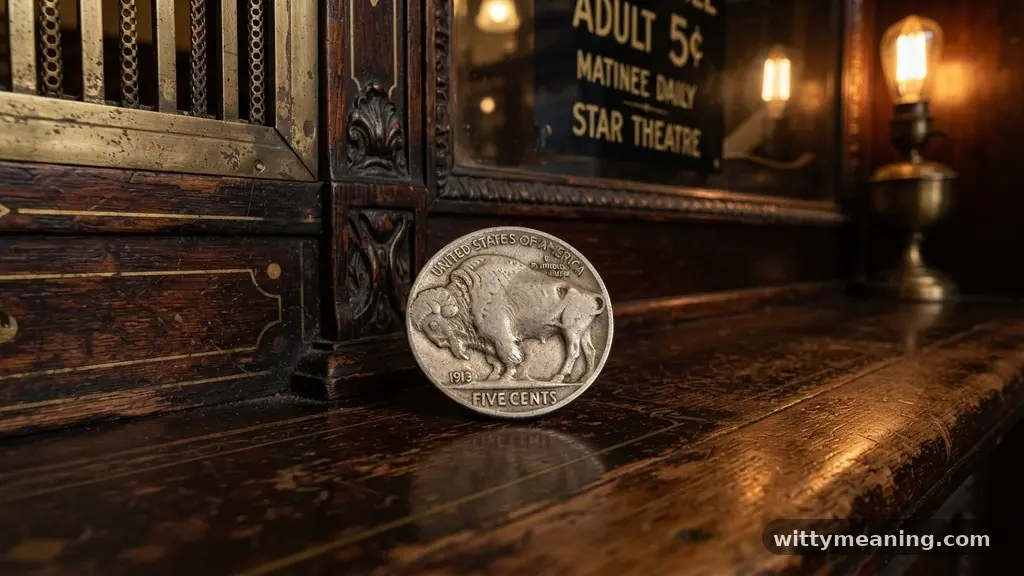
At its core, the term is a portmanteau, a linguistic blend that merges two distinct concepts into a single, functional word. When you break down the construction, it becomes clear that it was never meant to be a mysterious title, but rather a functional description of a business model. The word combines “nickel,” which refers to the five-cent coin, with “odeon,” a Greek term for a roofed theater or musical hall.
This combination served as a clever marketing tool during the early 1900s. By highlighting the price of entry directly in the name, operators communicated that their establishment was an accessible form of mass entertainment.
It was a direct appeal to the working class, promising that anyone with a spare nickel could enjoy the latest moving pictures. This linguistic transparency was a hallmark of early twentieth-century advertising, where the name of a business often functioned as its primary value proposition.
Origins of the Nickelodeon in Early American Cinema
The story of these theaters began in earnest in 1905, specifically in Pittsburgh, Pennsylvania. Two entrepreneurs, Harry Davis and John P. Harris, opened the first venue specifically designed to show silent films for a low price.
Before this, motion pictures were often relegated to side attractions in vaudeville houses or penny arcades. By creating a dedicated space, they fundamentally changed how the public interacted with film.
Admission was five cents per show, a price point that made cinema an affordable habit rather than a rare luxury. These storefront theaters were typically converted retail spaces, allowing them to pop up in dense urban areas where foot traffic was high.
The rapid spread of this business model across the United States marked the birth of the movie theater industry as we know it today. It transformed film from a technical curiosity into a staple of daily life.
Pittsburgh as the Birthplace of the Concept
The cultural impact of the Pittsburgh scene cannot be overstated. When Davis and Harris converted a vacant store into a theater, they weren’t just opening a business; they were setting a standard for the exhibition of silent film. The success of their venture was almost instantaneous, leading to a wave of imitators across the country.
Within a few years, thousands of these venues appeared in cities and towns nationwide. They were social hubs where immigrants and laborers could sit side-by-side to watch flickering images on a screen.
Because the films were silent, they required no common language, making them the perfect medium for a diverse, rapidly urbanizing population. This accessibility is a primary reason why the concept took hold so firmly in the American psyche.
Linguistic Misconceptions and Trivia
Despite the straightforward history, users often search for deeper, hidden meanings behind the name. You might encounter theories suggesting the word has mystical or ancient roots, but these are almost always linguistic misconceptions.
The reality is far more grounded in the economic landscape of the 1900s. The term was coined with a specific purpose: to tell the customer exactly what they were getting for their money.
Some trivia enthusiasts occasionally confuse the term with other Greek-derived words, but the “odeon” connection is the only one supported by historical records. It is a common human tendency to seek complexity in words that have become iconic, yet the beauty of this term lies in its simplicity. It represents a specific moment in time where technology, urban planning, and popular entertainment collided to create a new way of living.
Evolution from Cinema to Television
As the decades passed, the term moved away from physical architecture and toward the world of broadcasting. By the 1920s, the original storefront theaters began to disappear, replaced by larger, more opulent movie palaces. However, the name remained embedded in the cultural lexicon, eventually being adopted by the television network that launched in the late 1970s.
This transition highlights how words can be repurposed to fit new media formats. While the original theaters provided a physical space for community viewing, the television channel provided a virtual space for a specific demographic: children.
The brand adopted the name to evoke a sense of nostalgia and entertainment, bridging the gap between the silent film era and the digital age. This shift is a perfect example of how established entities leverage historical terms to build instant brand recognition.
The Economic Reality of Early Admission
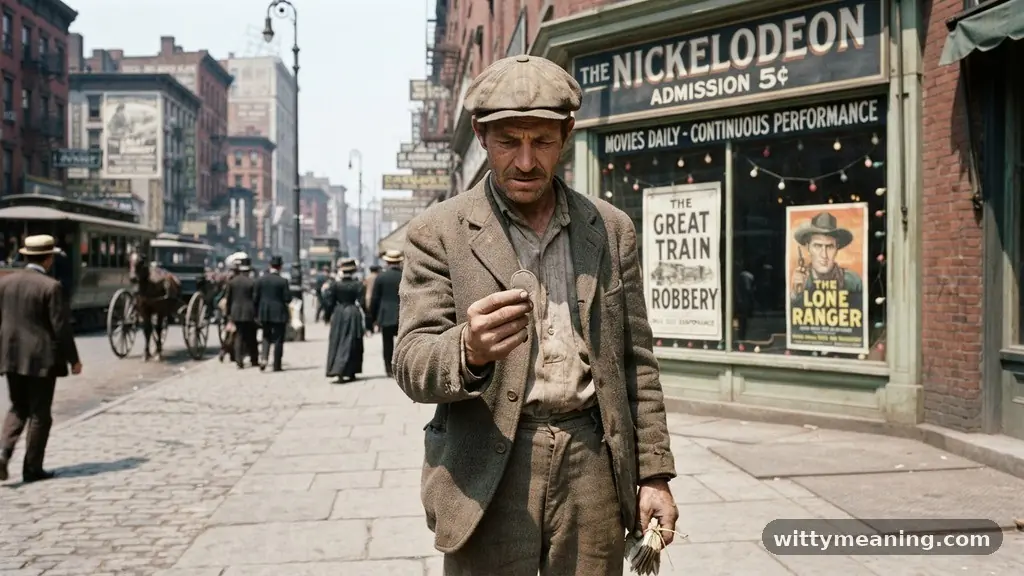
The price of five cents was not chosen randomly. At the time, a nickel was a significant but manageable sum for most city dwellers.
It was the cost of a newspaper or a cup of coffee, making it a low-risk investment for a few minutes of escapism. This pricing strategy was essential for the rapid growth of the industry.
| Aspect of Early Theaters | Historical Context |
|---|---|
| Primary Cost | Admission: Five cents per show |
| Typical Location | Converted storefront theater |
| Main Attraction | Silent film shorts |
| Target Audience | Working-class urban population |
This table outlines the basic operational structure that allowed these venues to flourish. By keeping costs low and turnover high, owners ensured a steady stream of revenue. It was a model of efficiency that prioritized volume over exclusivity, effectively democratizing the experience of watching stories unfold on a screen.
How the Term Functions in Modern Text
When you see the word used in modern writing, the context usually dictates whether the author is referring to the historical venue or the media brand. In academic or historical texts, it almost always points back to the early 1900s. In contemporary media analysis or casual conversation, it is shorthand for the children’s television network.
Understanding this duality is important for accurate interpretation. If you are reading a piece about early motion pictures from the Library of Congress, the context is clearly the storefront era.
If you are reading a critique of cable television programming, the meaning shifts entirely. Context clues—such as dates, references to silent films, or mentions of cartoons—will always clarify which version of the term is being invoked.
Addressing Common Misunderstandings
Many people mistakenly believe the term has a religious or ancient mythological origin. This is likely due to the “odeon” suffix, which does sound somewhat classical.
However, checking the etymology confirms that it was a purely practical coinage of the 20th century. It does not appear in the Bible, nor does it have roots in ancient liturgical texts.
It is helpful to view the word as a product of the industrial era. Just as terms like “telegraph” or “automobile” were created to describe new technologies, this word was created to describe a new way of consuming art.
It is a testament to the era’s ingenuity, not a relic of antiquity. Clearing up these myths helps maintain a grounded understanding of how media history actually unfolds.
The Social Impact of the Silent Film Era
These theaters were more than just businesses; they were melting pots. Because they were inexpensive, they were accessible to everyone, regardless of social status or language proficiency.
This helped foster a sense of shared culture in rapidly growing American cities. People from vastly different backgrounds could laugh at the same slapstick comedy or be moved by the same dramatic shorts.
This shared experience was crucial for social integration. It provided a common ground that didn’t require English fluency or deep knowledge of local customs. By providing a low-cost, high-engagement activity, the theaters played a silent but significant role in shaping the social fabric of early 20th-century urban life.
The Lasting Legacy of the Name
The endurance of the word is a fascinating study in brand longevity. Even though the original storefronts are long gone, the name continues to evoke a sense of playfulness and wonder. It has successfully traversed from a physical location to a cultural concept and finally to a corporate identity.
This journey shows how language is never static. Words take on the weight of the experiences we associate with them. For someone who grew up with the television channel, the word means nostalgia and childhood.
For a film historian, it means the birth of a global industry. Both meanings are valid, and both are tied to the same fundamental idea of entertainment being accessible and fun.
Frequently Asked Questions
What does the term mean in its original historical context?
In its original context, it refers to a small, inexpensive movie theater that charged a nickel for admission. These venues appeared in the early 1900s and were typically converted storefronts that played silent short films, making cinema accessible to the general public for the first time.
Is the name related to any ancient Greek or Latin words?
Yes, the term is a portmanteau that combines the English word “nickel” with the Greek word “odeon.” An odeon was an ancient building used for musical performances and poetry readings. The name was specifically chosen to evoke a sense of a musical or performance hall.
Why did the term eventually become associated with television?
The name was adopted by a children’s television network in the late 1970s to evoke feelings of nostalgia, fun, and entertainment. By borrowing a term associated with the origins of cinema, the network established a brand identity rooted in the history of visual storytelling and youth-oriented media.
Does the word have any hidden or secret meanings?
No, the word does not have any hidden, secret, or mystical meanings. It is a straightforward descriptive term created in the early 20th century to inform potential customers about the price of entry and the nature of the business, which was a theater for moving pictures.
Conclusion
The meaning of the term has evolved significantly from its inception in the early twentieth century to its current status as a global brand. By understanding that it was originally a clever portmanteau designed to signal affordability and accessibility, you can better appreciate the history behind the word. Whether you are studying the origins of cinema or simply reflecting on the evolution of media, the term serves as a bridge between the humble storefront theaters of the past and the digital entertainment of the present.
I hope this exploration has cleared up any confusion regarding the term’s history. If you found this breakdown of the nickelodeon meaning in text helpful, feel free to share your thoughts or continue exploring the fascinating history of early American cinema.