


Deciphering the sunnah meaning in text requires looking beyond a simple dictionary definition. At its core, the term refers to the habitual practices, social customs, and established ways of life associated with the Prophet Muhammad. When you encounter this word in religious literature, it serves as a blueprint for behavior, acting as the second primary source of Islamic law after the Quran.
Understanding how this concept functions helps clarify why these traditions hold such weight in daily life. By examining the context in which it appears, you gain a clearer picture of how ancient traditions remain relevant in modern settings.
The Linguistic and Technical Origins

The word itself carries a deep linguistic history that predates the emergence of Islam. In classical Arabic, it refers to a path, a way, or a habitual mode of conduct.
When scholars discuss the sunnah meaning in text, they are often distinguishing between its general usage—which might refer to any established habit—and its specific religious connotation. In the context of theology, it specifically denotes the path trodden by the Prophet, encompassing his entire lifestyle as a model for believers to emulate.
This distinction is vital because it separates the general idea of tradition from the authoritative precedent set by the Prophet. Scholars emphasize that it is not merely about mechanical imitation but about understanding the intent behind the actions.
When you see the term used in legal or ethical discussions, it is almost always referring to this normative model. It acts as a bridge, connecting the broad principles found in the Quran to the specific, actionable details of human behavior.
Differentiating Sunnah and Hadith
A common point of confusion for many readers is the relationship between these two terms. While they are often used interchangeably in casual conversation, they carry distinct technical meanings: one refers to the practice itself, while the other refers to the report of that practice. The Sunnah is the actual way of life, while the Hadith is the recorded narrative that preserves the details of that life.
Think of the Sunnah as the software and the Hadith as the documentation. You cannot have the documentation without the underlying system, and you cannot easily understand the system without the documentation.
When you read a text, the author might quote a Hadith to demonstrate a specific Sunnah in action. This relationship ensures that the teachings of the Prophet are preserved with high levels of scrutiny, as each report must be verified through rigorous chains of transmission.
Categories of Prophetic Practice
To understand the scope of these traditions, it helps to categorize them based on their nature. These categories often appear in scholarly texts to help readers determine the gravity and context of a specific action. The classification generally looks at the source of the behavior, whether it was a verbal instruction, a physical deed, or a silent approval of someone else’s action.
- Qawl (Speech): This covers the verbal teachings and instructions provided by the Prophet on various matters of faith and ethics.
- Fi’l (Action): These are the specific deeds performed by the Prophet, such as the way he prayed, performed ablution, or interacted with his family.
- Taqrir (Silent Approval): This category includes actions performed by his companions that he witnessed and did not forbid, effectively granting his tacit consent.
These classifications help clarify the sunnah meaning in text by providing a framework for how different behaviors are prioritized. By looking at these categories, one can see that not all actions hold the same legal weight, yet all contribute to the overall character of the prophetic model.
Sunnah Mu’akkadah and Ghayr Mu’akkadah
Within the study of Islamic jurisprudence, there is a further distinction regarding the emphasis placed on certain practices. You will often encounter the terms Sunnah Mu’akkadah and Sunnah Ghayr Mu’akkadah when reading about ritual life. These classifications help believers understand which practices were performed consistently and which were done occasionally.
Sunnah Mu’akkadah refers to those acts that were performed consistently by the Prophet and are highly encouraged for followers. These are seen as essential components of a well-rounded spiritual life. On the other hand, Sunnah Ghayr Mu’akkadah refers to practices that were performed less frequently or are considered supererogatory.
Engaging in these is seen as an act of devotion, but they do not carry the same level of communal expectation. Distinguishing between them allows for a balanced approach to faith, where the most important habits are prioritized without overwhelming the individual.
Practical Examples in Daily Life
The beauty of the prophetic model lies in its integration into the mundane moments of the day. When you look for the sunnah meaning in text, you find that it is not restricted to grand gestures or complex rituals.
Instead, it encompasses simple, human actions that foster mindfulness and connection. These habits are intended to turn everyday tasks into meaningful moments of reflection.
| Area of Life | Prophetic Practice | Significance |
|---|---|---|
| Personal Hygiene | Washing hands and teeth | Promotes physical and spiritual purity |
| Dining | Eating with the right hand | Encourages mindfulness and etiquette |
| Social Interaction | Greeting others with peace | Fosters community and goodwill |
| Sleep | Sleeping on the right side | Aligns daily rest with traditional habits |
These examples illustrate how the concept is meant to be lived, not just studied. Whether it is entering the home with a greeting or maintaining personal hygiene, these small acts are designed to anchor the individual in a state of awareness. By integrating these small, habitual actions into their lives, believers create a rhythm that connects their modern reality to a historical tradition.
The Role of the Quran in Contextualization
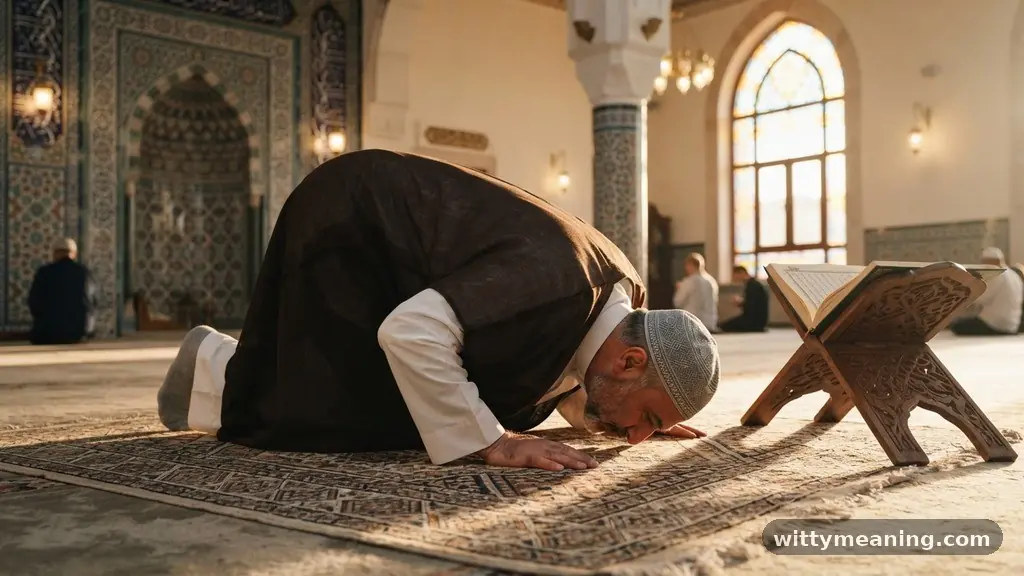
You cannot fully grasp the weight of these traditions without acknowledging their relationship with the Quran. The Quran provides the overarching principles, while the prophetic practice provides the detailed methodology for implementing those principles. In many instances, the text of the Quran commands a specific action, such as prayer, but does not detail the specific movements or timings.
It is here that the prophetic tradition becomes essential. It fills the gaps, providing the “how-to” that turns a divine command into a practical, repeatable ritual. This relationship is often described as the Sunnah explaining the Quran.
Without this interpretive layer, many of the core tenets of the faith would lack the specific structure required for consistent practice. This synergy between the two sources is a fundamental aspect of Islamic theology, ensuring that the faith remains both grounded in revelation and practical in application.
Social Ethics and Interpersonal Conduct
Beyond rituals, a significant portion of these traditions focuses on character and social interaction. When you examine the sunnah meaning in text regarding social behavior, you find a heavy emphasis on kindness to neighbors, fairness in business dealings, and the importance of honesty. These teachings are not just abstract ideals; they are practical strategies for maintaining a healthy and functional community.
The Prophet’s approach to social life was characterized by a balance between rights and responsibilities. He taught that one’s faith is incomplete without considering the well-being of others.
Whether it was the way he spoke to the elderly, his patience with children, or his integrity in trade, these narratives provide a template for ethical conduct. By observing these standards, individuals contribute to a culture of trust and mutual respect, which is just as vital to the tradition as the more formal acts of worship.
Maintaining Personal Hygiene and Wellness
One of the most accessible areas where this tradition manifests is in the realm of personal health and cleanliness. The emphasis on hygiene is not merely for physical comfort but is treated as a matter of spiritual discipline. Practices such as keeping the body clean, maintaining oral health, and ensuring one’s environment is tidy are all part of a broader commitment to self-care.
When you read about these habits, they are often framed as a way to respect the body as a gift. This perspective shifts the act of brushing one’s teeth or washing one’s face from a mundane chore to a conscious act of gratitude.
It is a reminder that the sacred and the secular are not as divided as they might seem. By treating the body with care, the individual honors the principles of the faith in a very tangible way.
Entering the Home and Daily Transitions
The transitions between public and private life are moments of great significance in this tradition. There are specific guidelines for entering the home, such as offering a greeting and being mindful of one’s family. These practices serve as a buffer, helping to leave the stresses of the outside world behind and focusing on the sanctity of the domestic space.
Similarly, there are habits associated with the end of the day, such as the prayers said before sleeping. These actions are designed to help the individual transition into a state of rest with a calm mind.
By following these established ways of transitioning, one creates a sense of stability and peace in their daily routine. It is another clear example of how these ancient practices are designed to support the psychological and spiritual well-being of the practitioner.
Addressing Misconceptions and Nuance
There are often misconceptions regarding how these traditions should be applied in a contemporary setting. Some assume that it requires a rigid, literal adherence to every single detail of the Prophet’s life, ignoring the context of the 7th century. However, scholars often emphasize the importance of distinguishing between the essence of an act and its historical form.
For instance, the Prophet traveled by camel because that was the available mode of transport. The essence of the practice is not the camel itself, but the spirit of travel, the etiquette of the journey, and the intention behind it. Understanding the sunnah meaning in text involves separating the variable, cultural elements from the constant, moral principles.
This nuance allows the tradition to remain flexible and relevant in any era, ensuring that it remains a source of guidance rather than a burden of historical imitation. For those interested in a deeper, academic look at these nuances, the Oxford Islamic Studies Online provides extensive resources on the history and interpretation of these texts.
FAQ Section
What is the simplest way to understand Sunnah?
The simplest way to understand it is as the lifestyle, habits, and established practices of the Prophet Muhammad. It serves as a practical model for how to live, acting as a secondary source of guidance that complements the principles found in the Quran.
How does Sunnah differ from a Hadith?
The Sunnah is the actual practice or the way of life itself. The Hadith is the written report or narrative that records these practices. You can think of the Sunnah as the action and the Hadith as the documentation that tells us about that action.
Is it mandatory to follow every Sunnah?
Not all practices are mandatory. Scholars classify them into different levels, such as highly recommended (Mu’akkadah) and optional (Ghayr Mu’akkadah). The mandatory aspects of the faith are generally derived from the Quran, while these traditions provide the structure and the extra layers of spiritual practice.
Can these traditions be applied today?
Yes, they are intended to be applied in any era. The key is to focus on the underlying moral and ethical principles of the actions rather than just the historical form. By understanding the intent behind the practice, it remains relevant to modern life.
Conclusion
The sunnah meaning in text is a doorway into a deeper understanding of a tradition that balances divine guidance with practical, everyday behavior. By viewing these practices as a roadmap for character development and spiritual mindfulness, you can see how they bridge the gap between ancient wisdom and contemporary living. It is not about perfect, mechanical replication of the past, but about internalizing the values of kindness, integrity, and reflection that the Prophet embodied.
As you continue to explore these traditions, focus on the small, manageable habits that resonate with your daily routine. Whether it is improving your social etiquette or finding more intention in your personal hygiene, these acts can provide a sense of continuity and purpose.
Engaging with these teachings is a personal journey, one that invites you to bring more balance and awareness into your own life. Feel free to explore more of these concepts as you deepen your understanding of how these timeless practices can shape your character today.