
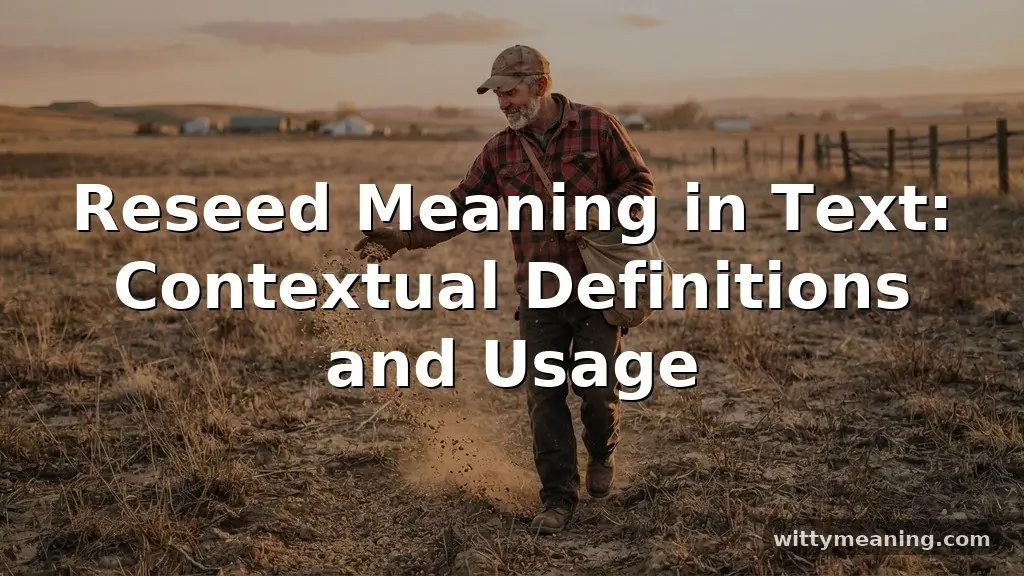

The term reseed meaning in text often leaves readers confused because its definition shifts dramatically depending on the environment in which it is used. At its most literal level, the word implies planting seeds again in a field that failed to sprout or was harvested.
However, as language evolves, this term has migrated into the digital landscape, where it describes the process of refreshing connections, restarting data transfers, or even metaphorically resetting a narrative. Understanding this concept requires looking at how a word can span from physical soil cultivation to the complex architecture of peer-to-peer networks.
Agricultural and Biological Roots
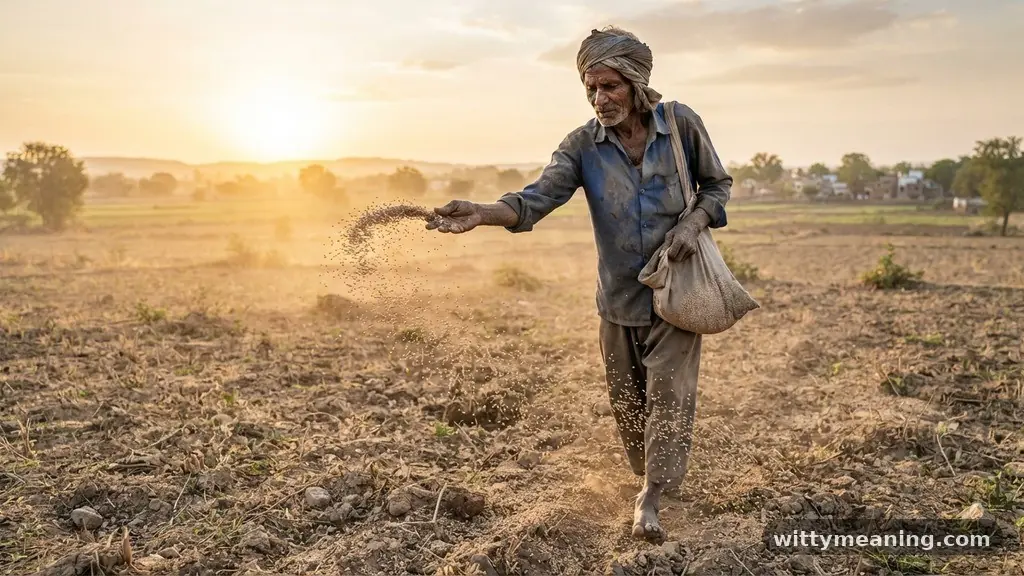
To grasp the foundational reseed meaning in text, one must look at the traditional agricultural practice. In farming, reseeding is the process of sowing seeds over an area where the initial crop failed to take root or where the vegetation has become sparse. This is not merely an act of repetition but a calculated intervention based on environmental assessment.
When a farmer chooses to reseed, they are acknowledging that the primary attempt was insufficient—perhaps due to poor soil quality, lack of moisture, or pest interference. By introducing new seeds into the existing environment, the farmer aims to stabilize the ecosystem and ensure a successful yield.
This biological origin provides a powerful metaphor for human language. When we use the term in a non-agricultural context, we often imply a second chance or a “do-over.” Just as a patch of grass might be reseeded to fill a bald spot in a lawn, a project or a conversation might be reseeded with fresh ideas to revitalize it.
This nuance is essential for interpreting the word correctly when it appears in literature, business correspondence, or casual messaging. It signifies a restorative action intended to bring life back to a system that has stalled or lost its initial momentum.
Digital Data and Peer-to-Peer Networks
In the modern era, the most common technical application of the term relates to digital data transfer. If you encounter the phrase while browsing forums or tech-centric websites, it almost certainly refers to BitTorrent or similar file-sharing protocols. In these systems, a “seed” is a user who possesses a complete copy of a file and allows others to download segments of it from their computer.
When a file has no seeds, it becomes “dead,” meaning the data is no longer accessible to the network. To “reseed” a file is to bring it back to life.
This happens when a user who previously downloaded the file notices that the torrent has stalled because there are no available sources. By keeping their client open and re-uploading the data, they act as a new source, effectively “reseeding” the content for the community. This specific reseed meaning in text is crucial for digital preservationists.
Without this process, vast amounts of niche digital information would vanish as soon as the original uploader went offline. It is a collaborative act of maintenance, transforming the user from a passive consumer into an active infrastructure provider for the network.
Narrative Arcs: In Storytelling
Beyond the technical and physical realms, writers and editors often employ the concept of reseeding as a structural tool. In literature and screenwriting, revisiting foundational ideas is a common technique used to strengthen the emotional resonance of a story. When a creator “reseeds” a theme or a plot point, they are intentionally reintroducing an element established earlier in the narrative to prepare the audience for a major climax or resolution.
Consider a mystery novel where a specific, seemingly minor detail—perhaps a particular type of flower or a specific habit of a character—is mentioned in the first chapter. If the author mentions this detail again in the middle of the book, they are reseeding the information to ensure it remains fresh in the reader’s memory. This is a subtle manipulation of the audience’s attention.
By the time the final reveal occurs, the reader feels a sense of satisfaction because the “seed” was planted, withered, and then nurtured back into the narrative. This usage highlights the versatility of the term, showing how it can function as a literary device to create coherence and depth in complex storytelling.
Synonyms and Related Concepts
When searching for the reseed meaning in text, it is often helpful to look at how the word compares to other terms in the English language. Depending on the context, consider these alternatives: if you are discussing agriculture, “oversowing” or “replanting” are the most accurate substitutes.
In the digital world, you might use “re-uploading,” “seeding,” or “refreshing the source.” These synonyms help clarify the intent behind the action, as the word “reseed” can sometimes be ambiguous without a clear subject.
| Context | Primary Meaning | Common Synonym |
|---|---|---|
| Agriculture | Re-planting vegetation | Oversowing |
| Digital Networks | Restoring file availability | Re-uploading |
| Project Management | Restarting a stalled process | Re-initiating |
| Narrative Writing | Reintroducing a theme | Recalling |
Using the correct synonym can prevent confusion in professional settings. For instance, if you tell a software developer that you need to “reseed” a database, they will interpret this as a technical task involving the re-population of dummy data or the re-initialization of a primary key.
If you tell a gardener you need to “reseed” the database, they will likely be confused. Context is the primary filter through which this word must be processed.
Technical Distinctions in Databases

In the world of information technology, specifically concerning SQL and relational databases, reseeding carries a very specific, technical weight. When a primary key (often an auto-incrementing integer) reaches its limit or needs to be reset for testing purposes, developers often perform a “reseed” operation. This process resets the counter for the identity column, essentially telling the database to start counting from one (or any specified number) again.
This is a critical maintenance task. Without the ability to reseed an identity column, developers would be forced to delete and recreate entire tables to clear out test data, which is inefficient and potentially dangerous in a production environment. Understanding the reseed meaning in text in this context involves recognizing that it is an administrative command.
It is a way of clearing the slate while maintaining the structure of the data. This technical usage demonstrates how language evolves from simple physical acts to abstract operations that govern the way our digital world functions behind the scenes.
Addressing Topical Gaps
A common gap in existing explanations of this term is the failure to distinguish between “seeding” and “reseeding” in interpersonal or social dynamics. While the term is rarely used in casual conversation, it is increasingly appearing in modern jargon related to community building and social media management. In these circles, to “reseed” a community might mean to bring in a new group of core members to revitalize a dying forum or group chat.
If a group has become stagnant or toxic, adding new, active participants (the “seeds”) can shift the culture. This is an area where the term is used more as a metaphor for social engineering.
By adding new life to a static group, the “reseed” functions as a catalyst for change. This usage is distinct from the digital data definition, yet it shares the same underlying logic: identifying a system that is no longer functioning as intended and introducing new elements to restore its original purpose or functionality.
The Evolution of Language
Why does a single word span such disparate fields as farming, computer science, and creative writing? The answer lies in the human tendency to use metaphors based on natural processes to describe complex, artificial systems.
The reseed meaning in text is a classic example of linguistic drift. We take a concept that is universally understood—the idea that something must be planted to grow—and we apply it to everything from digital files to social groups.
This evolution is not accidental. By calling a digital process “reseeding,” we instantly convey the nature of the task. We imply that the data is not being created from scratch, but rather that a previous version existed, was lost, and is now being restored.
It is an efficient shorthand. As our technology becomes more complex, our language often reaches back to simpler, organic concepts to make sense of that complexity. This ensures that even the most technical jargon remains tethered to the physical reality of our world, making it easier for new users to conceptualize abstract systems.
Practical Application and Usage Tips
If you are writing content and considering using the word “reseed,” there are a few best practices to ensure your audience understands your intent. First, always provide context. If you are writing about technology, ensure your surrounding sentences mention servers, protocols, or data packets.
If you are writing about gardening, ensure you mention soil, seeds, or seasonal timing. Because the word is so context-dependent, relying on it without clear signposts can lead to reader frustration.
- Clarify the domain immediately: Start the sentence by explicitly mentioning the field (e.g., “In a database environment, to reseed means…”)
- Use modifiers: Words like “data,” “field,” “narrative,” or “community” help anchor the meaning.
- Avoid jargon where possible: If you are writing for a general audience, consider using a more descriptive phrase like “re-initiating the process” or “planting new seeds” if the metaphor is clear.
- Check for ambiguity: If you suspect a reader might misinterpret the word, add a parenthetical definition to bridge the gap.
By following these simple rules, you can use the word effectively without worrying that your message will be lost in translation. Good writing is all about managing the reader’s expectations, and when using a versatile term like this, clear expectations are paramount.
Future Trends in Usage
As we move further into an era defined by artificial intelligence and automated systems, the reseed meaning in text is likely to continue evolving. We are already seeing the term used in machine learning, where “reseeding” a model might refer to resetting the random seed of an algorithm to achieve different, or more reproducible, results. This is a fascinating development, as it brings the term into the realm of probability and mathematical modeling.
Furthermore, as digital preservation becomes a more pressing concern, the term “reseed” will likely become more common in the public lexicon. With the constant risk of digital decay and the loss of historical online data, the act of “reseeding” archives will become a standard practice for institutions and hobbyists alike.
The word is transforming from a niche technical term into a broader concept that describes our collective responsibility to maintain the integrity of our digital heritage. It is a powerful word that captures the human desire to preserve, restore, and nurture, regardless of the medium.
FAQ
What does “reseed” mean in a digital context?
In digital networks, particularly with peer-to-peer file sharing, to reseed means to provide a file that has become unavailable because the original sources have gone offline. A user with the file initiates a new upload, allowing others to download the data and restore its availability to the network.
Is “reseed” a common term in everyday conversation?
No, “reseed” is generally not used in casual, daily conversation. It is a specialized term primarily found in agriculture, computer science, and database management. Outside of these fields, people might use it metaphorically, but they usually provide context to ensure the listener understands the intended meaning.
How does reseeding work in a database?
In a database, reseeding refers to resetting the identity column or the primary key counter. This is typically done to reset a sequence of numbers, such as changing the next auto-incrementing ID back to 1, which is useful for cleaning out test data or restarting a data collection process.
What is the difference between seeding and reseeding?
Seeding is the initial act of making data or plants available. Reseeding is the secondary act of performing that same task again, usually because the first attempt failed or the resources were lost. Reseeding implies a corrective or restorative action that follows a previous, incomplete effort.
Conclusion
The reseed meaning in text is a testament to the flexibility of language. Whether it is used in the literal sense of planting crops, the technical sense of restoring file availability, or the metaphorical sense of refreshing a narrative, the core concept remains the same: the act of restoring something that has been lost or stalled.
By understanding the agricultural roots, the digital applications, and the narrative nuances of this term, you can navigate its usage across various professional and creative landscapes with confidence. As we continue to build and manage increasingly complex systems, the ability to “reseed”—to bring life and functionality back to our projects—will remain a vital skill in our collective toolkit.