
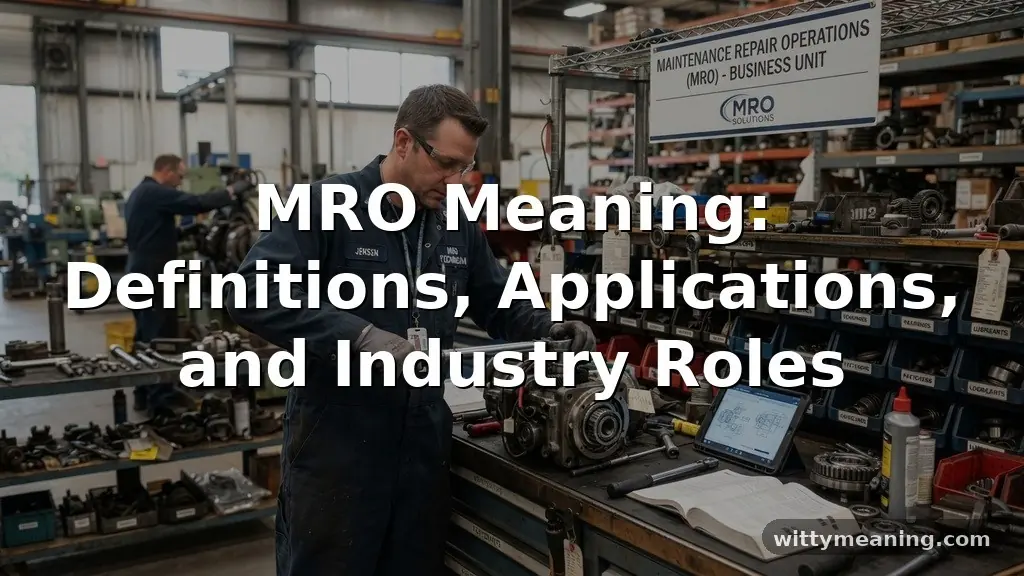

When you encounter the term in a professional setting, the mro meaning often shifts depending on whether you are standing on a factory floor, sitting in a cockpit, or reviewing a laboratory report. At its core, the acronym typically stands for maintenance, repair, and operations, serving as a foundational concept in supply chain management.
Understanding these three pillars helps businesses keep their physical assets running without unnecessary interruptions. Whether you are dealing with office supplies or heavy machinery, these items are the invisible gears that keep the engine of industry turning every single day.
Beyond the industrial context, the acronym takes on a distinct role in healthcare as a medical review officer. This professional is pivotal in ensuring drug testing compliance and interpreting results within a legal and ethical framework.
Because the context determines the definition, clarifying whether you are discussing indirect procurement or workplace safety protocols is the first step toward true understanding. This article breaks down these diverse applications to ensure you know exactly how the term applies to your specific field of work.
Maintenance, Repair, and Operations in Business
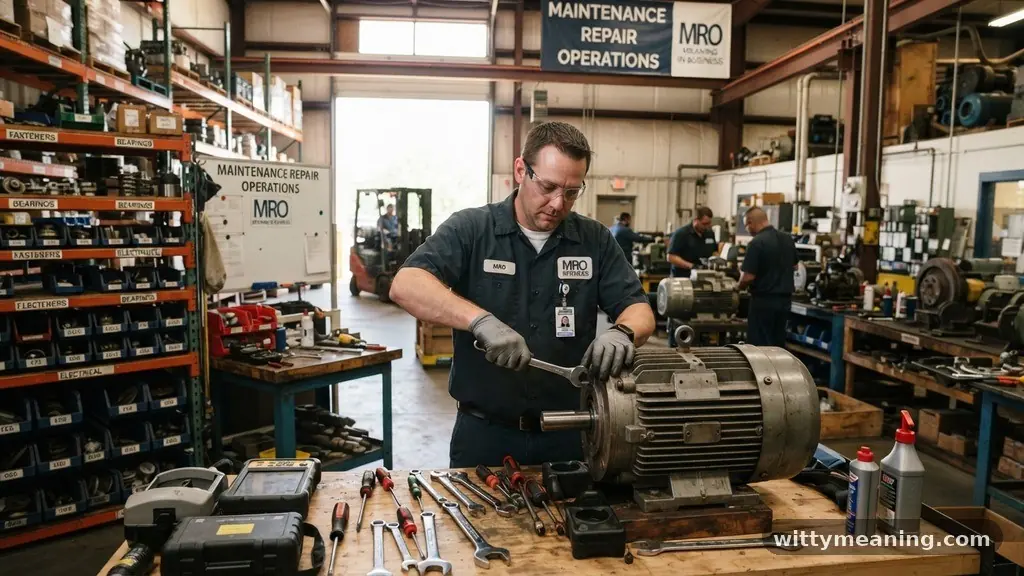
In the world of manufacturing and large-scale business, the maintenance, repair, and operations definition refers to all the items and services required to keep a company functioning that aren’t part of the final product itself. These are often categorized as indirect procurement because they don’t go directly into the goods being sold to customers. Instead, they support the infrastructure that makes production possible.
Think of it as the support system for your primary business model. If you run a high-tech manufacturing plant, your primary components are the raw materials that become computers.
Your MRO items, however, are the lubricants for the conveyor belts, the lightbulbs in the warehouse, and the safety goggles worn by the staff. Without these consumables, the production line would grind to a halt, leading to significant operational downtime.
Managing these items effectively is a balancing act. If you hold too much inventory, you tie up capital that could be used elsewhere.
If you hold too little, you risk a shortage of a critical spare part that could idle your entire facility. This is why inventory control and efficient procurement lifecycle management are so vital to keeping overhead costs low while maintaining high output.
The Role of MRO in Supply Chain Management
Within supply chain management, the procurement of non-production items is often overlooked, yet it accounts for a surprising percentage of total expenditure. Many organizations treat these purchases as an afterthought, leading to fragmented buying habits and high total cost of ownership. By centralizing these purchases, firms can negotiate better rates with vendors and reduce the administrative burden on their staff.
Effective vendor management is essential here. Because there are so many different types of items—from janitorial supplies to specialized electrical components—you often deal with a vast array of suppliers.
Consolidating these relationships helps ensure that you aren’t paying a premium for everyday items. Furthermore, having a clear strategy for MRO purchasing allows for better forecasting of future needs.
When you analyze the flow of goods, you start to see that these items are not just expenses; they are strategic assets. A well-managed supply chain treats these pieces as part of a larger ecosystem.
This includes tracking usage rates, automating reorder points via MRO software, and auditing the quality of the goods received. When done correctly, this approach prevents the “emergency purchase” syndrome, where a company pays double for a part because it was needed yesterday.
What Defines a Medical Review Officer
When you shift gears to the healthcare and legal sectors, the medical review officer—often abbreviated as MRO—is a licensed physician who plays a critical role in the integrity of drug testing. Their primary responsibility is to act as an independent gatekeeper between the laboratory that analyzes the samples and the employer who requested the test. They ensure that the process remains fair and that results are interpreted through a lens of medical expertise.
This role is vital for maintaining workplace safety and adhering to strict federal or state regulatory standards. For example, if a donor tests positive for a controlled substance, the officer contacts the individual to discuss the findings. They investigate whether there is a legitimate medical explanation, such as a valid prescription, for the presence of the substance in the donor’s system.
This process protects the privacy of the individual while providing the employer with a verified, actionable result. Without this oversight, false positives could lead to wrongful terminations and significant legal liabilities. The officer acts as the final arbiter, reconciling the laboratory data with the donor’s medical history to reach a definitive conclusion.
MRO in Aviation and Aeronautical Engineering
In the aerospace industry, the mro meaning takes on a highly technical and rigorous form. Here, it refers to the specialized processes required to maintain the airworthiness of an aircraft. Aviation maintenance is not just about fixing things when they break; it is a highly regulated, schedule-driven discipline that ensures planes remain safe for flight.
The work involves everything from routine inspections to major structural overhauls. Every action must be documented in meticulous technical documentation to satisfy aviation authorities.
This is where aeronautical engineering meets hands-on labor. Mechanics and engineers work in tandem to ensure that every bolt, wire, and turbine meets the precise specifications set by the original equipment manufacturer.
Managing the logistics for these operations is incredibly complex. Airlines need to source high-quality spare parts that are certified as airworthy, often through complex global supply chains.
A delay in receiving a specific component can result in a grounded aircraft, costing the airline thousands of dollars every hour. Therefore, the efficiency of the maintenance department is directly tied to the airline’s bottom line.
Operational Efficiency and Facility Management
Regardless of the industry, the core goal of managing these resources is to drive operational efficiency. In facility management, this means ensuring that the building itself—the HVAC systems, the security infrastructure, and the office utilities—operates at peak performance. If the facility is poorly managed, the people inside cannot perform their roles effectively.
Good management involves a proactive stance. Instead of waiting for a pipe to burst or a cooling system to fail, facility managers use predictive maintenance techniques. By monitoring the health of equipment through sensors and regular audits, they can schedule repairs during off-hours, minimizing disruption to the business.
This level of detail requires a strong grasp of both the physical plant and the digital tools available to track it. Modern facility management teams often rely on integrated software platforms to manage work orders, track assets, and monitor energy consumption. These tools provide the visibility needed to make data-driven decisions about when to repair or replace aging infrastructure.
The Importance of Workplace Safety
One of the most critical aspects of managing these supplies is ensuring workplace safety. Many items categorized under the MRO umbrella are essential for protecting employees from harm.
This includes personal protective equipment (PPE), hazard signage, spill containment kits, and ergonomic tools. If these items are missing or of poor quality, the risk of accidents increases significantly.
Maintaining a safe environment is not just an ethical requirement; it is a legal one. Organizations that fail to provide adequate safety equipment can face severe penalties and, more importantly, put their workers in danger. A robust MRO program ensures that these safety items are always in stock and that employees know how to use them correctly.
Furthermore, the quality of these items matters. A cheap pair of safety glasses might meet the bare minimum requirements, but they might not provide the comfort or durability needed for daily wear. Investing in high-quality safety gear often leads to better compliance, as employees are more likely to wear equipment that is comfortable and effective.
Procurement Lifecycle and Inventory Control
The procurement lifecycle for these goods involves several stages: identification of need, sourcing, purchasing, receiving, and managing the inventory. Many organizations fail because they treat these as disconnected tasks rather than a continuous loop. For instance, if the person ordering the parts doesn’t talk to the person maintaining the equipment, you end up with the wrong items sitting on a shelf gathering dust.
Effective inventory control requires a clear understanding of the consumption rate for every item. You should know exactly how many boxes of gloves or how many gallons of coolant you go through in a month. This data allows you to set reorder points that trigger automated purchases, ensuring you never run out of critical supplies.
Another challenge is the management of obsolete inventory. Over time, machines are replaced or processes change, leaving behind spare parts that are no longer useful. A well-run organization regularly audits its stock to identify these items and either returns them, sells them, or writes them off, freeing up valuable storage space and capital.
Comparing MRO Across Different Sectors
The definition of MRO changes depending on the environment, as shown in the table below. Understanding these differences is key to effective communication in a professional setting.
| Sector | Primary Focus | Key Assets |
|---|---|---|
| Manufacturing | Operational Continuity | Lubricants, Spare Parts, PPE |
| Aviation | Safety and Compliance | Certified Components, Tools |
| Healthcare/HR | Testing Integrity | Lab Results, Medical Records |
| Facilities | Infrastructure Health | HVAC, Cleaning Supplies, Lighting |
Each of these sectors approaches the management of these resources differently, yet they all share a common goal: ensuring that the essential support systems are available when needed. Whether you are dealing with a jet engine or a drug test result, the focus is on accuracy, timing, and reliability.
Common Challenges in Procurement
One of the biggest hurdles in managing these supplies is the “hidden cost.” Because these items are often low-cost individually, organizations may not track them as closely as they track raw materials.
However, the cumulative cost of thousands of small, unmanaged purchases can be astronomical. This is often referred to as “maverick spending,” where employees purchase items from non-approved vendors at higher prices.
Another challenge is the fragmentation of data. If the purchasing team uses one system, the maintenance team uses another, and the finance department uses a third, it is nearly impossible to get a clear picture of what is being spent. Integrating these systems is a major step toward better business logistics.
Finally, there is the challenge of finding reliable technical support. When a piece of equipment goes down, you don’t just need the part; you need the expertise to install it correctly. Many vendors now offer bundled services where they provide both the hardware and the technical know-how, which can be a massive benefit for smaller companies that lack specialized in-house staff.
Strategies for Improvement
To optimize your MRO processes, you should start by auditing your current spending. Identify the top 20% of items that account for 80% of your costs. Focus your negotiation efforts there, as even small percentage savings on high-volume items can lead to significant bottom-line improvements.
Another effective strategy is to implement a VMI (Vendor Managed Inventory) program. In this arrangement, the supplier takes responsibility for maintaining the stock levels of specific items at your facility. This shifts the burden of inventory management to the vendor, who has better visibility into the supply chain and can prevent stockouts more effectively.
Lastly, emphasize training. Even the best software and the most high-quality parts will fail if the people using them aren’t trained properly.
Invest in regular workshops for your maintenance and procurement teams. You can find more information on standardized practices through the Institute for Supply Management, which provides resources for professionals looking to improve their procurement operations.
Frequently Asked Questions
What is the primary role of an MRO in a company?
The primary role is to manage the procurement and maintenance of non-production items, such as tools, spare parts, and office supplies. This ensures that the business can maintain continuous operations without experiencing downtime due to missing equipment or supplies.
How does an MRO function in drug testing?
In the context of drug testing, an MRO is a licensed physician who reviews laboratory results. They verify that the test results are accurate and investigate if there is a legitimate medical explanation, such as a prescription, for any positive result before reporting it to the employer.
Why is inventory control important for MRO items?
Effective inventory control prevents overstocking, which ties up cash, and understocking, which leads to production delays. By tracking usage rates and automating reorder points, businesses can ensure they have the right parts at the right time while minimizing the total cost of ownership.
Does MRO differ between industries?
Yes, the definition varies significantly. In manufacturing, it focuses on industrial supplies and machine maintenance. In aviation, it refers to specialized, safety-regulated aircraft repairs. In healthcare, it refers to a medical professional overseeing compliance. The context always dictates the specific meaning of the term.
Conclusion
Grasping the mro meaning requires looking past the simple acronym to see the complex functions it represents across different industries. Whether you are optimizing a supply chain to reduce operational downtime, ensuring the safety of workers with the right protective gear, or relying on a medical officer to maintain testing integrity, these processes are essential for a functional, safe, and efficient organization. The key is to recognize which definition applies to your situation and apply the appropriate management strategies to support your goals.
By focusing on centralized procurement, better inventory control, and clear communication between departments, you can turn these support functions into a genuine competitive advantage. Take the time to audit your current processes, identify your most critical needs, and consider how better software or vendor partnerships could streamline your operations. Staying informed and proactive is the best way to ensure that the behind-the-scenes work of your organization continues to run smoothly.