
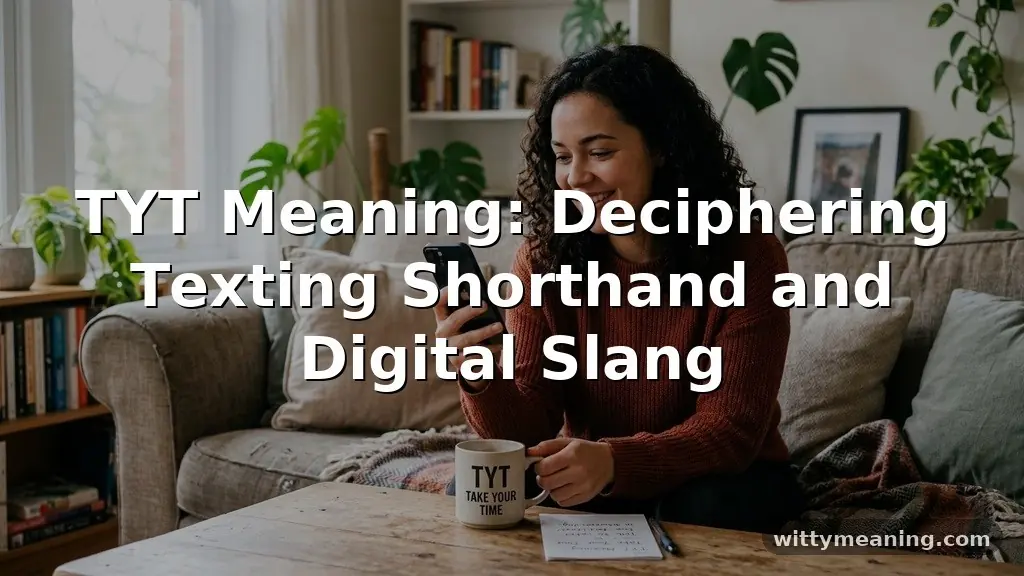

If you have ever stared at a screen trying to figure out what a mysterious three-letter acronym stands for, you are not alone. Navigating the world of digital communication often feels like learning a second language, especially when acronyms like TYT pop up in your inbox or feed. While the tyt meaning usually points toward a simple request for patience, it can occasionally signal something entirely different depending on who is typing and where the conversation is taking place.
Understanding these nuances helps prevent awkward misunderstandings and keeps your online interactions smooth. Let’s break down how this shorthand functions across various platforms and social circles.
Common Interpretations of TYT in Modern Messaging

The most frequent way people use this acronym is as a shorthand for “take your time.” It acts as a polite buffer in fast-paced text messaging environments, letting the recipient know that there is no immediate pressure to respond.
When someone sends this, they are effectively removing the anxiety of a delayed reply. It is a hallmark of casual, low-pressure digital communication where the sender wants to maintain a friendly rapport without forcing an instant back-and-forth.
You will often see it used when a friend asks a question that requires a bit of thought or effort. Instead of leaving the conversation hanging, the sender provides an immediate acknowledgement followed by the reassurance that the answer can wait.
This simple phrase helps manage expectations, especially when you are multitasking or dealing with a busy schedule. By signaling that the response does not need to be rushed, the sender fosters a more relaxed and comfortable interaction style.
The Role of Contextual Differences in Messaging
Context is everything when you are trying to decode digital slang. While “take your time” is the standard interpretation, the tyt meaning can shift based on the platform. On apps like Snapchat or Twitter, where brevity is preferred, users often rely on these shortcuts to save space and time.
However, if you are in a professional setting, relying on acronyms can sometimes backfire. If the context remains unclear, it is usually safer to use full sentences to avoid any ambiguity regarding your intent or tone.
In some cases, people might mistype “ty” for “thanks” and accidentally hit the “t” key, leading to a confusing message. If the interaction is professional, it is almost always better to err on the side of caution.
Using formal language ensures that your message is interpreted correctly, regardless of the recipient’s familiarity with internet culture. Always consider your audience before hitting send, as what works in a group chat might not be appropriate for a work-related email.
TYT in Regional and Global Slang
Digital language does not exist in a vacuum; it often evolves differently across borders. For instance, including parts of the Philippines, the tyt meaning can sometimes be associated with specific local variations or even be conflated with other common English acronyms. Because English is widely spoken and used in digital spaces throughout the region, the crossover between international internet slang and local idioms is quite common.
When you encounter these variations, it is helpful to look at the broader conversation history. If the person you are chatting with frequently uses global social media slang, they are likely sticking to the “take your time” definition.
However, if the message seems slightly off-kilter or the acronym doesn’t fit the flow of the conversation, do not hesitate to ask for clarification. Most people are happy to explain their shorthand, especially when they realize the confusion stems from a difference in regional usage or personal typing habits.
Distinguishing the Acronym from Political Media
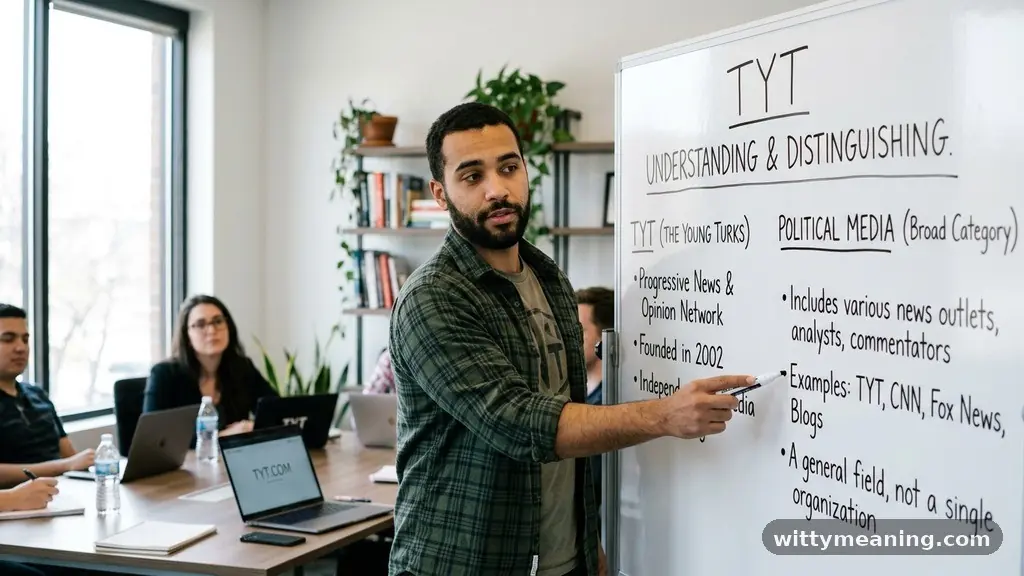
It is vital to distinguish between casual texting shorthand and established media entities. In the broader media landscape, TYT is widely recognized as an abbreviation for The Young Turks, a prominent progressive news organization. If you see this acronym in a political discussion, a news feed, or a headline, it almost certainly refers to this media outlet rather than a request for you to slow down.
This is a classic example of how the same set of letters can represent two completely different concepts depending on the setting. If you are browsing a political forum or reading a commentary on current events, the context will usually make the reference clear.
The organization has built a significant following, and its brand identity is tightly linked to the acronym. Mixing up these two meanings—the casual “take your time” and the specific media brand—is a common mistake for those who are just starting to familiarize themselves with common internet acronyms.
Table of Common Acronym Interpretations
| Acronym | Common Meaning | Primary Context |
|---|---|---|
| TYT | Take your time | Casual text messaging |
| TYT | The Young Turks | Political news and media |
| TY | Thank you | General appreciation |
| TTYT | Talk to you tomorrow | Closing a conversation |
Why Brevity is Preferred in Digital Spaces
Modern communication is defined by speed. Whether it is an instant messaging platform or a quick comment on a post, the digital world rewards those who can convey their message efficiently.
Using shorthand allows people to maintain a steady flow of communication without feeling like they are writing a novel. The tyt meaning is just one small piece of a much larger puzzle involving how we communicate our needs and availability in real-time.
When you are juggling multiple conversations, being able to type a quick three-letter response is incredibly efficient. It allows for a level of conversational shorthand that mimics the rhythm of face-to-face talking.
However, this speed can sometimes lead to a lack of nuance. It is important to balance the need for brevity with the need for clarity, ensuring that your message is not just fast, but also easily understood by the person on the other end.
The Impact of Texting Etiquette

Good texting etiquette is about making the other person feel heard and respected, even when you are busy. Using an acronym like this is a polite way to acknowledge someone’s message without committing to an immediate, high-effort response. It shows that you value the interaction enough to reply, but you are also setting a healthy boundary for your own time and attention.
If you are the one receiving the message, try not to overthink the tyt meaning. It is rarely a secret code or a sign of annoyance.
In the vast majority of cases, it is simply a helpful tool used to keep the conversation going without the pressure of an instant reply. By understanding this, you can let go of the need to respond immediately, which actually improves the quality of your digital interactions in the long run.
Common Misinterpretations and How to Avoid Them
One of the biggest issues with internet slang is that it can be misinterpreted if the recipient is not familiar with the latest trends. For example, some might confuse it with “talk to you tomorrow” or other variations that sound similar. If you find yourself frequently confused, a quick check on a reliable resource like an urban dictionary can provide some context, though you should always take user-generated definitions with a grain of salt.
The best way to avoid confusion is to look at the surrounding words. If someone sends, “I’m busy right now, tyt,” the meaning is clear. If they send, “I’ll be there soon, tyt,” it might be a typo for “talk to you then” or “talk to you tomorrow.”
Context is the ultimate arbiter of meaning in the digital age. When in doubt, asking a simple clarifying question like “Did you mean take your time?” is perfectly acceptable and usually appreciated.
Social Media Slang and Its Evolution
The way we use language online changes rapidly. Acronyms that were popular five years ago might be obsolete today, while new ones emerge weekly.
The tyt meaning has remained relatively stable because it addresses a fundamental human need: the desire to communicate without being tethered to an instant response. This stability is why it has survived while other, more specific slang terms have faded away.
As social media platforms continue to integrate more features like reactions and status indicators, the reliance on text-based acronyms might shift. However, for now, they remain a staple of how we talk to each other.
Being aware of these trends allows you to stay connected and ensures that you aren’t left behind as digital communication continues to evolve. Keep an eye on how your peers use these terms, as their personal habits are often the best indicator of what is currently popular.
Addressing Topical Gaps in Acronym Knowledge
Many people struggle with the crossover between professional and casual tones. If you are worried about the tyt meaning being misunderstood in a work chat, the best approach is to avoid it entirely.
There is no rule that says you must use shorthand in every digital space. In fact, choosing to write out “take your time” in a professional email can actually come across as more thoughtful and considerate than using an acronym.
Another gap often missed is the difference between intent and impact. Sometimes, sending an acronym can feel dismissive even if you don’t intend it that way.
If the person you are messaging is sensitive or if the topic is serious, stick to full words. The goal of any communication is to ensure the receiver feels understood, and acronyms, while efficient, can sometimes strip away the warmth that full sentences provide.
Practical Tips for Clear Communication
To ensure your messages are always clear, consider these three rules for using digital shorthand:
- Assess the Relationship: Only use shorthand with people you know well enough to understand your communication style.
- Check the Platform: What works on Snapchat or Twitter might be too informal for a LinkedIn message or a work email.
- Prioritize Clarity: If you think there is even a small chance your acronym could be misinterpreted, just type the full word.
By following these simple steps, you can enjoy the benefits of fast, efficient communication without the risk of being misunderstood. Remember that the goal of any acronym is to facilitate connection, not to create confusion. When you use these tools mindfully, they become a seamless part of your daily interactions rather than a source of frustration.
Final Thoughts on Digital Shorthand
Navigating the various meanings of short acronyms is a necessary skill in our interconnected world. Whether you are dealing with a simple “take your time” text from a friend or encountering a political media reference, the key is to always look at the context. By staying aware of how these terms are used across different platforms and regions, you can communicate more effectively and avoid unnecessary misunderstandings.
If you find yourself confused, remember that asking for clarification is always a better option than guessing. As digital communication continues to grow, your ability to adapt and decode these signals will only become more valuable. Keep practicing your digital literacy, stay mindful of your audience, and don’t be afraid to keep your own messaging clear and concise.
What other acronyms have you been curious about lately? Feel free to reach out if you want to dive deeper into the ever-changing world of digital slang.