
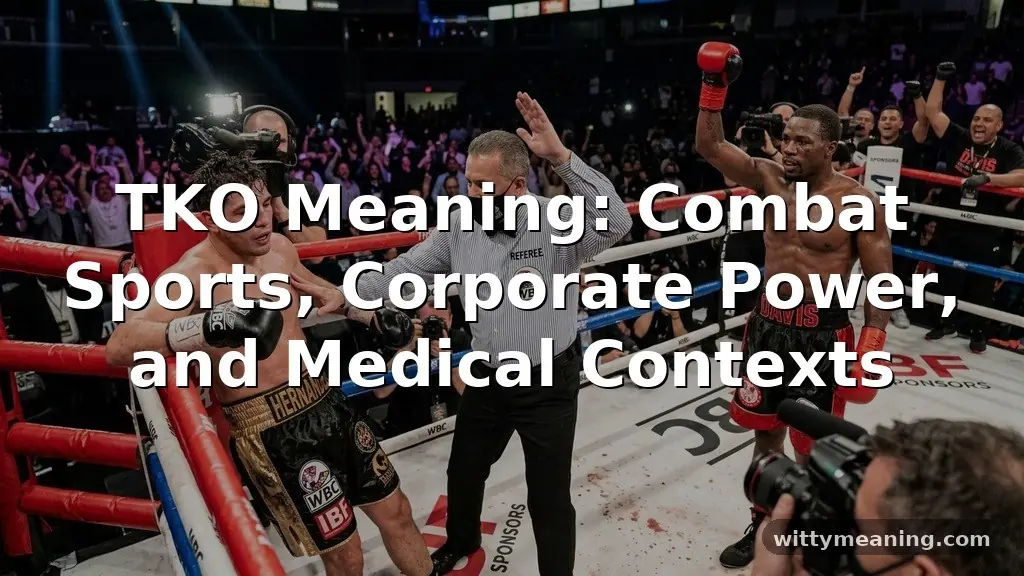

The acronym TKO is versatile, appearing across vastly different landscapes ranging from the high-stakes intensity of the boxing ring to the sterile environment of a hospital ward. Because the term shifts drastically depending on whether you are watching a televised title fight, following business news about major media conglomerates, or reading a patient’s medical chart, understanding the TKO meaning requires looking at the specific context in which it is used. Whether you encounter it as a description of a fight outcome, a stock ticker, or a nursing instruction, the letters carry distinct weight and practical implications that define how professionals act and how observers interpret events.
Understanding the Technical Knockout in Combat Sports
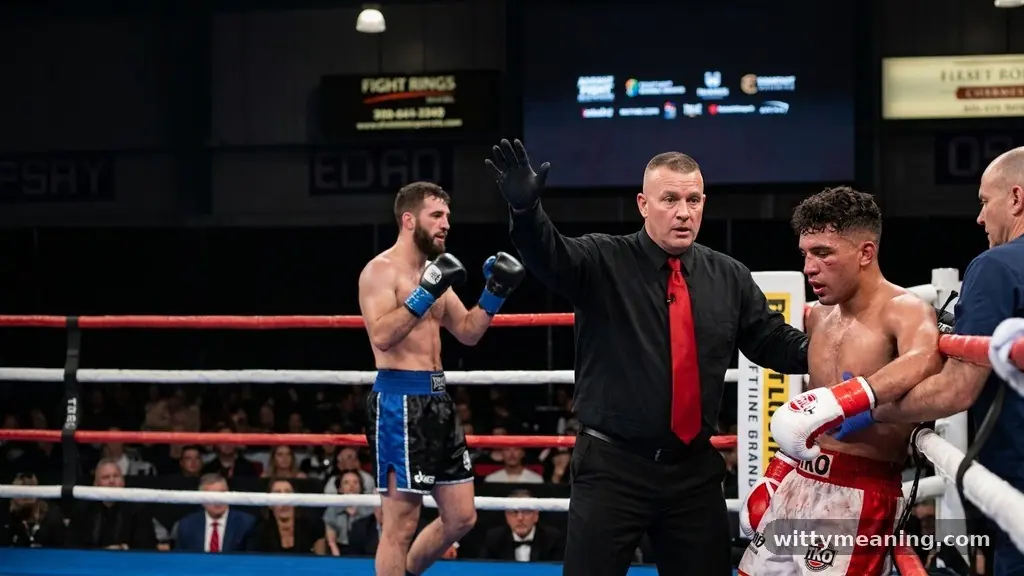
In the world of boxing and mixed martial arts, the technical knockout is perhaps the most common way a fight ends before the final bell. Unlike a standard knockout, where a fighter is rendered unconscious or unable to stand after being dropped, a TKO occurs when the referee decides that a competitor can no longer intelligently defend themselves. This decision is crucial for fighter safety, as it prevents unnecessary trauma while ensuring the integrity of the match remains intact.
When a referee steps in to stop a contest, they are acting on behalf of the governing body’s combat regulations. A ring official might call for a stoppage if a fighter is taking excessive unanswered blows, if they are trapped against the ropes without an escape, or if they have sustained a significant injury that precludes them from continuing.
Fans often debate the decision, but the ultimate goal is to protect the athlete from long-term health consequences. This distinction between a clean knockout and a referee-enforced stoppage is central to understanding how modern fighting leagues manage their rosters and the health of their participants.
The Distinction Between TKO vs KO
Confusion often arises when spectators attempt to categorize the difference between a knockout (KO) and a technical knockout (TKO). A traditional knockout is an absolute outcome; the fighter is physically incapacitated and cannot beat the count set by the official.
In contrast, a TKO is a subjective call made by an authority figure inside the ring. While both results end the fight and are recorded as losses on a professional record, the circumstances leading up to them differ significantly.
Why Referees Intervene
- Repeated strikes to the head or body without a defensive response from the fighter.
- Obvious physical impairment, such as a severe cut or a broken limb, that prevents fair competition.
- The corner of the fighter deciding to throw in the towel to prevent further punishment.
- The fighter failing to follow the referee’s instructions during a count or a break in action.
Table 1 provides a quick breakdown of how these two common fight conclusions differ in practice and perception.
| Feature | Knockout (KO) | Technical Knockout (TKO) |
|---|---|---|
| Primary Cause | Physical unconsciousness or inability to stand | Referee or corner intervention |
| Subjectivity | Low (the count is objective) | High (referee judgment is required) |
| Commonality | Frequent in heavyweights | Frequent in all weight classes |
| Safety Focus | Reactive | Proactive |
Corporate Evolution: TKO Group Holdings
Beyond the canvas, the TKO acronym has taken on a massive presence in the business world. Following the merger of the Ultimate Fighting Championship (UFC) and World Wrestling Entertainment (WWE), the resulting entity was branded as TKO Group Holdings.
This massive organization, which operates under the umbrella of Endeavor, represents a new era in sports entertainment. Investors and fans of the business side of sports often track TKO stock prices, as the company commands a dominant position in the global media landscape.
The formation of this group was driven by high-level executives like Ari Emanuel and the legacy influence of figures like Vince McMahon. By combining the raw, legitimate competition of the UFC with the narrative-driven, scripted spectacle of the WWE, the company has created a diversified portfolio that appeals to both traditional sports fans and entertainment consumers. When financial analysts discuss TKO in this context, they are rarely talking about punches; they are analyzing revenue streams, broadcasting rights, and the consolidation of global entertainment assets.
Medical Significance: Keep Vein Open

Stepping away from the arena, the TKO meaning changes entirely when you enter a clinical or hospital setting. In medical terminology, TKO stands for “keep vein open.”
This is a standard instruction given to nursing staff regarding the flow rate of an intravenous line. When a patient is receiving fluids or medication, a medical professional may order a TKO drip to ensure that the IV cannula does not clot or become blocked while the patient is not actively receiving a high-volume infusion.
This clinical acronym is vital for patient care. If a line closes up, it might require a new needle insertion, which is painful and inefficient.
By maintaining a slow, steady drip, the healthcare team ensures that the access point remains patent and ready for immediate use if an emergency occurs or if the next dose of medication is due. It is a perfect example of how jargon can be completely repurposed across different industries, with the medical application being far more mundane but arguably more critical to daily survival than any sporting event.
Historical Context and Evolution of the Term
The term technical knockout has evolved alongside the rules of modern boxing. During the early 20th century, fights were often allowed to continue until a fighter was fully incapacitated, which led to significant and preventable injuries.
As the sport became more regulated and subject to public scrutiny, commissions introduced the concept of the referee stoppage. This shift marked a transition toward prioritizing athlete welfare over the “blood sport” mentality that characterized earlier eras of prizefighting.
Throughout the decades, the criteria for a TKO have been refined to account for the nuances of different combat sports. In the UFC, for instance, the referee has a much broader mandate to stop a fight compared to traditional boxing, largely because of the variety of submissions and ground-based attacks allowed.
The evolution of the term reflects a broader societal shift in how we view risk and safety in professional entertainment. We have moved from a culture that demanded total physical destruction to one that values the competitive integrity of a match while acknowledging the human cost of the sport.
Pop Culture and Slang Terminology
In casual conversation, the TKO meaning can take on a more figurative sense. People often use the term as slang to describe something that is “knocked out” or completely defeated in a non-physical way.
For instance, you might hear a friend say they were “TKO’d” by a difficult exam, a long workday, or an overwhelming situation. This usage mirrors the intensity of the original term, conveying a sense of being completely drained or rendered ineffective by external circumstances.
This metaphorical application shows the power of sports terminology to bleed into everyday language. Because the concept of a TKO is so universally understood—a sudden, definitive end to a struggle—it provides a shorthand for describing personal exhaustion or failure. While it lacks the formal status of the medical or athletic definitions, this slang usage is perhaps the most common way the term is encountered by the general public in daily life and online social media interactions.
The Role of the Referee in Fight Integrity
The integrity of any combat sport rests heavily on the shoulders of the referee. Because a TKO is essentially a judgment call, the individual in the ring must possess immense experience and the ability to read a fighter’s body language in fractions of a second.
If a referee stops a fight too early, they are accused of robbing the crowd of a finish or the fighter of a chance to recover. If they stop it too late, they risk the long-term health of the athlete.
This balancing act is the core of their profession. Referees are trained to look for specific signs of “intelligent defense,” such as the ability to move the head, cover up, or intelligently return fire. When those signs vanish, the TKO is the only ethical outcome.
This is why organizations like the Association of Boxing Commissions maintain rigorous certification processes for officials. The goal is to standardize the criteria for a TKO across different jurisdictions so that the “meaning” of a stoppage remains consistent, regardless of where the fight takes place.
Financial Implications of the TKO Brand

The branding of TKO Group Holdings wasn’t an accident; it was a calculated move to capitalize on the prestige associated with the acronym in combat sports. By associating the business entity with the intensity and excitement of a technical knockout, the company signals that it is a leader in the industry.
Investors often associate the TKO ticker with aggressive growth strategies and market dominance. This illustrates how the meaning of an acronym can be leveraged for brand identity and corporate positioning.
The merger itself was a multi-billion dollar deal that reshaped the landscape of sports media. By bringing together the UFC and WWE, Endeavor effectively created a monopoly on the most popular forms of combat-based entertainment.
For the average investor, understanding the business side of the TKO meaning is as important as knowing the rules of a fight. It represents a shift in how media rights are negotiated and how fan bases are monetized in the digital age.
Addressing Common Misconceptions
Many people mistakenly believe that a TKO is somehow “lesser” than a KO. In reality, a TKO is often a more accurate reflection of a fighter’s inability to continue.
A fighter who is “out on their feet” may not hit the canvas, but they are clearly losing the battle. The TKO designation allows for a more nuanced reporting of the fight’s end, acknowledging that the fight was stopped due to a lack of competitive viability rather than a single, lucky punch.
Another misconception is that the corner of a fighter is not allowed to stop the match. In reality, a corner stoppage is a valid form of a TKO. This is a crucial strategic tool for trainers who see their athlete taking unnecessary damage.
The decision to “throw in the towel” is a manifestation of the team’s responsibility toward their athlete’s career longevity. When we analyze the TKO meaning, we must include the active role of the coaching staff, as they are often the first to recognize when a fighter has reached their limit.
Global Perspectives and Linguistic Variations
The acronym TKO is widely recognized in English-speaking countries, but its usage can vary depending on the local sporting culture. In some nations, the term might be translated or replaced by local equivalents, yet the core concept—a referee-enforced stoppage—remains a universal standard in international combat sports. Whether it is referred to as a technical knockout or via a local translation, the implication of a match being halted for safety reasons is a global constant.
In regions where mixed martial arts is still growing, the distinction between TKO and other stoppage types might be less clearly defined in the public consciousness. However, as global media continues to homogenize sports rules, the standard usage of TKO is becoming the international baseline. This linguistic consistency helps fans across the world understand the outcomes of professional bouts regardless of their native language, further cementing the term’s place in the global lexicon of sports.
Frequently Asked Questions
Is a TKO considered a knockout on a fighter’s record?
Yes, a technical knockout is officially recorded as a loss for the fighter who was stopped. While it is categorized differently than a standard knockout in terms of how the fight ended, both results count toward a fighter’s professional record and affect their rankings in the sport.
Can a fighter appeal a TKO decision?
Fighters can technically appeal a decision, but it is rarely successful. Commissions typically uphold a referee’s judgment unless there is clear evidence of a rules violation, such as an illegal blow that caused the stoppage. Because the referee has the authority to ensure safety, their decision is usually final.
Why do hospitals use the TKO acronym?
In a medical setting, TKO stands for “keep vein open.” It is a specific instruction to maintain a very slow rate of intravenous fluid flow. This ensures that the IV site remains patent and does not become obstructed by a blood clot between scheduled medication doses or infusions.
Does TKO Group Holdings only own fighting leagues?
While TKO Group Holdings is primarily known for its ownership of the UFC and WWE, the company is deeply involved in broader media, marketing, and event production. It functions as a massive sports and entertainment conglomerate, focusing on content distribution, live event management, and global brand partnerships.
Refining Your Understanding of TKO
The meaning of TKO shifts significantly depending on whether you are analyzing a high-profile corporate merger, a medical chart, or the results of a championship bout. By recognizing these distinct contexts, you can better interpret information across various professional sectors. In the arena, it serves as a vital safety mechanism that preserves the health of athletes while maintaining the excitement of the sport.
In the hospital, it is a routine but essential procedure for patient care. And in the boardroom, it represents a powerhouse of modern media and entertainment.
Understanding these differences prevents confusion and allows you to engage with the term accurately, regardless of the environment. Whether you are following stock trends, watching a fight, or learning about clinical procedures, you now have the context to see how these three letters are used to define outcomes and maintain standards. If you found this breakdown helpful, consider exploring the specific regulatory bodies that oversee combat sports or the financial reports of major media conglomerates to see how these definitions play out in real-world scenarios.