

Ever received a quick “YW” after saying “thanks” and wondered what it actually meant? You’re not the only one. With text messaging, social media, and online chat becoming part of everyday life, abbreviations are everywhere. Some are easy to figure out, while others can leave you scratching your head for a second.
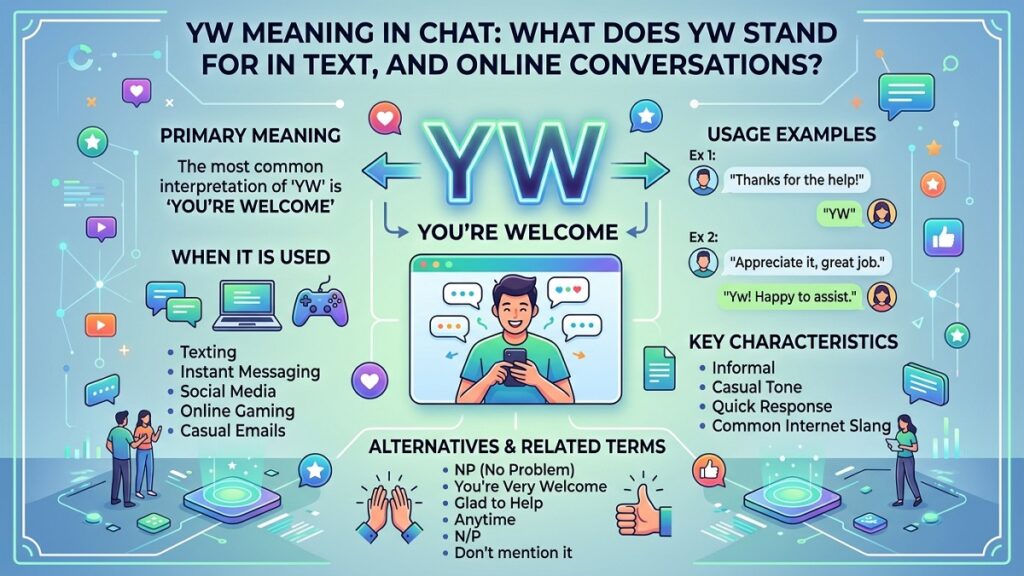
If you’re searching for the YW meaning in chat, the short answer is simple: YW stands for “You’re Welcome.” It’s a friendly and polite response people use after someone says “thank you.” While it’s only two letters long, it plays an important role in digital communication by keeping conversations quick, natural, and respectful.
In this guide, you’ll learn what YW means, where it’s commonly used, how to use it correctly, and why it has become one of the most popular texting abbreviations online. We’ll also look at examples, etiquette, and situations where you should avoid using it.
What Does YW Mean in Chat?
YW means “You’re Welcome.” It is a widely used chat abbreviation that people send in response to someone expressing gratitude. Instead of typing the full phrase, users shorten it to two letters to save time while still being polite.
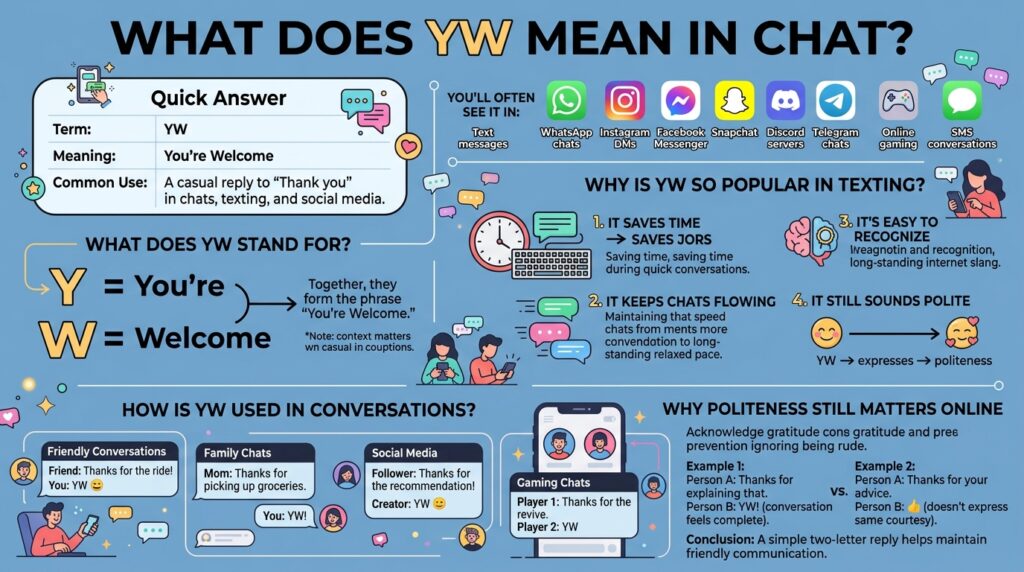
Quick Answer
| Term | Meaning | Common Use |
|---|---|---|
| YW | You’re Welcome | A casual reply to “Thank you” in chats, texting, and social media |
You’ll often see it in:
- Text messages
- WhatsApp chats
- Instagram DMs
- Facebook Messenger
- Snapchat conversations
- Discord servers
- Telegram chats
- Online gaming
- SMS conversations
For example:
Person A: Thanks for helping me with my homework!
Person B: YW 😊
Even though the reply is short, it still communicates appreciation and good manners. That’s why YW remains one of the most recognized internet abbreviations today.
What Does YW Stand For?
The full form of YW is:
- Y = You’re
- W = Welcome
Together, they form the phrase “You’re Welcome.”
The abbreviation became popular because people wanted a faster way to reply during online messaging. Instead of typing fourteen characters, they only need two. It may seem like a tiny change, but over hundreds of conversations, those saved keystrokes really add up.
One thing worth knowing is that YW stands for You’re Welcome in most texting situations. Context still matters, though. In later sections, we’ll also cover a few less common meanings you might come across.
Why Is YW So Popular in Texting?
The popularity of YW isn’t random. It fits perfectly with the fast-paced nature of digital communication. Most people want to keep conversations moving without sacrificing politeness.
Here are the biggest reasons it’s used so often.
It Saves Time
Typing “You’re welcome” takes much longer than typing YW. During quick conversations, especially on mobile phones, people naturally prefer shorter responses.
It Keeps Chats Flowing
Nobody wants a conversation to feel slow or overly formal when chatting with friends. Using text shorthand helps maintain a relaxed pace.
It’s Easy to Recognize
Unlike some internet slang that changes every year, YW has been around for a long time. Most people who regularly use messaging apps understand it instantly.
It Still Sounds Polite
Although it’s abbreviated, YW still expresses kindness and appreciation. It acknowledges someone’s gratitude without making the reply feel cold.
In simple terms:
YW → expresses → politeness.
That’s one reason it has survived while many other abbreviations have faded away.
How Is YW Used in Conversations?
The meaning doesn’t change much, but the tone can vary depending on the conversation.
Here are a few common situations.
Friendly Conversations
Friends often use YW because it’s quick and casual.
Friend: Thanks for the ride!
You: YW 😄
The response feels natural without sounding too formal.
Family Chats
Families also use YW regularly in group chats.
Mom: Thanks for picking up groceries.
You: YW!
It’s brief, but everyone understands what it means.
Social Media
People frequently use YW in comment sections or direct messages.
Follower: Thanks for the recommendation!
Creator: YW 😊
The abbreviation helps creators reply to more people without typing the same phrase repeatedly.
Gaming Chats
Online gaming conversations move quickly. Players often use abbreviations to communicate efficiently.
Player 1: Thanks for the revive.
Player 2: YW
Short replies fit perfectly into fast-paced games.
Why Politeness Still Matters Online
Some people think abbreviations make conversations less personal. Actually, that’s not always true.
Using YW shows you’ve acknowledged the other person’s gratitude. Ignoring someone’s “thank you” can sometimes seem rude, even if you didn’t mean it that way.
A simple two-letter reply helps maintain friendly communication.
Think about these examples.
Example 1
Person A: Thanks for explaining that.
Person B: YW!
The conversation feels complete.
Example 2
Person A: Thanks for your advice.
Person B: 👍
While the thumbs-up works, it doesn’t express the same level of courtesy as YW.
That’s why many people still prefer using the abbreviation.
YW Meaning Across Different Platforms
The meaning of YW stays the same across almost every messaging platform. However, the style of conversation can change slightly depending on where you’re chatting.
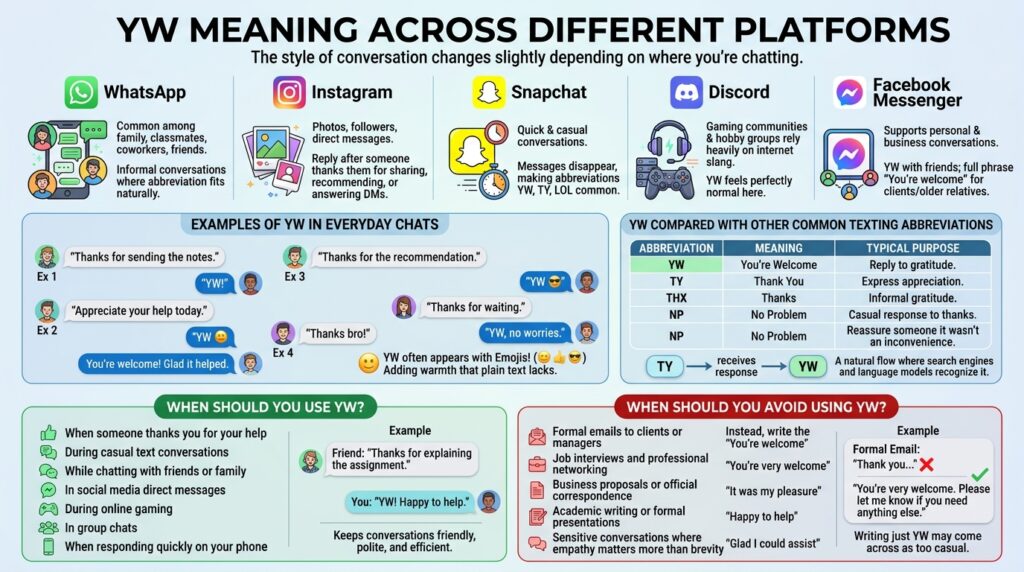
On WhatsApp, YW is commonly used among family members, classmates, coworkers, and friends. Conversations are usually informal, so the abbreviation fits naturally.
Instagram users often reply with YW after someone thanks them for sharing a post, recommending a product, or answering a question in DMs.
Snapchat
Snapchat conversations are usually quick and casual. Since messages disappear, abbreviations like YW, TY, and LOL are extremely common.
Discord
Gaming communities and hobby groups on Discord rely heavily on internet slang and chat abbreviations. Here, YW feels perfectly normal.
Facebook Messenger
Messenger supports both personal and business conversations. While YW works well with friends, using the full phrase “You’re welcome” may be better when chatting with clients or older relatives.
Examples of YW in Everyday Chats
Seeing real conversations makes the abbreviation much easier to understand.
Example 1
A: Thanks for sending the notes.
B: YW!
Example 2
A: Appreciate your help today.
B: YW 😊
Example 3
A: Thanks for the recommendation.
B: You’re welcome! Glad it helped.
Example 4
A: Thanks bro!
B: YW 😎
Example 5
A: Thanks for waiting.
B: YW, no worries.
Notice that YW often appears alongside emojis. Adding a smiley face or thumbs-up helps communicate warmth that plain text sometimes lacks.
YW Compared With Other Common Texting Abbreviations
People don’t only use YW when replying to thanks. Several other texting abbreviations appear in similar situations.
| Abbreviation | Meaning | Typical Purpose |
|---|---|---|
| YW | You’re Welcome | Reply to gratitude |
| TY | Thank You | Express appreciation |
| THX | Thanks | Informal gratitude |
| NP | No Problem | Casual response to thanks |
| NP | No Problem | Reassure someone it wasn’t an inconvenience |
While all of these are common, they aren’t interchangeable.
For example:
TY starts the gratitude.
YW acknowledges it.
This creates a natural conversation flow.
TY → receives response → YW.
Search engines and language models alike recognize this as one of the most common conversational relationships in online messaging.
When Should You Use YW?
Knowing when to use YW is just as important as knowing what it means.
Use it in situations like these:
- When someone thanks you for your help.
- During casual text conversations.
- While chatting with friends or family.
- In social media direct messages.
- During online gaming.
- In group chats.
- When responding quickly on your phone.
It’s especially useful when conversations move fast. Instead of slowing things down with longer replies, YW keeps everything natural.
For example:
Friend: Thanks for explaining the assignment.
You: YW! Happy to help.
This feels friendly, polite, and efficient—all at the same time.
When Should You Avoid Using YW?
Although YW is widely understood, it isn’t suitable for every situation. The biggest mistake people make is using it where a more professional response is expected.
Avoid using YW in these situations:
- Formal emails to clients or managers
- Job interviews and professional networking
- Business proposals or official correspondence
- Academic writing or formal presentations
- Sensitive conversations where empathy matters more than brevity
Instead, write the complete phrase:
- You’re welcome.
- You’re very welcome.
- It was my pleasure.
- Happy to help.
- Glad I could assist.
For example:
Formal Email
Thank you for your prompt response.
A better reply is:
You’re very welcome. Please let me know if you need anything else.
Writing just YW here may come across as too casual, even if you don’t mean it that way.
Alternative Meanings of YW
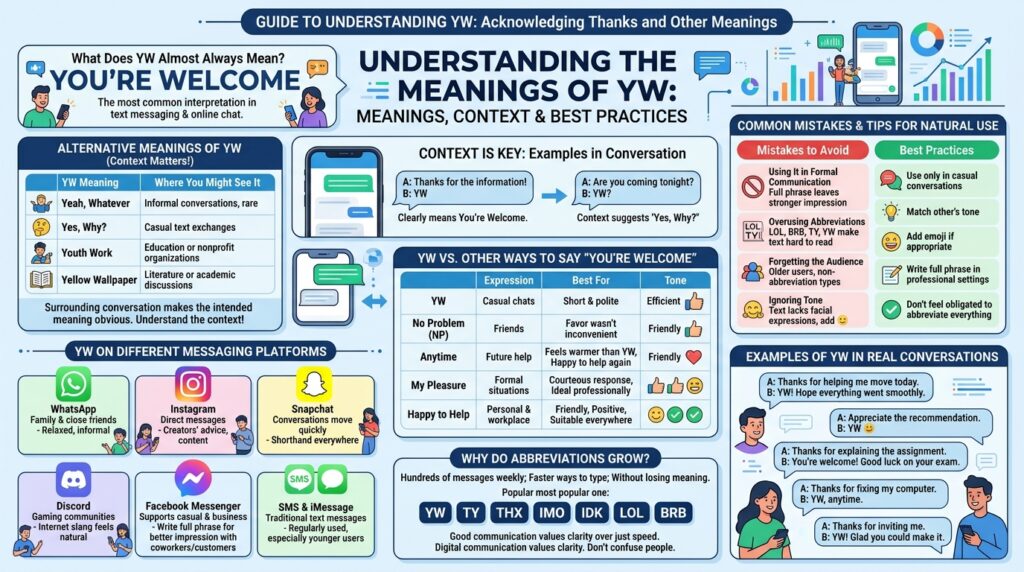
While YW almost always means “You’re Welcome” in text messaging and online chat, abbreviations can have different meanings depending on the context.
Here’s a look at some less common interpretations.
| YW Meaning | Where You Might See It |
|---|---|
| You’re Welcome | Texting, chat apps, social media |
| Yeah, Whatever | Informal conversations (rare) |
| Yes, Why? | Casual text exchanges |
| Youth Work | Education or nonprofit organizations |
| Yellow Wallpaper | Literature or academic discussions |
The surrounding conversation usually makes the intended meaning obvious.
For example:
A: Thanks for the information!
B: YW
Clearly means You’re Welcome.
But if someone writes:
A: Are you coming tonight?
B: YW?
The context may suggest something completely different.
That’s why understanding the conversation matters just as much as knowing the abbreviation itself.
YW on Different Messaging Platforms
Although the meaning stays the same, people use YW slightly differently depending on the platform.
Family and close friends often use YW because conversations are relaxed and informal.
You’ll frequently see it in direct messages after someone thanks a creator for advice, recommendations, or helpful content.
Snapchat
Since conversations move quickly, abbreviations like YW, LOL, TY, and BRB are everywhere.
Discord
Gaming communities rely heavily on internet slang, making YW feel completely natural.
Facebook Messenger
Messenger supports both casual and business conversations. If you’re chatting with coworkers or customers, writing “You’re welcome” instead of YW usually creates a better impression.
SMS and iMessage
Traditional text messages still use YW regularly, especially among younger users who prefer text shorthand.
YW vs. Other Ways to Say “You’re Welcome”
You don’t always have to reply with YW. Depending on the tone, another expression might fit better.
Here’s how they compare.
YW
Short, polite, and efficient.
Best for casual chats.
No Problem (NP)
Suggests the favor wasn’t inconvenient.
Works well among friends.
Anytime
Shows you’re happy to help again in the future.
Feels warmer than simply saying YW.
My Pleasure
A more formal and courteous response.
Ideal for professional situations.
Happy to Help
Friendly, positive, and suitable for both personal and workplace conversations.
Choosing the right response depends on who you’re talking to and the setting.
Common Mistakes People Make When Using YW
Even a simple abbreviation can be misused.
Here are the most common mistakes.
Using It in Formal Communication
Many people automatically type YW everywhere.
In business communication, the full phrase usually leaves a stronger impression.
Overusing Abbreviations
If every message contains LOL, BRB, TY, and YW, the conversation can become difficult to read.
Balance is important.
Forgetting the Audience
Older users or people unfamiliar with internet abbreviations may not immediately understand what YW means.
When in doubt, write the complete phrase.
Ignoring Tone
Text messages don’t include facial expressions or voice.
Sometimes adding a smiley emoji 😊 makes YW sound much friendlier.
Tips for Using YW Naturally
If you want your digital communication to sound friendly and natural, keep these tips in mind.
- Use YW only in casual conversations.
- Match the tone of the other person’s messages.
- Add an emoji if appropriate.
- Write the full phrase in professional settings.
- Don’t feel obligated to abbreviate every response.
Remember:
Digital communication → values → clarity.
Saving time should never come at the cost of confusing the person you’re talking to.
Examples of YW in Real Conversations
Here are more practical examples showing how people naturally use YW.
Example 1
A: Thanks for helping me move today.
B: YW! Hope everything went smoothly.
Example 2
A: Appreciate the recommendation.
B: YW 😊
Example 3
A: Thanks for explaining the assignment.
B: You’re welcome! Good luck on your exam.
Example 4
A: Thanks for fixing my computer.
B: YW, anytime.
Example 5
A: Thanks for inviting me.
B: YW! Glad you could make it.
These examples show that YW works best when the conversation already feels relaxed.
Why Abbreviations Like YW Continue to Grow
The internet has changed how we communicate.
People today send hundreds of messages every week. Naturally, they look for faster ways to type without losing meaning.
That’s why abbreviations such as:
- YW
- TY
- THX
- IMO
- IDK
- LOL
- BRB
continue to be popular.
They’re short, recognizable, and efficient.
Still, good communication isn’t only about speed. It’s also about making the other person feel acknowledged.
That’s exactly what YW does.
Final Thoughts
Understanding the YW meaning in chat is simple once you know the context.
In most conversations, YW stands for “You’re Welcome.” It’s a polite texting abbreviation used after someone says thank you, making online messaging faster while maintaining good manners.
Whether you’re chatting on WhatsApp, Instagram, Snapchat, Discord, Facebook Messenger, or through regular SMS, you’ll likely encounter YW sooner or later.
The key is knowing when to use it. In casual conversations, it’s perfectly natural. In professional communication, however, writing “You’re welcome” in full usually creates a better impression.
As digital language continues to evolve, abbreviations will remain part of everyday communication. Understanding them helps you read messages more confidently and respond in a way that fits the situation.
Frequently Asked Questions
What does YW mean in chat?
YW means “You’re Welcome.” It’s a common chat abbreviation used after someone says thank you. People use it in text messages, social media, online gaming, and messaging apps because it’s quick, polite, and easy to understand.
Is YW considered polite?
Yes. In casual conversations, YW is considered a polite response to gratitude. It acknowledges the other person’s appreciation without making the conversation feel overly formal. For business emails or professional settings, however, writing “You’re welcome” in full is generally more appropriate.
Can YW have other meanings?
Yes, although they’re much less common. Depending on the context, YW can also mean “Yeah, Whatever,” “Yes, Why?” “Youth Work,” or refer to other specialized terms. In texting and social media, though, it almost always means “You’re Welcome.”
Should I use YW in work emails?
It’s better not to. While YW is widely understood, professional communication benefits from complete phrases like “You’re welcome,” “My pleasure,” or “Happy to help.” These responses sound more polished and respectful in workplace environments.