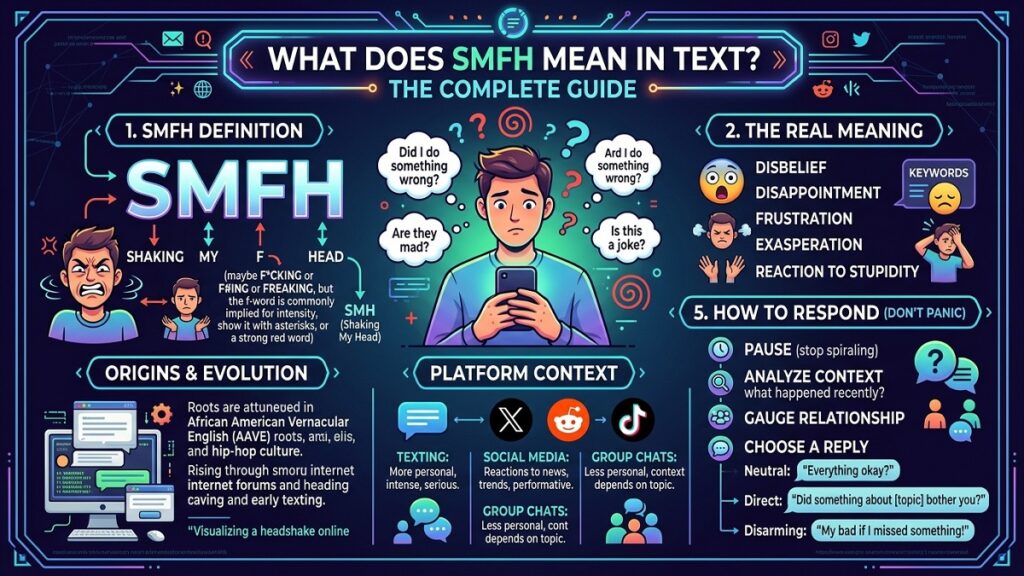

So you got a text back and it just says “SMFH.” No context. No emoji. Nothing else attached to it, just those four letters sitting there like a landmine. Your brain immediately starts spiraling — did I do something wrong? Are they mad? Is this a joke?
Honestly, that reaction is normal. If you’ve been asking yourself what does SMFH mean in text, you’re definitely not the only one googling it at 11pm after a confusing conversation. Texting slang moves fast, and acronyms like this one carry a LOT of emotional weight for something so short.
This guide is gonna break it down properly — the real meaning, where it actually came from (something most articles skip completely), how it hits differently depending on the platform you’re using, and how to respond without making the whole situation more awkward than it needs to be.
What Does SMFH Mean in Text?
SMFH stands for “Shaking My F*ing Head.”** It’s basically an intensified, more emotional version of the more common SMH, used to express strong frustration, disbelief, annoyance, or straight-up disappointment in a conversation.
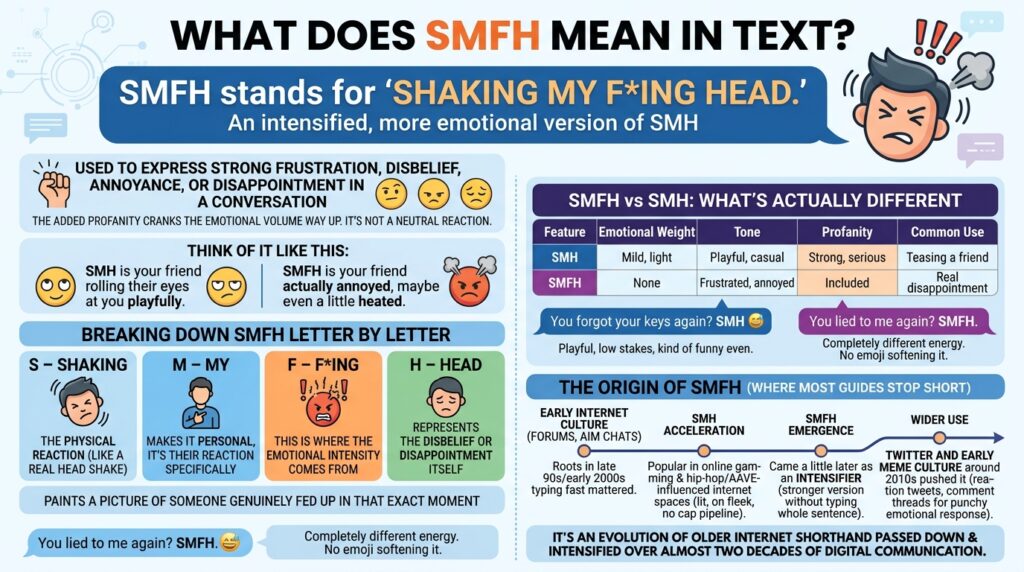
Here’s the thing though — SMFH → is an intensified variant of → SMH. Same base idea (someone shaking their head at something), but the added profanity cranks the emotional volume way up. It’s not a neutral reaction. It never really is. When someone types SMFH, they’re telling you the situation genuinely got under their skin.
Think of it like this: SMH is your friend rolling their eyes at you playfully. SMFH is your friend actually annoyed, maybe even a little heated.
Breaking Down SMFH Letter By Letter
Let’s actually look at what each letter is doing here, cause a lot of guides just gloss over this part:
- S – Shaking → the physical reaction, like a real head shake
- M – My → makes it personal, it’s their reaction specifically
- F – F*ing** → this is where the emotional intensity comes from
- H – Head → represents the disbelief or disappointment itself
Put together, it paints a picture of someone who’s genuinely fed up in that exact moment. They’re not just mildly annoyed, they’re at the point where words don’t even feel necessary anymore.
SMFH vs SMH: What’s Actually Different
This confuses a LOT of people, and honestly I get why. They look almost identical.
| Feature | SMH | SMFH |
|---|---|---|
| Emotional Weight | Mild, light | Strong, serious |
| Tone | Playful, casual | Frustrated, annoyed |
| Profanity | None | Included |
| Common Use | Teasing a friend | Real disappointment |
Example comparison so it’s crystal clear:
“You forgot your keys again? SMH 😅” — that’s playful, low stakes, kind of funny even.
“You lied to me again? SMFH.” — that’s a completely different energy. No emoji softening it either.
Profanity inclusion → increases → emotional intensity of SMFH, and that’s really the whole difference in a nutshell. Same skeleton, very different emotional muscle behind it.
The Origin of SMFH (Where Most Guides Stop Short)
Okay so this is the part most articles about SMFH completely skip, and it bugs me cause it’s actually interesting. Texting acronyms like SMH and SMFH didn’t just appear out of nowhere in 2020 or whatever people assume.
The “shaking my head” phrase itself has roots way back in early internet culture — forums, AIM chats, early message boards in the late 90s and early 2000s where typing fast mattered more than typing pretty. SMH picked up steam first as a shorthand reaction, especially popular in online gaming communities and hip-hop/AAVE-influenced internet spaces, which have historically been huge drivers of slang that later goes mainstream (think “lit,” “on fleek,” “no cap” — same pipeline basically).
SMFH came a little later as an intensifier, once people wanted a stronger version but didn’t wanna type out the whole sentence. Twitter and early meme culture around the 2010s really pushed it into wider use, especially in reaction tweets and comment threads where people needed a punchy, emotional response that fit in limited characters.
So basically — SMFH isn’t some random new-gen invention. It’s an evolution of older internet shorthand that’s been passed down and intensified over almost two decades of digital communication. Kinda cool when you think about it that way, not just some throwaway text abbreviation.
Emotional Meaning Behind SMFH 😤
When someone drops an SMFH in a chat, they’re usually feeling at least one of these:
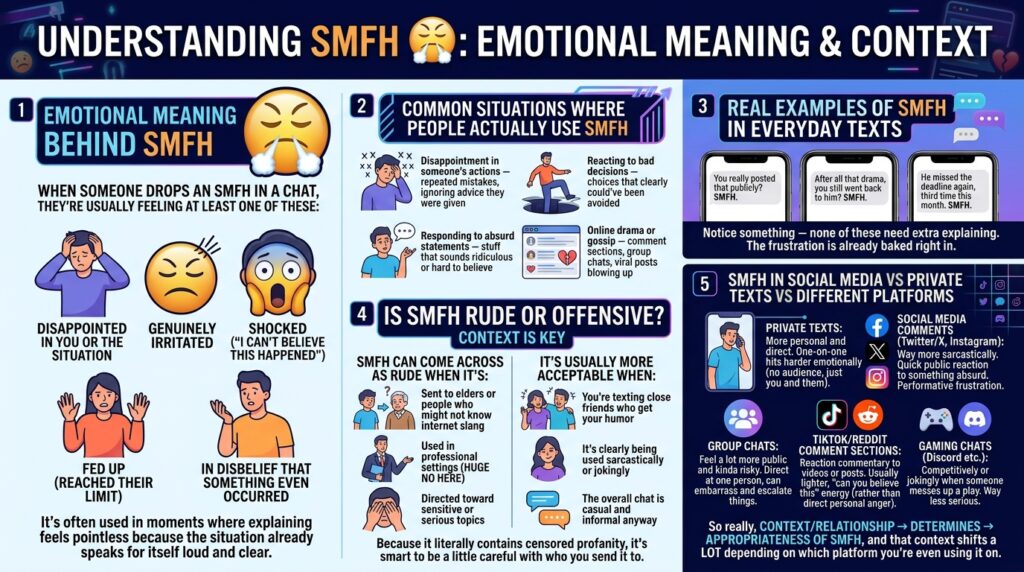
- Disappointed in you or the situation
- Genuinely irritated
- Shocked, in a “I can’t believe this happened” way
- Fed up, like they’ve reached their limit
- In disbelief that something even occurred
It’s often used in moments where explaining feels pointless because the situation already speaks for itself loud and clear.
Common Situations Where People Actually Use SMFH
People don’t just throw SMFH around randomly (well, some do, but usually there’s a pattern). Here’s where it pops up most:
- Disappointment in someone’s actions — repeated mistakes, ignoring advice they were given
- Reacting to bad decisions — choices that clearly could’ve been avoided
- Responding to absurd statements — stuff that sounds ridiculous or hard to believe
- Online drama or gossip — comment sections, group chats, viral posts blowing up
Real Examples of SMFH in Everyday Texts
Here’s a few natural examples so you can see how it actually shows up in real convos:
“You really posted that publicly? SMFH.”
“After all that drama, you still went back to him? SMFH.”
“He missed the deadline again, third time this month. SMFH.”
Notice something — none of these need extra explaining. The frustration is already baked right in.
Is SMFH Rude or Offensive?
Depends heavily on context, honestly. There’s no one-size-fits-all answer here.
SMFH can come across as rude when it’s:
- Sent to elders or people who might not know internet slang
- Used in professional settings (huge no here)
- Directed toward sensitive or serious topics
It’s usually more acceptable when:
- You’re texting close friends who get your humor
- It’s clearly being used sarcastically or jokingly
- The overall chat is casual and informal anyway
Because it literally contains censored profanity, it’s smart to be a little careful with who you send it to.
SMFH in Social Media vs Private Texts vs Different Platforms
This is another spot competitors barely scratch the surface on, so let’s actually dig into it properly.
Private Texts: Here SMFH tends to feel more personal and direct. Since it’s one-on-one, it can hit harder emotionally cause there’s no audience, just you and them.
Social Media Comments (Twitter/X, Instagram): SMFH gets used way more sarcastically here, often as a quick public reaction to something absurd someone posted. It’s less about genuine anger and more like performative frustration for the internet to see.
Group Chats: Using SMFH in a group chat can feel a lot more public and, honestly, kinda risky. If it’s directed at one person specifically, it might embarrass them in front of everyone else, which can escalate things fast.
TikTok/Reddit Comment Sections: Tends to show up as reaction commentary to videos or posts — usually lighter, more “can you believe this” energy rather than direct personal anger.
Gaming Chats (Discord etc.): Often used competitively or jokingly when someone messes up a play, way less serious than in personal texting.
So really, context/relationship → determines → appropriateness of SMFH, and that context shifts a LOT depending on which platform you’re even using it on.
How to Respond When Someone Texts You SMFH
Your reply honestly depends on why they sent it in the first place.
If they seem to be joking around, laugh it off or reply light-heartedly, matching their energy.
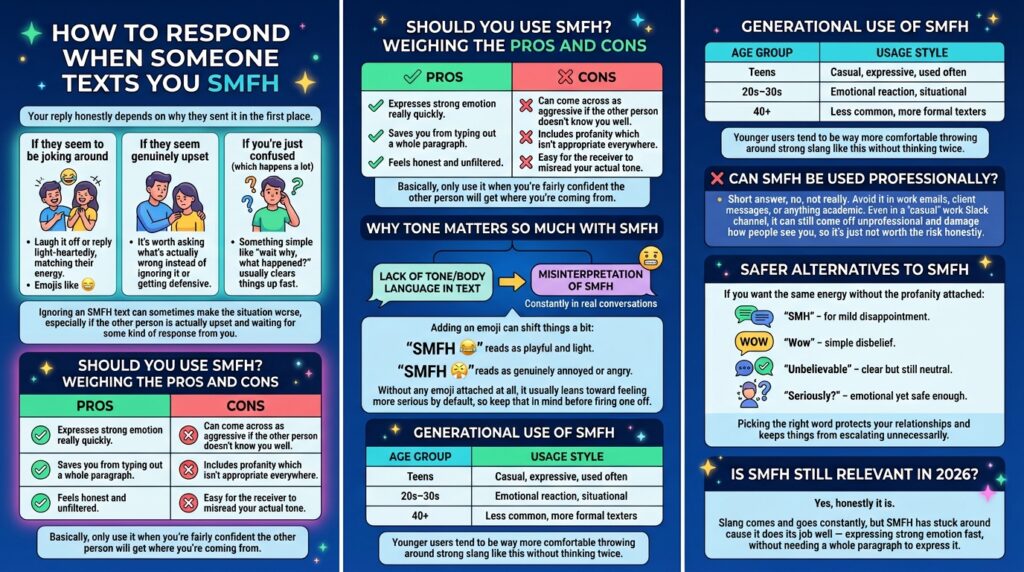
If they seem genuinely upset, it’s worth asking what’s actually wrong instead of ignoring it or getting defensive.
If you’re just confused (which happens a lot), something simple like “wait why, what happened?” usually clears things up fast.
Ignoring an SMFH text can sometimes make the situation worse, especially if the other person is actually upset and waiting for some kind of response from you.
Should You Use SMFH? Weighing the Pros and Cons
Pros:
- Expresses strong emotion really quickly
- Saves you from typing out a whole paragraph
- Feels honest and unfiltered
Cons:
- Can come across as aggressive if the other person doesn’t know you well
- Includes profanity which isn’t appropriate everywhere
- Easy for the receiver to misread your actual tone
Basically, only use it when you’re fairly confident the other person will get where you’re coming from.
Why Tone Matters So Much With SMFH
Text messages don’t have your voice, your facial expression, or your body language attached to them — that’s the core problem here. Lack of tone/body language in text → causes → misinterpretation of SMFH, and this happens constantly in real conversations.
Adding an emoji can shift things a bit:
“SMFH 😂” reads as playful and light.
“SMFH 😤” reads as genuinely annoyed or angry.
Without any emoji attached at all, it usually leans toward feeling more serious by default, so keep that in mind before firing one off.
Generational Use of SMFH
| Age Group | Usage Style |
|---|---|
| Teens | Casual, expressive, used often |
| 20s–30s | Emotional reaction, situational |
| 40+ | Less common, more formal texters |
Younger users tend to be way more comfortable throwing around strong slang like this without thinking twice.
Can SMFH Be Used Professionally?
Short answer, no, not really. Avoid it in work emails, client messages, or anything academic. Even in a “casual” work Slack channel, it can still come off unprofessional and damage how people see you, so it’s just not worth the risk honestly.
Safer Alternatives to SMFH
If you want the same energy without the profanity attached:
- SMH – for mild disappointment
- “Wow” – simple disbelief
- “Unbelievable” – clear but still neutral
- “Seriously?” – emotional yet safe enough
Picking the right word protects your relationships and keeps things from escalating unnecessarily.
Is SMFH Still Relevant in 2026?
Yes, honestly it is. Slang comes and goes constantly, but SMFH has stuck around cause it does its job well — expressing strong emotion fast, without needing a whole paragraph to explain yourself. It might not be “trending” anymore in the traditional sense, but it’s become part of everyday texting vocabulary for a lot of people now.
Frequently Asked Questions
What does SMFH mean in text messages? SMFH means “Shaking My F***ing Head,” an intensified slang expression used to show strong frustration, disappointment, or disbelief in texting and online conversations, unlike its milder cousin SMH.
Is SMFH worse than SMH? Yes, generally SMFH carries more emotional weight than SMH because of the added profanity, making it feel more serious, frustrated, or angry compared to the lighter, more playful tone of SMH.
Can SMFH be used jokingly? Sometimes, yes, but only really works with people who already understand your humor and tone well. Without that context or an emoji attached, it can easily come across as more serious than you intended.
Is SMFH offensive? It can be, depending heavily on the audience, relationship, and setting. It’s best avoided around elders, in professional environments, or when discussing sensitive topics where profanity feels inappropriate.