

If you have spent any time scrolling through social media or reading through your private messages, you have likely stumbled across the acronym TT. While it might look like a simple typo or a random collection of letters, the tt meaning is actually a deeply rooted piece of digital shorthand that conveys specific emotions.
Depending on where you see it, this abbreviation can signal everything from a playful jab to genuine sadness, making it a classic example of how internet slang evolves to fill the gaps in our digital communication. Understanding how to interpret these two characters will help you better grasp the nuance of modern text conversation.
At its core, the abbreviation serves as a visual representation of a face. It is an emoticon that mimics the appearance of crying eyes, with the vertical lines representing the tear ducts and the horizontal bars suggesting the closed or squinted eyes of someone weeping.
Because it relies on visual cues rather than complex language, it has become a staple in text messaging across various platforms. Whether you are interacting on Twitter, WhatsApp, or direct messages, knowing how this term functions ensures you never misread the tone of a digital interaction again.
The Visual Origin of the Crying Face
The most common interpretation of the term is as a depiction of a crying face. When you look at the letters T and T side by side, they resemble the eyes of a character in an anime or a cartoon who is shedding tears.
This emotional expression is designed to be quick and punchy, allowing users to convey sorrow or frustration without needing to type out a long sentence. In the early days of message boards and instant messaging, users were limited by character limit constraints and the need for speed, which birthed this specific style of digital shorthand.
Because it is purely visual, the term transcends language barriers. You do not need to speak English to recognize that the T-shape represents a downward flow from the eyes. This universality has helped it maintain its popularity across global internet culture for decades.
It is not just a random string of characters; it is a deliberate artistic choice meant to simulate a facial expression. When someone sends you this, they are effectively using a low-fidelity crying emoji that predates the standardized yellow icons we use today.
TT Meaning in Text Messaging and Social Apps
In the context of casual text messaging, the term is almost exclusively used to express sadness, disappointment, or a desire for sympathy. If a friend tells you they had a bad day at work or that their favorite show was canceled, responding with a simple TT is a way to show solidarity. It functions similarly to a crying face emoji, but with a more retro, lo-fi aesthetic that feels slightly more personal or ironic, depending on the relationship between the sender and the receiver.
The usage is highly context-dependent. In some friend groups, it is used sarcastically. For example, if someone makes a bad pun, a friend might reply with a TT to feign “crying” from the sheer cheesiness of the joke.
This duality—switching between genuine sadness and playful sarcasm—is why the term remains so prevalent in messaging apps. You have to read the room, or in this case, the chat history, to determine whether the person is actually upset or just being dramatic for effect.
Comparing Common Emotional Abbreviations
To understand the nuance of this term, it helps to see how it stacks up against other popular forms of digital shorthand. The following table highlights common ways people express emotion in text, showing how TT fits into the broader landscape of social media abbreviations.
| Abbreviation | Primary Emotion | Typical Usage |
|---|---|---|
| TT | Sadness / Crying | Casual, often ironic or lighthearted |
| LOL | Amusement | Universal indicator of laughter |
| SMH | Disappointment / Annoyance | Used when someone is frustrated |
| RN | Urgency | Indicates something happening currently |
As shown in the table, the term occupies a unique space. While LOL and SMH are descriptive of states of mind, TT is a literal representation of a physical reaction. This distinction is vital for anyone trying to master texting etiquette in an era where words are often replaced by symbols and shorthand.
The Influence of TikTok Trending Culture

On platforms like TikTok, the tt meaning often shifts toward a platform-specific shorthand. While the “crying eyes” definition remains the primary usage, the letters are frequently used as an abbreviation for the platform itself.
If someone says, “I saw this on TT,” they are almost certainly referring to TikTok trending content. This is a perfect example of how acronyms can have multiple meanings depending on the environment.
This dual usage can cause confusion for those who are not deeply embedded in the app’s culture. If a user asks, “Why is everyone on TT so upset?” they are talking about the platform’s user base.
However, if they comment, “This video made me go TT,” they are talking about the emotional impact of the content. Being able to distinguish between these two meanings is essential for navigating the current landscape of digital communication where platform names and slang terms often overlap.
Decoding the Crying Eyes Phenomenon
The reason this term persists is that it is incredibly low-effort. In the world of social media abbreviations, brevity is king. Typing out “I am so sad right now” takes time and emotional energy.
Sending a TT takes less than a second and conveys the exact same sentiment in a way that feels lighter and less demanding. This is a crucial aspect of non-verbal communication in digital spaces; it allows for emotional resonance without the weight of full sentences.
Furthermore, the term has become a staple of “soft” internet culture. It is frequently paired with other symbols like lowercase letters or aesthetic emojis to create a specific “vibe.” This is not just about communication; it is about identity.
Using this specific shorthand signals that you are part of a digital subculture that values nostalgia and irony. It is a way of saying, “I am part of the internet generation that remembers when we had to build our own emojis out of letters.”
Understanding TTR and Related Slang
You may occasionally see people confuse the term with TTR. While TT is about crying, TTR usually stands for “Tabletop Roleplaying” or, in different niche communities, “Time to Respond.” These are entirely different concepts.
It is important not to conflate these terms, as mixing them up can lead to awkward misunderstandings in a text conversation. When someone uses TTR, they are usually talking about gaming or logistics, not emotional states.
The urban dictionary has countless entries for both, but the distinction is clear once you look at the intent. If the conversation is about feelings, it is almost certainly the crying face.
If the conversation is about games, schedules, or technical specs, it is likely an unrelated acronym. Always look for the surrounding words to help clarify the intent, as this will save you from guessing the wrong tt meaning in a high-stakes conversation.
How to Use Digital Shorthand Responsibly
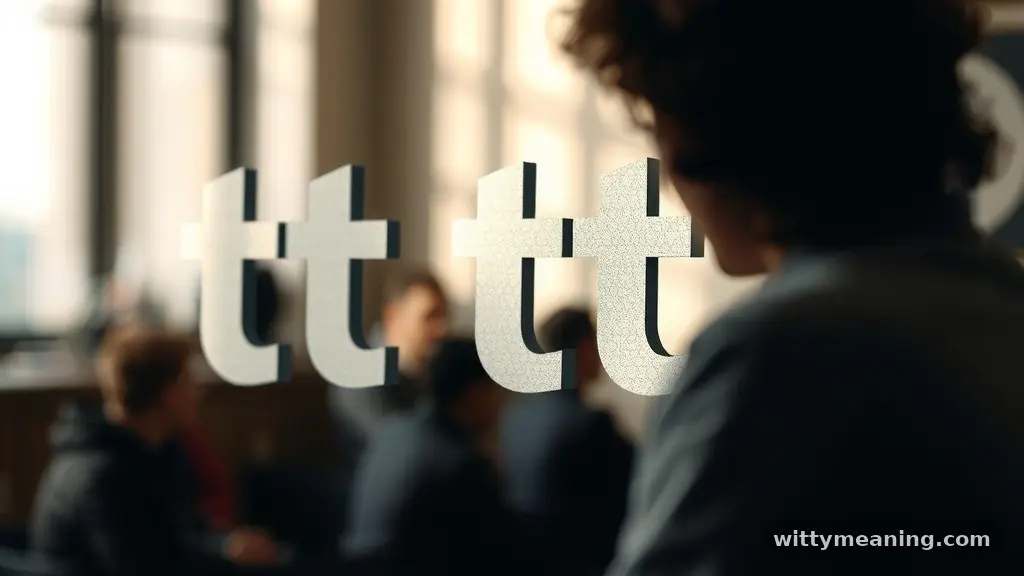
Using these terms effectively requires a bit of social awareness. Because digital communication lacks tone of voice, body language, and facial expressions, these acronyms are the only tools we have to signal intent.
If you use them too much, you can sound immature or insincere. If you use them too little, your messages might come across as cold or robotic.
* Use TT to acknowledge a friend’s venting without needing to write a paragraph.
* Avoid using it in professional emails or formal settings where clarity is required.
* Pay attention to how your friends use it; if they use it ironically, feel free to join in.
* Be mindful of the platform; on a site like LinkedIn, stick to professional language.
By following these simple rules of texting etiquette, you can integrate these expressions into your daily life without losing your professional edge. It is all about balance and knowing your audience.
Addressing Common Misconceptions
A frequent point of confusion is whether the term is inherently negative. Many people assume that because it represents crying, the sender must be in a state of distress. This is often not the case.
In many instances, it is used to express “crying over” something funny or overwhelming. For example, if a content creator posts a hilarious video, a viewer might comment, “I’m actually TT right now,” meaning they are laughing until they cry.
This highlights the complexity of internet culture. What starts as a literal representation of sadness can be co-opted to mean intense laughter or pure disbelief. Do not assume you know the emotional state of the sender based on the letters alone.
Instead, look at the context of the post or the previous messages in your thread. If the conversation is lighthearted, assume the term is being used in a playful, hyperbolic sense.
The Role of Non-Verbal Cues in Digital Spaces
We often forget that texting is a form of non-verbal communication. When we speak, we use pitch, volume, and facial expressions to clarify our meaning. In text, we have only words and, occasionally, symbols.
This is why the tt meaning has remained relevant for so long. It provides a necessary visual aid that words alone cannot supply.
Think of it as a bridge between text and emoji. It is more expressive than a plain period but less formal than a full-blown emoji. This middle ground is highly valuable in the fast-paced world of messaging apps.
It allows for a level of intimacy that is hard to achieve with standard punctuation alone. As we continue to rely on these digital shortcuts, terms like this will likely remain a core component of how we express ourselves online.
Answering Frequently Asked Questions
What does TT mean in text slang?
In text slang, TT is a visual representation of a crying face. The two Ts are meant to look like eyes with tears streaming down. It is used to express sadness, frustration, or sometimes, in a sarcastic sense, extreme laughter.
Is TT always used to mean crying?
Not always. While its primary meaning is related to crying, it is frequently used in a hyperbolic or ironic way. For example, people often use it to express that they are “laughing until they cry” at a funny video or a particularly good joke.
How do I know if someone is being sarcastic with TT?
You can usually tell by the context of the conversation. If the topic is light, humorous, or ridiculous, the person is likely being sarcastic. If the topic is serious or involves bad news, they are likely using it to express genuine sympathy or sadness.
Does TT mean anything on TikTok?
Yes, on TikTok, it is often used as a shorthand for the platform’s name itself. If a user refers to “TT trends,” they are talking about what is popular on the app, rather than the crying emoticon. Context is key to distinguishing between these two meanings.
Navigating Future Digital Communication
The way we communicate online is constantly shifting, but the need for shorthand remains a constant. As you continue to interact in digital spaces, you will find that the tt meaning is just one of many tools used to bridge the gap between text and emotion. By keeping an eye on how these terms evolve, you can stay ahead of the curve and ensure your messages are always received as intended.
Whether you are using it to show support to a friend or to describe a funny moment on social media, this simple piece of digital shorthand proves that even the smallest characters can carry a lot of weight. Keep practicing your texting etiquette, stay observant of how others use these symbols, and you will find it much easier to connect with people across the vast, ever-changing landscape of the internet.