
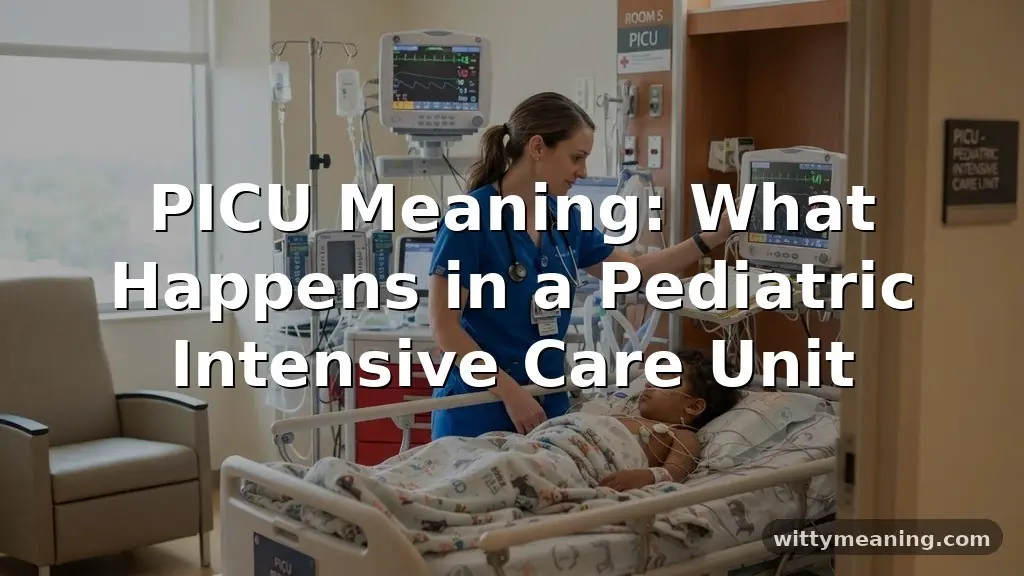

When you hear the term PICU, it refers to the specialized area of a hospital designed for children who are critically ill. Exploring the exact picu meaning involves understanding that this environment provides high-level medical support for infants, children, and teenagers requiring constant observation. Unlike standard hospital wards, these units are equipped with advanced technology and staffed by teams trained specifically in pediatric medicine.
Whether a child is facing a sudden injury or a chronic illness, the care provided here is designed to stabilize their condition while managing complex health needs. Understanding this environment helps families prepare for what can be an overwhelming experience during a medical crisis.
The Core Definition of a Pediatric Intensive Care Unit
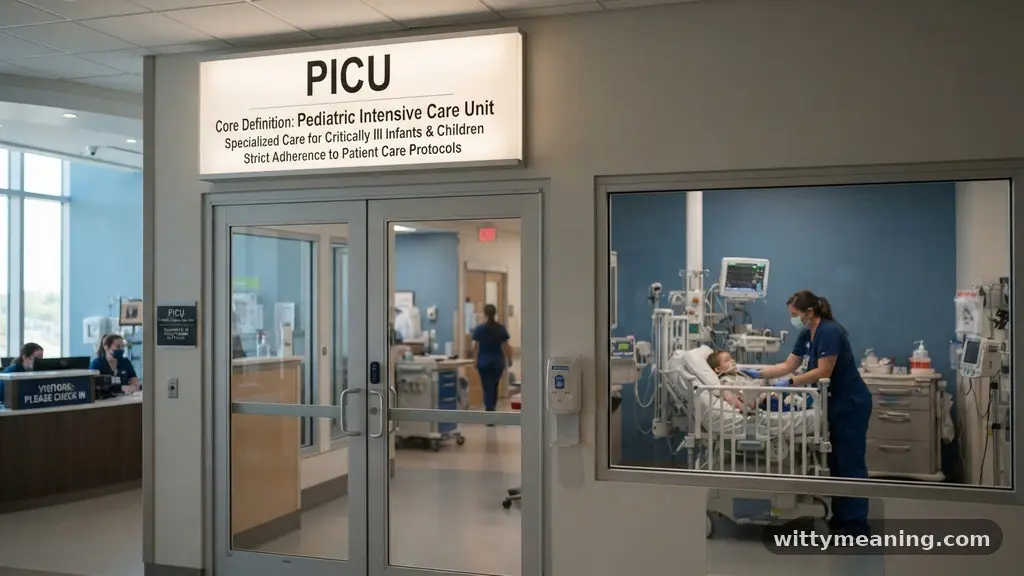
At its most basic level, the picu meaning centers on the concept of high-level, round-the-clock medical intervention. A pediatric intensive care unit serves as the heart of a hospital’s emergency and recovery infrastructure for young patients.
These units are distinct from general pediatrics because they focus exclusively on life-threatening conditions that require specialized monitoring and rapid response. When a child’s health status is unstable, they are moved to this environment to ensure that medical professionals can address subtle changes in their condition immediately.
The staff in these units are not just general doctors and nurses; they are highly trained specialists. A pediatric intensivist leads the team, often working alongside respiratory therapists, pharmacists, and social workers.
This multidisciplinary approach is necessary because critically ill children often face complex challenges that affect multiple bodily systems simultaneously. Every piece of equipment, from heart monitors to ventilators, is calibrated to the specific physiological needs of a developing body, making the environment uniquely suited for pediatric care.
Distinguishing the PICU from the NICU
One of the most common points of confusion involves the difference between the PICU and the NICU. While both are types of intensive care, the primary distinction lies in the age of the patient and the nature of their medical needs.
The American Academy of Pediatrics defines these boundaries clearly, noting that the neonatal intensive care unit is reserved for newborns, often those born prematurely or with congenital complications. In contrast, the PICU handles children from infancy up to early adulthood.
Neonatology is a specialized field that focuses on the unique physiology of the newborn, whose organs are still adapting to life outside the womb. Once a child moves past the neonatal stage—typically after the first month of life—their care requirements shift toward pediatric protocols. While there is occasionally overlap in the equipment used, such as specialized warming beds or monitoring systems, the medical philosophy in a PICU is geared toward the developmental milestones and specific disease processes that occur as a child grows.
Common Reasons for Admission
Patients arrive in the pediatric intensive care unit for a wide variety of reasons, ranging from sudden trauma to complications from chronic illnesses. The decision to admit a child is based on patient acuity, which measures how much medical support and monitoring the individual requires to stay stable.
If a child has difficulty breathing, for example, they might be admitted to receive advanced respiratory support. Similarly, children dealing with severe infections like sepsis often require the constant hemodynamic monitoring available only in this setting.
Other common reasons for admission include:
- Severe respiratory failure requiring mechanical ventilation.
- Post-operative recovery following complex neurosurgery or cardiac procedures.
- Trauma care resulting from accidents, burns, or near-drowning events.
- Management of multi-organ failure related to systemic diseases.
- Complex neurological monitoring for patients with status epilepticus.
The Role of Advanced Life Support
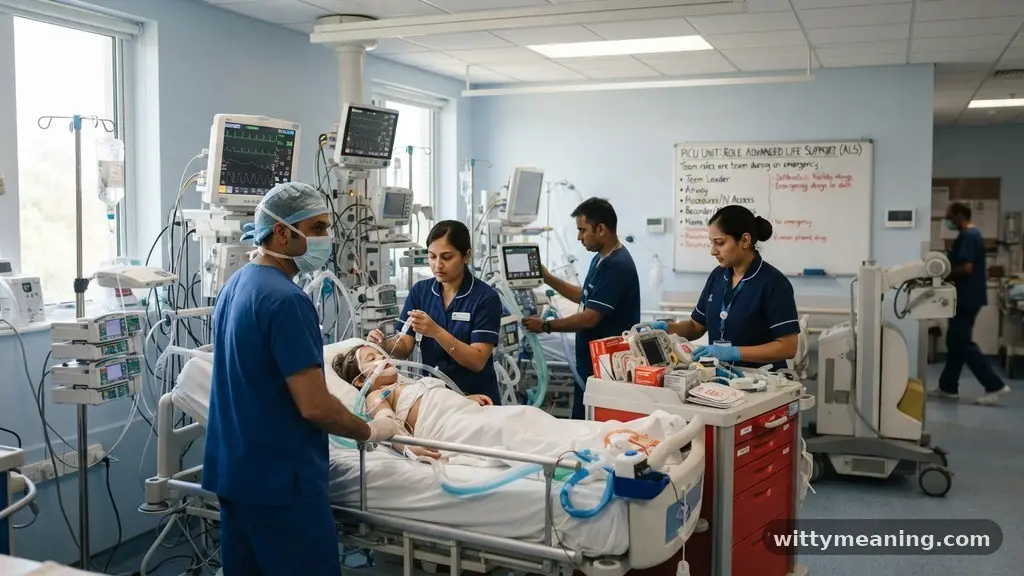
Life support in a pediatric setting is a sophisticated blend of technology and clinical expertise. When a child cannot maintain their own airway or circulation, the medical team employs various forms of support, such as mechanical ventilation, to do the work for them.
These interventions are often temporary bridges that allow the child’s body to heal while the underlying cause of the crisis is treated. In some extreme cases, teams may utilize extracorporeal membrane oxygenation (ECMO) to oxygenate the blood outside the body when the heart or lungs are too damaged to function.
Sedation is another critical component of this care. Many of the procedures and machines used in the unit can be frightening or painful for a child, so managing their comfort levels is a priority.
Pediatric nursing staff work closely with intensivists to balance the need for sedation with the goal of keeping the child as alert and comfortable as possible. This delicate balance helps reduce the trauma of the hospital experience while ensuring that the child does not pull at essential tubes or monitoring equipment.
Understanding the Psychiatric Intensive Care Unit
It is important to note that the acronym PICU can sometimes carry a different meaning in mental health contexts. In some healthcare systems, a psychiatric intensive care unit is also abbreviated as a PICU.
This facility provides a secure, therapeutic environment for adolescents who are experiencing an acute mental health crisis and pose a risk to themselves or others. Unlike the medical PICU, which focuses on physiological stability and life support, this version is centered on safety, behavioral stabilization, and intensive psychiatric assessment.
While the two units share the same name, their daily operations are starkly different. The psychiatric unit focuses on environmental modifications to prevent injury, structured therapeutic activities, and medication management for psychiatric conditions.
Understanding the context is vital, as a child admitted for a medical emergency will have entirely different needs and treatment goals than one admitted to a secure psychiatric facility. Always clarify with hospital staff which unit is being referenced if there is any ambiguity.
The Importance of Specialized Pediatric Nursing
Pediatric nursing is the backbone of the unit, providing the most direct, consistent care to the patient. These nurses are trained to recognize subtle signs of deterioration that might go unnoticed by less experienced staff.
Because children cannot always vocalize their pain or discomfort, nurses rely on observational skills, monitoring data, and physical assessment to determine how the child is responding to treatment. Their role goes beyond medication administration; they are the primary advocates for the child during rounds.
A key aspect of this role is developmental care. This involves creating an environment that minimizes stress, such as controlling light and sound levels, which can be overwhelming for a child in a high-tech, noisy unit.
Nurses also facilitate family-centered care, ensuring that parents are involved in the decision-making process and are kept informed about their child’s progress. This partnership between the medical team and the family is essential for the child’s emotional well-being and recovery.
Triage and Patient Acuity
Triage in the pediatric setting is a constant, dynamic process. Because the unit has a limited number of beds and highly specialized resources, staff must continuously assess patient acuity to determine who needs the most intensive care.
This involves a constant flow of information between the emergency department, surgical suites, and the intensive care unit. When a new, critically ill patient arrives, the existing team must be ready to shift resources instantly to accommodate the new admission without compromising the care of current patients.
The assessment of acuity involves tracking vital signs, neurological status, and laboratory values in real-time. If a patient’s condition improves, they are often moved to a “step-down” unit or a general pediatric floor to make room for those in more urgent need. This process is managed by the pediatric intensivist, who coordinates the flow of patients to ensure that the hospital’s critical care capacity is utilized effectively and safely.
Table: Key Differences in Care Environments
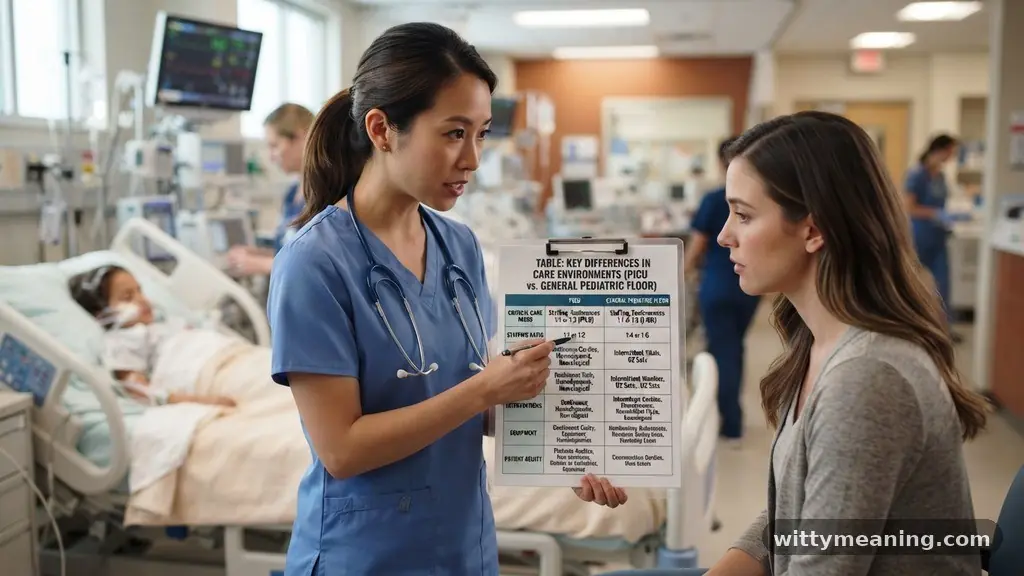
The following table provides a comparison between different levels of pediatric hospital care to help clarify where specific needs are met.
| Care Level | Primary Focus | Patient Condition |
|---|---|---|
| General Pediatrics | Recovery and monitoring | Stable, non-life-threatening |
| Step-Down Unit | Increased observation | Stable but high-risk |
| PICU | Life support and stabilization | Critically ill, unstable |
| NICU | Neonatal development | Newborns, premature infants |
Managing Surgical Recovery
Post-operative recovery for children is a specialized process that often requires a stay in the intensive care unit, especially after major surgeries. Procedures involving the heart, brain, or major organs require intense monitoring to ensure that the child remains hemodynamically stable.
The immediate post-operative period is when complications such as bleeding, infection, or respiratory distress are most likely to occur. By keeping the patient in a controlled environment, surgeons and intensivists can detect these issues before they escalate into emergencies.
During this time, the team may also manage complex pain protocols, which are essential for recovery. Effective pain management is not just about comfort; it is a clinical necessity that helps prevent secondary complications like pneumonia or delayed movement.
By utilizing a combination of systemic medications and localized blocks, the staff ensures that the child can rest while their body begins the healing process. This phase is often the most critical step in transitioning a child from a surgical state to a stable recovery phase.
Addressing Topical Gaps in Intensive Care Knowledge
Many people ask whether adults can ever be admitted to a pediatric intensive care unit. Generally, this does not happen because adult physiology and medical equipment are drastically different.
However, in rare circumstances—such as during a pandemic or in remote areas with limited resources—hospitals might make exceptions for young adults with chronic conditions that have been managed by pediatric specialists their entire lives. This is a complex ethical and logistical issue that hospitals manage on a case-by-case basis.
Another common question concerns the use of tracheostomies in these units. A tracheostomy is an opening in the neck that allows a tube to be inserted into the windpipe to help the patient breathe.
While it might seem like a permanent solution, in the intensive care unit, it is often a temporary measure for children who require prolonged mechanical ventilation. The team works to wean the child off the ventilator, eventually removing the tube and allowing the site to heal, highlighting the unit’s focus on long-term recovery and eventual discharge.
The Philosophy of Family-Centered Care
Modern pediatric medicine emphasizes the vital role of the family in a child’s recovery. Family-centered care is the standard in most high-quality units, as it recognizes that parents are the experts on their child’s personality and history.
In the intensive care environment, this means parents are encouraged to participate in rounds, help with daily care routines, and provide comfort to their child whenever possible. This involvement has been shown to improve outcomes, as it reduces the anxiety of the child and provides the medical team with better insights into the patient’s baseline behavior.
The environment is also designed to accommodate families, with many units offering sleeping arrangements and private spaces where parents can process the stress of the situation. Social workers and child life specialists are often available to help siblings and parents cope with the emotional burden of the experience. By treating the family as a unit rather than just focusing on the patient, the hospital creates a more holistic approach to healing that extends beyond just fixing the physiological problem.
FAQ
What is the main purpose of a PICU?
The primary purpose is to provide intensive, 24-hour monitoring and life-support interventions for critically ill children. It centralizes specialized equipment and expert staff, such as pediatric intensivists and nurses, to manage life-threatening conditions, stabilize vital signs, and support organ function until the patient recovers.
How does the PICU differ from a general hospital ward?
A general ward provides standard care for stable patients. In contrast, the PICU is designed for high-acuity patients who require constant observation. The ratio of nurses to patients is significantly higher in the PICU, and the facility is equipped with advanced technology for hemodynamic and respiratory monitoring.
Can parents stay with their child in the PICU?
Yes, most pediatric intensive care units encourage family presence and participation. Family-centered care is a core component of the unit’s philosophy, as parental support is known to aid a child’s recovery. Staff will guide parents on how to interact safely with their child and the surrounding equipment.
Is the PICU used for mental health crises?
While some hospitals have a psychiatric intensive care unit that uses the same acronym, a medical PICU is different. A medical unit focuses on physical, life-threatening conditions. If a child is in a mental health crisis, they are typically admitted to a specialized psychiatric unit or behavioral health facility.
Conclusion
Understanding the picu meaning is essential for any parent or caregiver navigating the complexities of a child’s medical journey. This environment, while intimidating, is a specialized sanctuary where advanced technology meets compassionate, expert care. By focusing on the unique needs of infants and children, these units play a critical role in stabilizing health and facilitating recovery during the most challenging times.
The integration of family-centered care and specialized pediatric nursing ensures that every child receives the support they need to heal. If you find yourself or a loved one needing these services, rely on the team of specialists to guide you through the process, as they are dedicated to the health and well-being of the youngest patients in the hospital.