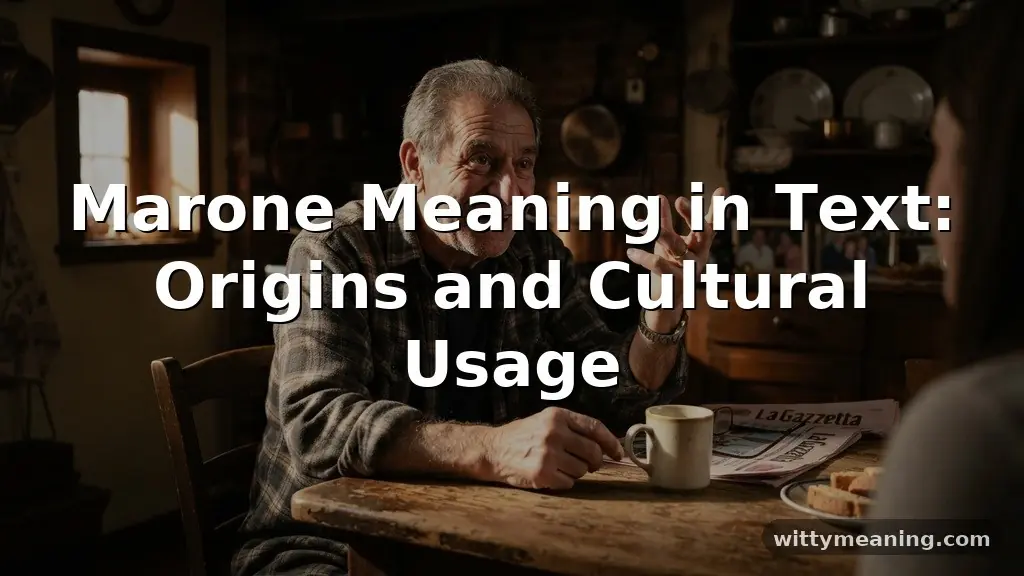

When you encounter the word “marone” in a text message or on social media, you might feel a bit confused if you aren’t familiar with Italian-American slang. It often appears in moments of high emotion, usually signaling that the sender is venting or reacting to something shocking.
Understanding the marone meaning in text requires looking at how language shifts from spoken dialects into our modern, typed-out digital communication. This term serves as a bridge between old-world heritage and contemporary frustration, providing a punchy way to convey intensity without needing a long explanation.
The Linguistic Roots of the Term
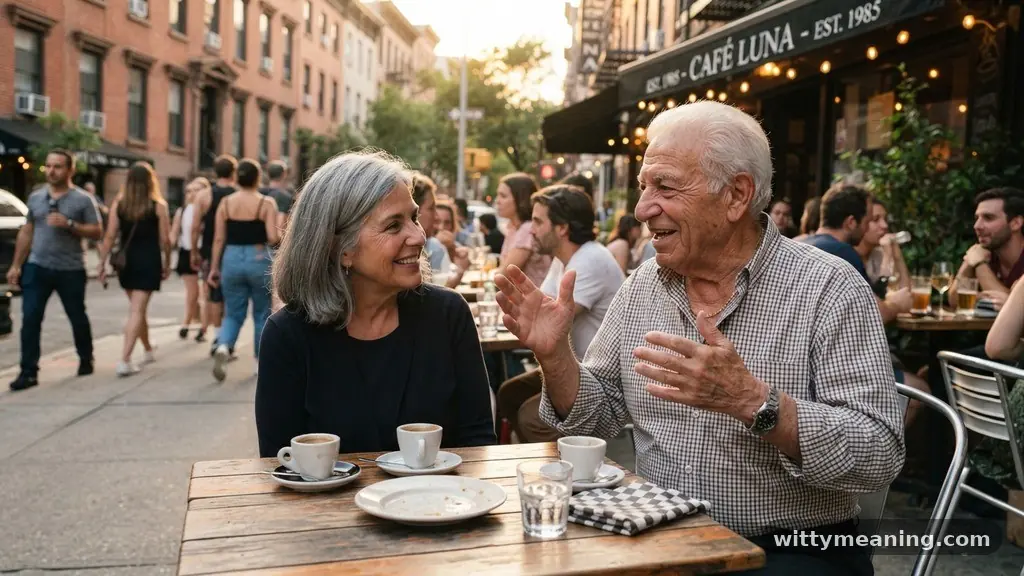
At its core, the term is a corruption of the Italian word “Madonna,” which literally translates to “my lady.” In the context of Italian-American dialects, particularly in the Northeast United States, the pronunciation shifted from the formal Italian “Madonna” to the anglicized and shortened “marone.”
This phonetic drift is common among immigrant languages that lose their formal structure when colliding with English-speaking urban environments. The transition from a religious invocation to a secular exclamation of annoyance is a fascinating evolution of cultural linguistics.
Because the term originated in spoken dialogue, it wasn’t initially intended for written use. However, as television dramas like The Sopranos gained massive popularity, the term entered the mainstream lexicon.
When people write “marone” today, they are tapping into a specific, gritty, and often humorous cultural identity. It functions as an interjection, much like “damn” or “wow,” but with a distinct flavor that connects the speaker to a specific regional history.
The Role of Television Dramas in Normalization
Popular media has played a massive role in how we perceive and use slang terms from specific ethnic enclaves. Television dramas, especially those centered on the Italian-American experience, brought these colloquialisms into living rooms across the country.
Characters often used the word to express deep-seated frustration, or disbelief, during high-stakes scenes. Because these characters were often depicted as passionate or volatile, the word became permanently associated with high-intensity emotional reactions.
When you see the word in a text, it is often an imitation of the tone used by these iconic characters. It carries a sense of performative exhaustion. The viewer-turned-texter uses the term to signify that they are dealing with a situation that feels like a scene out of a mob movie.
It’s a shorthand for saying, “I can’t believe this is happening,” or “This situation is completely ridiculous.” The screen has essentially acted as a dictionary for millions, teaching them the emotional weight of a word they might never have heard in their own homes.
Expressing Frustration and Disbelief
In digital communication, tone is notoriously difficult to convey. We often rely on emojis or specific slang to ensure our feelings aren’t misinterpreted. Using “marone” is a powerful way to signal immediate, visceral frustration.
It isn’t used for minor inconveniences; usually, someone types it when they are genuinely annoyed or shocked by a turn of events. It acts as an anchor for the reader, letting them know that the sender is currently experiencing a peak emotional state.
This term is particularly effective because it sounds forceful. The rolling “r” and the abrupt ending give it a percussive quality that feels satisfying to type.
When someone is dealing with a difficult coworker, a bad traffic jam, or a frustrating piece of news, the word provides a quick, cathartic release. It replaces more sterile expressions like “I am annoyed” with something that feels more human, grounded, and undeniably expressive.
Common Variations and Contextual Nuances
Language is rarely static, and this term is no exception. While “marone” is the most common spelling, you might encounter variations depending on how the person phonetically interprets the sound. Some people spell it “maron,” which is a shortened version that loses the terminal vowel sound.
Others might stretch it out to “maroooone” to emphasize the length of their frustration. These variations are important to note because they change the intensity of the message.
A longer spelling usually implies a deeper sense of exasperation. If someone writes “marone” with a single ‘e’, it might be a quick, passing thought. If they write “marooooone,” they are likely leaning back in their chair, hand on their forehead, completely fed up.
Being able to read these nuances helps in deciphering the actual state of the sender. It is a subtle art of digital body language that we have all learned to master over time.
Marone Mia: A Common Expansion
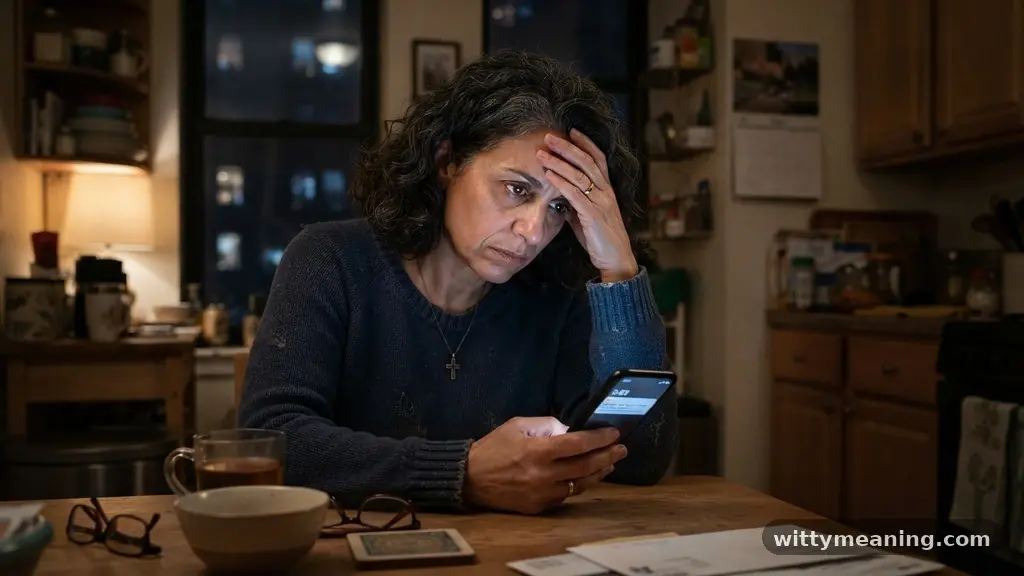
Another frequent iteration you will see is “Marone mia.” This expansion, which means “my Madonna,” adds a layer of personal appeal to the exclamation. It sounds more like a lament or a cry for help than a simple curse.
In Italian culture, invoking the Madonna is a way to seek comfort or to express that one is overwhelmed by the weight of the world. In a text message, it often serves as a way to say, “I am at my wit’s end.”
This specific phrase is often used when a situation feels hopeless or overly complex. It’s the kind of thing someone might text after a series of unfortunate events. It connects the user back to the idea of a desperate plea for sanity.
Using the “mia” adds a possessive, intimate quality that makes the frustration feel shared rather than just projected outward. It’s a way of saying, “My life is currently chaotic, and I need you to know it.”
| Term/Variation | Typical Emotional Intensity | Context of Use |
|---|---|---|
| Marone | Moderate to High | General annoyance or shock |
| Maron | Mild | Casual, quick reaction |
| Marone Mia | Very High | Deep exasperation or despair |
| Marooooone | Extreme | Overwhelming frustration |
Regional Differences and Misconceptions
It is vital to distinguish between the Italian-American slang and other similar-sounding words in different languages. For instance, in Spanish, “marron” (often spelled without the accent) means “brown” or can refer to a difficult task or a “mess.”
People sometimes confuse the two because the pronunciation is somewhat similar, but the meanings are entirely different. An English speaker using the term in a text is almost certainly drawing from the Italian-American tradition, not the Spanish vocabulary.
Furthermore, within Italy itself, the term is rarely used in the same way as it is in the United States. In many regions of Italy, using “Madonna” as an exclamation is considered quite vulgar or blasphemous, depending on the local culture and the speaker’s religious background.
The version used in American text threads has been sanitized and secularized by distance and time. It is a classic example of an “expatriate word,” where a term travels to a new land and evolves into something that the original speakers might not even recognize.
The Impact of Digital Communication
The way we type has changed how we think about words. Because text is permanent and searchable, slang moves faster than it ever did in the age of spoken word alone.
A term like “marone” can jump from a niche cultural group to a global audience in a matter of years due to the viral nature of social media and streaming services. This democratization of language is why you might see someone from a completely different cultural background using the term.
This phenomenon can lead to “semantic bleaching,” where the original, specific meaning of a word is diluted as it is adopted by a wider audience. While purists might argue that the term should only be used by those with a specific cultural connection, the reality is that language is a living, breathing entity. As it is used in digital communication, it becomes a tool for everyone to express a specific, high-intensity feeling that English doesn’t always capture as effectively.
Addressing Topical Gaps and Common Errors
One major gap in the general understanding of this term is the assumption that it is a direct translation of a swear word. It isn’t. It is an interjection.
Many people treat it as if it were a synonym for the “F-word,” but that misses the mark. It is much closer to “Good grief,” “Oh my god,” or “For heaven’s sake.” Understanding this distinction is key to using it correctly in a conversation without sounding like you are trying too hard to be aggressive.
Another common error is applying the term to positive situations. You wouldn’t typically say “marone” when you are happy or excited. If you win the lottery, you wouldn’t text “marone!” because the term is inherently tied to the sensation of being burdened or annoyed.
It is exclusively for the negative, the ridiculous, or the overwhelming. Using it incorrectly can make your text seem confusing or out of place to someone who knows the etymology.
Historical Context and Cultural Preservation
Language acts as a vessel for history. Even as the term becomes more common in digital text, it carries the weight of the Italian-American experience.
It reflects the struggle, the humor, and the resilience of a community that lived in close-knit urban environments. By using these words, we are inadvertently participating in the preservation of a dialect that might otherwise fade away as generations move further from their immigrant roots.
It is helpful to view slang not just as “bad grammar” but as a form of cultural shorthand. Every time someone types “marone,” they are unknowingly paying homage to the linguistic environment of the early 20th-century American Northeast.
It’s a testament to how humans hold onto their identity through the way they express their most basic emotions. You can find more information about the evolution of such dialects through resources like the Library of Congress American Folklife Center, which documents the diverse ways Americans speak and interact.
FAQ
Is using the word marone considered offensive?
It is generally not considered offensive in casual, informal settings. Because it is a secularized version of a religious invocation, most people view it as a harmless slang term for frustration. However, it is always best to avoid using it in professional or strictly formal environments.
Can I use the term if I am not Italian?
Yes, it is widely used as a piece of general American slang today. Like many cultural terms that have entered the mainstream, it is no longer restricted to a single ethnic group. As long as you understand the meaning and context, you are free to use it.
Is marone the same as the Spanish word marron?
No, they are different. The Spanish “marron” usually means brown or refers to a mess or a difficult task. The Italian-American “marone” is an interjection for frustration. They share a similar sound but have completely distinct origins and meanings in their respective languages.
Why do people spell it differently in texts?
Spelling variations usually reflect how the person hears the word or how much emphasis they want to place on their frustration. Stretching the vowels or shortening the word allows the texter to convey tone, which is often lost in digital, text-based communication.
Final Thoughts
The next time you see “marone” pop up in your messages, you will know exactly what the sender is feeling. It is a shorthand for that specific, intense kind of exasperation that happens when life just gets a little too loud or ridiculous. By understanding the cultural origins and the linguistic evolution of this term, you gain a better grasp of how we communicate our deepest frustrations in the digital age.
Language is constantly changing, and this particular term shows how a bit of history can find a new home in our daily, fleeting text conversations. If you find yourself using it, just remember it’s a classic way to let off a little steam. Keep observing how language shifts, and don’t hesitate to share these insights with friends who might still be scratching their heads when they see it.