

When people discuss the javert meaning in contemporary culture, they are almost always referencing the relentless, unyielding nature of the character from Victor Hugo‘s masterpiece. While the name originates from a specific 19th-century figure in French literature, it has evolved into a shorthand for those who prioritize legalism over humanity.
Understanding this term requires looking past the surface of the antagonist role to see how his rigid principles serve as a foil to the themes of mercy and personal growth. Whether you are analyzing classic fiction or trying to understand how this character name functions as modern slang, the core of the concept remains rooted in the tension between the letter of the law and the spirit of justice.
The Literary Origins of Inspector Javert

Inspector Javert serves as the primary antagonist in the sprawling narrative of Les Misérables. Created by Victor Hugo, this character functions as the embodiment of state authority and the uncompromising application of the law.
Within the context of 19th-century France, he represents the rigid structures of society that refuse to bend for the sake of individual circumstances. His existence is defined entirely by his profession; he is a man who views the world through the narrow lens of crime and punishment.
Hugo designed this character to stand in stark opposition to Jean Valjean, the protagonist who undergoes a profound transformation. While Valjean represents the possibility of change and spiritual growth, Javert remains static. He is the personification of a system that views poverty, desperation, and history as irrelevant variables.
To him, an escaped convict is always an escaped convict, regardless of the good they might do in the years following their original transgression. This fixation is not merely a job requirement but a fundamental aspect of his identity.
Defining the Archetype of Moral Absolutism
The javert meaning is inextricably linked to the concept of moral absolutism. In philosophical terms, this is the belief that there are universal standards of right and wrong that apply to everyone, everywhere, at all times.
For someone operating under this framework, the world is binary: things are either legal or illegal, good or bad, black or white. There is no room for the gray areas that characterize the human experience.
This archetype is particularly compelling because it is not inherently “evil” in the traditional, malicious sense. He does not act out of cruelty or a desire to cause pain to others. Instead, he acts out of a sincere, albeit misguided, belief in the necessity of order.
He views his duty as a sacred trust, believing that if the law were to be ignored for even a moment, society would descend into chaos. This makes him a tragic figure rather than a simple villain, as his obsession eventually leads to his own psychological undoing.
Legalism and the Conflict of Duty
Legalism is the practical application of the absolutist mindset. It is the rigid adherence to the text of the law, often ignoring the intent behind it. In the eyes of this character, the law is the highest morality.
If a person breaks a law, they have committed a sin that cannot be washed away by later good deeds. This perspective creates a profound conflict when he encounters individuals who have evolved beyond their past mistakes.
His duty is his religion. He does not allow himself the luxury of empathy, as he believes that empathy is a weakness that undermines the foundation of justice. This is why his pursuit of Jean Valjean is so persistent; it is not personal hatred that drives him, but a terrifying sense of professional obligation.
He cannot reconcile the idea that a man who was once a criminal could become a pillar of his community. To accept this would be to admit that his entire worldview is flawed.
The Contrast Between Justice and Mercy
The central tension of the story lies in the struggle between justice and mercy. While justice is often portrayed as an objective, blind force, mercy is the human element that recognizes the complexity of life.
The javert meaning is essentially the denial of mercy. By refusing to acknowledge the humanity of those he hunts, he isolates himself from the very society he claims to be protecting.
Contrast this with the journey of other characters who learn to look beyond the surface. Mercy is not the absence of justice; rather, it is the maturity to apply justice with wisdom. When the inspector finally realizes that he has been shown mercy by the very man he sought to destroy, his world collapses.
He cannot integrate this act of grace into his rigid belief system. The inability to reconcile this paradox is what ultimately forces him to confront the limits of his own existence.
Obsession as a Defining Character Trait
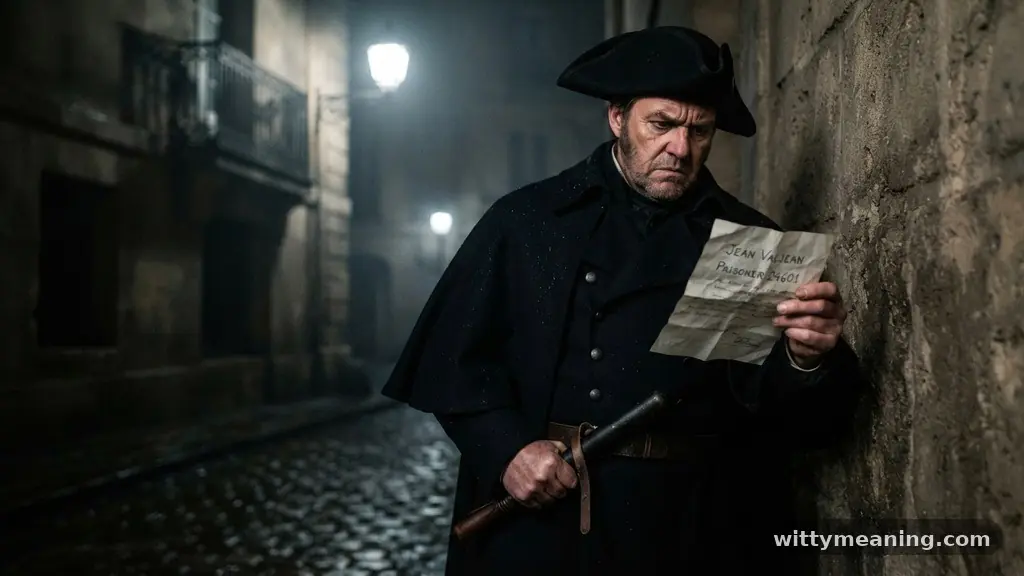
Obsession is the fuel that keeps this character moving through the pages of the novel and the scenes of the Les Misérables musical. His pursuit is not just a task; it is a manifestation of his inner need for stability.
Without a target to hunt, he would have no purpose. He defines himself by the criminals he catches, and by letting one escape, he loses a piece of his own definition.
This obsession serves as a warning about the dangers of living a life without self-reflection. When someone becomes so attached to a single goal or a single way of viewing the world, they lose the ability to adapt to new information. He becomes a prisoner of his own logic.
This is a common theme in literature: the hunter who becomes so focused on the prey that they lose sight of the horizon. His downfall is not caused by his enemy, but by the weight of his own internal consistency.
The Evolution of the Character in Modern Slang
In contemporary internet culture and social discourse, the name has taken on a life of its own. When someone is described as a “Javert,” it usually implies they are being overly pedantic, relentlessly critical, or obsessively focused on catching someone in a mistake. It is often used in the context of online debates where one person refuses to let a minor error go, effectively acting as a self-appointed auditor of others’ behavior.
This slang usage highlights the cultural shift toward recognizing the “policing” of others as a negative trait. In a world where people are constantly under observation, the label is applied to those who act as if they are the sole arbiters of truth and morality.
It is a critique of the “gotcha” culture that values exposing a flaw over understanding the context in which that flaw occurred. It turns the character from a tragic literary figure into a relatable, if somewhat annoying, social archetype.
Societal Implications of Rigid Principles
The danger of adhering to rigid principles is that they often fail to account for systemic inequality. The character represents a state that is more interested in maintaining its own power structure than in serving the people it governs.
By focusing solely on the law, he ignores the social conditions that create crime in the first place. This is a recurring critique of law enforcement and judicial systems that prioritize punishment over rehabilitation.
When a society functions like this character, it becomes brittle. It cannot evolve, it cannot forgive, and it cannot heal. It creates a cycle of antagonism where the state and the individual are constantly at war.
The lesson here is that a healthy society requires a balance between the rules that keep us safe and the compassion that allows us to live together. Without that balance, the system becomes an end in itself, rather than a means to a better life for all.
Comparing the Novel and the Musical Representations
The portrayal of this character varies slightly between the original literature and the popular musical adaptation. In the novel, the internal monologue is much more extensive, allowing the reader to see the cracks in his armor more clearly. The book delves deeper into his upbringing in prison and his sense of being an outsider, which adds a layer of depth to his eventual mental collapse.
The musical, by contrast, relies on powerful songs to convey his state of mind. His soliloquies are anthems of his internal struggle, making his obsession feel more immediate and operatic.
Both versions, however, maintain the core of his character: the man who cannot change. The medium changes the delivery, but the fundamental struggle remains the same, proving that the archetype is strong enough to survive across different artistic interpretations.
| Feature | Inspector Javert | Jean Valjean |
|---|---|---|
| Core Motivation | Duty and the Law | Redemption and Love |
| Worldview | Static and Binary | Dynamic and Evolving |
| Primary Conflict | External Law vs. Internal Doubt | Past Sins vs. Future Potential |
| Outcome | Self-destruction | Spiritual Peace |
Addressing Common Misconceptions
A common gap in the general understanding of this character is the belief that he is purely a villain in the traditional sense. Many viewers of the story mistake his persistence for pure malice. However, he is a man of integrity, albeit a distorted one.
He believes he is doing the right thing, which makes his eventual realization of his error all the more painful. He is not fighting for greed or power; he is fighting for his version of the truth.
Another frequent misconception is that his story is about the triumph of the law. In reality, it is about the failure of the law when it is divorced from mercy.
His death is not a victory for the protagonist; it is a tragedy that highlights the loss of a man who could not find a way to exist in a world that requires nuance. He represents the limits of what a life built on pure duty can achieve.
FAQ
What does Javert symbolize in the story?
He symbolizes the rigid, unyielding nature of the law when it is separated from human compassion. He represents the systemic structures that prioritize order and status quo over the potential for individual redemption and the complexities of the human condition.
Is Javert considered a villain?
He is an antagonist, but not a villain in the traditional sense. He acts out of a misguided sense of duty and moral obligation rather than malice or cruelty. His conflict is internal, and his downfall stems from his inability to reconcile justice with mercy.
Why did he choose to end his life?
He takes his own life because he cannot resolve the cognitive dissonance caused by an act of mercy. When he is saved by the man he has been hunting, his entire worldview collapses. He realizes the law is not the ultimate morality, and he cannot survive that realization.
How is the term used in modern slang?
In modern usage, the term describes someone who is overly pedantic, obsessed with rules, or constantly looking for mistakes in others. It refers to a person who acts as an unyielding, self-appointed judge, often lacking the context or empathy required to understand a situation fully.
Conclusion
Exploring the javert meaning provides a fascinating look into how literature shapes our understanding of morality and justice. This character stands as a timeless reminder that while laws are necessary for a functional society, they are not a substitute for empathy and human judgment. His journey from a position of unwavering certainty to total collapse serves as a powerful cautionary tale about the dangers of living without the capacity for change.
By recognizing this archetype in ourselves and others, we can better navigate the complexities of our own moral lives. Whether you are a fan of classic literature or simply interested in how character archetypes influence our modern language, the story of this inspector remains a vital, thought-provoking piece of cultural history. Engaging with these themes allows us to reflect on our own values and the ways in which we balance our duties with our humanity.