
When you encounter the word “flounder” in conversation or literature, its dual nature can sometimes cause confusion. Whether you are dealing with a biological classification of a marine creature or a verb describing a difficult situation, understanding the flounders meaning requires looking at both the physical world and the nuances of human behavior.
This article breaks down how the term functions across different contexts, helping you distinguish between the flatfish swimming on the ocean floor and the act of struggling through a complex task. By exploring these origins and applications, you will gain a clearer grasp of how language shifts depending on the environment.
Etymology and Biological Classification
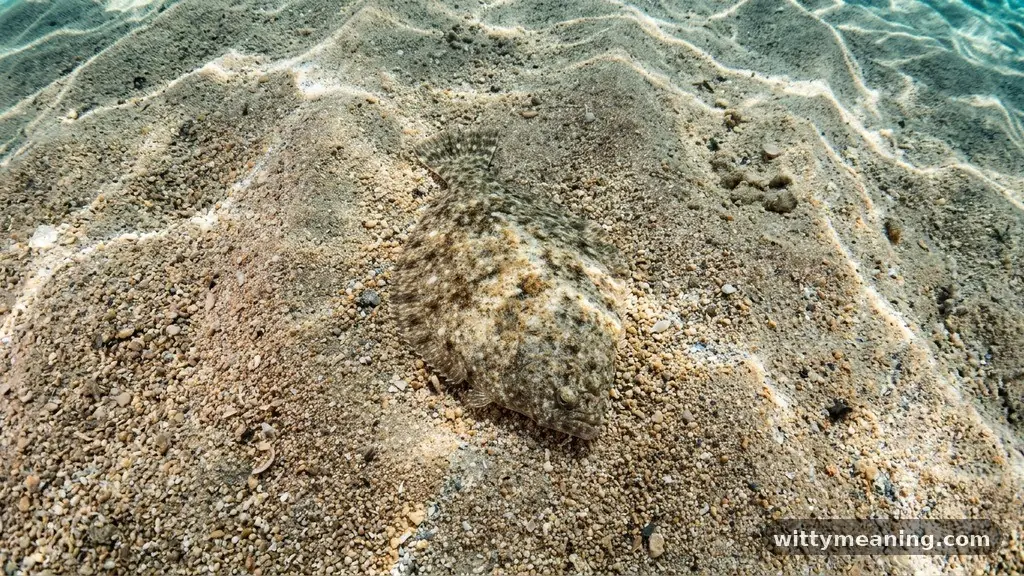
In a biological sense, the word “flounder” refers to a specific group of flatfish that are well-known to anglers and chefs alike. These fish belong to the order Pleuronectiformes, characterized by their unique ability to migrate both eyes to one side of their head as they mature, allowing them to lie flat against the sandy or muddy seabed. This physical adaptation is a masterpiece of evolutionary design, providing the fish with a distinct camouflage advantage against predators while they wait for prey.
The etymology of the word is somewhat debated, but it is generally thought to be linked to Scandinavian roots, specifically Old Norse or Middle English terms related to stumbling or being clumsy. This is a fascinating intersection where the physical movement of a fish—which often appears to “flap” or “wallow” along the bottom of the ocean—crosses over into the English verb used to describe someone who is losing their footing. Common species like the summer flounder and halibut are frequently grouped under this classification, though they differ in size and specific habitat preferences.
Physical Struggles and Literal Movement
When someone uses the term as a verb, it often evokes a specific, visceral image of physical movement. In a literal sense, such as thick mud, deep snow, or even loose sand, to flounder is to move with great difficulty.
You can imagine a hiker trying to cross a deep, slushy snowdrift; their legs sink, their balance is compromised, and every step requires an immense amount of effort. This is exactly what the verb describes: the act of moving clumsily or helplessly because the terrain is unstable.
This physical struggle is the foundation for the metaphorical usage of the word. If you have ever watched someone try to walk through a swampy area, you have seen the essence of the word in action.
The person is not necessarily falling down completely, but they are clearly lacking the grace, rhythm, and stability required to move forward efficiently. This sense of being “stuck” or “unsteady” is the primary link between the aquatic creature’s movement and the human experience of encountering an unexpected hurdle.
Interpretations of the Verb
When used as a verb, the term takes on a richer, more psychological dimension. It describes a state of confusion, hesitation, or a lack of clear direction. Unlike a simple mistake, which might be a one-time event, to flounder implies a sustained period of unproductive effort.
It is the feeling of being in deep water without a map, trying to find your way but only managing to go in circles. This state often arises when a person is confronted with a task they are not prepared for or an environment that is rapidly changing.
Consider the difference between “failing” and “floundering.” Failing is often an outcome, whereas floundering is a process. It is the messy, uncertain middle ground where you are still trying to succeed, but your methods are ineffective.
You might be putting in the work, but because you lack a strategy or the necessary resources, you continue to stumble. Identifying this state early is often the key to getting back on track, as it allows you to stop and reassess your approach rather than continuing to struggle blindly.
Metaphorical and Professional Contexts
In professional or social settings, the term is frequently used to describe projects or careers that are losing momentum. If a company is struggling to adapt to a new market or a student is failing to grasp a complex subject, we say they are floundering.
This is not necessarily a judgment on their character or ability, but rather an observation of their current state of progress. It suggests that the individual or the organization has lost their footing and is now dealing with the consequences of that instability.
When someone is facing unexpected obstacles, their response often dictates whether they continue to flounder or find their stride. For example, a project manager might notice that a team is floundering because the goals are ill-defined.
The solution in that scenario isn’t just to work harder; it is to clarify the objectives and provide the necessary tools for the team to regain their balance. Recognizing the difference between a temporary setback and a state of sustained struggle is a vital skill for anyone in a leadership role.
Common Synonyms and Usage

To improve vocabulary and precision, synonyms include a variety of words that capture different shades of meaning. Depending on whether you are describing a person who is confused or a business that is failing, your word choice can drastically change the impact of your statement. For the verb, you might choose words that emphasize the lack of coordination or the lack of success.
For the verb: Struggle, blunder, stumble, falter, wallow, or grope.
For the noun: Flatfish, sole.
Using these synonyms allows you to tailor your writing to the specific context. If you want to emphasize the lack of grace in someone’s movement, “stumble” or “blunder” works well.
If you want to emphasize the feeling of being overwhelmed, “wallow” or “struggle” is more appropriate. Precision in language helps your audience understand exactly what kind of difficulty is being described.
Distinguishing Between Noun and Verb
One of the most common points of confusion for learners of English is how to distinguish between the noun and the verb forms. While the spelling is identical, the context is usually enough to tell them apart.
If you see the word accompanied by an article (like “a” or “the”) or in a list of food items, it is almost certainly the fish. If it is paired with a subject and describes an action or a state of being, it is the verb.
| Context | Meaning | Example Sentence |
|---|---|---|
| Biological (Noun) | A type of flatfish | We caught a large flounder off the coast. |
| Action (Verb) | To struggle clumsily | The company began to flounder after the merger. |
| Physical (Verb) | To move with difficulty | He floundered through the deep mud. |
By looking at the sentence structure, you can quickly determine the intended meaning. This simple mental check—is it something you can eat or something you can do?—is usually enough to resolve any ambiguity in a text.
Addressing Topical Gaps: Floundering vs. Foundering
A common area where people often get tripped up is the confusion between “floundering” and “foundering.” While they sound similar and both relate to struggle, they have distinct origins and applications.
To “founder” historically refers to a ship filling with water and sinking. Therefore, “foundering” implies a more final, catastrophic failure, whereas “floundering” implies an ongoing, messy struggle.
If a boat is foundering, it is in the process of going under. If a student is floundering, they are having a hard time but are still capable of recovering. Understanding this nuance adds a layer of depth to your communication.
You can learn more about the technical definitions of maritime terms through the Encyclopedia Britannica, which provides reliable insights into how these words have historically shifted in meaning. Using these words accurately prevents common errors that can make your writing appear less professional.
Psychological Aspects of Floundering
When we discuss the experience of floundering, we cannot ignore the psychological toll it takes on a person. It is an inherently stressful state.
It involves the realization that your current path is not yielding results, which often leads to anxiety or a loss of confidence. This “cognitive friction” is a natural response to being in an environment where your existing skills are no longer sufficient to solve the problems at hand.
Many people feel a sense of shame when they are floundering, as if it were a character flaw rather than a tactical issue. However, in many professional and creative pursuits, it is a necessary phase of learning.
You cannot master a new skill without first feeling a bit lost. Embracing this feeling as a sign of growth, rather than a failure, is a common trait among high achievers who understand that the “floundering” phase is where the most significant breakthroughs often occur.
Practical Tips to Stop Floundering
If you find yourself in a state of professional or personal stagnation, there are practical steps you can take to regain your footing. First, define the specific obstacle. Are you missing information?
Are you lacking a clear plan? Are you overwhelmed by the sheer volume of work? By identifying the root cause, you can stop moving in circles and start making linear progress.
- Break the task down into the smallest possible units of work.
- Seek external feedback to gain a new perspective on your approach.
- Step away from the situation to clear your mind and reduce stress.
- Revisit your original goals to see if they are still relevant or if they need adjustment.
- Focus on the process rather than the outcome to reduce performance anxiety.
These steps help move you from a state of chaotic struggle into a state of intentional effort. When you stop acting on impulse and start acting on a plan, the “floundering” sensation typically subsides.
Historical Evolution of the Term
The evolution of the word is a testament to how language adapts to human needs. Originally tied to physical, clumsy movement, the word was eventually borrowed to describe the mental state of being similarly uncoordinated.
Over centuries, it has become a staple of English, appearing in literature, journalism, and daily conversation. Its endurance is likely due to how perfectly it captures the feeling of being “out of one’s element.”
Tracing this evolution shows us that language is not static. Words are living tools that change as our environments change.
Just as we use “floundering” today to describe digital or corporate struggles that our ancestors could never have imagined, we will likely continue to find new ways to apply the term as the world evolves. Understanding this history gives you a deeper appreciation for the words you use every day.
FAQ
What is the main difference between floundering and failing?
Failing is typically an end result or a completed event where an objective was not met. Floundering is a process; it describes the ongoing struggle, confusion, and lack of coordination that often precedes a potential failure or, if corrected, a successful turnaround.
Can you use the word flounder when describing a boat?
Yes, but you must be careful. If a boat is in trouble, it is often said to be “foundering” (sinking). If it is rocking back and forth or moving clumsily in shallow water, you might use “floundering,” but “foundering” is the more technically accurate term for maritime distress.
Is the term offensive when applied to a person?
It is generally not considered offensive, but it can be condescending depending on the tone. Saying someone is “floundering” is a critique of their current method or performance, not an attack on their intelligence. Use it carefully in professional settings to remain constructive.
How do I stop myself from floundering on a project?
The best approach is to pause and simplify. When you are struggling, your vision is often clouded by the complexity of the task. Break the project into smaller, manageable steps, seek outside advice, and ensure you have clearly defined goals for each phase of your work.
Conclusion
Understanding the nuances of the word allows you to use it with greater precision and empathy. Whether you are discussing the biological characteristics of a summer flounder, the literal difficulty of walking through deep snow, or the metaphorical struggle of a person navigating a professional challenge, the term provides a powerful way to describe being out of balance.
By recognizing the difference between the noun and the verb, and by distinguishing between a state of struggle and a state of failure, you can improve your communication and gain better control over your own problem-solving processes. Feel free to reach out if you have further questions about how to use these terms in your own writing or daily conversation.