Exploring the fae meaning often leads people down a winding path that connects ancient folklore to current digital-age identity markers. While the term is frequently associated with whimsical creatures from European storytelling, its modern application has expanded significantly.
Whether you are encountering the word in the context of high-fantasy novels or within the queer community as a set of neopronouns, understanding its depth requires looking at both its roots in tradition and its shift in contemporary speech. This article breaks down how these mythical origins inform the way we use the term today, offering a clear perspective on its multifaceted nature.
Roots in Ancient Folklore and Mythology
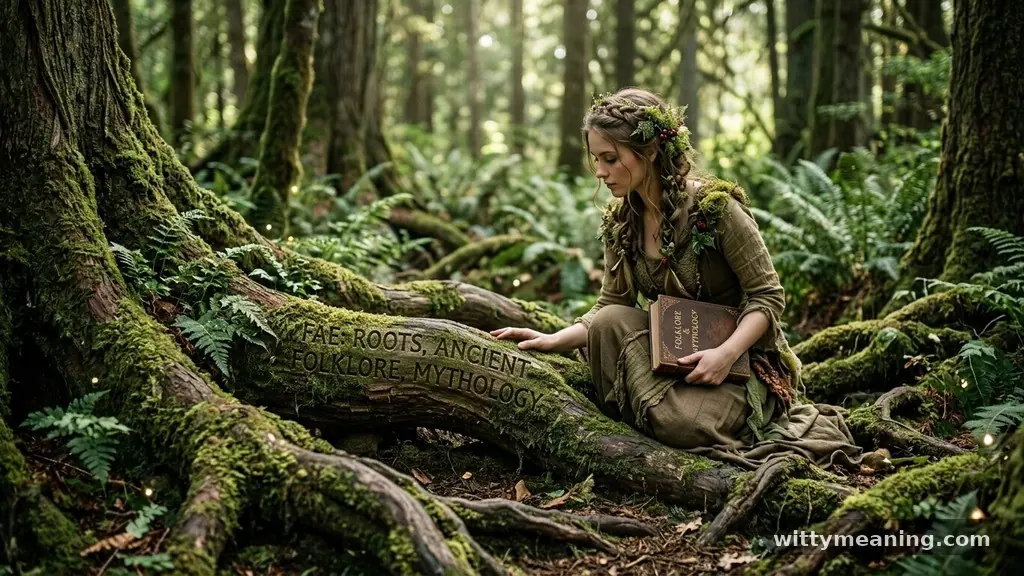
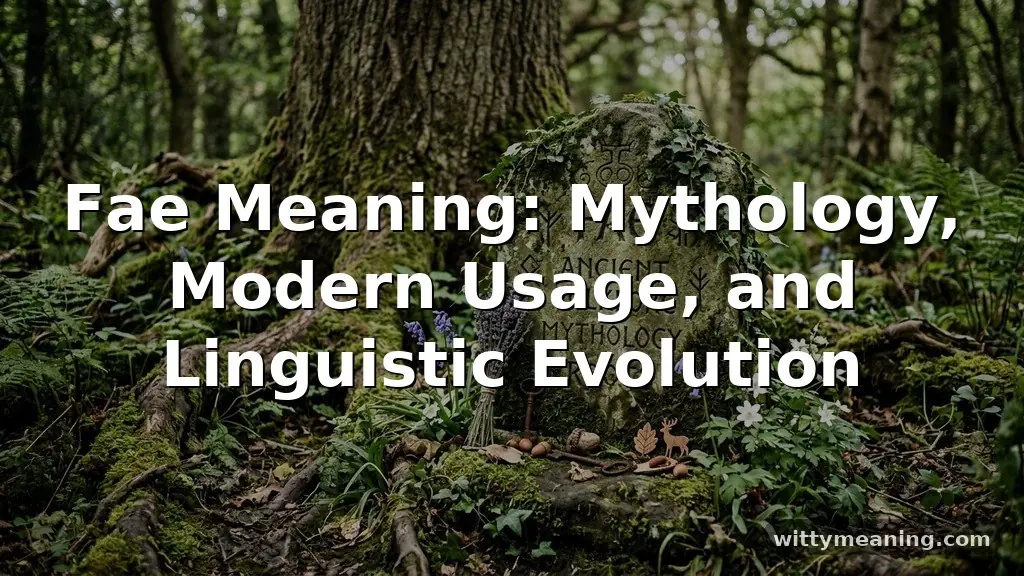
The term fae serves as a collective designation for a wide array of supernatural beings found primarily in Western European traditions. Often used interchangeably with fairy or faerie, the word finds its deepest roots in the oral traditions of the British Isles, particularly within Celtic mythology.
These beings were never depicted as the diminutive, winged creatures popularized by Victorian children’s literature. Instead, they were viewed as powerful, often dangerous, and morally ambiguous entities that inhabited the liminal spaces between the human world and the wild, untamed landscape.
In these older stories, the fae folk were not merely characters in a fairy tale; they were forces of nature. They represented the unpredictable aspects of the world—the sudden storms, the shifting seasons, and the hidden dangers of the deep forest. Because these creatures were said to possess magic that could shift reality, they were treated with a mixture of respect and genuine fear.
People would often leave offerings or avoid specific groves to ensure they didn’t accidentally offend the residents of the Otherworld. This historical context is essential for understanding why the concept of the fae retains an aura of mystery and power in modern narratives.
Linguistic Evolution and Etymology
The etymology of the word is tied to the Old French word faerie, which itself stems from fae, meaning fate or destiny. This connection highlights the original perception of these beings as masters of human fate.
Over centuries, the spelling shifted through Middle English, eventually settling into the forms we recognize today. The transition from a noun describing a specific class of supernatural creatures to an adjective describing a certain aesthetic or identity is a hallmark of linguistic evolution.
As the term moved from folklore studies into popular culture, its spelling became a point of distinction. Some writers and fans prefer fae or faerie to distance themselves from the cartoonish image of the fairy.
This preference for the older, more archaic-sounding versions helps maintain a connection to the darker, more serious roots of the mythos. Language is fluid, and the way we use these words today is a direct reflection of how our society continues to repurpose ancient archetypes to suit modern conceptual needs.
The Rise of Fae in Modern Fantasy Literature
Fantasy literature has been the primary vehicle for keeping the concept of the fae alive in the public consciousness. Authors have taken the raw material of Celtic deities and ancient spirits and woven them into complex, high-stakes narratives. A prominent figure in this resurgence is Sarah J.
Maas, whose work has introduced a new generation of readers to the gritty, political, and often lethal world of the fae. In these books, the creatures are depicted as long-lived, magically gifted, and deeply involved in the power struggles of their realms.
This shift in portrayal has moved the fae away from the periphery of children’s stories and into the center of complex adult fiction. These characters are no longer just forest spirits; they are rulers, warriors, and strategists.
By grounding these beings in internal logic and consistent magical systems, authors have made the fae feel more tangible. This literary trend has influenced how we define the term, shifting the emphasis from cute, winged sprites to beings of immense, often terrifying, capability.
Fae Pronouns and Gender Identity
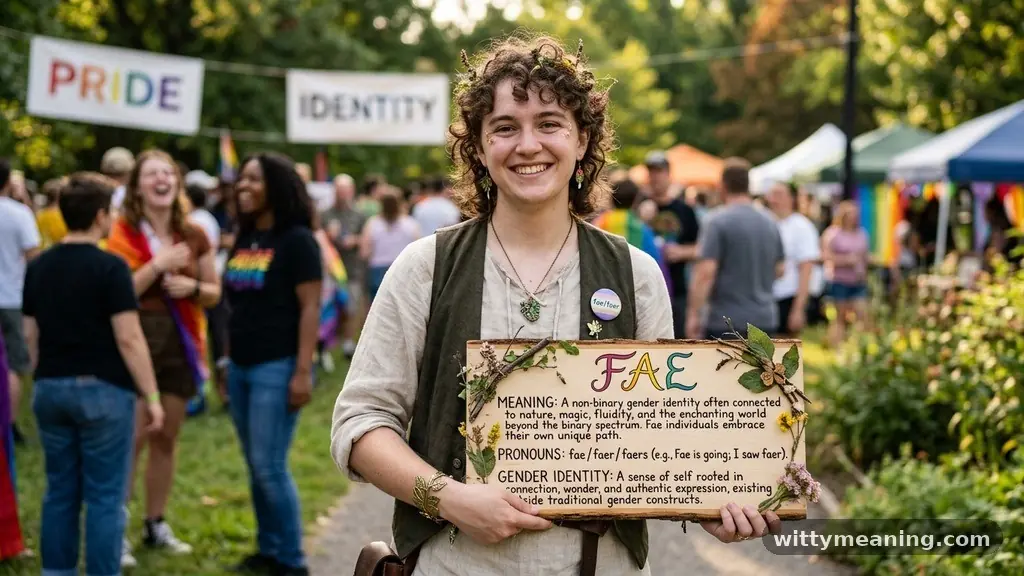
In recent years, the term has taken on a significant role within the queer community, specifically regarding the adoption of neopronouns. The use of fae/faer pronouns is part of a broader movement toward gender-neutral language that allows individuals to express their gender identity in ways that traditional pronouns cannot. For many non-binary or gender-nonconforming people, these pronouns provide a sense of alignment that feels more authentic than the binary options of he or she.
The choice of fae as a pronoun is often deeply personal. It draws upon the non-binary nature of the mythological creatures themselves, who have historically been seen as existing outside of conventional human social structures.
By adopting these pronouns, individuals are not just signaling their identity; they are aligning themselves with the archetype of the outsider—the being who exists between worlds and refuses to conform to rigid societal expectations. This modern usage is a fascinating example of how ancient concepts are being reclaimed to create new, inclusive spaces for self-expression.
Distinguishing Between Myths and Modern Slang
It is common for people to get confused when they see the word used in different contexts. To clarify the distinction, we can look at how the word operates in a traditional sense versus how it functions as a piece of internet-born slang or identity language. The following table provides a quick reference to help differentiate these meanings.
| Context | Definition | Key Characteristic |
|---|---|---|
| Mythology | Supernatural, powerful spirits | Often dangerous or morally neutral |
| Literature | High-fantasy beings | Complex, human-like, magical rulers |
| Identity | Neopronouns (fae/faer) | Used for gender-neutral expression |
This table illustrates that the term is not a monolith. When someone uses the word, the meaning is entirely dependent on the context of the conversation.
Understanding this allows for much smoother communication, especially when moving between discussions about folklore, pop culture, and social identity. It is important to recognize that none of these meanings is more “correct” than the others; they are all valid branches of the word’s living history.
The Intersection of Queer Identity and Supernatural Lore
The relationship between the queer community and the concept of the fae goes beyond just the use of pronouns. There is a long-standing cultural affinity for the idea of the Other—the person who does not fit into the established order of the status quo.
In many ways, the fae serve as a metaphor for the queer experience. They are often depicted as having their own social hierarchies, their own rules, and their own ways of loving that do not align with the heteronormative expectations of the human world.
This parallel has been explored extensively in art, music, and digital culture. The aesthetic often referred to as “faecore” or “fairycore” celebrates themes of nature, rebellion, and non-conformity.
By embracing the imagery of the fae, people are finding a visual and conceptual vocabulary to describe their experiences of displacement and liberation. It is a powerful way to reclaim a space of belonging, using the history of the “hidden people” to create a modern community that values difference rather than fearing it.
Technical Distinctions: FAE Engineering

It is vital to address a common point of confusion for those searching for the term online. In the professional world, the acronym FAE often refers to something entirely different: Finite Element Analysis.
This is a computerized method for predicting how a product reacts to real-world forces, vibration, heat, fluid flow, and other physical effects. When you search for “FAE meaning,” you might encounter technical results related to engineering simulations.
For those interested in the engineering side, Finite Element Analysis is a critical tool used to verify that a design will perform as intended. While it shares the same acronym as the term for mythical creatures, the two are completely unrelated. Keeping this distinction in mind is helpful for anyone researching the term, as it saves time and prevents confusion between the creative, mythological side of the word and its highly technical, industrial application.
The Role of Urban Fantasy in Shaping Perception
Urban fantasy has played a massive role in bridging the gap between ancient myths and the modern world. By placing the fae in contemporary cities—hiding in plain sight among commuters and office workers—this genre has made the concept feel immediate and relevant. The “fae” in these stories are often forced to adapt to modern technology and social norms, creating a friction that drives the narrative forward.
This genre often explores the idea of a “Veil” or a “hidden world” that exists right alongside our own. It suggests that even in a world dominated by science and logic, there is still room for the unexplained.
This perspective resonates with people who feel that modern life has become too sterile and are looking for a way to re-enchant their surroundings. The urban fantasy version of the fae serves as a reminder that mystery is not gone; it has simply changed its location.
Folklore Studies and the Academic Perspective
Academic interest in the fae has grown alongside popular interest. Folklore studies treat these creatures as windows into the anxieties and values of the cultures that created them.
By examining regional variations in tales, researchers can learn a great deal about how different communities viewed their relationship with the environment and with the concept of the “other.” These stories were not just entertainment; they served as warnings, moral lessons, and explanations for the unexplainable.
When studying these myths, it is clear that they were never static. They changed as societies shifted from agrarian lifestyles to industrial ones. Academics often highlight that the “fae” are essentially a mirror reflecting human development.
As we become more technologically advanced, our myths about the fae evolve to accommodate our new fears and aspirations. This academic perspective provides a grounding influence, reminding us that while our modern usage of the word is new, the underlying human impulse to tell these stories is ancient.
Common Misconceptions and Topical Gaps
A frequent gap in current discussions is the conflation of different cultural myths. Many people group all supernatural entities under the umbrella of “fae,” ignoring the specific nuances of Celtic, Germanic, or Slavic spirits. For instance, the Scandinavian “huldra” or the Slavic “rusalka” are often lumped into the category of “fae” by casual observers, even though they belong to distinct mythological lineages with their own unique sets of rules and origins.
Another common misconception is that the fae are necessarily “good” or “nature-loving” in a romanticized, environmentalist sense. In traditional folklore, the fae were just as likely to be malevolent as they were to be helpful.
They were indifferent to human morality, acting according to their own inscrutable agendas. Recognizing this helps to clear up the confusion between the modern, sanitized version of the fae and the more complex, challenging, and historically accurate depiction of these ancient, supernatural beings.
FAQ Section
What is the difference between fae and fairy?
The terms are often used interchangeably, but “fae” is generally considered a broader, more archaic term that encompasses a wider range of supernatural beings. “Fairy” is more commonly associated with the diminutive, winged creatures found in Victorian-era children’s stories and modern pop culture media.
Is the term fae offensive to anyone?
Generally, no, but it depends on how it is used. In the context of identity and neopronouns, it is a respectful term chosen by individuals to describe themselves. However, using the term to mock someone’s gender identity or to fetishize cultural beliefs would be considered offensive by many people.
How do I use fae/faer pronouns correctly?
These are used just like any other set of pronouns. If someone uses fae/faer, you would say: “Fae went to the store to get faer groceries.” It is always best to ask someone for their preferred pronouns if you are unsure how to address them in conversation.
Does the term fae always refer to mythology?
Not anymore. While it originates from mythology and folklore, the term has evolved significantly. Today, it is just as likely to refer to a specific aesthetic, a fantasy literature genre, or a set of gender-neutral pronouns used by members of the queer community in modern discourse.
Conclusion
The meaning of the word has traveled a long way from the ancient, mist-covered woods of Celtic folklore to the digital spaces of the modern internet. Whether you are interested in the historical study of supernatural creatures, the complex politics of high-fantasy novels, or the personal importance of neopronouns, the term offers a rich and varied landscape for exploration. It remains a powerful symbol of the outsider, the mysterious, and the non-conforming.
As language continues to evolve, the ways we define and interact with this concept will undoubtedly shift as well. Engaging with these stories and identities provides a deeper understanding of how we construct our own sense of self and our relationship to the world around us. Keep exploring these narratives to see how they continue to shape our culture today.