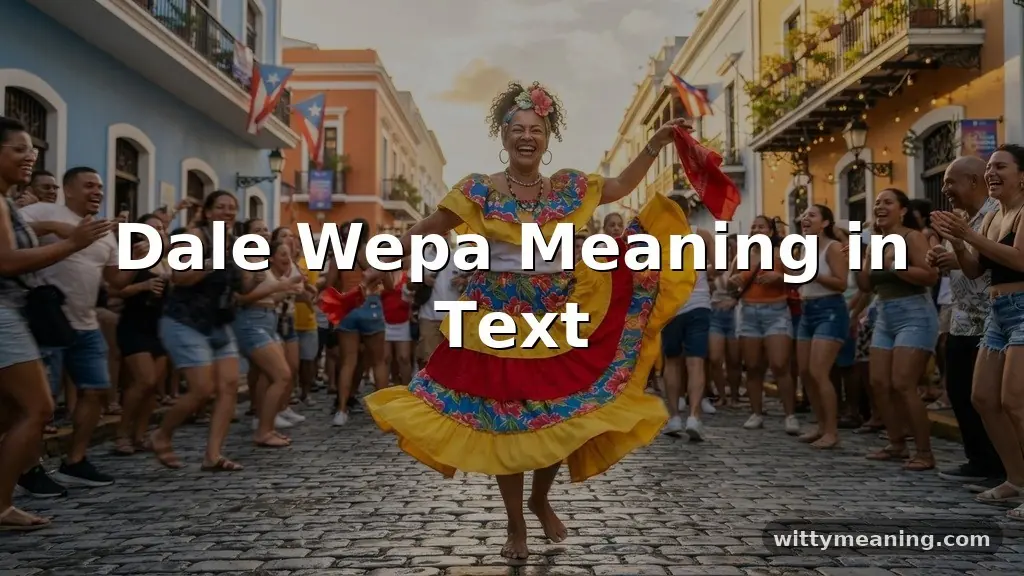

If you’ve stumbled across someone dropping the phrase “dale wepa” in a text, comment, or social media caption, you might be scratching your head trying to figure out the nuance. You are in the right place to get the lowdown on this vibrant bit of slang. Understanding the dale wepa meaning in text requires looking past the dictionary and diving straight into the heart of Puerto Rican culture.
It is a high-energy expression that bridges the gap between encouragement and pure celebration. Whether you are seeing it attached to a dance video or a party photo, this phrase is all about keeping the momentum going.
The Roots of Wepa in Puerto Rican Culture
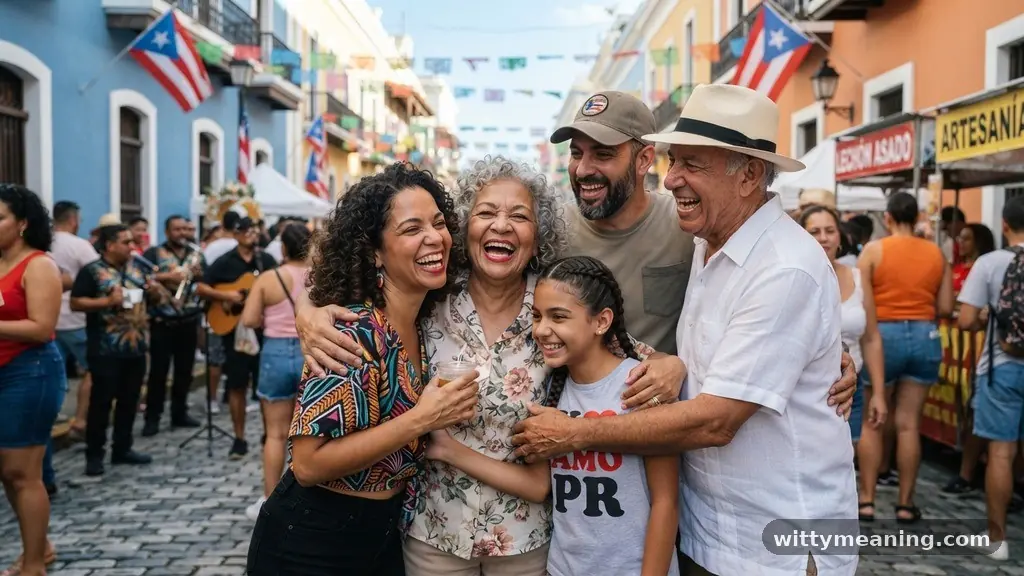
At its core, “wepa” is an exclamation of joy, excitement, or pride. It functions much like “hurray” or “wow” in English, but it carries a much deeper emotional weight, especially within the Caribbean diaspora.
It is one of those words that feels almost impossible to define with a single English equivalent because it is tied to a specific feeling of cultural solidarity. You will hear it at family gatherings, during street festivals, and throughout the vibrant nightlife of San Juan.
When people use this term, they are usually acknowledging a shared moment of happiness or a small victory. It has evolved over generations to become a staple of Puerto Rican identity.
The term itself doesn’t have a formal etymology rooted in a single dictionary entry; instead, it grew organically from the vocal expressions of people in the streets. It is fundamentally an expression of collective energy that brings people together in a shared experience of celebration.
Decoding the Term Wepa and Its Variations
Decoding the Term Wepa is a journey into the rhythm of speech. While “wepa” stands on its own, it often acts as a catalyst for other interactions.
In many contexts, it serves as an interjection that punctuates a conversation, letting the other person know that you are vibing with what they are saying. It is not just a word; it is a signal of enthusiasm.
Many people wonder if it changes meaning depending on where you are. While it is synonymous with Puerto Rican culture, the spirit of the word is understood across much of the Spanish-speaking Caribbean. When you see it in text, it is almost always positive.
If someone sends you a message saying “Wepa!”, they are cheering you on or celebrating something you just accomplished. It is the linguistic equivalent of a high-five or a celebratory shout.
Understanding the Role of Dale in Caribbean Slang
To fully grasp the phrase, you have to look at the first half of the expression. “Dale” is an incredibly versatile verb in Spanish, derived from “dar” (to give). But in colloquial Spanish, it functions as “go ahead,” “do it,” “come on,” or “keep it up.“
It is the ultimate motivator. When you tell someone “dale,” you are giving them the green light to proceed or encouraging them to put more effort into what they are already doing.
Think of “dale” as the spark and “wepa” as the fire. When combined with “dale,” the phrase creates a powerful command to maintain that level of excitement. It is often used to push someone to continue a dance, a song, or a high-energy conversation.
By using both words together, the speaker is essentially saying, “Yes, keep that energy going!” It is an imperative of joy.
Common Usage in Digital Communication
In the world of texting and social media, brevity is key, but the impact of “dale wepa” remains huge. You will often see it used in captions for Instagram posts featuring travel, music, or nightlife. It is the perfect tag for a video showing someone dancing to genres such as reggaeton, salsa, and bomba. The phrase signals to the viewer that the atmosphere in the video is electric and authentic.
When someone says “dale wepa” in a text thread, they are likely reacting to a piece of good news or a lively update. It is a way to bridge the physical distance between people by injecting a bit of island spirit into a digital message.
Because it is so informal, it is best reserved for friends, family, or people you are comfortable with. It is not something you would typically include in a formal business email, but for a group chat, it is gold.
The Connection to Music and Dance
It is nearly impossible to separate the phrase from the music that defines the Caribbean. Music is the heartbeat of Puerto Rican life, and the phrase is frequently shouted by DJs or dancers when the rhythm picks up.
If the tempo of a song increases or a dancer executes a particularly impressive move, “dale wepa” is the natural reaction. It is a command to dance harder and lean into the beat.
This connection to music is why you see the phrase so often online. It is a way to bring the club or the festival to the screen. When a song reaches its peak, the “dale wepa” energy is what keeps the crowd moving.
It is a rhythmic, percussive way of speaking that mimics the syncopation found in local musical styles. If you want to dive deeper into the history of these musical traditions, you can visit the Library of Congress to explore the rich cultural archives of Caribbean music and folk arts.
When to Use This Phrase: A Practical Guide

Knowing when to use this phrase: depends entirely on the vibe of the situation. You want to use it when the energy is high and the mood is positive.
It is a celebratory term, so using it during a somber or serious moment would be completely out of place. It is meant to amplify joy, not to comment on neutral or negative events.
- Use it when a friend shares a photo from a party or concert.
- Use it to encourage someone who is excited about a new project.
- Use it when you are listening to music and want to express that the beat is infectious.
- Use it during a video call to show you are hyped about what your friend is telling you.
Because it is so expressive, it is best to use it when you want to show genuine enthusiasm. If you are just trying to be polite, other phrases might work better, but if you want to show that you are fully invested in the fun, “dale wepa” is the perfect choice.
Cultural Nuance and Social Etiquette
While the phrase is widely accepted, it is important to remember that it carries a specific cultural weight. It is not just random slang; it is an expression of Puerto Rican identity.
Using it appropriately shows that you appreciate the culture rather than just mimicking it. When you use it, you are tapping into a long lineage of celebration and resilience.
Always consider the context of the person you are talking to. If they are not from a background where this slang is common, they might be confused, but that is a great opportunity to explain what it means.
It is a friendly, inviting term that usually leads to a conversation about the culture itself. Just keep it light, keep it fun, and ensure the energy of the conversation matches the intensity of the phrase.
Comparing Regional Slang Across the Caribbean
Slang evolves differently depending on the island, and while “wepa” is definitively Puerto Rican, other regions have their own versions of this high-energy encouragement. Understanding these differences can help you navigate conversations with people from across Latin America.
| Region | Common Expression | Primary Vibe |
|---|---|---|
| Puerto Rico | Dale Wepa | High energy, celebratory, rhythmic |
| Dominican Republic | ¡Dale! / ¡Eso! | Direct encouragement, positive affirmation |
| Cuba | ¡Arriba! / ¡Asere! | Friendship, excitement, camaraderie |
| Colombia | ¡Dale! / ¡Qué nota! | Motivation, cool factor, approval |
As shown in the table, while “dale” is almost universal in Spanish-speaking countries as a form of encouragement, the “wepa” component is what makes the phrase uniquely Puerto Rican. It adds a layer of cultural flair that is instantly recognizable to anyone familiar with the island’s unique way of expressing joy.
Addressing Common Misconceptions
There is a common misconception that “wepa” might be an insult or something derogatory. This is absolutely false. The confusion often stems from people hearing it in loud, crowded environments where they might misinterpret the intensity of the shout.
Rest assured, it is a term of endearment and excitement. It is never used to put someone down.
Another point of confusion is whether it is acceptable for non-Puerto Ricans to use the phrase. Generally, if you are genuinely sharing in the joy or expressing appreciation for the culture, it is well-received.
The key is intent. If you are using it to mock, it will be obvious, but if you are using it to celebrate alongside your friends, it is seen as a sign of cultural appreciation and connection.
Topical Gaps: What Most People Get Wrong
Many people look for a direct translation, but that is where the search for “dale wepa meaning in text” often falls short. It is not a phrase that can be translated word-for-word. It is a functional expression.
One gap in current online discourse is the failure to emphasize that it is as much a sound as it is a word. The way you type it—often with extra exclamation points or in all caps—matters just as much as the letters themselves.
Another thing often missed is that it is not necessarily a “slang” in the sense of being a secret code. It is common parlance. It is the language of the people.
It doesn’t need to be decoded so much as it needs to be felt. When you look for its meaning, don’t look for a dictionary definition; look for the feeling of a packed room, loud music, and the collective spirit of a group of people having the time of their lives.
FAQ
Is dale wepa considered offensive in any context?
No, it is not offensive. It is a purely positive, celebratory expression used to convey excitement, joy, or encouragement. You can use it freely in casual, friendly settings to show you are hyped about something, whether it is music, a dance, or good news.
Do people outside of Puerto Rico use the term wepa?
Yes, the term has spread throughout the Caribbean diaspora. While it is definitively Puerto Rican in origin, you will hear it used by people from other Latin American backgrounds who have picked it up through shared music, nightlife, and close-knit community interactions in places like New York or Florida.
How should I respond if someone sends me a text saying dale wepa?
The best response is to match their energy. A simple “Wepa!” back, or a comment like “Let’s go!” or “Living the dream!” works perfectly. Since it is a high-energy phrase, you can also respond with emojis that convey excitement, like fire, dancing figures, or party poppers.
Is there a difference between saying dale and saying wepa?
Yes, they serve different functions. “Dale” is an imperative, like a command to “go” or “do it.” “Wepa” is an interjection, like “hurray” or “wow.” When combined as “dale wepa,” you are essentially telling someone to keep that positive momentum and energy going strong.
Final Thoughts on Embracing the Energy
At the end of the day, the phrase is all about connection. Whether you are using it to hype up a friend’s latest dance video or to celebrate a shared win in a group chat, you are participating in a vibrant, long-standing tradition of Caribbean joy. The next time you see it, don’t worry about finding a clinical definition; just recognize the positive intention behind it.
It is a reminder that language is more than just words—it is a way to share feelings and maintain that collective momentum that makes life a little more fun. Go ahead and use it when the moment feels right, and keep the energy alive. Feel free to join the conversation and share how you use this phrase in your own circles.