


If you have ever seen those three letters badged on the trunk of a sleek German luxury car, you might have wondered about the actual amg meaning behind the brand. While many people associate the badge with pure speed, it represents a deep-rooted history of motorsport excellence and precision engineering that stretches back over half a century.
Understanding these letters is the first step toward appreciating why these vehicles hold such a unique position in the global automotive market. From its humble beginnings in a small workshop to its current status as a powerhouse within the broader Mercedes-Benz ecosystem, this brand has defined what it means to blend luxury with raw, track-ready mechanical capability.
The Origins and Founding of the Brand
The story of the brand begins in the late 1960s with two visionary engineers, Hans Werner Aufrecht and Erhard Melcher. Both men worked for Mercedes-Benz in the development department, specifically focusing on racing engines, but their ambition exceeded the corporate constraints of the time.
They decided to leave the company to pursue their own dream of creating high-performance engines for private racing teams. The name itself is an acronym derived from the surnames of the two founders and the location where they started their operations: Großaspach.
Aufrecht and Melcher set up shop in a former mill in Burgstall, near Großaspach, dedicating themselves to the art of performance tuning. Their early work involved modifying standard production engines to extract significantly more power for endurance racing. This focus on mechanical refinement quickly gained them a reputation among racing enthusiasts.
By the time they moved their headquarters to Affalterbach, the company had already cemented its status as a specialized shop for those who demanded more from their vehicles than what the factory provided. This legacy of independent spirit remains a core part of the brand identity even today.
The Evolution into a Mercedes-Benz Powerhouse
The relationship between the independent tuning house and the parent company, Daimler AG, evolved significantly over the decades. What started as a loose collaboration eventually turned into a formal partnership, and in 1999, Mercedes-Benz acquired a majority stake in the company.
This transition allowed the brand to become the official automotive performance division of the manufacturer. Today, the integration is so complete that the division is responsible for developing the most potent versions of nearly every model in the lineup.
This shift changed how the market perceived the brand. It was no longer just an aftermarket tuner; it became an integral part of the manufacturer’s identity. The collaboration ensures that every vehicle benefits from advanced powertrain engineering, sophisticated suspension tuning, and aerodynamic upgrades that are tested under rigorous conditions.
By leveraging the resources of Daimler AG, the division can push the boundaries of what is possible in mass-produced sports sedans and SUVs. This synergy between luxury comfort and track-level performance is exactly what buyers look for when they choose a model with these specific badges.
The Philosophy of One Man One Engine
Perhaps the most famous aspect of the brand is its philosophy of one man one engine. This is not just a marketing slogan but a strict manufacturing protocol that distinguishes these vehicles from standard production models.
Every high-performance engine is hand-built by a single master technician from start to finish. This technician is responsible for every bolt, every wire, and every internal component, ensuring the build quality meets the highest possible standards of precision.
Once the engine is completed, the technician signs a metal plaque that is then affixed to the top of the engine cover. This personal signature acts as a testament to the build quality and creates a direct connection between the owner and the builder.
It is a level of craftsmanship that is rarely seen in modern automotive manufacturing, where automation typically dominates the assembly line. This artisanal approach ensures that each powertrain is optimized for maximum efficiency, durability, and raw power delivery, regardless of the chassis it is placed in.
Defining Performance Through Forced Induction
Forced induction is a cornerstone of how the division achieves its signature power figures. Whether using large turbochargers or complex supercharging systems, the engineers are masters at managing airflow and combustion pressures.
This expertise allows them to extract immense amounts of horsepower and torque from relatively small displacements. By using advanced metallurgy and heat management techniques, they ensure these engines can handle the extreme stress of sustained high-speed driving without compromising reliability.
The integration of turbochargers is not just about raw speed; it is about the delivery of that power. The engineers focus on minimizing lag and ensuring that torque is available across a broad rev range. This creates a driving experience that feels both effortless and exhilarating.
Whether you are accelerating away from a stoplight or overtaking on a highway, the forced induction systems are tuned to respond instantly to driver input. This is a crucial element of the brand’s success in the competitive landscape of high-end sports cars.
The Role of Affalterbach in Modern Engineering
Affalterbach serves as the heart of the operation, acting as the research, development, and testing hub for all new projects. It is here that engineers translate theoretical performance goals into tangible vehicle dynamics.
The facility is equipped with state-of-the-art testing rigs, including advanced dynos and wind tunnels, which allow for the fine-tuning of every component. From the chassis geometry to the software mapping of the engine management system, nothing is left to chance.
The work done in Affalterbach influences the entire range of vehicles, including the emerging Mercedes-EQ performance models. As the industry shifts toward electrification, the engineers are tasked with applying the same rigor and passion to electric powertrains.
This involves sophisticated battery management, high-output electric motors, and advanced cooling systems that maintain performance levels during spirited driving. The commitment to excellence remains the same, proving that the brand’s identity is about the pursuit of performance, regardless of whether the source of power is internal combustion or battery-electric.
Comparing Standard and Performance Variants
It is helpful to look at how these specialized vehicles differ from their standard counterparts. While a base model might be designed for fuel economy and comfort, a high-performance version is engineered for agility and responsiveness. The following table highlights some of the key technical differences that define the brand’s contribution to a vehicle’s character.
| Feature | Standard Model | Performance Variant |
|---|---|---|
| Engine Build | Mass-produced on automated lines | Hand-built by a single technician |
| Suspension | Comfort-oriented damping | Adaptive damping with track-ready stiffness |
| Torque Delivery | Linear and fuel-efficient | Aggressive with torque vectoring systems |
| Braking | Standard steel rotors | High-capacity performance calipers |
Advanced Driving Dynamics and Torque Vectoring
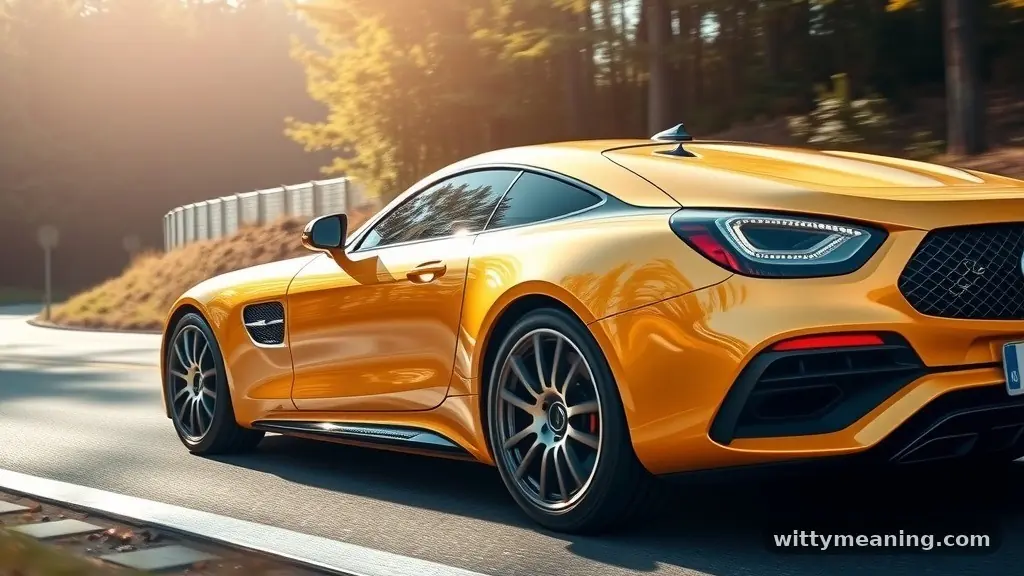
Beyond the engine, the driving experience is defined by how that power is put to the road. Modern vehicles from the division use sophisticated torque vectoring systems to manage power delivery to individual wheels.
This technology allows the car to rotate more effectively through corners, drastically improving handling and grip. By monitoring steering angle, throttle position, and yaw rate, the computer can apply precise amounts of power to the outside rear wheel, effectively pushing the car through the turn.
Adaptive damping is another essential component of the performance package. These systems allow the driver to switch between different profiles, ranging from a soft, compliant ride for daily commuting to a firm, responsive setup for track days.
Sensors continuously adjust the shock absorbers in milliseconds based on road conditions and driver behavior. This versatility is what makes these cars so appealing; they are genuinely usable as daily drivers while still being capable of dominating on a race circuit.
The Cultural Impact of Vehicle Branding
The presence of the badge on a vehicle serves as a powerful signal in the automotive world. It indicates that the owner values engineering, prestige, and a specific type of driving engagement. This branding has become a status symbol, often associated with success and an appreciation for fine machinery.
However, it also carries a responsibility. The brand must maintain its reputation for quality and performance across a wide range of body styles, from small hatchbacks to large luxury SUVs.
This branding strategy has been remarkably successful because it creates a clear hierarchy within the portfolio. Consumers know exactly what to expect when they see the badge: higher output, more aggressive styling, and a more focused chassis.
It provides a shorthand for the level of engineering investment that has gone into the vehicle. As the market continues to demand more personalization and performance, this clear, recognizable branding will continue to play a vital role in how the company communicates its value proposition to potential buyers.
Addressing Common Misconceptions
There are several myths surrounding the brand that often lead to confusion. For instance, some people assume that any car with a sporty body kit is a full performance model. In reality, there is a distinction between a full-fledged model and an AMG-enhanced model.
The latter might feature aesthetic upgrades and minor suspension tweaks, but it does not always include the hand-built engine or the full suite of drivetrain modifications found in the top-tier versions. It is important for buyers to look at the specific engine and badge configuration to understand exactly what they are getting.
Another common point of confusion relates to the pronunciation and the acronym itself. Some people treat it as a word, while others spell it out letter by letter. While there is no single correct way to say it, most enthusiasts simply spell out the three letters.
Additionally, the association with other manufacturers is often a point of debate. While other brands have their own performance divisions, the specific history and the one-man-one-engine philosophy remain unique to this particular entity. Clearing up these misconceptions helps potential owners make more informed decisions when they are shopping for a new or used vehicle.
Future Trends in Automotive Performance
The future of high-performance driving is currently undergoing a massive transformation. The shift toward electrification presents both challenges and opportunities for the brand. Maintaining the emotional connection that drivers have with these cars is the primary goal.
This involves creating artificial but authentic-feeling soundscapes, simulating gear shifts in electric drivetrains, and focusing on the weight distribution and balance of the chassis. The goal is to ensure that the transition to electric doesn’t mean a loss of character.
Furthermore, the integration of artificial intelligence into vehicle dynamics will continue to grow. Future systems will be able to predict road conditions and adjust the powertrain and suspension before the driver even enters a corner.
This level of predictive performance will push the boundaries of what is possible, keeping the brand at the cutting edge of the automotive industry. As long as there is a demand for vehicles that excite the senses and perform at a high level, the engineering expertise behind these cars will remain relevant and highly sought after.
FAQ
Is every Mercedes with an AMG badge a hand-built car?
Not every model with the badge features a hand-built engine. While full-blooded models receive the one-man-one-engine treatment, some entry-level or mid-range models are simply AMG-enhanced, meaning they feature performance-tuned components, sportier aesthetics, and upgraded suspension, but their engines are produced on standard assembly lines rather than by a single master technician.
What does the acronym actually stand for?
The letters are an acronym for the surnames of the founders, Hans Werner Aufrecht and Erhard Melcher, and the German town of Großaspach, where the company originated. It is not an English term or a descriptive word, but rather a historical designation that honors the roots of the performance division.
How do these performance models differ from standard Mercedes-Benz vehicles?
These vehicles are engineered for superior handling, higher power output, and more aggressive styling. They typically include upgraded braking systems, specialized sport-tuned suspension with adaptive damping, and, in the case of top-tier models, hand-built engines that provide significantly more torque and horsepower than the standard versions found in the manufacturer’s main lineup.
Can I drive these cars daily or are they just for the track?
These vehicles are designed to be versatile. While they are fully capable of track-ready performance, they also feature sophisticated ride control systems that allow them to be comfortable for daily commuting. Most models offer various drive modes that can soften the suspension and throttle response, making them suitable for everyday use in traffic.
Conclusion
Understanding the amg meaning reveals a legacy built on the intersection of racing passion and industrial precision. From the early days in a small German workshop to the global powerhouse it is today, the brand has remained consistent in its commitment to high-performance engineering and driver engagement. Whether you are interested in the storied history of the hand-built engine or the modern technical marvels of torque vectoring and electrified powertrains, these vehicles offer a unique experience that few others can replicate.
As you look at the options available in the luxury performance segment, remember that this badge is more than just a label—it is a promise of mechanical excellence. Exploring these cars further will undoubtedly give you a deeper appreciation for the artistry involved in automotive performance.