
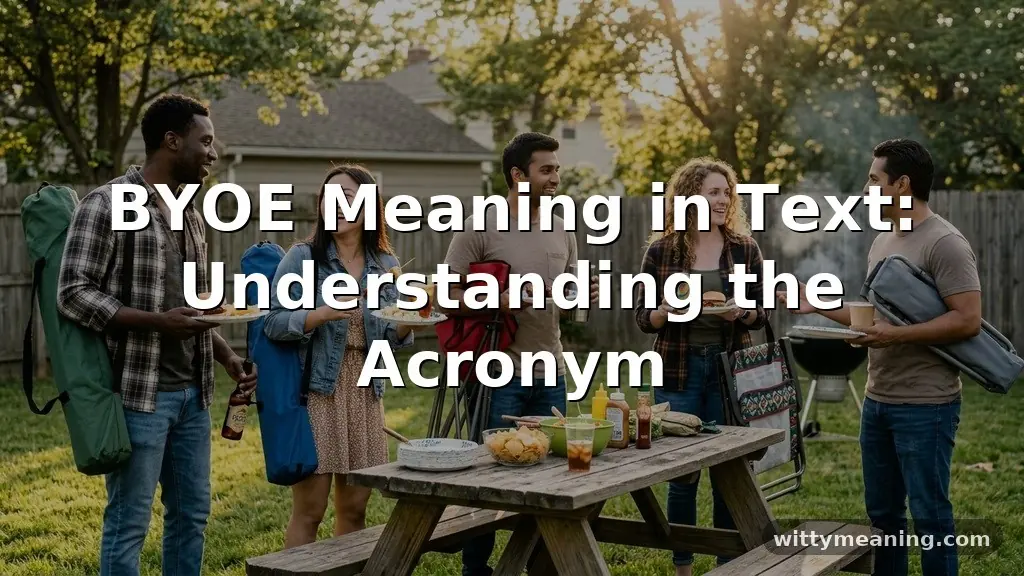

When you encounter the acronym BYOE in a digital conversation, it usually signals a specific expectation regarding the supplies or gear you need to bring to an event or task. While many people are familiar with the classic BYOB, understanding the byoe meaning in text can save you from an awkward situation where you show up empty-handed.
Whether it refers to a party, a workout session, or a professional collaboration, this shorthand is designed to streamline logistics. By grasping these subtle shifts in social media slang and text messaging abbreviations, you can communicate more effectively and ensure you are always prepared for whatever the host or coordinator has planned for the group.
The Core Definition of BYOE
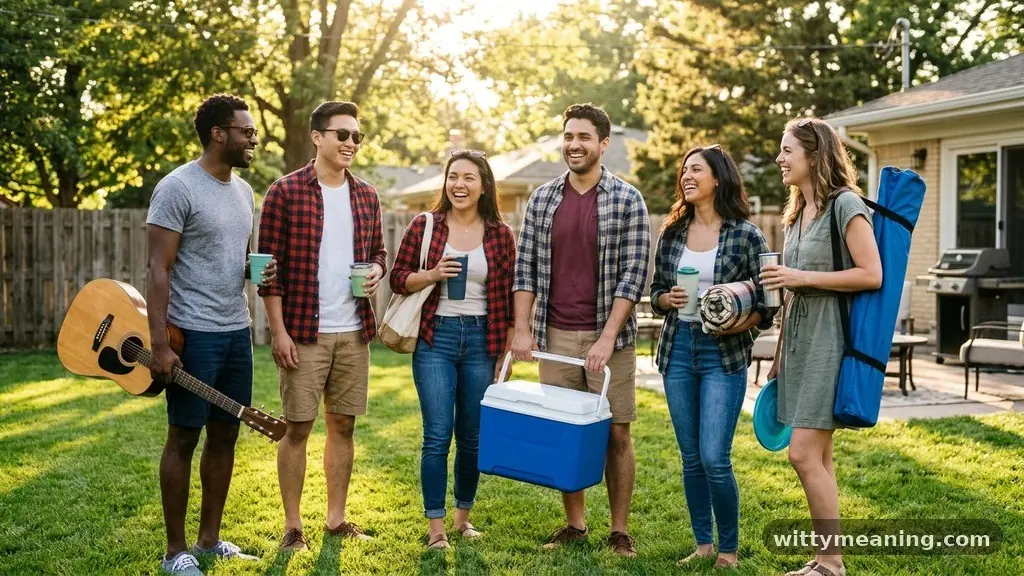
At its simplest level, BYOE stands for Bring Your Own Everything. This is an evolution of the older, more specific party etiquette terms like BYOB, which stands for Bring Your Own Beverage.
When a host uses this phrase in an invitation or a group message, they are signaling that they will provide the space or the core activity, but the participants are responsible for providing all necessary consumables, tools, or gear. It is an umbrella term that covers a wide variety of scenarios, ranging from casual backyard hangouts to structured fitness classes or even specialized remote work setups where colleagues are expected to provide their own hardware.
In the context of modern digital communication, acronyms like this serve a functional purpose. They remove the ambiguity that often plagues event planning.
If you receive a text that says, “We’re hosting a game night on Friday, BYOE,” you immediately know that you shouldn’t expect the host to supply everything from the snacks and drinks to the specific controllers or gaming peripherals you might prefer. It effectively shifts the burden of resource management from a single host to the collective group, which is a hallmark of contemporary DIY culture.
Evolution from BYOB to Broader Acronyms
To understand why we use these abbreviations, it helps to look at the history of social gatherings. BYOB became popular decades ago as a way to host events without the massive expense of stocking a full bar for every guest. It was a polite way to tell people that the host would provide food or a venue, but the alcohol was on them.
As social gatherings became more diverse, the need for a more inclusive term arose. This is where BYOE entered the lexicon, as it encompasses not just drinks, but food, equipment, and even specialized items.
The transition from single-purpose acronyms to general ones reflects a shift in our social habits. We are increasingly mobile and specific about our preferences. Whether it is the specific type of craft beer you enjoy or the exact model of mechanical keyboard you need for a gaming session, people have become more attached to their personal gear.
BYOS, or Bring Your Own Snacks, is another variation that popped up in casual settings, but BYOE remains the most comprehensive. It acts as a catch-all that prevents the host from having to list every single item a guest might need to bring along.
BYOE in the Context of Fitness Culture
One of the most common places you will see this term used outside of party planning is within the fitness community. In the Peloton community or local gym groups, BYOE often refers to Bring Your Own Equipment. This might mean bringing your own yoga mat, resistance bands, or specific heart rate monitors to a class.
It is a way for instructors to keep their overhead low while ensuring that every participant has the gear they are most comfortable using. For a beginner, this can be confusing, but it is standard practice in many modern training environments.
This usage highlights how the acronym has moved beyond just party etiquette. In fitness, it is about hygiene and personal preference. Using your own equipment is often safer and more effective because you know exactly how your gear has been maintained.
If you are invited to a group fitness session and see the term mentioned, it is a cue to pack your gym bag carefully. Ignoring this signal usually leads to an uncomfortable workout where you are stuck waiting for equipment or unable to participate fully in the planned exercises.
Decoding Social Media Slang and Text Shorthand
When you see byoe meaning in text, it is important to consider the platform. On platforms like Snapchat or Instagram, brevity is king. Users often employ text shorthand to keep messages punchy and clear.
If a friend sends you a quick message about a get-together, they aren’t looking for a formal invitation; they are looking for a quick acknowledgment that you understand the terms of the event. Learning these terms is essential for anyone who wants to stay in the loop with their social circles.
The beauty of these abbreviations is that they create a shorthand language that defines the culture of a group. If your friend group uses BYOE, it implies a level of informality and mutual reliance. It suggests that the group is comfortable enough to share the responsibility of hosting.
However, it also demands a level of awareness. You must be prepared to check in with the host if you are unsure about what exactly is being provided. A quick follow-up question is always better than showing up to a barbecue with nothing but your appetite when everyone else brought their own grillables.
Host Expectations vs. Guest Responsibilities
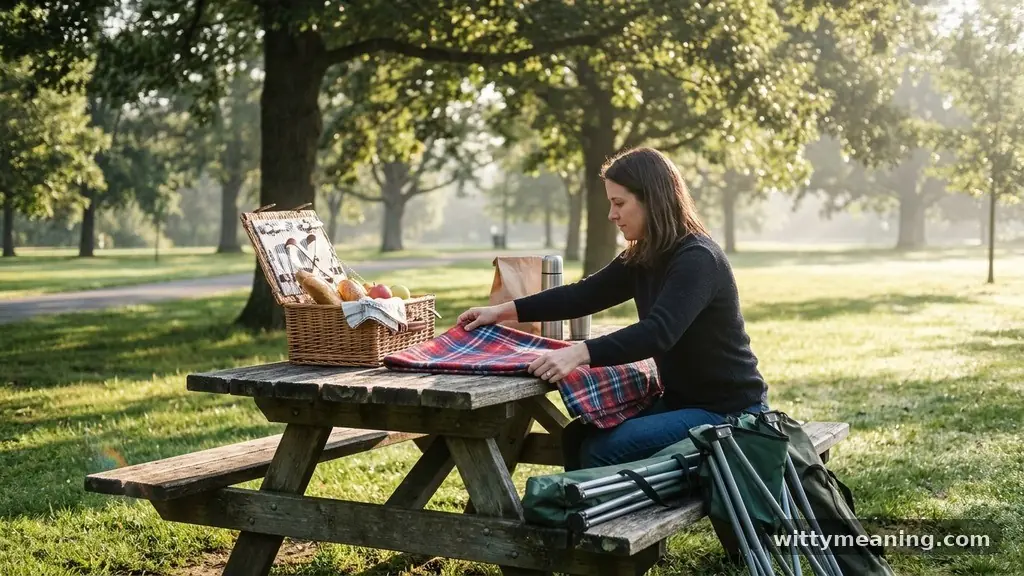
When an event organizer puts out a call for BYOE, they are establishing a clear set of expectations. As a guest, your responsibility is to interpret what that “everything” entails based on the type of event. If it is a picnic, you might assume it includes a chair, a blanket, and your own food.
If it is a collaborative work session, it might mean bringing your own laptop, charger, and peripheral devices. The ambiguity of the term is actually its strength, as it allows the host to remain flexible while still setting a firm boundary on what they will provide.
| Acronym | Primary Meaning | Typical Context |
|---|---|---|
| BYOB | Bring Your Own Beverage | Parties, dinners, social mixers |
| BYOE | Bring Your Own Everything | Workshops, fitness, outdoor events |
| BYOS | Bring Your Own Snacks | Study groups, casual hangouts |
| BYOD | Bring Your Own Device | Professional meetings, IT settings |
This table illustrates how different variations serve different needs. While BYOE is the most expansive, terms like BYOD (Bring Your Own Device) have become standard in corporate environments to describe policies where employees use their personal hardware for work. Understanding the nuances between these terms prevents social blunders.
If you are invited to a professional workshop and you see BYOE, it probably means you need to bring your own supplies, not necessarily your own beverage. Context is always the primary filter for decoding these messages.
Addressing Topical Gaps in Digital Communication
A common point of confusion is whether BYOE is considered rude. In some cultures or older generations, the idea of asking guests to bring everything might seem like a lack of hospitality. However, in the realm of modern digital communication and urban dictionary definitions, it is widely accepted as a practical necessity.
It isn’t about being a “cheap” host; it is about creating a collaborative event where participants have agency over what they consume or use. The key is transparency. If you are the host, being clear about what BYOE means in your specific context is the best way to avoid confusion.
Another gap in current information is the emotional weight of these acronyms. Some people feel that byoe meaning in text carries a connotation of “don’t expect me to take care of you.” While this can be true in very casual, transient social circles, in established communities like the Peloton community or local hobbyist groups, it is viewed as a sign of respect for individual choices.
It acknowledges that people have specific needs that a host might not be able to meet. Recognizing this distinction helps you interpret the tone of the message more accurately.
The Rise of DIY Culture and Resource Sharing
The popularity of terms like BYOE is a direct result of the rise of DIY culture. We live in an era where people are more self-sufficient than ever. Whether it is building a home gym, curating a specialized gaming setup, or learning how to cook specific cuisines, people enjoy having control over their own environment.
When we gather, we want to bring that control with us. This is why the acronym has moved from a niche party term to a mainstream concept.
This shift also encourages resource sharing. If everyone brings their own items, the pool of available resources at any gathering grows significantly. Instead of one person providing mediocre equipment for everyone, you end up with a collection of high-quality items provided by the guests themselves.
This creates a more dynamic experience. It turns a standard gathering into a collective event where the participants are active contributors rather than passive recipients of the host’s hospitality.
Navigating Potential Social Pitfalls
Even with the best intentions, using acronyms in texts can lead to misunderstandings. If you are unsure about the byoe meaning in text for a specific invitation, the best approach is always to ask for clarification. A simple, “Hey, just to confirm, what does BYOE include for this event?” is perfectly acceptable.
It shows that you care about being prepared and that you respect the host’s efforts. Avoiding the question and guessing can lead to you bringing the wrong items or being under-prepared.
It is also worth noting that the “Everything” in BYOE is subjective. For some hosts, it might mean the basics, while for others, it might literally mean everything including plates, utensils, and seating. If you are the one sending the invitation, don’t be afraid to be specific.
Instead of just saying BYOE, you could say, “BYOE (please bring your own camp chair and drinks).” This level of detail is appreciated by guests and ensures that the event runs smoothly from the moment the first person arrives.
Future Trends in Acronym Usage
As communication continues to shift toward faster, more abbreviated forms, we can expect to see even more specialized acronyms emerge. We are already seeing a rise in terms that blend professional and personal language.
The way we talk about our digital and physical lives is merging, and our language is adapting to reflect that. BYOE is just one example of a term that has successfully bridged the gap between different social spheres.
The key to keeping up with these trends is to remain adaptable. Language is fluid, and social media slang is constantly evolving. What is considered standard today might be replaced by something else tomorrow.
By paying attention to how these terms are used in your own social circles, you can stay ahead of the curve. Ultimately, these acronyms are just tools to facilitate connection. As long as the message is received and the event is a success, the specific words used to get there matter less than the quality of the interaction itself.
Frequently Asked Questions
What does BYOE stand for in a text message?
BYOE stands for Bring Your Own Everything. It is a catch-all term used in event invitations to let guests know that they are responsible for providing their own supplies, gear, or consumables. It is an evolution of more specific terms like BYOB, which focuses only on beverages.
Is it considered rude to use BYOE when inviting guests?
Generally, no. In modern social contexts, BYOE is seen as a practical way to manage resources rather than a lack of hospitality. It is widely accepted, especially in casual or community-focused gatherings, as it allows guests to bring the specific items they prefer or require.
How should I respond if I am unsure what a host means by BYOE?
The best approach is to send a quick, polite follow-up message to the host. Asking for clarification, such as “What does BYOE include for this specific event?” is not rude; it shows that you are considerate and want to make sure you arrive fully prepared.
Are there situations where BYOE is inappropriate to use?
Yes, it is best to avoid using BYOE for formal events, weddings, or professional business dinners where the host is expected to provide all amenities. In those settings, using such slang can come across as unprofessional or disrespectful to the tone of the occasion.
Conclusion
Understanding the byoe meaning in text is a simple yet effective way to improve your social navigation. Whether you are heading to a workout class, a game night, or a casual outdoor hangout, knowing what is expected of you ensures you are prepared and ready to contribute to the event’s success. These types of abbreviations are part of the modern digital toolkit, helping us communicate complex logistical needs with minimal effort.
As you continue to engage with your friends and communities, remember that these terms are meant to facilitate, not complicate, your social life. Stay observant of how they are used in your specific circles and don’t hesitate to ask for clarity when the context is ambiguous.
By mastering these small but significant details of social media slang, you can participate more confidently in all your upcoming gatherings. Feel free to reach out if you have more questions about common digital shorthand or how to best handle social event logistics.