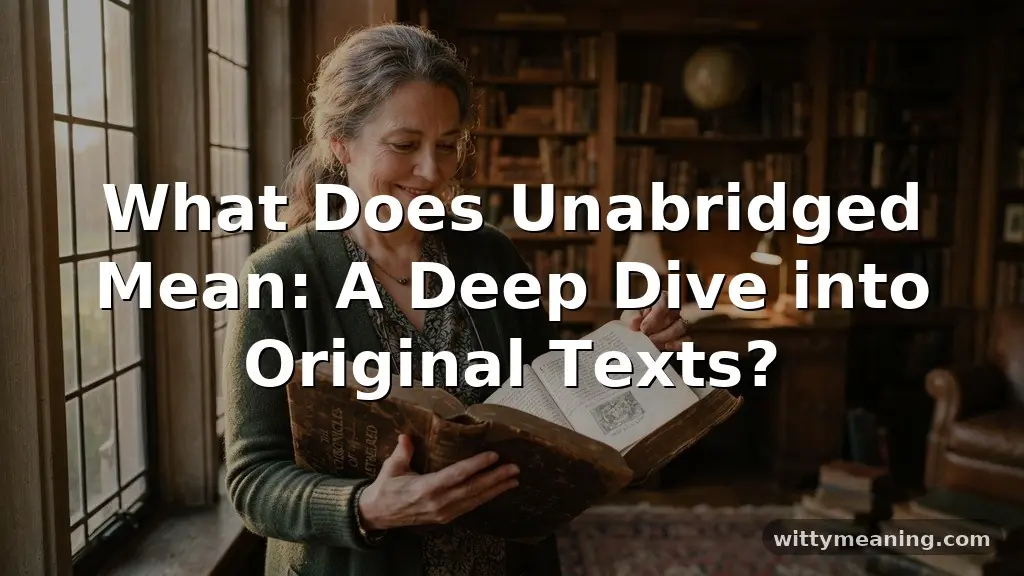

When you pick up a book or start a new listening session, you might see the word “unabridged” displayed prominently on the cover or in the digital file metadata. Understanding what does unabridged mean is essential for anyone who values the full intent of an author.
Essentially, it signifies that the work you are consuming is the complete, original text, free from any editorial interference or shortening. Whether you are a student of literature or a casual reader, recognizing this term ensures you aren’t missing out on the nuances that get lost during the editing process.
Defining the Unabridged Concept

At its core, the unabridged definition refers to a piece of content that remains in its entirety. It hasn’t been trimmed, condensed, or altered to fit a specific length requirement or target audience.
When a publisher releases an unabridged version, they are making a promise to the reader that every chapter, paragraph, and sentence written by the author is present. This is particularly relevant in the world of academic research, where every word can change the interpretation of a passage.
When we talk about the preservation of a manuscript, we are talking about maintaining the author’s original vision. Editorial cuts often happen for logistical reasons—like printing costs or the desire to make a book more “accessible” to a wider audience.
However, these cuts can sometimes remove vital context that frames the narrative arc. By choosing a full-length edition, you ensure that no character development or plot point has been sacrificed for the sake of brevity.
The Abridgement Process and Its Impact
To understand why some books are abridged, you have to look at the economic and practical pressures of the publishing industry. The abridgement process involves professional editors carefully selecting which parts of a text are “essential” and which can be removed.
This is common in textbooks, condensed novels, or audiobooks that need to fit within a specific time limit. While the goal is often to provide a faster reading experience, it inevitably leads to a loss of literary integrity.
Think of it like a movie adaptation of a dense novel. Just as a director must cut scenes to fit a two-hour runtime, an editor cuts prose to fit a specific page or time count.
The problem arises when the “filler” that is removed actually contributes to the atmosphere or the pacing of the story. Readers often find that the emotional impact of a scene is diminished when the lead-up to that climax is stripped away during the editing phase.
Analyzing Unabridged vs Abridged Formats
The debate between unabridged vs abridged editions is usually a tradeoff between time and depth. If you are reading a historical account or a dense philosophical text, the unabridged version is almost always preferred because every argument matters. On the other hand, some readers prefer abridged versions for quick summaries of non-fiction business books where the core takeaway is more important than the anecdotal evidence provided by the author.
The primary difference lies in the word count and the density of the information. Abridged versions are designed to be consumed quickly, often stripping away the “connective tissue” of the writing.
If you want to experience the true voice of the writer, you should look for the complete edition. Below is a quick comparison of the two approaches to help you decide which is right for your next project.
| Feature | Unabridged | Abridged |
|---|---|---|
| Content Depth | Maximum, includes all subplots | Reduced, focuses on main narrative |
| Length | Full manuscript size | Significant reduction |
| Purpose | Academic study, purist enjoyment | Quick consumption, summaries |
| Literary Integrity | High, matches original vision | Variable, depends on editor choice |
The Role of Unabridged Audiobooks
The popularity of the unabridged audiobook has exploded in recent years, largely due to the rise of platforms that prioritize the full performance of a narrator. In the past, many audiobooks were heavily condensed to fit onto a limited number of physical cassette tapes or CDs. Today, digital files allow for an unabridged recording that can span dozens of hours, capturing every nuance of the author’s prose.
Listening to an unabridged audiobook is a distinct reading experience. The narrator can take their time with the pacing, allowing the listener to absorb the tone and rhythm of the writing.
When a narrator performs a full-length book, they are essentially acting as the bridge between the author’s mind and the listener’s ears. If you enjoy getting lost in a story, the extra time required for a full recording is usually a small price to pay for the immersion.
Why Word Count Matters for Scholars
For academics and researchers, the unabridged text is the gold standard. When you are analyzing a publication history or comparing different editions of a classic, you need to be certain you are working with the verbatim original text.
Any change made by an editor—even if it is just a minor stylistic tweak—can introduce bias or remove critical context. This is why libraries and universities prioritize the acquisition of unabridged editions for their collections.
Text preservation is a vital part of maintaining the historical record. If we only ever consumed condensed versions of history or literature, our collective understanding of those works would become shallow.
By insisting on the full-length version, researchers can verify the facts and ensure that the narrative arc they are critiquing is the one the author actually intended to present to the world. You can find more information about the importance of authentic source materials through the Library of Congress, which houses vast collections of original manuscripts.
The Unabridged Dictionary and Language
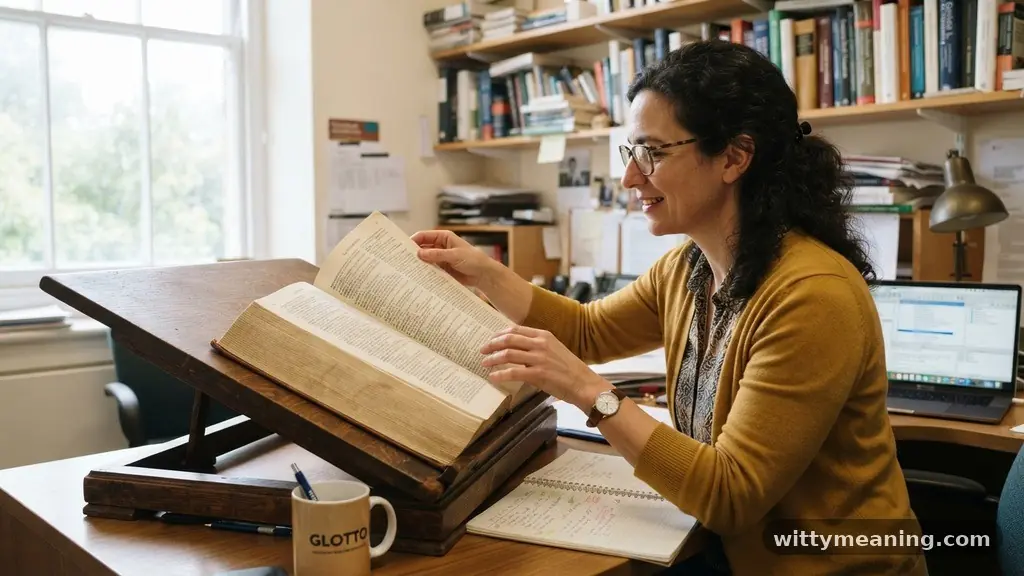
The concept of being “unabridged” isn’t limited to novels or biographies; it is perhaps most famous in the world of lexicography. An unabridged dictionary is a reference book that contains the most exhaustive collection of words and definitions available for a language. Unlike a standard desk dictionary, which is curated for the average user, an unabridged version includes obscure, archaic, and highly specialized technical terms.
Using an unabridged dictionary is an exercise in thoroughness. If you are a writer or a translator, having access to the full breadth of a language’s vocabulary is a powerful tool.
It allows you to find the exact, nuanced word you need rather than settling for a common synonym. These volumes are often massive, physically heavy books that serve as a testament to the complexity and evolution of human language over centuries.
Identifying Abridged Content in the Wild
It isn’t always immediately obvious if you are holding an unabridged book or a condensed version. Publishers often use subtle language to hide the fact that they have edited the text. Look for keywords on the cover or the copyright page.
Words like “retold,” “condensed,” “essential,” or “digest” are clear indicators that the work has been altered. If a book claims to be the “original text,” it is generally a safe bet that it is unabridged.
Checking the page count is another effective way to identify if a book is complete. If you are comparing two editions of the same book, a significant discrepancy in the number of pages is a red flag.
While font size and margins play a role, a difference of several hundred pages almost certainly points to an abridgement process. Always check the publication details to ensure you are getting the full experience.
Common Motivations for Editorial Cuts
Why do publishers feel the need to edit perfectly good manuscripts? Usually, it comes down to market research. They might believe that a particular audience lacks the attention span for a long, meandering novel.
In other cases, they might be trying to lower the price point of a book by reducing the paper and ink required for printing. This is a purely commercial decision that often conflicts with the artistic goals of the writer.
Sometimes, abridgement is done to update a text for a modern audience by removing outdated or offensive language. While this might make the book more “palatable” for certain demographics, many critics argue that it sanitizes history and prevents the reader from engaging with the original context of the work. When you choose an unabridged version, you are opting to see the work exactly as it was created, warts and all.
Benefits of Choosing the Full Version
There are several key benefits to choosing the full-length edition of a book, whether in print or audio format:
- Complete Narrative Arc: You get the full story without missing crucial subplots or character growth.
- Authorial Intent: You experience the work exactly as the writer intended, without editorial bias.
- Historical Context: You are less likely to miss references or themes that were removed during the editing process.
- Language Nuance: You get the benefit of the author’s full vocabulary and stylistic choices.
- Richer Experience: You can enjoy the pacing and the deliberate build-up that makes a long book rewarding.
These advantages are particularly important for readers who want to engage deeply with a topic. If you are reading for pleasure, the unabridged version provides a much more immersive experience. You don’t just read the story; you live through the entire journey, feeling the highs and lows that the author spent months or years crafting.
Addressing Topical Gaps in Reader Knowledge
A common misconception is that “unabridged” means “difficult.” Many readers avoid full-length books because they assume they are bloated or boring. This is a misunderstanding of what the term actually implies.
Being unabridged simply means the work is complete. It doesn’t mean it is poorly written or overly dense. In fact, many of the world’s most beloved novels are long precisely because they are so engaging that readers never want the story to end.
Another gap in knowledge is the assumption that the unabridged version is the “original” in every case. Sometimes, authors release a “revised edition” that is actually shorter than the first, but still considered the definitive version. It is important to distinguish between an author-led edit and a publisher-led abridgement.
If the author made the cuts themselves to improve the work, that is a stylistic choice; if a publisher made them to save money, that is an abridgement. Always look for information regarding the edition history to understand the context of the cuts.
FAQ Section
What is the main difference between abridged and unabridged?
The main difference is the presence of the complete, original text. An unabridged version contains every word written by the author, while an abridged version has been intentionally shortened or condensed by an editor to fit specific space or time constraints.
How can I verify if a book is unabridged?
Check the copyright page or the publisher’s description for labels like “complete,” “original text,” or “unabridged.” You can also compare the page count or total runtime against other editions. If the length is significantly shorter than the standard, it is likely an abridged version.
Is an unabridged audiobook always better?
For most listeners, yes. An unabridged recording preserves the author’s original rhythm and narrative depth. However, if you are short on time or only interested in the high-level takeaways of a non-fiction book, an abridged version might be more efficient for your specific needs.
Does unabridged mean the same thing for every type of media?
Yes, the core definition remains consistent across books, audiobooks, and even dictionaries. It consistently refers to the idea that the content has not been shortened or edited down, ensuring that the final product represents the full, original scope of the material.
Conclusion
Choosing the right version of a book or recording can dramatically change your appreciation for the material. When you understand what does unabridged mean, you gain the power to make informed decisions about your media consumption. You no longer have to settle for the “lite” versions that publishers push for convenience; instead, you can seek out the full-length works that offer the most depth and integrity.
Whether you are diving into a classic novel, a complex biography, or a massive dictionary, opting for the complete version is the best way to ensure you are getting the true, unfiltered story. Take the time to check the metadata and edition details next time you are browsing, and you will find that the extra effort leads to a far more rewarding experience. Feel free to reach out if you have questions about specific editions or if you’d like recommendations for books that are best experienced in their entirety.