

When you encounter the word “gringa” in a digital conversation, you might wonder if it signals a friendly greeting or a pointed jab. Understanding the gringa meaning in text requires more than a simple dictionary definition; it demands a look at the cultural nuances that shape how we communicate across borders.
Depending on where the person is from and the relationship you share, this term can shift from an affectionate nickname to a neutral descriptor or, occasionally, a sharp critique. By exploring the history and regional variations of this word, you can better navigate the complexities of cross-cultural digital exchanges.
The Etymology and Linguistic Origins of the Term

The history of the word is far more complex than it might appear on the surface. While many people assume it stems from the meaning Greek, or the Spanish word “griego,” the path from ancient origins to modern slang is winding. In historical Spanish, “griego” evolved into “gringo” as a way to describe someone who spoke a foreign language—essentially, someone who spoke “Greek” to the local ear because they were unintelligible.
This linguistic evolution highlights how communities have always labeled those who exist outside their immediate cultural sphere. Over centuries, the term shifted from referring to anyone speaking a non-Spanish tongue to specifically targeting those from English-speaking nations.
When you see the feminine form “gringa” used in text today, you are engaging with a term that has survived centuries of colonial history and shifting national identities. It is a linguistic artifact that carries the weight of past interactions between Spanish-speaking populations and foreign visitors.
Regional Variations in Usage Across Latin America
The way this word lands depends heavily on the geography of the conversation. In Mexico, for instance, the term is frequently used as a neutral descriptor for a woman from the United States, regardless of her ethnic background.
It is a common, everyday label that lacks the aggressive bite it might carry in other, more politically charged regions. People in Mexico might refer to a tourist as a “gringa” simply to identify her origin, much like one might use the word “American.”
In contrast, South America presents a different landscape. In countries like Argentina or Chile, the term might be applied to anyone with lighter skin or European features, regardless of their actual nationality. Meanwhile, in Brazil, the concept of “gringo” or “gringa” is applied broadly to almost any foreigner, including those from other parts of Latin America.
This makes the gringa meaning in text highly dependent on the location of the sender. If you are chatting with someone from a specific country, it helps to recognize that their regional dialect determines whether the term is a casual identifier or a social marker.
Social Context: Casual Settings vs. Formal Discourse
The environment in which the word appears determines its impact. In casual settings, such as a group chat with friends or a lighthearted social media comment, “gringa” is often used as a playful signifier.
It might even be used as a term of endearment, especially if the speaker and the recipient share a close, humorous bond. In these instances, the word is stripped of its historical baggage and functions as a shorthand for “the friend who isn’t from here.”
However, in political or academic discourse, the situation changes significantly. When used in formal or heated discussions, the term can take on a more exclusionary tone. It may be used to highlight power imbalances or to emphasize a sense of “otherness” that separates the speaker from the subject.
You should always look at the surrounding words. If the sentence is focused on policy, borders, or economic disparities, the term is likely being used to frame an argument rather than to simply identify a person. Context is the primary tool for decoding the intent behind the text.
Is the Term Offensive?
Determining whether the term is offensive is a subjective task that often depends on the receiver’s perspective. For many, it is a neutral descriptor that acknowledges their status as a foreign national.
Many people who travel through Latin America find that locals use the term simply because it is the most accessible way to classify an outsider. In these cases, it is rarely intended to be hurtful; it is simply a linguistic shortcut.
However, the potential for offense exists. If the term is used in a dismissive, derogatory, or xenophobic manner, it becomes a weapon intended to alienate the recipient. The power of the word lies in the speaker’s intent.
If you are ever unsure, the best approach is to observe how the term is deployed in the rest of the conversation. Does the speaker use it to build a bridge, or are they using it to shut down a point of view? Recognizing the difference between a label of origin and a label of exclusion is the key to maintaining a healthy dialogue.
Cultural Nuances in Phrases
The word often appears in specific phrases that change its functional meaning entirely. For example, hearing “mi gringa” in a romantic or familial context changes the dynamic from a label of origin to a term of endearment.
Much like “my dear” or “my friend,” adding a possessive pronoun can soften the edges of the word, indicating affection rather than categorization. This is a common pattern in the Spanish language, where labels of identity are often repurposed to denote closeness.
Other phrases might involve irony. A person might jokingly refer to themselves as a “gringa” when they fail to understand a local custom or miss a cultural reference.
This self-deprecating usage is quite common and serves to diffuse tension. When you see the term used in this way, it is usually a sign that the speaker is comfortable with their status as an outsider and is willing to laugh at their own lack of local knowledge.
| Context | Typical Tone | Likely Intent |
|---|---|---|
| Casual Chat | Friendly/Playful | Identifying a friend or traveler |
| Travel Advice | Neutral | Describing a foreigner’s experience |
| Political Debate | Critical/Exclusionary | Highlighting power dynamics |
| Romantic/Endearment | Affectionate | Expressing closeness |
The Role of Foreign Nationals in Local Communities
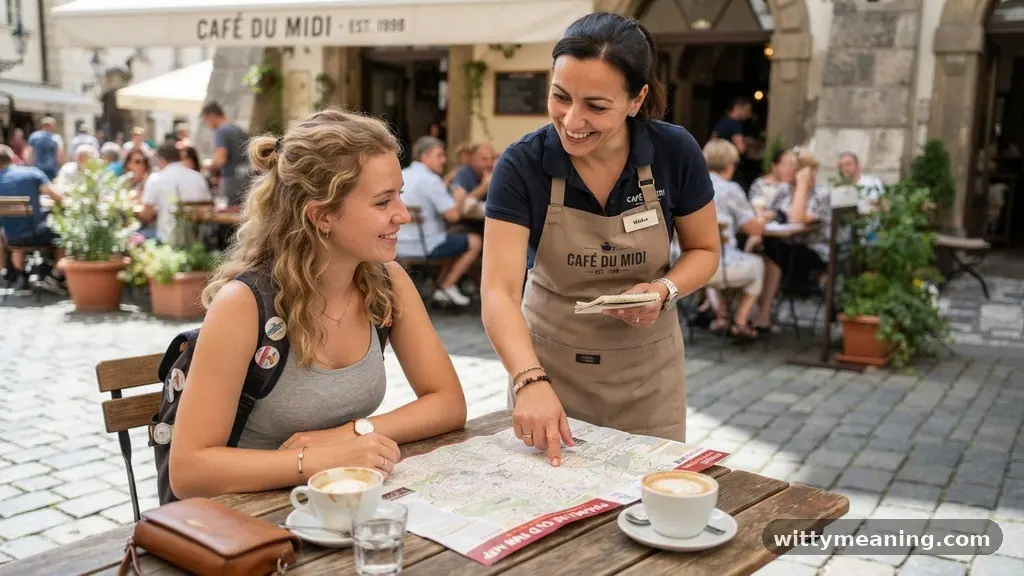
The perception of “gringas” often mirrors the broader relationship between a host country and foreign visitors. In areas with high tourism, the term is part of the hospitality industry’s vocabulary.
It helps service workers distinguish between locals and those who might need assistance with translation or navigation. This is a functional usage that stems from the practical need to facilitate communication.
When foreign nationals integrate into local communities, the label often fades. Once a person is known by their name and their actions, the descriptor “gringa” becomes redundant. It acts as a placeholder for identity until the individual becomes a known entity within the group.
Understanding this transition can help you see the word as a temporary bridge rather than a permanent wall. It is a way of processing the presence of the unknown until the unknown becomes familiar.
Linguistics and the Evolution of Slang
Language is never static, and the way we use words like this one is a perfect example of linguistic drift. Over the last few decades, the rise of digital communication has accelerated how these terms are used and perceived.
Social media platforms allow for the rapid spread of regional slang, meaning that a term once contained within a specific town can now be understood globally. This leads to a blending of definitions that makes tracking the “true” meaning even more challenging.
Linguistics experts often point out that slang terms like this are essential for maintaining group cohesion. By creating a label for the “outsider,” the “insider” group reinforces its own cultural identity.
This isn’t necessarily a malicious act; it is a fundamental part of how human societies define themselves. As you encounter these terms in your own digital life, remember that you are witnessing the living, breathing evolution of human language in real-time.
Topical Gaps: What Most People Miss
Many resources fail to address the specific intersection of gender and the term in question. While “gringo” is often the default, “gringa” carries its own specific connotations.
It can sometimes be tied to stereotypes regarding beauty standards, wealth, or even perceived naivety, depending on the cultural tropes prevalent in that specific region. Ignoring the gendered aspect of the term leaves out a significant portion of the social reality.
Another gap is the lack of focus on how digital platforms change the reception of the word. In a face-to-face conversation, tone of voice and body language make the intent clear. In a text-based medium, those cues are stripped away, leaving only the word itself.
This lack of context is why so many people search for the meaning of the term online. They aren’t just looking for a dictionary definition; they are looking for the emotional nuance that the text failed to convey. You can find more on the official dictionary of the Spanish language regarding how these regionalisms are formally classified, though their day-to-day use often deviates from the textbook.
- Always consider the geographical origin of the person typing the message.
- Look for additional emotional markers like emojis or pet names.
- Assess the topic of the conversation to see if it is political or social.
- Remember that self-identification is often meant to be humorous or self-deprecating.
- Don’t hesitate to ask for clarification if the tone feels ambiguous.
Navigating Digital Misunderstandings
When you feel unsure about a term used in a text, the best policy is to keep the conversation going rather than assuming the worst. Misunderstandings are common in digital spaces because we lack the physical context of the speaker.
Instead of reacting defensively to a label, try to respond in a way that encourages the other person to elaborate. A simple, “What do you mean by that in this context?” can often reveal that the usage was entirely benign.
Digital communication requires a higher degree of emotional intelligence. Because we miss the nuances of tone and facial expression, we have to rely on our knowledge of the speaker’s personality and the history of our relationship.
If you are chatting with someone you know well, you are likely already aware of their style. If you are chatting with a stranger, give them the benefit of the doubt until you have more evidence to suggest otherwise.
The Future of Cultural Labels in Global Communication
As our digital world continues to shrink, the way we use labels will inevitably change. We are moving toward a global lexicon where regional terms are increasingly understood by people who have never set foot in the countries where they originated. This creates a fascinating dynamic where “gringa” might eventually lose its specific regional ties and become a broader, more standardized term for a foreign woman.
This process of globalization can lead to both a loss of cultural depth and an increase in mutual understanding. As we share more of our language with one another, we become better at navigating the gaps that used to divide us.
By taking the time to learn the origins and the social implications of the words we use, we contribute to a more thoughtful and connected world. The goal is not to eliminate these terms, but to use them with a greater awareness of their power.
FAQ
Is calling someone gringa always considered an insult?
No, it is not always an insult. In many regions, particularly in Mexico and parts of Central America, it is a neutral descriptor used to identify a woman from the United States or a foreign country. The intention behind the word depends entirely on the context and tone.
What does it mean if someone calls me mi gringa?
When someone adds the possessive “mi” (my) to the term, it usually shifts the meaning toward affection or endearment. It is often used between friends, romantic partners, or family members to express closeness, effectively turning a label of origin into a personal nickname.
How should I respond if I am called a gringa in a text?
If the context is friendly, you can simply ignore it or acknowledge it with a lighthearted comment. If you feel uncomfortable or if the tone seems derogatory, it is best to ask the person to clarify their meaning or express that you prefer not to be labeled by your nationality.
Does the meaning change based on the speaker’s country?
Yes, regional variations are significant. In some countries, it is a neutral identifier for any foreigner; in others, it may be used to specifically identify someone with European features or someone from the United States. Always consider the speaker’s background when interpreting the term.
Conclusion
Navigating the nuances of language in digital spaces is a constant learning process. The gringa meaning in text is a perfect example of how one word can carry multiple layers of history, geography, and social intent. By looking beyond the surface and considering the context of your conversation, you can distinguish between a friendly identifier and a more pointed remark.
Remember that the goal of communication is always to connect, and a little bit of curiosity about the words we use goes a long way in building better relationships across cultures. Keep engaging, stay observant, and don’t be afraid to ask questions when the tone remains unclear. Understanding the roots of the words you encounter will only make you a more effective and empathetic communicator in our increasingly interconnected world.