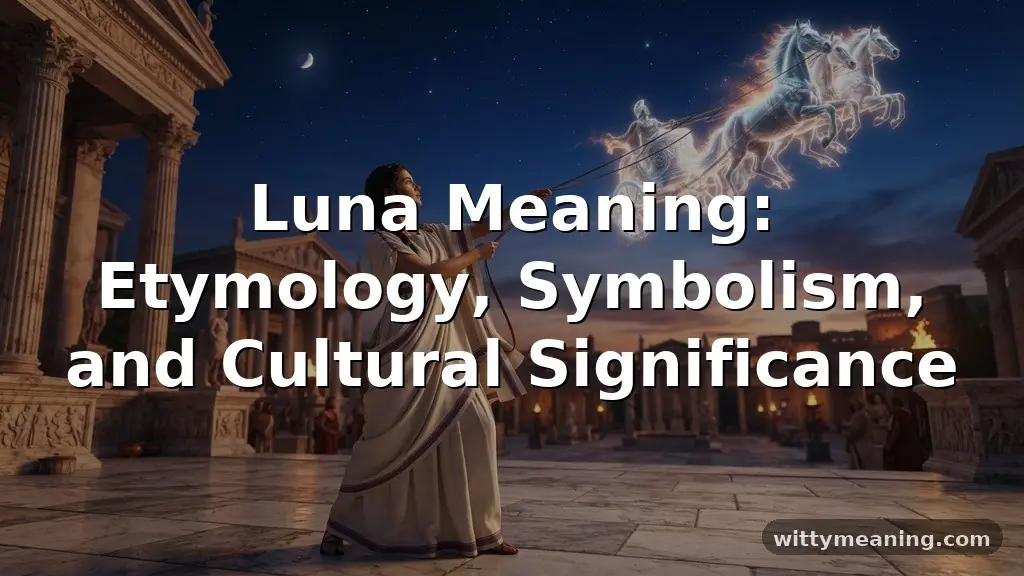

The luna meaning is deeply rooted in the ancient connection between humanity and the night sky. Derived directly from the Latin word for “moon,” the term encapsulates more than just a satellite orbiting our planet; it represents a profound intersection of Roman mythology, linguistic history, and universal symbolism. For centuries, the word has served as a touchstone for poets, astronomers, and spiritual seekers alike, evolving from a simple descriptor of a celestial body into a complex archetype that continues to influence modern culture, naming trends, and psychological frameworks.
Etymology and Historical Roots of Luna
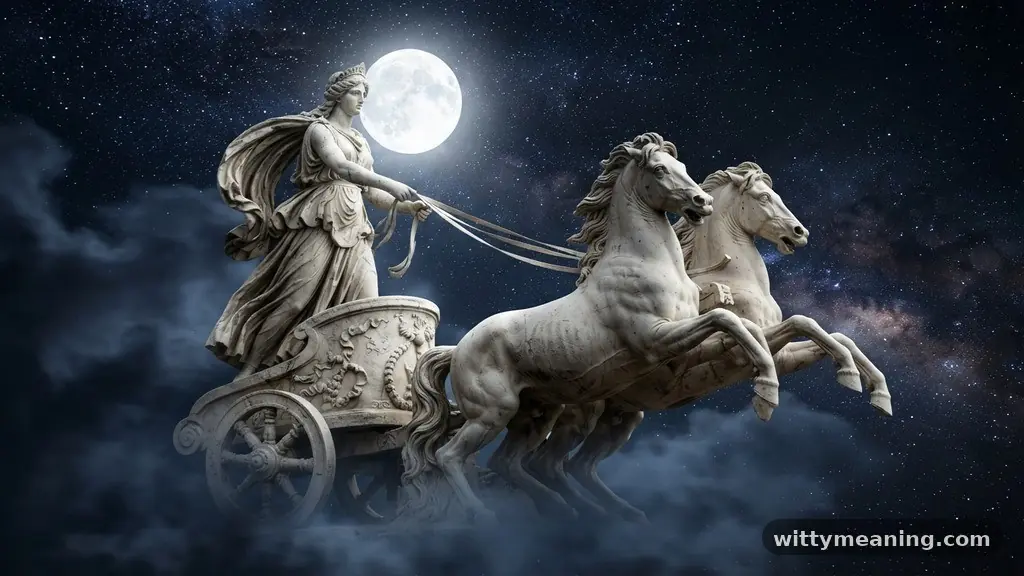
The etymology of “Luna” traces back to the Proto-Italic *louksna, which carries the literal translation of “shining” or “light-bringer.” This connection to light is fundamental to understanding why the name has persisted across millennia. In Roman mythology, Luna was the personification of the moon, often depicted driving a two-yoked chariot across the sky.
She was the counterpart to Sol, the sun god, establishing a binary of light and shadow that governed the Roman perception of time and nature. Unlike the Greek goddess Selene, who often shares the same domain, the Roman Luna was frequently invoked in agricultural rites and the timing of festivals.
The transition of this term from a mythological figure to a common linguistic root highlights how deeply the moon influenced early civilizations. Because the moon dictated the timing of planting, harvesting, and religious observances, the word “luna” became synonymous with order, rhythm, and predictability. Even as societies moved away from polytheistic traditions, the term retained its gravity.
It moved into various Romance languages, becoming the standard word for the moon in Italian, Spanish, and Romanian, while simultaneously leaving an indelible mark on the English language through astronomical terminology like “lunar cycles” or “lunacy.” The persistence of this word underscores the human need to categorize the nocturnal world and assign meaning to the shifting phases of the night sky.
Symbolism and the Divine Feminine
When discussing the spiritual meaning of Luna, one cannot ignore its association with the divine feminine. Across nearly every culture, the moon is viewed as a receptive, reflective force, contrasting with the active, assertive energy of the sun.
This association with femininity is rooted in the biological and metaphorical alignment of lunar cycles with rhythms of life. The soft, diffuse nature of moonlight is often interpreted as an inward-facing power—a nurturing, intuitive light that illuminates the dark corners of the soul rather than scorching them with harsh heat.
In the realm of mysticism and esoteric studies, Luna represents the subconscious mind. While the sun is the ego—the face we present to the world—the moon is the shadow, the hidden dreams, and the latent potential waiting to be tapped. This symbolism makes the term highly relevant in contemporary discussions about intuition and emotional intelligence.
People often feel drawn to the name or the concept of Luna during periods of personal transition because it mirrors the cycle of growth, fullness, and dissolution. It is a reminder that constant change is a natural state of being. By embracing this symbolic connection, individuals often find a sense of comfort in their own fluctuating emotions, recognizing them as a reflection of the tides that the moon itself commands.
The Influence of Naming Trends and Popularity
The name popularity of Luna has surged in the 21st century, marking a significant shift in modern naming trends. Moving away from traditional or highly structured names, parents are increasingly gravitating toward nature-inspired names that evoke a sense of wonder and tranquility.
Luna sits at the perfect intersection of history and modernity; it feels ancient and grounded in cultural heritage, yet it sounds fresh, short, and punchy enough for the contemporary ear. This popularity is not merely a fad; it reflects a broader societal desire to reconnect with the natural world.
Data indicates that the rise of the name is global, spanning across diverse linguistic landscapes. From the United States to Europe and parts of Asia, the name is consistently ranked among the top choices for newborns. This trend speaks to the universal appeal of celestial bodies.
In a world dominated by screens, artificial light, and digital noise, naming a child after the most prominent feature of the night sky is a symbolic act of grounding them in something eternal. Below is a breakdown of why this name has gained such traction in recent years:
| Factor | Impact on Appeal |
|---|---|
| Phonetic Simplicity | Easy to pronounce and spell in multiple languages. |
| Nature Association | Connects the individual to the environment and space. |
| Cultural Neutrality | Resonates across various ethnic and linguistic backgrounds. |
| Archetypal Weight | Carries a sense of grace, mystery, and ancient history. |
Astrology and the Zodiac Connection
In astrology, the moon is arguably as important as the sun sign. While the sun represents the core personality, the moon represents the emotional landscape, the inner self, and the subconscious responses to the world.
When we look at the zodiac, the moon’s placement at the time of one’s birth dictates how that individual processes security, comfort, and vulnerability. The luna meaning in this context is deeply personal—it is the “inner child” that reacts to external stimuli before the rational mind has a chance to intervene.
Astrologers often teach that understanding one’s “moon sign” is the key to unlocking emotional maturity. Because the moon moves quickly through the zodiac, it creates a rhythm of shifting moods. This is why the term “lunatic”—historically linked to the belief that the moon caused erratic behavior—is being reclaimed and reinterpreted through a psychological lens.
Instead of seeing emotional variance as a disorder, modern astrology views it as a necessary function of human complexity. The moon is not just a rock in space; it is the gravitational anchor for our feelings.
By studying the lunar influence, one gains a better understanding of why they feel drawn to certain environments or why they struggle with specific social dynamics. It turns the abstract nocturnal light into a mirror for the self.
Psychological Archetypes and the Shadow Self
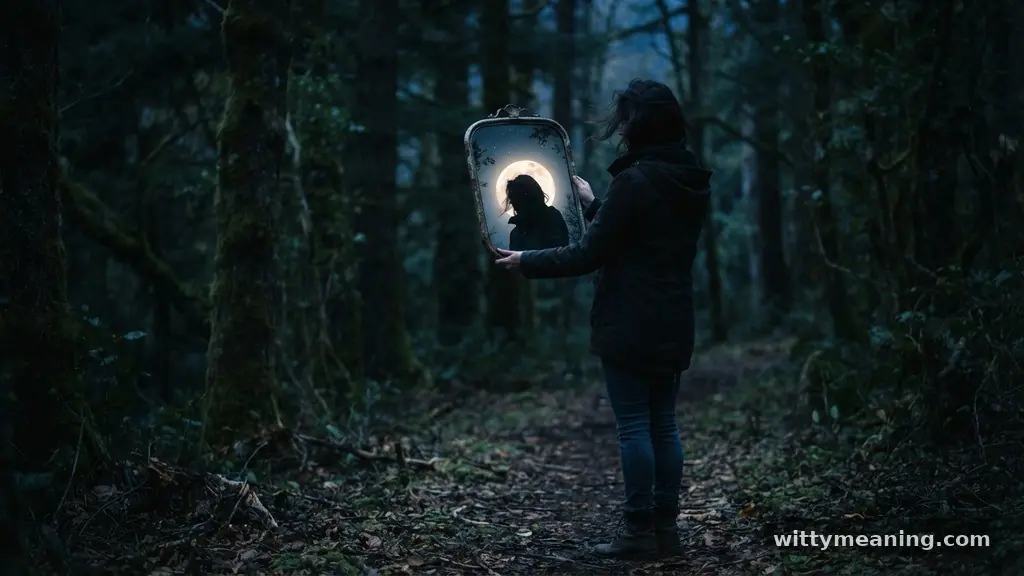
Beyond the spiritual, the luna meaning plays a significant role in psychological archetypes, particularly within the framework developed by Carl Jung. Jungian psychology posits that the moon represents the “anima,” the feminine aspect within the psyche of all individuals, regardless of gender.
This archetype encompasses creativity, intuition, and the ability to bridge the gap between the conscious and the unconscious. The moon, in its cycle of waxing and waning, serves as the perfect metaphor for the ego’s journey toward wholeness.
To integrate the shadow—the hidden, often repressed parts of our personality—one must be willing to walk in the moonlight. This requires a shift from the logical, hyper-rational mindset to one that values feeling and instinct. When we project the qualities of Luna onto ourselves, we are acknowledging that we are not static.
We are beings that grow, dim, and disappear only to emerge again. This psychological perspective is vital for those undergoing a spiritual awakening.
It provides a framework for accepting the “darker” or quieter phases of life as being just as valuable as the “bright” or successful ones. The moonlight does not hide the world; it reveals it in a different, often more honest, light.
Cultural Variations and Global Perspectives
While the term is rooted in Latin, the moon goddess archetype appears in various forms throughout global cultural heritage. In Japanese folklore, the moon is associated with the deity Tsukuyomi, a masculine figure who governs the night, providing an interesting contrast to the feminine-heavy associations of the West.
In Korean culture, the full moon is a symbol of fertility and abundance, celebrated during festivals like Chuseok, where families gather under the moonlight to give thanks for the harvest. These variations prove that while the luna meaning is anchored in the Latin term, the human experience of the moon is universal.
* Greek Mythology: Selene, the Titan goddess who drives the moon chariot.
* Egyptian Mythology: Khonsu, the god of the moon, associated with time and healing.
* Chinese Folklore: Chang’e, the goddess who resides on the moon, symbolizing immortality.
* Hinduism: Chandra, the lunar deity who represents the mind and emotional well-being.
* Norse Mythology: Máni, the personification of the moon who drives the moon’s chariot across the sky.
These diverse interpretations show that regardless of geographic location, humans have always looked up and felt a kinship with the satellite above. The luna meaning acts as a bridge between these cultures, a shared vocabulary for the night that allows us to discuss our collective anxieties and aspirations. Whether it is viewed as a source of madness or a source of guidance, the moon remains the ultimate constant in a world of variables.
Answering Topical Gaps: The Luna Connection in Modern Contexts
Many articles gloss over the practical, everyday application of the luna meaning, focusing instead on abstract mythology. A significant gap exists in understanding how this concept manifests in modern professional and creative sectors. For instance, the “lunar” aesthetic has become a massive trend in design, architecture, and branding.
Businesses often use the concept of the moon to signal luxury, exclusivity, and calm. This is because the nocturnal associations of the moon evoke a sense of quiet sophistication that daylight brands struggle to replicate.
Furthermore, there is a gap regarding the scientific vs. spiritual divide. How do we reconcile the cold, cratered reality of the moon with the warm, mystical symbolism we project onto it? The answer lies in the human capacity for dualism.
We can appreciate the lunar surface as a geological marvel while simultaneously utilizing it as a tool for grounding and reflection. The luna meaning is not a binary choice between science and spirit; it is the synthesis of both.
By acknowledging the physical reality of the celestial body, we actually enhance the power of the metaphor. It reminds us that our greatest sources of inspiration are often grounded in tangible, observable reality, even when they feel entirely ethereal.
The Nocturnal Nature and Artistic Inspiration
The nocturnal quality of the moon has historically been the primary catalyst for artistic and literary creation. When the sun sets, the world falls silent, and for many, this is the time when the “inner” world wakes up.
Poets and novelists have long used moonlight as a device to signal transition, secrecy, or romantic intimacy. The luna meaning here is one of transformation; it is the light that changes the appearance of everything it touches, turning the mundane into the magical.
This artistic connection extends into music, cinema, and photography. The “blue hour” or the “moonlit landscape” are standard tropes for evoking melancholy or deep contemplation. Artists are drawn to the moon because it is a light that does not demand attention but rather invites observation.
It requires the viewer to slow down. In a modern context, this translates to the rise of “slow living” movements that emphasize spending time outdoors at night, star-gazing, or simply sitting in the garden under the moonlight to reset the nervous system. The moon serves as a natural regulator for the human pace, a reminder that the world does not have to be in a constant state of high-intensity activity to be productive or meaningful.
Summary and Future Outlook
The luna meaning is a testament to the enduring power of language and myth. From its origins as a simple Latin descriptor for a celestial object to its current status as a potent symbol of the divine feminine, intuition, and the subconscious, the term has evolved alongside humanity.
It remains one of the few concepts that bridges the gap between the scientific and the sacred, offering a common ground for people of all backgrounds. As we continue to look toward the stars and plan for future space exploration, the moon will undoubtedly retain its hold on our collective imagination, serving as both a destination and a mirror.
Whether you are exploring the astrology of your own chart, choosing a name for a child, or simply seeking a deeper connection to the nature-inspired rhythms of the world, the legacy of Luna provides a rich, multi-layered framework for understanding the human experience. It reminds us that we are part of a larger, cosmic cycle—one that values the quiet, reflective, and intuitive aspects of life just as much as the bold and the bright. As long as the moon continues to wax and wane, the human fascination with its meaning will continue to illuminate our path forward.
Frequently Asked Questions
What is the core spiritual meaning of Luna?
The spiritual meaning of Luna revolves around intuition, the divine feminine, and the subconscious mind. It represents the receptive, reflective side of human nature, encouraging individuals to look inward and embrace the cycles of change, growth, and rest that mirror the moon’s own phases in the night sky.
How does the name Luna influence personality traits?
While names do not dictate personality, the archetypal associations of the name Luna often inspire a sense of grace, mystery, and emotional depth. Those identified with the name or the concept are often perceived as being highly intuitive, creative, and deeply connected to their emotional and environmental surroundings.
Why is the moon considered a symbol of femininity?
The moon is associated with femininity due to its cyclical nature, which has historically been linked to biological rhythms and the tides. In mythology, the moon is often represented by goddesses who govern fertility, childbirth, and the transition between life and death, reinforcing the connection to nurturing, receptive power.
Is there a difference between the Roman Luna and the Greek Selene?
While both are personifications of the moon, Roman Luna was often integrated into agricultural and state-level religious rites, focusing on the moon’s function in timekeeping. Greek Selene is more frequently associated with the poetic and mythological narratives of the moon’s romantic interactions and her chariot’s nightly journey.