

The term “Dolittle” carries a dual identity that bridges the gap between classic children’s literature and modern vernacular slang. At its core, the dolittle meaning is inextricably linked to the fictional physician created by British author Hugh Lofting in the early 20th century. However, the name has also evolved into a descriptor for laziness or incompetence, creating a linguistic tension between the gentle, brilliant veterinarian and the colloquial insult.
Understanding this term requires a journey through the evolution of the Dr. John Dolittle character and an examination of how names transition from literary icons into the everyday lexicon of the public.
The Literary Genesis of Dr. John Dolittle
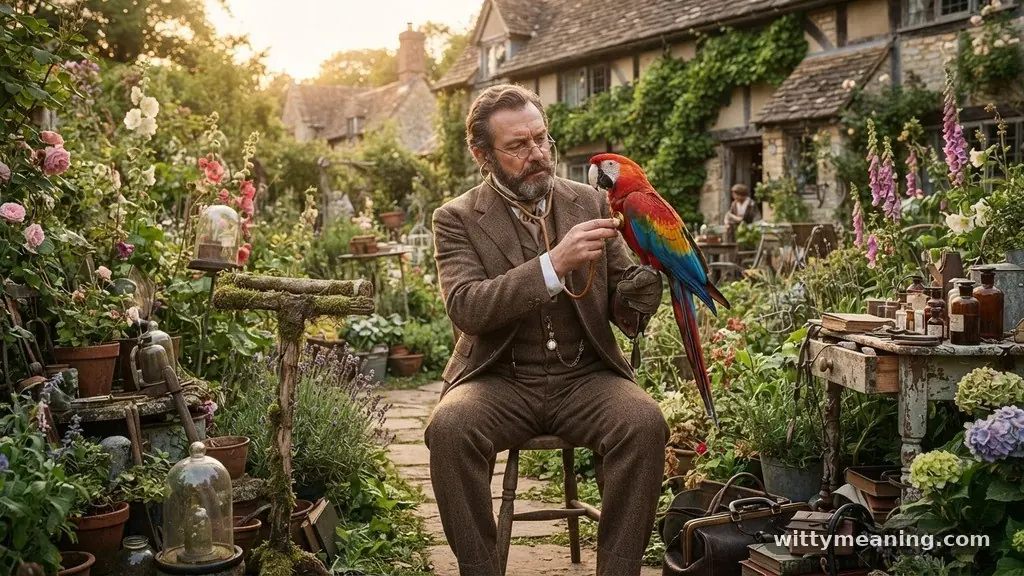
The character of Dr. John Dolittle first emerged from the trenches of World War I, where Hugh Lofting wrote letters to his children featuring a doctor who preferred animals to humans. Set in the quiet, fictional English village of Puddleby-on-the-Marsh, the stories introduced a man who abandoned his practice of human medicine to master the complex art of animal communication.
This shift was not merely a plot device; it was a profound statement on the nature of empathy and the hierarchy of species. By stepping away from the human world, the doctor engaged in a radical form of zoology that defied the rigid social structures of the Victorian era.
The literary character became a staple of children’s literature because he represented the ultimate outsider. He was a man of science who prioritized the welfare of creatures over the social expectations of his peers. His ability to speak to animals transformed the way children viewed the natural world, suggesting that communication is the bedrock of understanding.
The name “Dolittle” itself—a pun on “do little”—served as a humble, self-deprecating moniker for a man who actually did a great deal, effectively subverting the expectation of his name through his extraordinary deeds. This irony is a hallmark of Lofting’s writing style, which often utilized gentle humor to critique the pomposity of the adult world.
The Evolution of Dolittle in Vernacular Slang
Outside of the pages of books, the dolittle meaning has shifted toward a more pejorative interpretation in common parlance. In various forms of vernacular slang, calling someone a “dolittle” is a way of accusing them of being unproductive, lazy, or incapable of sustained effort.
This usage functions as an incompetence trope, where the name is used to label an individual who fails to meet the basic requirements of a task. It is a fascinating linguistic phenomenon where a name associated with an expert in veterinary medicine and complex linguistics is repurposed to describe the exact opposite of expertise.
This linguistic shift reflects how cultural icons are often flattened over time. While the original character was a man of immense intellect and dedication, the phonetic quality of the name—”do little”—is too tempting for the English language to ignore. It is a classic example of nominative determinism being used as an insult.
When people use the term in this way, they are rarely referencing the fictional physician; they are instead tapping into the literal meaning of the words to disparage someone’s work ethic. This disconnect highlights the difference between literary legacy and the way words are recycled by the public to serve immediate social functions.
Cinematic Adaptations and Cultural Impact
The perception of the character has been heavily influenced by various cinematic adaptations that have kept the name relevant across generations. From the musical charm of Rex Harrison in the 1967 film to the comedic high-energy performances of Eddie Murphy in the 1990s and the high-budget spectacle featuring Robert Downey Jr., each iteration has tweaked the dolittle meaning for a contemporary audience. These films often move away from the specific Victorian setting of Puddleby-on-the-Marsh, choosing instead to modernize the doctor’s struggle to balance his gift with the pressures of modern society.
The transition from the page to the screen has expanded the character’s reach, but it has also diluted the nuance of the original source material. While the books focused on the doctor’s internal journey and his respect for nature, the movies often focus on the spectacle of talking animals and the chaos that ensues.
This shift has cemented the idea of “Dolittle” as a brand—a franchise centered on the concept of interspecies dialogue. For many modern viewers, the association with the name is purely tied to the comedy of talking animals, further distancing the term from its roots in early 20th-century literature and its potential as a critique of human-centered medicine.
Key Figures in the Dolittle Universe
The depth of the stories is largely provided by the supporting cast of animals, who serve as foils to the doctor’s own personality. These characters are prime examples of anthropomorphism, as they possess human traits while retaining their animal instincts.
The most iconic of these include Polynesia the parrot, who serves as the doctor’s primary translator and guide, and Dab-Dab the duck, who manages the household with a pragmatic, often grumpy efficiency. These animals are not mere props; they are essential to the doctor’s success and provide a mirror to human behavior.
| Character Name | Species | Role in the Narrative |
|---|---|---|
| Polynesia | Parrot | The doctor’s mentor and primary linguistic teacher. |
| Dab-Dab | Duck | The meticulous housekeeper of the doctor’s home. |
| Jip | Dog | A loyal companion with a keen sense of smell and intuition. |
| Gub-Gub | Pig | A food-obsessed character providing comic relief. |
Each of these characters plays a specific role in the doctor’s life, illustrating the diversity of his practice. By creating these complex dynamics, Lofting demonstrated that the dolittle meaning was never just about a single man, but about the interconnectedness of all living things.
These relationships emphasize that even if the doctor is an outsider to humanity, he is a central pillar within the animal kingdom. The nuance of these characters helps to elevate the stories above simple fairy tales, turning them into a commentary on communication and empathy.
Linguistic History and the Power of Names
The study of how names develop meanings in linguistic history is a broad field, and “Dolittle” serves as a perfect case study for the process of pejoration. Pejoration occurs when a word or name with a neutral or positive connotation shifts toward a negative one over time. In the case of the fictional doctor, the name was originally chosen to sound unassuming.
However, because “do” and “little” are common English words, the name was always vulnerable to being broken down and used as a literal descriptor. This is a common fate for names in literature that carry descriptive elements.
We can track the evolution of the term through several distinct stages:
- Literary Creation: The name is established as a humble, ironic title for a brilliant character.
- Cultural Saturation: The films and books make the name a household term, ensuring mass recognition.
- Semantic Drift: The public ignores the literary context, focusing on the literal “do-little” construction.
- Vernacular Adoption: The term enters the slang lexicon as a shorthand for laziness or inefficiency.
This progression shows that a name’s “meaning” is not static. It is constantly being negotiated by the audience.
While fans of the literature might defend the character’s legacy, the average person using the term as an insult is not participating in a debate about the book; they are simply using the language as a tool. This dynamic is a fundamental aspect of how language evolves in a digital, globalized society where media consumption is rapid and often disconnected from original sources.
Satire and the Victorian Era Context
To fully grasp the dolittle meaning, one must look at the satire inherent in the original texts. Hugh Lofting was writing during a time when the medical profession was becoming increasingly arrogant and detached from the average person.
By portraying his doctor as someone who would rather converse with a squirrel than a patient, Lofting was poking fun at the medical establishment of his day. He was suggesting that the “experts” were the ones failing to communicate, while the “simple” animals were the ones with the real wisdom.
This satirical angle is often missed in modern interpretations, which tend to treat the doctor as a magical figure rather than a social critic. The Victorian era was defined by a rigid class structure and a belief that humanity was the pinnacle of existence. By placing his protagonist in Puddleby-on-the-Marsh, a quintessential English setting, Lofting was creating a microcosm of society.
The doctor’s decision to leave human medicine for veterinary medicine was a rejection of these values. He chose to work with those who were considered “lower” in the hierarchy, proving that true intelligence is found in the ability to listen, not just in the ability to lecture.
Animal Rights and Ethical Implications
The legacy of the doctor has also become a focal point in discussions surrounding animal rights. While the original books were written long before the modern animal rights movement gained traction, the underlying message of the stories is deeply sympathetic to the plight of creatures in a human-dominated world.
The doctor often acts as a defender of animals, protecting them from exploitation and cruelty. This makes the dolittle meaning a symbol of advocacy for those who cannot speak for themselves.
In contemporary analysis, scholars often point to the doctor’s approach as a precursor to modern ethical standards in zoology. He does not view animals as resources or property; he views them as individuals with their own languages, cultures, and concerns. This shift in perspective is what makes the character so enduring.
Even as the term has been co-opted by slang, the core of the story remains a powerful argument for the inherent value of animals. It is a testament to the power of a single literary character to influence the moral framework of generations of readers, even if they never consciously realize the influence the stories have had on their worldview.
Addressing Topical Gaps in Cultural Perception
Many readers often ask why the character is so frequently associated with incompetence when the books describe a genius. The gap exists because of a mismatch between the character’s name and his actual actions. In literature, irony is a standard tool, but in the real world, people prefer clarity.
The name “Dolittle” is phonetically designed to sound like a lack of effort. When you look at the literary analysis of the works, it becomes clear that Lofting knew exactly what he was doing. He was playing with the listener’s expectations, forcing them to reconcile the name with the man.
Another gap in the current discourse is the lack of connection between the doctor’s linguistic skills and the concept of global empathy. People often focus on the “talking to animals” part as a fantasy element, ignoring that it is actually a metaphor for the difficulty of communicating across cultural and social divides. By mastering the language of the animals, the doctor is essentially performing the work of a diplomat.
He is the ultimate bridge-builder. When we ignore this aspect, we lose the most profound part of the story, leaving us with nothing but a name that sounds like an insult.
The Future of the Dolittle Legacy
As we look toward the future, it is likely that the dolittle meaning will continue to bifurcate. On one hand, the character will remain a classic icon of childhood wonder, likely to be rebooted and reimagined as technology and visual effects continue to evolve.
On the other hand, the slang term “dolittle” will likely persist as a casual, if somewhat dated, way to describe someone who isn’t pulling their weight. The two versions of the name will continue to exist in parallel, rarely intersecting.
However, there is always the potential for a new wave of interest in the original texts. As people seek out more meaningful stories from the past, the original Hugh Lofting books may find a resurgence. If this happens, the literary definition might reclaim some of the territory lost to the vernacular slang.
Regardless of how the term is used, the doctor remains a fascinating figure who challenges us to reconsider how we interact with the natural world and each other. Whether he is a symbol of laziness or a champion of empathy, the name will continue to provoke conversation, which is perhaps the greatest legacy any character can hope to achieve.
Frequently Asked Questions
Is the name Dolittle meant to be an insult to the character?
No, the name is an example of literary irony. Hugh Lofting used the name to contrast the doctor’s actual high level of intellect and dedication with a humble, self-deprecating surname. It serves as a narrative tool to show that the doctor is a man of substance rather than superficial appearances.
How did the term become associated with laziness in slang?
The shift occurred because the name “Dolittle” is composed of two common English words: “do” and “little.” In conversational English, this construction is easily applied as a descriptor for someone who is unproductive. Over time, the literary context was stripped away, leaving only the literal, negative interpretation.
What is the significance of the doctor’s move to veterinary medicine?
It represents a moral and social shift. By leaving human medicine, the doctor rejects the status-seeking of his peers to focus on empathy and interspecies communication. It serves as a critique of a society that prioritizes human ego over the welfare of other living beings.
Are there real-world equivalents to the doctor’s communication skills?
While humans cannot literally speak animal languages, modern science has made great strides in understanding animal cognition and communication. The doctor serves as a fictional precursor to fields like ethology, where researchers work to decode the complex vocalizations and behaviors of various species to better understand their needs.
Conclusion
The dolittle meaning is a multifaceted concept that reflects the complex relationship between literature and language. While the name originated as an ironic badge for a brilliant, empathetic fictional physician in the works of Hugh Lofting, it has also found a secondary life as a common piece of vernacular slang. This duality demonstrates how names can travel far from their origins, gaining new layers of meaning as they are filtered through the lens of popular culture.
Despite the potential for the name to be used as a criticism of work ethic, the underlying legacy of the doctor remains a powerful testament to the importance of empathy, communication, and the ethical treatment of animals. By understanding both the literary roots and the linguistic evolution of the term, we can better appreciate how stories continue to shape our world long after the final page is turned.