

Deciphering the mappy meaning in text requires an appreciation for how language shifts depending on the environment in which it is used. While some users might encounter the term as a simple, playful adjective describing something that resembles a map, others may be referencing specific pop culture icons or niche digital slang.
Because language is fluid, determining the intent behind a word often relies on context cues and the surrounding subject matter of the conversation. In the digital age, where orthographic variation is common, terms like “mappy” can fluctuate between innocent descriptions of geography and highly specific references to vintage entertainment or personal nicknames.
The Linguistic Origins and Dictionary Definition
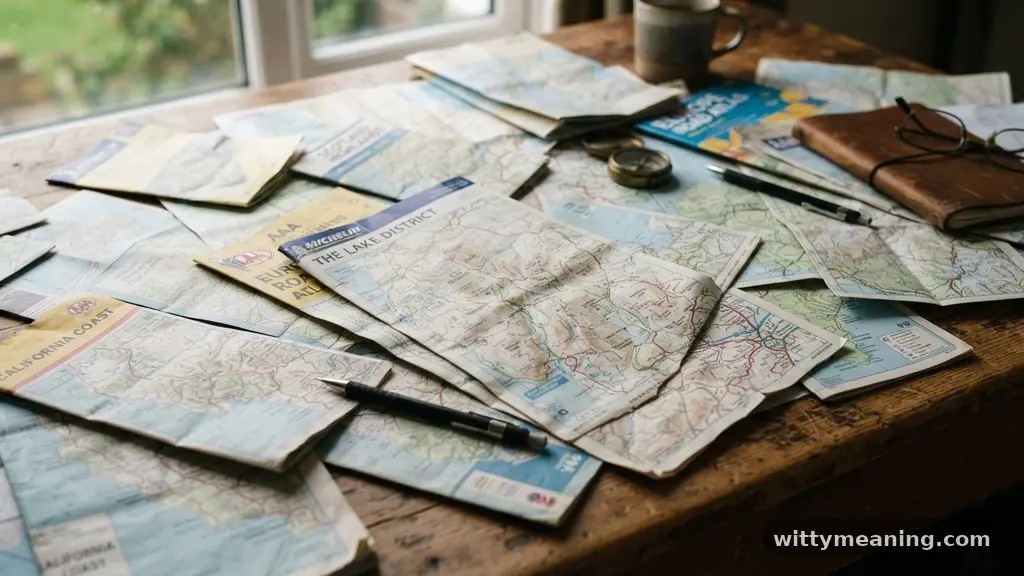
At its most literal level, the term “mappy” functions as a colloquial adjective. In standard English, adding a “y” to a noun is a common way to denote that something possesses the qualities of that noun.
Therefore, when someone uses the term to describe a document, a set of directions, or a cluttered desktop, they are essentially saying it is “map-like.” This usage is straightforward and relies on the listener’s ability to infer the connection to cartography or spatial representation.
However, the lexicology of the term is not strictly confined to formal dictionaries. Because it is a non-standard formation, you will rarely find it in authoritative printed dictionaries, which leads to linguistic ambiguity in casual text messaging. When a word lacks a formal definition, the speaker relies heavily on the recipient’s ability to decode the message based on shared knowledge.
If you are discussing a complex navigational route, “mappy” might be used to describe a visual aid that is dense with information. In this sense, the word acts as a shorthand for “containing too many features” or “resembling a complex diagram.” Understanding this requires looking at the word not as a rigid entry, but as a flexible tool used to convey a specific visual quality.
Mappy as a Cultural Icon in Retro Gaming
For a large segment of the population, the mappy meaning in text has absolutely nothing to do with geography. Instead, it is a direct reference to the Mappy arcade game released by Namco in 1983.
This classic title features a police officer mouse named Mappy who navigates a house while avoiding the Goro cats. In the world of retro gaming, the name has become synonymous with the platforming genre of the 1980s.
When this term appears in forums, gaming chats, or nostalgic social media posts, it is almost certainly a proper noun rather than a descriptive adjective. The character has persisted in the cultural consciousness due to his recurring appearances in subsequent Namco compilations and crossovers. For those embedded in gaming culture, seeing “Mappy” in a text message triggers an immediate association with chiptune music, trampoline mechanics, and the golden age of arcades.
This is a prime example of how internet culture can hijack a word that sounds like a common adjective and solidify it as a brand identity. If you are analyzing a text and see the name capitalized, it is highly probable that the author is discussing the game, the character, or the legacy of 8-bit entertainment rather than any form of digital mapping.
Distinguishing Between Mapping and Mappy
One of the most common points of confusion in text analysis arises from the phonetic similarity between “mappy” and the gerund “mapping.” Mapping is a fundamental process in geographic information systems (GIS) and data science. It involves the translation of spatial data into a visual format that humans can interpret. When an analyst discusses “mapping software” or “data visualization,” they are referring to the technical art of cartography and the representation of physical or abstract spaces.
Conversely, “mappy” is almost always used in a descriptive or informal capacity. This distinction is vital for those working in fields that rely on semantic interpretation. If a colleague sends a message saying, “The project is getting a bit mappy,” they are likely complaining that the project has become disorganized, overly complex, or cluttered with too many branching pathways—metaphorically resembling a confusing map.
If they say, “We need to work on the mapping,” they are referring to a structured technical task. Recognizing these subtle differences prevents miscommunication in professional settings. The following table highlights the primary differences between these terms:
| Term | Primary Context | Functional Role |
|---|---|---|
| Mappy | Casual, Slang, Gaming | Adjective or Proper Noun |
| Mapping | Technical, GIS, Data Science | Process or Verb |
| Cartography | Academic, Geography | Scientific Discipline |
The Role of Context Cues in Semantic Interpretation
When you encounter the word in a digital conversation, your brain performs a rapid semantic interpretation to assign it a meaning. This process relies on context cues such as the platform, the relationship between the speakers, and the presence of related keywords.
For instance, if the text mentions “levels,” “score,” or “Namco,” the mappy meaning in text is clearly tied to the video game character. If the text mentions “GPS,” “layers,” “coordinates,” or “interface,” the speaker is likely using the word to describe a visual layout.
This phenomenon is a core component of modern linguistics. In the absence of a formal definition, the meaning is negotiated between the sender and the receiver. This is why slang often thrives in tight-knit online communities.
If a group of developers decides that a “mappy” interface is one that has too many navigation tabs, that definition becomes the “truth” for that specific group. This subjectivity is what makes text analysis so challenging for algorithms. A computer might struggle to differentiate between a user talking about a game and a user complaining about a cluttered navigation menu, whereas a human reader intuitively understands the intent based on the rest of the sentence.
Urban Slang and Internet Culture
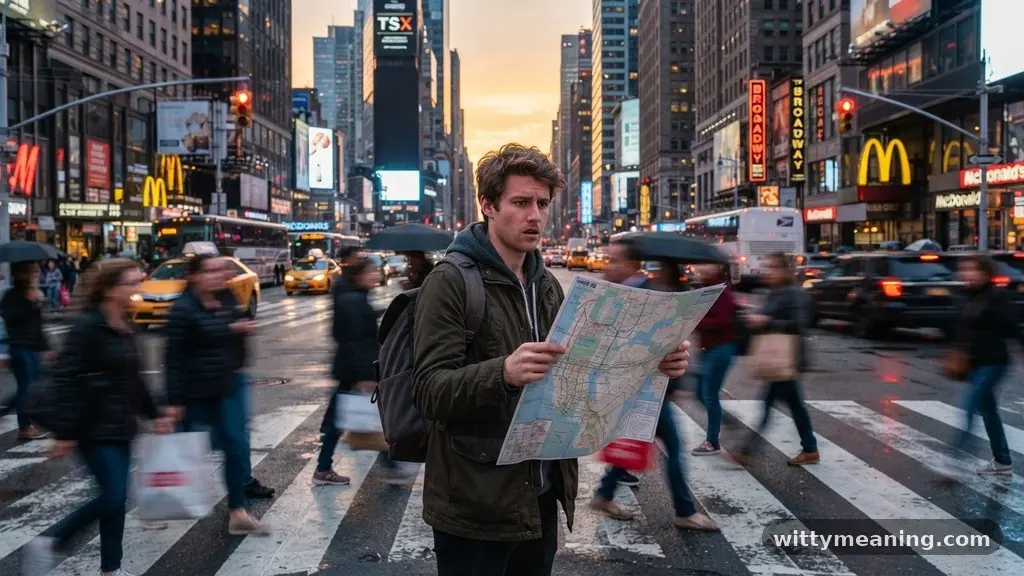
In the realm of urban slang, words are often repurposed to describe states of mind or social environments. While “mappy” is not a widely recognized piece of mainstream slang like “lit” or “ghosting,” it does appear in niche internet culture to describe someone who is “lost” or “wandering” like a person trying to read a map. In some subcultures, calling someone “mappy” implies they are unfocused, constantly looking for direction, or perhaps overly obsessed with details at the expense of the big picture.
The beauty of orthographic variation in text messaging is that it allows for the creation of these temporary, localized meanings. Because we communicate so rapidly, we often invent or modify words to fit the mood of the moment. If you see “mappy” used in a way that doesn’t fit the video game or the geographical description, it is likely a creative, one-off usage.
This is where lexicology meets creativity. As a writer or analyst, it is essential to remain flexible.
Do not assume that a word must have a singular, static definition. Instead, look at how the word is being used to build a bridge between the speaker’s thoughts and the listener’s understanding.
Topical Gaps: Addressing Misconceptions
Many users search for the meaning of “mappy” because they are confused by autocorrect errors or misspellings of similar-sounding words. For instance, users often confuse “mappy” with “amply” or “tappy.” Linguistic ambiguity is frequently exacerbated by mobile keyboards that suggest words based on frequency rather than intent. If a user types “mapy” or “mappie,” the phone might suggest “mappy,” leading the user to wonder if they have encountered a legitimate, albeit obscure, English word.
Another common gap is the assumption that “mappy” is an acronym. While many terms in the tech world are acronyms, “mappy” is not. It does not stand for “Mapping Application Program,” nor is it a shorthand for any specific technical protocol.
Clearing up this misconception is important for professionals who might be searching for documentation on a software tool that doesn’t exist. By confirming that the term is either an informal descriptor or a proper noun related to gaming, we can save time and reduce frustration. When you encounter a word that seems out of place, always check if it is a typo for a more common term before assigning it a complex linguistic value.
The Importance of Spatial Data in Modern Communication
While “mappy” is rarely a technical term, the underlying concept of spatial data is central to how we communicate today. We live in an era of digital mapping, where our phones constantly track our location and provide us with real-time navigation.
This ubiquity of geographic technology has bled into our language. We use metaphors derived from navigation to describe our lives—we talk about “finding our way,” “charting a course,” or “getting lost.”
When someone uses the term “mappy,” they are often tapping into this cultural obsession with navigation. Even if they are using it to describe a messy document, the root of the word is tied to our collective experience of navigating the physical world. This is why the word “mappy” feels intuitive to the reader, even if they haven’t encountered that specific spelling before.
We all understand the concept of a map, and we all understand the feeling of being overwhelmed by too much information. By combining these two ideas, the word creates an instant mental image. This highlights how our environment shapes our vocabulary and how spatial representation continues to influence human language in the digital age.
Professional Contexts and Avoiding Linguistic Confusion
In professional writing, it is generally best to avoid terms that rely on colloquialism or ambiguous slang. If you are writing a report on mapping software or GIS, using a word like “mappy” would be considered unprofessional and potentially confusing to your audience. The ambiguity of the term could lead to a misunderstanding of your data or your project goals.
Instead, opt for precise language. If something is complex, call it “complex.” If it is cluttered, call it “disorganized.”
If you find that your colleagues are using “mappy” to describe specific software interfaces, consider creating a glossary of terms for your team. This ensures that everyone is on the same page and that your communications remain clear and effective. Professional communication relies on a shared lexicon, and while slang is great for social media or casual chat, it has no place in technical documentation or formal business correspondence.
Remember that your goal is to be understood, not to be clever. When in doubt, choose the word that leaves the least amount of room for interpretation.
Future Trends in Digital Lexicology
As we continue to integrate AI and automated text analysis into our lives, the way we handle non-standard words like “mappy” will evolve. Algorithms are becoming better at identifying context cues, which means they will eventually be able to distinguish between a user discussing the Mappy arcade game and a user describing a “mappy” (cluttered) spreadsheet. However, the human element will always be the final arbiter of meaning.
The evolution of language is not slowing down; if anything, the internet has accelerated the pace at which new words are born and discarded. We should expect to see more of these “micro-meanings” appearing in our text streams. The key is to remain adaptable.
By understanding the roots of words, the influence of pop culture, and the importance of context, we can navigate the shifting sands of modern communication with ease. Whether you are a fan of retro gaming or a professional working in the field of cartography, recognizing the various layers of the mappy meaning in text will help you stay informed and articulate in an increasingly complex digital world.
Frequently Asked Questions
Is Mappy a recognized term in standard English dictionaries?
No, “mappy” is not a formal word found in standard dictionaries. It is a colloquial formation used primarily as an informal adjective to describe something that resembles a map or is cluttered with detail, or as a proper noun referring to the classic 1983 Namco arcade game.
How do I know if someone is talking about the game or a map?
Look for surrounding keywords. If the text includes terms like “arcade,” “Namco,” “character,” “levels,” or “retro,” it is a reference to the video game. If the text discusses navigation, layouts, GPS, or UI design, it is likely being used as a descriptive adjective.
What is the difference between mapping and mappy?
“Mapping” is a formal process involving the creation of visual representations of data or geography, often used in technical fields like GIS. “Mappy” is an informal, non-technical term used to describe a visual quality or to refer to the specific video game character from the 1980s.
Why do people use the word mappy in text messages?
People use it as a shorthand to describe a situation or object that feels complex, cluttered, or navigational. Because it is short and evocative, it serves as a quick way to convey a feeling of being overwhelmed by information without needing to provide a long-winded explanation.
Conclusion
In summary, the mappy meaning in text is entirely dependent on the context in which it appears. It can range from a lighthearted, descriptive adjective used to characterize something that feels “map-like” or cluttered, to a specific proper noun paying homage to the classic Namco Mappy arcade game. By paying attention to context cues and the surrounding subject matter, you can easily determine whether the speaker is referencing cartography, spatial representation, or retro gaming culture.
While the term may lack a formal dictionary definition, its usage demonstrates the fluid and creative nature of modern language in the digital age. Whether you are navigating a complex project or reminiscing about 8-bit classics, understanding these nuances ensures you stay connected and clear in all your digital interactions.