


When encountering the term “Ares” in modern digital communication, literature, or academic study, the ares meaning in text often fluctuates depending on the context. While most readers immediately associate the name with the Olympian god of war from Greek mythology, the term has evolved to represent complex themes of aggression, conflict, and primal instinct. Whether you are analyzing a classical text or decoding a contemporary social media post, understanding how this name functions as a symbol requires peeling back layers of history, linguistics, and psychological archetypes.
Etymology and Linguistic Origins of the Name
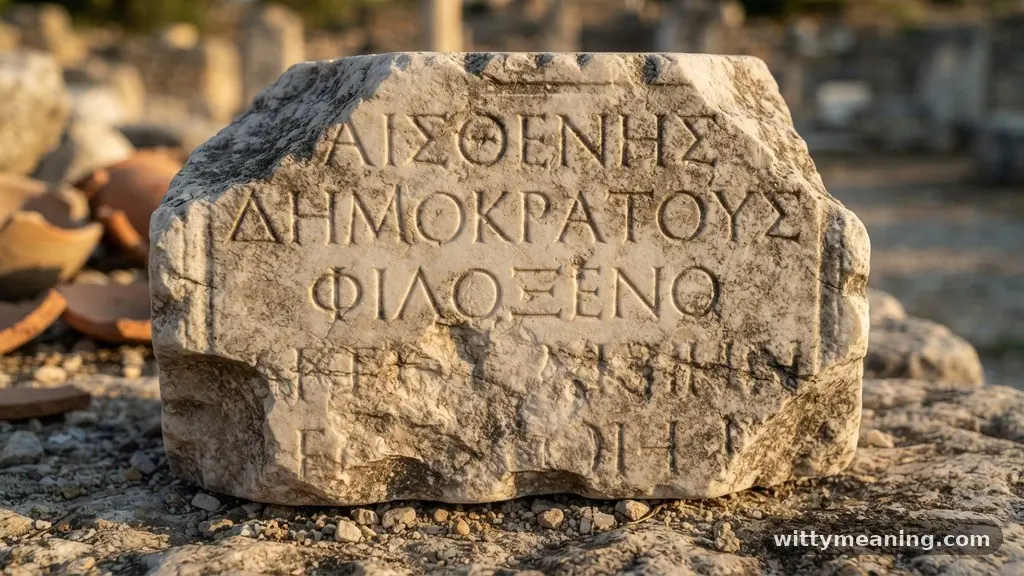
The etymology of the name Ares is a subject of significant debate among linguists and classicists. In the ancient Greek language, the name is generally linked to the verb arein (to destroy) or arē (bane, ruin, or curse).
This linguistic connection reinforces his role as a deity of destruction. Unlike other gods who might represent the strategic or protective aspects of military engagement, the name Ares itself carries the weight of raw, unmitigated carnage.
When scholars examine the linguistic origins of the name, they often look toward Proto-Indo-European roots that suggest a connection to “inflicting wounds.” This is not merely a superficial label; it is a descriptor of the character’s fundamental essence. In literature, the appearance of the name serves as a shorthand for the chaos of the battlefield.
Authors often use the name to evoke a sense of inevitable violence or to characterize a figure who acts on impulse rather than calculation. By tracing these roots, we see that the ares meaning in text is rarely neutral. It is a loaded term, historically designed to signal the presence of danger, the breakdown of social order, and the visceral reality of physical confrontation.
The Olympian God of War in Classical Antiquity
To grasp why the name holds such power, one must look at his role within the pantheon of classical antiquity. Ares was the son of Zeus and Hera, yet he was often viewed with disdain by his fellow deities. In the Homeric epics, particularly the Iliad, he is depicted as a volatile, unpredictable force.
Homer describes him not as a noble commander, but as a being driven by insatiable bloodlust. This portrayal provides the foundational context for how the name is used in later Western literature.
The mythological influence of Ares extends far beyond the battlefield. He represents the “raw” side of war—the screaming, the wounding, and the mindless destruction that follows a conflict. While his sister Athena represents the strategy, wisdom, and justice inherent in righteous struggle, Ares represents the terrifying, indiscriminate nature of combat.
When you encounter this name in a historical or literary analysis, the text is almost certainly contrasting these two archetypes. The distinction between strategic warfare and chaotic violence is a recurring motif that writers continue to leverage today. Understanding this dichotomy is essential for interpreting the nuances of the name when it appears in modern creative writing or cultural criticism.
Ares Versus Athena: The Duality of Conflict
A critical component of the ares meaning in text is the inherent comparison to Athena. This rivalry is one of the most enduring tropes in literature. In the context of the Iliad, the interaction between these two deities serves as a commentary on the nature of human aggression.
Athena is the cool, collected mind, while Ares is the heated, reactive body. This symbolism of conflict is often utilized by authors to contrast different approaches to problem-solving or political struggle.
When a character is described in terms of Ares, they are usually being framed as impulsive, short-tempered, or prone to violence. Conversely, characters associated with Athena are framed as rational and calculated. This literary device allows writers to convey a great deal of information about a character’s internal state without needing to write pages of exposition.
If a narrative mentions an “Ares-like” approach to a diplomatic crisis, the reader immediately understands that the character is opting for force over negotiation. This shorthand is a testament to the enduring power of these mythological figures. They have become archetypes that simplify complex human behaviors into recognizable, binary categories of action.
Ares in Roman Mythology: The Shift to Mars

The transition from the Greek Ares to the Roman mythology equivalent, Mars, represents a significant shift in how the deity was perceived and utilized in texts. While the Greeks often viewed Ares with a degree of ambivalence or even fear, the Romans elevated Mars to a position of central importance. Mars was not merely a god of destruction; he was a guardian of the state, a protector of the people, and a figure associated with agriculture and the arrival of spring.
This shift in perception is vital when deciphering the ares meaning in text across different historical periods. If a text is referencing Roman sources, the term might carry connotations of duty, national pride, and structured military power. In contrast, Greek texts focus on the terror of the individual soldier.
This evolution highlights how cultural context dictates the meaning of symbols. When a modern author uses the name, they are frequently pulling from the Greek tradition to highlight the destructive, irrational side of human nature, whereas references to Mars are more likely to be used in contexts involving institutional power or organized, state-sponsored aggression.
Psychological Warfare and Aggressive Instincts
In contemporary psychological discourse, the term is frequently used to discuss aggressive instincts and the human capacity for violence. The archetype of Ares is often employed to describe the “shadow” side of the human psyche—the part of us that reacts to threats with immediate, overwhelming force.
In this metaphorical sense, the ares meaning in text shifts toward an exploration of human temperament. It describes a personality type that is confrontational, assertive, and perhaps lacking in emotional regulation.
This usage is common in character studies and biographical writing. When a biographer describes a political figure as having “the spirit of Ares,” they are drawing upon this psychological framework. It suggests a person who thrives in high-stakes, volatile environments and who views every obstacle as a battle to be won.
This is not necessarily a pejorative term; in some contexts, it can imply a necessary bravery or the ability to act decisively when others are paralyzed by hesitation. However, the underlying implication of instability remains. The name serves as a warning, signaling that the individual in question is someone who operates on a primal level, often bypassing the filters of social propriety.
Ares and the Zodiac Implications
The name also appears frequently in discussions regarding the Aries constellation and the broader zodiac implications. In astrology, Aries is the first sign of the zodiac and is ruled by the planet Mars.
This connection bridges the gap between ancient mythology and modern pop culture. When people talk about “Aries energy,” they are implicitly referencing the traits associated with the Olympian god of war: leadership, impulsivity, courage, and a tendency toward aggression.
In text, this usage often appears in horoscopes, lifestyle articles, or social media discussions about personality traits. It is a shorthand for a specific set of behaviors: being a “pioneer,” being “hot-headed,” or being “direct.” This contemporary usage is a perfect example of how ancient entities are repurposed for modern consumption.
The ares meaning in text here is less about the literal god of war and more about the perceived personality traits of those born under the sign. It is a fascinating study in how mythological names lose their religious context over time, transforming into secular labels for human behavior and character development.
Naming Conventions and Cultural References
Beyond its mythological roots, the name is frequently used in modern naming conventions for everything from military hardware to sports teams and video game characters. This is where the name loses much of its nuance and becomes a brand. When a company names a product “Ares,” they are leveraging the association with power, strength, and victory.
The ares meaning in text in these instances is purely aspirational. It is meant to evoke a sense of dominance and technological superiority.
| Context | Primary Association | Connotation |
|---|---|---|
| Literary Analysis | Chaos and Destruction | Negative/Warning |
| Astrology | Initiation and Leadership | Neutral/Positive |
| Marketing/Branding | Power and Strength | Positive/Aspirational |
| Psychological Study | Impulsive Aggression | Analytical/Diagnostic |
The usage of the name in these contexts is a testament to the enduring power of the brand of war. Even in a secular, modern world, the name carries a weight that few others can match.
It is a shortcut to the concept of “power” that requires no explanation. Whether it is a brand of gym equipment or a fictional character in a science-fiction novel, the name serves the same function: it tells the audience exactly what kind of energy to expect.
Addressing Topical Gaps: Why Ares Remains Relevant
A common gap in existing explanations of this term is the failure to connect the ancient mythological figure to modern digital communication. Many articles focus solely on the Greek myths, ignoring the way the name is used as a shorthand in internet culture.
For instance, in online gaming, a player might be described as having “Ares-like” skill, referring to a hyper-aggressive playstyle that prioritizes offense over defense. This demonstrates that the ares meaning in text is not static; it is constantly being rewritten by the communities that use it.
Furthermore, it is important to address how the name functions as a metaphor for the unpredictability of the modern world. In a globalized society, the “Ares” archetype represents the sudden, destabilizing forces—such as economic crashes or geopolitical conflicts—that seem to arrive with the same suddenness and violence as the god himself.
By viewing the name through this lens, we can see that it is not just a relic of the past. It is a vital, living part of our vocabulary, used to describe the very real, very human experience of navigating a world that is often chaotic and unforgiving.
Summary of Key Takeaways
To summarize the various dimensions of the ares meaning in text, we must recognize that the term is a multifaceted signifier. It is rooted in the ancient Greek language and the bloody reality of the Iliad, yet it has evolved to encompass a broad spectrum of meanings ranging from the purely archetypal to the commercially branded.
Whether you are analyzing a classical poem or scrolling through a modern social media feed, the key is to look for the underlying intent. Is the author referencing the chaos of war, the traits of a zodiac sign, or the simple concept of raw, unbridled power?
- Historical Context: Always check if the text is drawing from Greek or Roman traditions, as the connotations differ significantly.
- Archetypal Usage: Recognize that the name is often used as a shorthand for impulsive, aggressive, or “shadow” personality traits.
- Modern Branding: In corporate or consumer contexts, the name is stripped of its destructive baggage and used as a synonym for power and strength.
- Astrological Links: Be aware of the connection to the Aries constellation and the personality traits attributed to that sign in pop culture.
By maintaining this awareness, you can navigate the various ways this powerful name appears in writing. It is a symbol that has survived for millennia because it speaks to a fundamental aspect of the human condition: our complicated, often contradictory relationship with conflict and power.
Frequently Asked Questions
What is the primary association of Ares in literature?
In literature, Ares is primarily associated with the chaos, destruction, and raw violence of warfare. He serves as a symbol for the impulsive and irrational aspects of human aggression, often contrasted with the strategic and disciplined approach represented by his sister, Athena.
How does the Roman god Mars differ from the Greek Ares?
While Ares was often viewed with fear and disdain by the Greeks, the Roman god Mars was a foundational figure of the state. Mars was associated with protection, agriculture, and the preservation of the Roman people, carrying a much more positive and institutional connotation than his Greek counterpart.
Why is the name Ares used in modern branding?
The name is used in modern branding because it is a globally recognized shorthand for power, strength, and dominance. Companies use the name to signal that their products are high-performance, aggressive, or capable of overcoming significant obstacles, effectively borrowing the deity’s reputation for martial prowess.
What does it mean when someone refers to “Aries” energy?
Referring to “Aries” energy typically relates to the zodiac sign and its ruling planet, Mars. It implies a personality characterized by initiative, leadership, directness, and a tendency toward being hot-headed or impulsive. It is a common way to describe someone who acts decisively and assertively in their daily life.
The term “Ares” continues to be a potent force in our lexicon, bridging the gap between the ancient world and contemporary life. Whether used to describe a volatile historical figure, a tactical approach in a game, or a personality type, the ares meaning in text remains firmly anchored in the concept of intense, transformative power. By understanding the diverse ways this name has been interpreted throughout history—from the blood-soaked pages of the Iliad to the modern, secular usage of the zodiac and corporate branding—we gain a deeper appreciation for how language preserves and evolves our most primal archetypes.
As we continue to navigate a world that is frequently defined by conflict and competition, the figure of the god of war remains a relevant, if unsettling, mirror held up to our own nature. Understanding this name is not just about knowing mythology; it is about recognizing the enduring patterns of human behavior that define our history and our future.