

In the modern digital landscape, the term OPSEC—an acronym for operational security—has migrated from its origins in military intelligence to become a staple of daily online discourse. When you encounter the opsec meaning in text during a conversation on platforms like Discord, Twitter, or private messaging apps, it serves as a shorthand for the practice of protecting sensitive data from unauthorized disclosure.
At its core, it is about controlling the narrative of your own life by limiting the amount of information that could be synthesized into a profile by someone with malicious intent. Whether you are navigating professional environments or managing a highly private online persona, understanding these protocols is no longer optional; it is a fundamental requirement for maintaining digital privacy in an era of ubiquitous surveillance and data harvesting.
The Evolution of Operational Security from Military to Civilian Use

The historical roots of operational security lie in the Vietnam War, where military leaders recognized that the enemy was gaining actionable intelligence by piecing together seemingly trivial bits of information. By observing the movement of supplies, the patterns of radio communications, and the behavior of personnel, adversaries could predict future tactical maneuvers. Today, this concept has been democratized.
When someone asks about the opsec meaning in text within a group chat, they are essentially asking, “Are we being careful enough with our information?” This transition from battlefield intelligence to personal safety reflects the reality of our hyper-connected world, where information leakage can occur through a single ill-advised post or a poorly configured privacy setting.
In a civilian context, the focus shifts from protecting troop movements to protecting personal identifiable information (PII). Every time a user posts a photo, shares a location, or interacts with a public thread, they are creating a digital footprint.
If these individual breadcrumbs are left unchecked, they can be aggregated by bad actors to perform social engineering or identity theft. The modern application of these measures is not just about avoiding extreme scenarios like state-sponsored espionage; it is about protecting the average user from the everyday risks of digital life, such as harassment, stalking, and the unwanted monetization of their private behavioral patterns.
Understanding the Mechanics of Information Leakage
To truly grasp the opsec meaning in text, one must first understand how information leaks occur. Most users assume that they are only at risk if they share their home address or social security number. However, the most significant breaches often involve “low-sensitivity” data that, when combined, creates a high-sensitivity profile.
This is the essence of data sensitivity analysis. For example, a picture of a coffee shop posted on social media might seem harmless, but if it shows a specific street sign, the time of day, and the user’s usual routine, it provides a threat actor with a clear picture of that person’s physical location at a predictable time.
This vulnerability is exacerbated by metadata. Every file uploaded to the internet—whether it is a photo, a document, or a video—often carries hidden tags that reveal where, when, and on what device the content was created. When users ignore these technical realities, they experience an OPSEC failure.
These failures are rarely the result of a massive security breach; they are usually the result of a thousand tiny, unintentional disclosures. To mitigate these risks, one must adopt a mindset of constant situational awareness, questioning not just what is being said, but what the underlying context of that information might reveal to an outside observer who is intentionally looking for patterns.
Threat Modeling for the Average Digital Citizen
A core component of professional operational security measures is the process of threat modeling. While this sounds like an enterprise-level IT task, it is highly applicable to individual users. Threat modeling involves identifying who might want your information, what they would do with it, and what assets you need to protect.
For instance, a journalist might have a different threat model than a casual gamer on Discord. The journalist is concerned with protecting sources and staying anonymous to avoid censorship, while the gamer might be concerned with preventing doxxing or account takeover attacks.
By performing a simple risk assessment, you can prioritize which areas of your digital life require the most defense. If you are active in niche communities, you might prioritize pseudonymity—ensuring that your online alias is never linked to your real-world identity. If you are concerned about your financial data, your threat model would prioritize securing your primary email and using multi-factor authentication everywhere.
This structured approach allows you to implement cyber hygiene practices that are effective without being overwhelming. You do not need to be a government agent to practice good security; you simply need to be a conscious participant in your own digital safety.
Common OPSEC Protocols for Daily Online Interaction
Implementing opsec protocols does not require a background in computer science. It begins with a change in habits. The following table outlines standard practices that help maintain privacy across various digital platforms.
| Strategy | Actionable Step | Primary Benefit |
|---|---|---|
| Account Separation | Use unique emails for each platform | Prevents cross-site tracking |
| Metadata Scrubbing | Remove EXIF data from photos | Protects location privacy |
| Encryption | Utilize E2EE messaging apps | Prevents eavesdropping |
| Access Control | Review app permissions regularly | Limits data harvesting |
These practices serve as the bedrock of a secure online existence. By separating your identities, you ensure that if one account is compromised, the breach does not cascade into your other digital lives. Furthermore, the use of encrypted messaging tools ensures that your private conversations remain private, protected from both third-party advertisers and malicious interception.
These measures, while simple, provide a significant barrier against the most common forms of digital intrusion. It is about creating “friction” for anyone attempting to map your life, making it more effort than it is worth for a casual attacker to pursue your data.
The Role of Pseudonymity and Burner Accounts
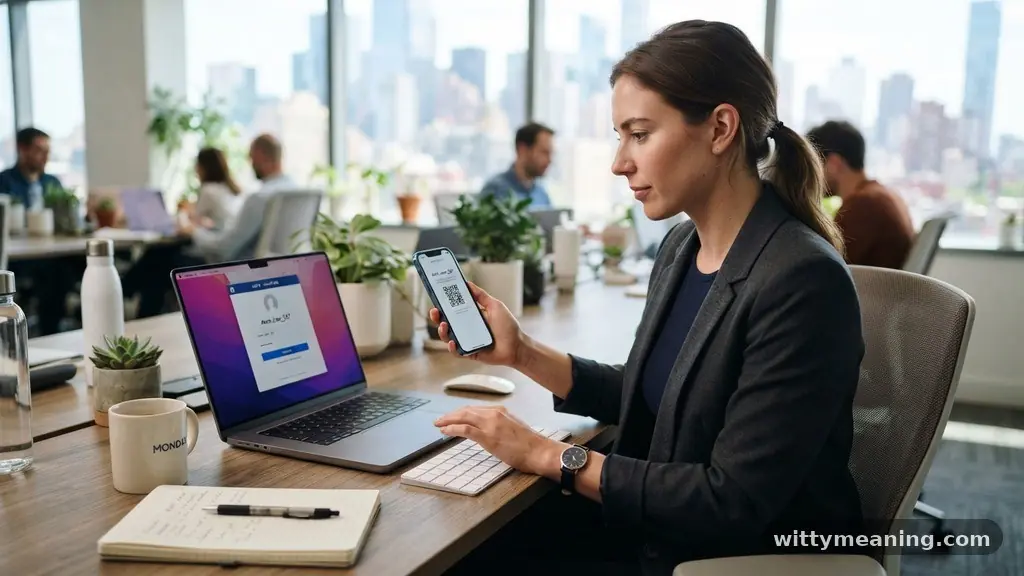
The concept of pseudonymity is often misunderstood as being synonymous with deceit. In the realm of privacy, however, it is a legitimate tool for protection. Using burner accounts—secondary profiles that have no link to your primary identity or PII—is a standard method for interacting with public forums.
If you are asking for advice on sensitive medical or financial topics, doing so from a burner account prevents that data from being permanently associated with your main social media presence. This separation is vital because it limits the blast radius of any potential information leak.
When discussing the opsec meaning in text within online communities, you will often find that users prioritize the separation of their “professional” self from their “personal” self. This does not mean they are hiding something shameful; it means they are exercising their right to control their own narrative. By using different handles, avatars, and email addresses for different contexts, you create a compartmentalized digital life.
If one compartment is compromised, the rest remain secure. This form of “compartmentalization” is a cornerstone of intelligence work, and it is equally effective for protecting your personal privacy in the age of data-driven marketing and identity theft.
Addressing Topical Gaps: Why Misinformation Spreads
A common gap in public understanding is the assumption that privacy is a binary state: you are either “secure” or you are “hacked.” In reality, security is a spectrum. Many people search for the opsec meaning in text because they have heard it used in the context of “cheating” or “secret relationships.”
This colloquial usage, while less formal than the military definition, still relies on the same principle: the concealment of information to prevent discovery. The gap in current discourse is the lack of nuance between “secrecy” (hiding something illicit) and “privacy” (protecting your personal life from public view).
It is important to emphasize that operational security is a defensive, not an offensive, tool. It is about the preservation of one’s own boundaries. When people conflate the two, they often disregard privacy tools entirely, assuming that only those with “something to hide” need to worry about their digital footprint.
This is a dangerous misconception. Everyone has something to protect, whether it is their financial health, their physical safety, or their intellectual property.
Bridging this gap requires shifting the narrative from “hiding” to “protecting.” By framing these practices as essential maintenance for a modern citizen, we can reduce the stigma often associated with privacy-conscious behavior.
Social Engineering and the Human Element
The most sophisticated technical defenses are often rendered useless by a single lapse in human judgment. This is the danger of social engineering. An attacker does not need to crack your password if they can trick you into revealing it through a phishing email or a manipulative message on a platform like Discord.
This is where the human element of operational security becomes paramount. You must be trained to recognize the psychological triggers that attackers use: urgency, fear, and curiosity.
To stay safe, you must maintain a healthy level of skepticism. If a contact suddenly asks for sensitive information or sends a suspicious link, even if the request seems to come from someone you know, you must verify the request through an out-of-band communication channel. This is part of your cyber hygiene.
Never assume that a platform is inherently safe just because it is popular. The more you understand how attackers operate—by exploiting human trust rather than technical vulnerabilities—the more effective your security posture will be. Always remember that your information is only as secure as the person you are communicating with, which is why it is often best to keep sensitive discussions off public or semi-public platforms entirely.
Best Practices for Maintaining Digital Privacy
To summarize the effective implementation of these concepts, users should follow a tiered approach to their security. Below are the essential pillars for maintaining long-term digital safety:
- Audit your digital footprint: Periodically search for your own name and associated handles to see what information is publicly available to strangers.
- Minimize data collection: Only provide the absolute minimum amount of information required when signing up for new services or apps.
- Harden your accounts: Utilize strong, unique passwords for every service and enable multi-factor authentication (MFA) using an authenticator app rather than SMS.
- Practice data hygiene: Regularly delete old accounts you no longer use, as these are often the first points of entry for hackers during a data breach.
- Be mindful of context: Before posting, ask yourself if the information could be used to build a profile of your habits, location, or professional associations.
These steps, when integrated into your routine, create a robust defense system. It is not about being paranoid; it is about being proactive.
In a world where your personal data is the currency of the internet, treating that information with care is a form of self-defense. By consistently applying these principles, you ensure that you remain the primary gatekeeper of your own life, rather than leaving your private affairs exposed to the whims of data brokers and malicious actors.
FAQ: Common Questions Regarding OPSEC
What does it mean when someone says OPSEC in a casual conversation?
In casual text or chat, it usually means “be careful what you say” or “keep this quiet.” It is a warning to the other person that the information being discussed should not be shared publicly or that the current channel of communication is not secure.
Is OPSEC only for people who are doing something illegal?
No, that is a common misconception. OPSEC is a tool for anyone who values their privacy. It is used to prevent identity theft, doxxing, and unwanted surveillance, allowing individuals to navigate the internet without leaving a trail that can be exploited by advertisers or bad actors.
How can I improve my OPSEC on platforms like Discord?
To improve your security on Discord, use a unique email address for your account, enable two-factor authentication, and be selective about which servers you join. Avoid clicking suspicious links and never share your real-world location or PII in public channels, even if you trust the other users.
What is the biggest risk to my personal OPSEC today?
The biggest risk is usually the unintentional disclosure of information through social media. People often share details about their daily routines, workplaces, and physical locations without realizing that this data can be aggregated by third parties to create a detailed map of their lives.
Conclusion
The opsec meaning in text has transcended its military origins to become a vital framework for navigating the complexities of the digital age. By focusing on the protection of your digital footprint, practicing diligent cyber hygiene, and maintaining a high level of situational awareness, you can effectively shield yourself from the risks of information leakage and social engineering. While the tools of the trade—such as encrypted messaging, burner accounts, and privacy settings—are important, the most critical component of success is your own mindset.
Understanding that every piece of information you share has a potential cost is the first step toward reclaiming your privacy. As you continue to interact online, remember that your security is a continuous process, not a one-time setup. By staying informed and proactive, you can ensure that your personal information remains exactly where it belongs: under your own control.