

The term “skank” is a complex linguistic artifact that carries drastically different connotations depending on the context in which it is used. To investigate the skank meaning is to walk a fine line between the evolution of musical subcultures and the darker, more problematic history of gendered insults.
While many people encounter the word in modern pop culture or digital communication, its origins are rooted in distinct, often unrelated, historical threads. Understanding how this word shifted from a specific dance movement in the Caribbean to a derogatory slang term used to police female behavior requires an objective look at both linguistic evolution and the social pressures that shape our vocabulary.
At its core, the word serves as a prime example of how language can be reclaimed, co-opted, and weaponized. In one setting, it describes an energetic, rhythmic dance; in another, it functions as a pejorative meant to demean individuals based on perceived sexual conduct. This article peels back the layers of these definitions to provide clarity on how the term functions today, why it remains a subject of debate, and how its usage varies across different global communities.
The Etymological Roots of Skank
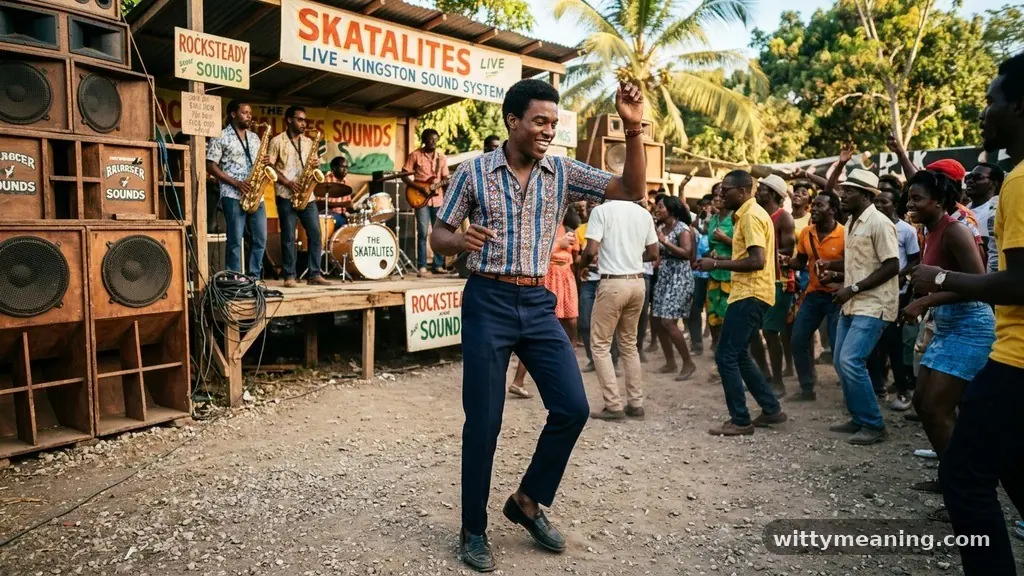
Tracing the etymology of the word reveals that it did not begin as an insult. The term likely emerged in Jamaica during the mid-20th century, specifically tied to the burgeoning music scene that would eventually give birth to ska and reggae.
Early Jamaican sound system culture utilized the term to describe a specific style of rhythmic movement that accompanied the offbeat, syncopated guitar chops characteristic of the genre. Far from being a derogatory epithet, the original usage was purely descriptive, tied to the physical expression of a musical beat.
As the music migrated from the Caribbean to the United Kingdom and eventually the United States, the term became inextricably linked to the skanking dance. This dance style involves a hunched-over posture, rapid knee movements, and flailing arm motions that match the tempo of the music. In this context, to “skank” is simply to participate in the communal joy of a musical genre.
The word remained relatively neutral within these artistic circles for decades, serving as a shorthand for subcultural identity and authentic participation in the scene. It is only when we move away from the dancehall and into the broader lexicon of Western society that the word takes on the offensive terminology for which it is more commonly known today.
Skanking as a Cultural Dance Expression
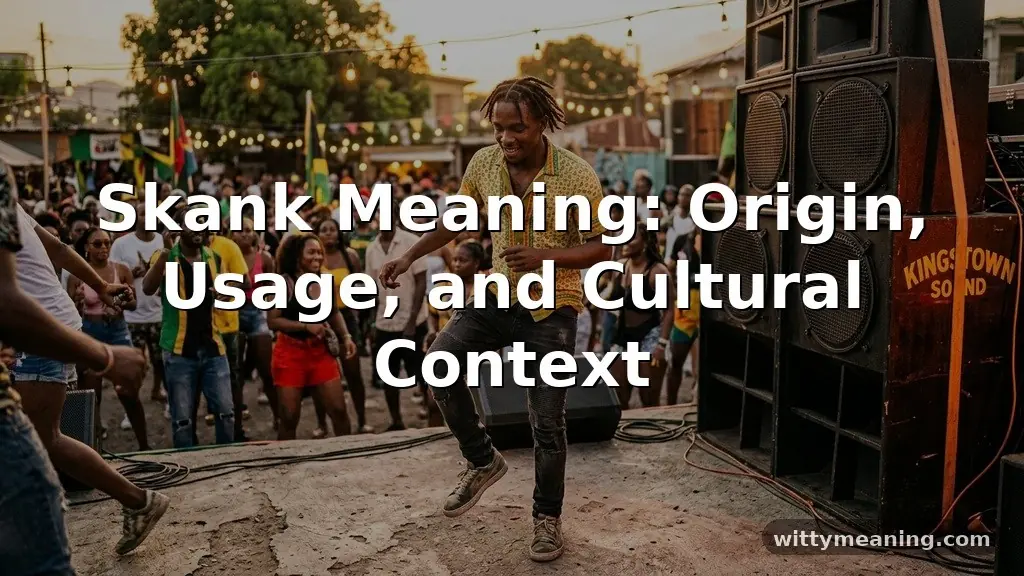
The skanking dance is a high-energy, full-body experience that defines the atmosphere of ska, punk, and reggae concerts. Unlike more structured ballroom or club dances, skanking is improvisational and visceral.
It requires the participant to lean forward, rhythmically lifting their knees while their arms move in a “running in place” motion or swinging side-to-side. This rhythmic movement is a fundamental aspect of the subculture, acting as a physical manifestation of the music’s offbeat pulse.
Within the ska community, the act of skanking is not merely a dance; it is a signal of belonging. It serves as a bridge between the performer and the audience, creating a shared physical language that transcends social barriers. When enthusiasts discuss the “skank,” they are participating in a tradition that honors the roots of Jamaican dancehall history.
This positive, celebratory association is vital to keep in mind, as it contrasts sharply with the misogynistic language that has unfortunately colonized the term in other spheres. Recognizing this distinction is essential for anyone trying to navigate the term’s dual nature without falling into the trap of conflating a cultural art form with a personal attack.
The Evolution into Derogatory Slang
The transition of the word into a derogatory connotation is a classic case of how society targets women through language. In the late 20th century, the term began appearing in North American and British vernacular as a way to describe women in a way that suggests sexual promiscuity or moral looseness.
This usage is inherently sexist, functioning as a gendered insult that seeks to shame women for their behavior or appearance. Unlike the musical definition, this usage is designed to alienate and demean.
Sociologists often point to this shift as an example of how offensive speech can strip the power from a word’s original, benign meaning. By labeling someone with this term, the speaker is attempting to enforce patriarchal standards of conduct.
The rise of the internet, and platforms like Urban Dictionary, has further complicated this, as users often submit definitions that perpetuate these biases while simultaneously mocking the word’s origins. This digital environment has allowed the social stigma associated with the word to persist, making it difficult for the original, positive meaning of the word to remain untainted by the weight of its current, weaponized form.
Comparing Usage: Music vs. Social Slang
To better understand the dichotomy, it is helpful to look at how the word functions in different environments. The following table highlights the stark differences between the musical context and the social context of the term.
| Category | Musical/Cultural Context | Social/Pejorative Context |
|---|---|---|
| Origin | Jamaican dancehall/Ska music | Unknown, likely North American slang |
| Intent | Descriptive/Celebratory | Dehumanizing/Insulting |
| Target | Dancers and music fans | Usually women |
| Social Impact | Fosters community and subculture | Perpetuates sexism and harassment |
This table illustrates that the skank meaning is almost entirely dependent on the speaker’s intent and the listener’s awareness of its dual history. While the musical definition is rooted in artistic expression, the social definition is a tool for verbal abuse. Recognizing this divide is the first step in understanding why the word remains so controversial.
Addressing the Topical Gaps

A common point of confusion for those researching this term is whether it is an “animal” or an “insect,” as some people occasionally use the word to describe skunks or other creatures due to phonetic similarities. To be clear: the term is not a formal biological classification. Any usage of the word to describe an animal is a mispronunciation or a colloquial corruption of the word “skunk.”
Furthermore, there is significant confusion regarding the “skanker” label. A “skanker” is simply someone who participates in the skanking dance—a label worn with pride by members of the ska scene.
Another gap in current discourse is the role of cultural appropriation. When the term is used in a derogatory way by individuals who are disconnected from the Caribbean roots of the word, it effectively erases the history of the culture that created it. By turning a word associated with Jamaican dance music into a generic insult, the aggressor is engaging in a form of linguistic erasure.
It is important to acknowledge that the word’s history is not just a footnote; it is a central part of why the word is so loaded. Ignoring the historical usage of the term in favor of its modern, offensive usage is a failure to understand the full scope of its impact.
The Role of Social Media and Digital Vernacular
In the digital age, the spread of slang is faster than ever. Platforms like TikTok, Twitter, and Reddit have become breeding grounds for the proliferation of derogatory slang.
Because these platforms lack nuanced context, the original, artistic meaning of the word is often lost, replaced by the most common or “viral” usage. This creates a feedback loop where the social stigma is reinforced by millions of users who may be unaware that they are using a term that has a rich, non-offensive history.
Furthermore, the influence of pop culture cannot be overstated. When the term is used in films, television shows, or song lyrics, it often leans into the most sensationalist version of the definition to shock or provoke an audience.
This normalization of misogynistic language makes it harder to advocate for more respectful discourse. As a result, younger generations may grow up knowing only the insult, completely blind to the fact that their vocabulary is being shaped by historical misconceptions and the deliberate degradation of a cultural term.
Linguistic Evolution and Reclaiming Language
Language is not static; it is a living organism that changes based on how we interact with it. Some subcultures have attempted to reclaim the word, stripping it of its derogatory connotation and returning to its roots as a descriptor of a dance or a lifestyle.
This process of reclamation is common in many marginalized groups, but it is fraught with difficulty when the term carries such a heavy history of verbal abuse. Whether or not the word can ever be fully “cleansed” of its offensive history remains a subject of intense debate among linguists and activists.
* Awareness: Recognizing that the word has multiple origins is the first step toward better communication.
* Contextual Sensitivity: Always consider the setting in which the word is being used before forming a judgment.
* Historical Respect: Acknowledge the Caribbean roots of the term to honor the culture that created it.
* Challenging Bias: Actively call out the use of the word when it is used to demean or shame individuals based on gender.
By focusing on these points, we can begin to shift the conversation away from the offensive terminology and toward a more nuanced understanding of how our words reflect our values.
Social Stigma and the Policing of Behavior
At its heart, the use of the word as a gendered insult is about control. By labeling a woman with this term, the speaker is attempting to exert social power and enforce a narrow set of expectations regarding how a person “should” behave.
This is the definition of social stigma being weaponized. When we use words to categorize and judge others, we are participating in a system of social policing that limits individual freedom.
It is worth noting that this type of language is rarely used against men in the same way or with the same frequency. This disparity highlights the systemic nature of the misogynistic language that permeates our daily lives. To move past this, we must look at why we feel the need to use such labels in the first place.
Often, the use of the word says more about the insecurity and prejudices of the speaker than it does about the person being targeted. By challenging the use of the word, we are not just correcting a vocabulary error; we are pushing back against a culture of judgment.
The Future of the Term in Modern Lexicons
As we look toward the future, it is likely that the skank meaning will continue to evolve, though perhaps not in a singular direction. In the music scene, the term remains a staple of the ska community, where it is used with pride and passion.
In the broader world, however, the word will likely remain a contentious issue. As our society becomes more aware of the impact of derogatory epithets, there is a growing movement to replace such words with more inclusive and accurate language.
The key to navigating this term is education. By highlighting the Jamaican dancehall origins and the history of the skanking dance, we can provide a counter-narrative to the toxic social usage.
We cannot simply delete the word from our dictionaries, but we can change how we prioritize its definitions. When we choose to emphasize the art over the insult, we begin to take back the power of language, ensuring that the words we use reflect the world we want to live in rather than the prejudices of the past.
Frequently Asked Questions
Is skank a derogatory word in all contexts?
No, it is not. While it is widely recognized as a derogatory slang term when directed at individuals, it is also a neutral, descriptive term within the ska and reggae music scenes. In that context, it refers to a specific rhythmic movement and dance style.
How did the word change from a dance to an insult?
The shift occurred through a process of linguistic co-option. The term was adopted into general English vernacular and repurposed as a gendered insult to shame women. This evolution reflects broader social trends where specific terms are weaponized to police behavior rather than describe an artistic expression.
Should I avoid using the word entirely?
It depends on your audience and intent. Because the term carries a heavy derogatory connotation for many, it is generally best to avoid using it as a descriptor for people. If you are discussing music or dance history, using it in its proper, historical context is usually acceptable and accurate.
What is the difference between skanking and other dances?
Skanking is a unique dance style characterized by a hunched posture, rhythmic knee lifts, and flailing arms. It is distinct from other forms of dance because it is improvisational and specifically synchronized to the offbeat, syncopated rhythms of ska music, acting as a physical extension of the genre.
Conclusion
The skank meaning is a multifaceted subject that serves as a mirror for the complexities of modern language. By understanding the divide between its origins in Jamaican dancehall culture and its later adoption as a pejorative term, we can better navigate how we use language in our daily lives. Whether we are discussing the high-energy skanking dance or addressing the harmful nature of gendered insults, the goal remains the same: to communicate with precision, empathy, and an awareness of the history behind the words we choose.
By acknowledging the cultural significance of the term while rejecting its use as a tool for verbal abuse, we contribute to a more respectful and informed society. Language is a powerful tool, and by choosing to use it with care, we can ensure that we honor the cultures that create our vocabulary while actively working to dismantle the prejudices that sometimes hide within it.