

When you encounter the term palazzo, you are stepping into a rich history of Italian culture that stretches far beyond a simple dictionary definition. At its core, the palazzo meaning is rooted in the Italian language as a direct translation for palace, yet its application in real-world contexts varies significantly from grand historical residences to contemporary fashion trends.
Understanding this term requires looking at how a structure defined by its urban presence and noble heritage has evolved into a descriptor for specific design elements and even specific styles of clothing. Whether you are exploring historical estates or looking for the perfect pair of wide-leg trousers, knowing the nuances of this word helps clarify its unique cultural weight.
The Etymological Roots of Palazzo
The Italian language serves as the foundation for the term, which traces its linguistic roots back to the Latin word palatium. This Latin root refers specifically to the Palatine Hill in Rome, where the emperors of the Roman Empire maintained their imperial residences. Over centuries, the word evolved through various dialects and cultural shifts, eventually solidifying as the standard term for a grand house or, more specifically, an urban residence for a noble family.
When you analyze the term linguistically, it is not merely a synonym for a large house. It carries connotations of power, civic duty, and the display of wealth within a city center.
While the term palace in English can refer to a royal residence, the Italian usage is broader, often applying to any large, imposing town house owned by a powerful lineage. The palazzo pronunciation is also distinct, with the double ‘z’ creating a sharp, rhythmic sound that reflects its Italian heritage, usually rendered as puh-lat-zo.
Distinguishing Palazzo from Villa
One of the most frequent points of confusion for travelers and architecture enthusiasts is the difference between a palazzo and a villa. While both signify luxury housing, their geographic and functional roles are distinct.
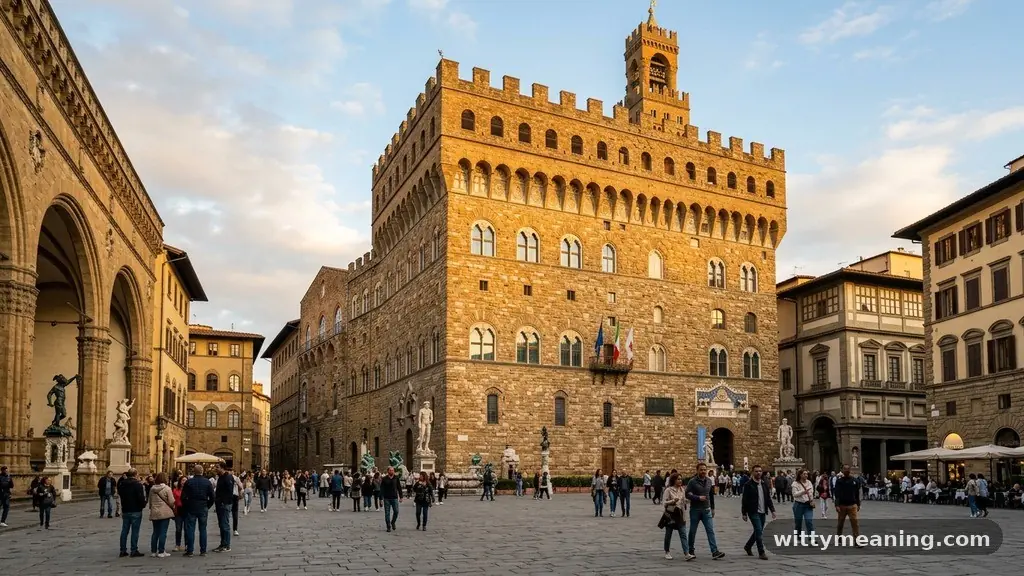
A palazzo is fundamentally an urban residence. It is designed to fit into the dense fabric of a city, often occupying a large block or corner, with its primary facade facing a street or a public square.
In contrast, a villa is typically a country estate. It is designed for leisure, agriculture, and escape from the urban heat or political turmoil of city life.
When you compare a palazzo vs villa, you are essentially looking at the difference between a center of power and a retreat for pleasure. A palazzo is meant to be seen by the public, serving as a stage for political meetings and social gatherings, whereas a villa is a private sanctuary often surrounded by gardens, vineyards, or farmland.
Architectural Features of the Grand Urban Residence
The design of these structures is what truly sets them apart in the field of architectural history. Unlike the sprawling, organic layouts of country houses, a palazzo design is usually compact and vertical, adhering to a strict, symmetrical facade. These buildings were built to impress, often featuring a ground floor constructed with heavy, rusticated stone to signify strength and stability.
As you move upward, the floors become more refined, with thinner masonry and larger windows. This hierarchy of construction reflects the social structure of the noble family living inside.
The ground floor was often used for business, storage, or servants, while the piano nobile—the second or main floor—housed the grandest living spaces and reception rooms. These floors are characterized by high ceilings, elaborate frescoed walls, and large windows that overlook the bustling city streets below.
The Role of the Courtyard in Design
A quintessential element of the traditional structure is the interior courtyard. Because these buildings were constructed in densely packed urban environments, they could not always rely on expansive external gardens for light and air.
Instead, the architect turned the building inward. The central courtyard served as the lungs of the house.
This space was not just for ventilation; it was a status symbol. It often featured a fountain, marble columns, or intricate stonework that showcased the family’s wealth to any visitor who entered the main gate. It provided a quiet, private space away from the noise and dust of the street, acting as a transition zone between the public face of the building and the private sanctuary of the family’s living quarters.
Palazzo Meaning in Literature and Culture
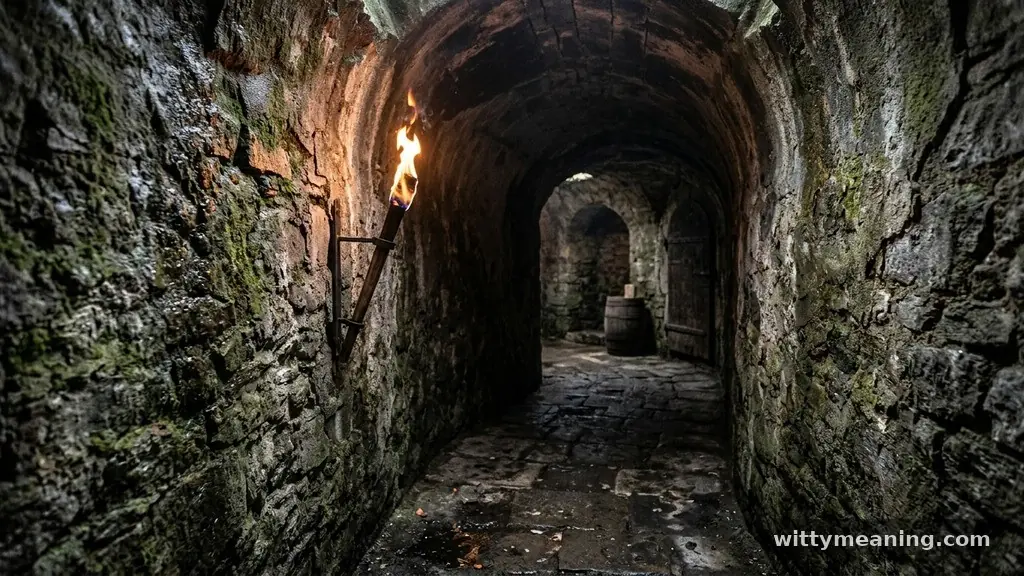
Literature frequently employs the setting of a grand house to signify decay, hidden secrets, or immense pride. The palazzo meaning in literature often transcends the physical building, becoming a character in its own right. A notable example is found in Edgar Allan Poe’s The Cask of Amontillado, where the dark, labyrinthine vaults beneath a palazzo serve as the site of a grim revenge.
In such stories, the architecture is used to heighten the tension. The depth of the cellars, the dampness of the walls, and the sheer scale of the building emphasize the isolation of the characters. By using the word in this context, authors tap into the reader’s understanding of these buildings as complex, historic, and occasionally menacing structures that hold the weight of generations within their walls.
Evolution into Modern Fashion
The term has migrated from the world of architecture into the world of textiles, specifically through the popularization of palazzo pants. These are wide-leg trousers that flare out from the waist, creating a silhouette that is both dramatic and comfortable. The connection to the original term comes from the sense of volume and movement associated with the flowing fabric, which mirrors the elegance and grand scale of Italian architectural design.
When you wear these trousers, the flared silhouette provides a sense of ease that contrasts with the restrictive nature of formal tailoring. They have become a staple in modern wardrobes because they bridge the gap between casual comfort and sophisticated style. While the link to a 16th-century Italian mansion might seem tenuous, both the building and the clothing share a commitment to a distinct, bold aesthetic that commands attention.
Comparing Luxury Housing Structures
To better understand where the palazzo fits in the landscape of high-end living, it is useful to look at how it compares to other types of elite residences. The following table highlights the key differences between these architectural forms.
| Feature | Palazzo | Villa | Mansion |
|---|---|---|---|
| Primary Location | Urban/City Center | Rural/Country | Suburban/Urban |
| Primary Purpose | Civic/Business/Status | Leisure/Agriculture | Family Residence |
| Symmetry | Strictly Symmetrical | Variable | Variable |
| Outdoor Space | Interior Courtyard | Gardens/Land | Landscaped Grounds |
Addressing Common Misconceptions
Many people mistakenly assume that any large, old building in Italy is a palazzo. However, the term is specific to the history of the Renaissance and the era of powerful city-states.
A building must have been constructed or occupied by a family of significant social or political standing to truly earn the title. It is not just about size; it is about the intended function of the space.
Another common misconception is that a palazzo must be a museum or a government office. While many of the most famous examples, such as those in Venice or Florence, have been converted into galleries or administrative buildings, their original purpose was domestic. They were the homes where business deals were struck, marriages were arranged, and the political future of the city was often decided.
The Legacy of Noble Architecture
The preservation of these historical estates is a massive undertaking that requires balancing modern utility with the need to protect centuries-old masonry. In many cases, the lower floors have been adapted for commercial use, such as luxury boutiques or upscale cafes, while the upper floors remain as private residences or cultural foundations. This adaptive reuse is what keeps the architectural history alive.
The influence of this style also extends beyond Italy. During the 18th and 19th centuries, architects across Europe and North America drew inspiration from these grand structures when designing banks, town halls, and private residences. The heavy stone, the grand entrance, and the symmetrical facade became a universal language for authority and permanence, proving that the influence of the Italian Renaissance is still very much with us today.
Topical Gaps: What Most Sources Miss
When discussing the palazzo meaning, many sources focus only on the architecture or the pants. However, they often overlook the role of these buildings in the economic history of the city.
A palazzo was essentially a mixed-use development before the term existed. It housed shops on the street level, offices for the family’s banking or trading business on the mezzanine, and private living quarters above.
Furthermore, the social hierarchy within the building was strictly enforced by the physical design. The layout of the rooms, the choice of materials in different areas, and even the height of the ceilings were all calibrated to communicate to visitors exactly how much power the family held. Understanding this economic and social context is vital for anyone who wants to grasp the full significance of these structures beyond their aesthetic value.
- The ground floor was often rented out to merchants to generate income for the noble family.
- Staircases were designed to be grand and sweeping, forcing guests to slow down and acknowledge the wealth of the host.
- The size of the windows on the facade often indicated the importance of the room located behind them.
- Many were built as fortified structures, with thick walls and small openings on the ground level to protect against civil unrest.
- The rooflines were often flattened or hidden behind a cornice to present a clean, imposing profile to the public street.
FAQ Section
Is every large old house in Italy considered a palazzo?
No, a building must have been the residence of a noble or high-ranking family to be accurately called a palazzo. Many large houses are simply referred to as casa or villa, depending on their location and the social status of the original owners.
How did palazzo pants get their name?
They are named after the structure because of their wide-leg, flowing design that mimics the grand, sweeping aesthetic of the architecture. The term was adopted in the fashion industry to describe the dramatic, voluminous silhouette that feels both luxurious and comfortable.
What is the difference between a palazzo and a mansion?
A palazzo is specifically tied to the urban culture of Italy and the historical context of noble family residences. While a mansion is a general term for a large, luxurious house anywhere in the world, a palazzo carries specific connotations of Renaissance design and city-center living.
Can a palazzo be located in the countryside?
Technically, no. By definition, a palazzo is an urban residence. If a noble family owned a large property in the countryside, it would be referred to as a villa or a tenuta, as these terms better reflect the agricultural and leisure-focused nature of rural estates.
Conclusion
The term palazzo carries a weight that is both historical and versatile. From the stone-clad facades of Renaissance city centers to the flowing fabric of modern wide-leg trousers, the word has traveled far from its origins on the Palatine Hill. By understanding the true palazzo meaning, you gain a deeper appreciation for the interplay between power, architecture, and cultural identity.
These buildings were never just houses; they were the command centers of history, designed to project influence and host the lives of those who shaped the modern world. Whether you are studying the evolution of urban design or simply updating your wardrobe, recognizing the legacy behind this term adds a layer of depth to your perspective. Feel free to explore the architectural wonders of Italy in person to see how these structures continue to define the urban landscape today.