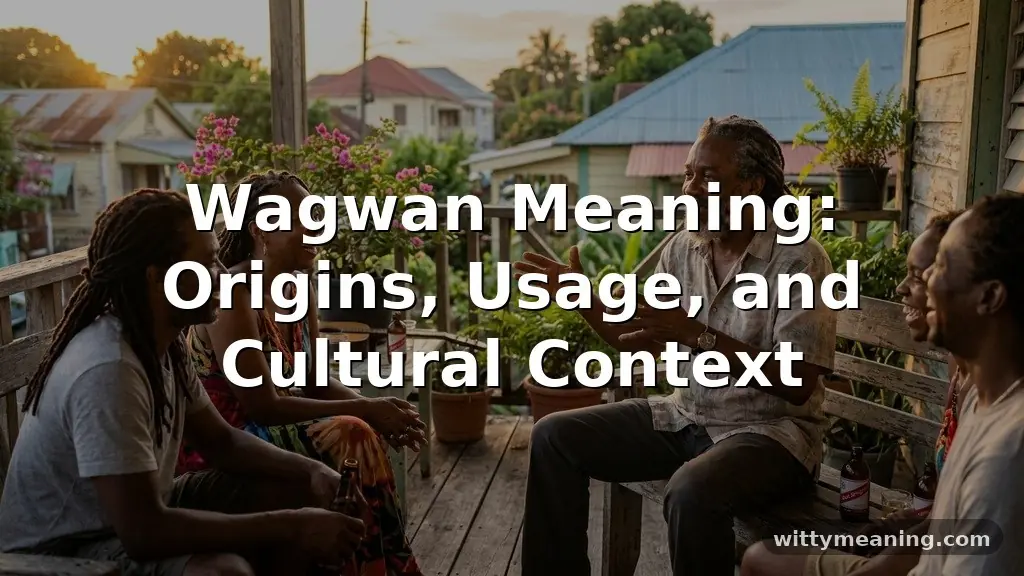

If you have ever heard someone say “wagwan” in a movie, a song, or on the street, you might have wondered about the exact intent behind the phrase. At its core, the wagwan meaning is a standard greeting derived from the contraction of the phrase “what is going on.”
Rooted deeply in Jamaican Patois, this expression has transcended its Caribbean origins to become a staple in urban centers across the globe. Understanding this term requires looking beyond a simple dictionary definition and examining the social dynamics of how it functions as a bridge between people in informal settings.
The Linguistic Roots of Jamaican Patois
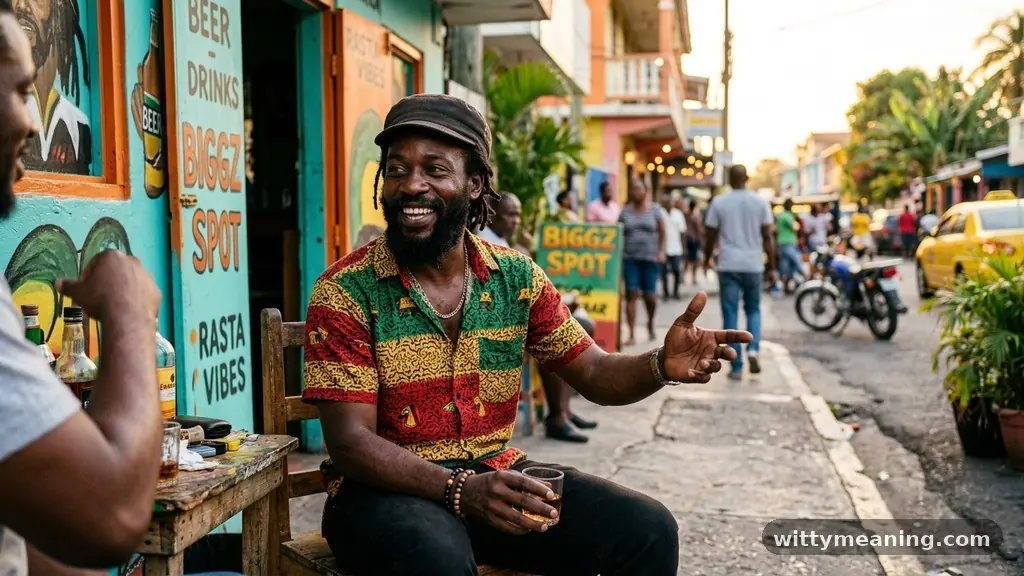
To understand where the term comes from, one must first look at the history of Jamaican Patois, or Jamaican Creole. This language is a vibrant, rhythmic blend of English, West African languages, and influences from various colonial powers. It is a language of resilience and identity, serving as a primary mode of expression for millions of people within the Caribbean and the global diaspora.
The term itself is a phonetic contraction that highlights the efficiency of the dialect. By collapsing “what is going on” into a single, punchy word, speakers of Patois created a highly functional salutation.
This is a common feature in many creole languages, where economy of speech is prioritized to maintain the flow of conversation. Because it is a spoken language, the spelling of such terms often varies, but “wagwan” remains the most recognized iteration in written media and digital communication.
Global Spread Through the Diaspora
The migration of Caribbean communities throughout the 20th century played a massive role in exporting this slang terminology to new territories. As families moved to cities like London, Toronto, and New York, they carried their linguistic heritage with them. In these environments, the phrase became a way for people to maintain a connection to their roots while navigating new social landscapes.
In the United Kingdom, specifically, the term found a permanent home within the development of Multicultural London English, often referred to as MLE. This dialect emerged in diverse, urban neighborhoods where various immigrant communities interacted daily.
The adoption of Patois-derived terms into MLE turned these words into a shared vernacular that defines urban youth culture. Today, you will hear it used by people from a vast array of ethnic backgrounds, demonstrating how language acts as a living, breathing entity that evolves through constant contact.
Wagwan as a Functional Greeting
When someone greets you with this phrase, they are essentially performing a social ritual. It functions exactly like “hello,” “hi,” or “how are you,” but with a more casual, intimate tone. It implies a sense of familiarity or, at the very least, a desire to establish a relaxed atmosphere between the participants.
In many social circles, it is not merely a question requiring a status report on your life. Instead, it is an acknowledgement of presence. When used in this way, it is often paired with a head nod or a handshake.
The beauty of the phrase is its versatility; it works just as well when you are catching up with an old friend as it does when you are striking up a conversation with an acquaintance at a party. It effectively lowers the barrier to entry for social interaction.
Typical Response Etiquette
Knowing how to reply is just as important as knowing when to use the greeting. Because the wagwan meaning is rooted in “what is going on,” the most traditional responses mirror those you would use for any other inquiry about your state of being. You do not need to provide a deep, philosophical answer to the question.
If you are wondering how to navigate the social cues, consider these common responses:
- Everything bless: This is a positive, upbeat response indicating that life is going well.
- Not much: A simple, standard reply that mirrors the casual nature of the greeting.
- I’m good, you?: A polite, reciprocal way to keep the conversation moving.
- Everything cool: Another way to signal that there are no major issues or concerns.
These responses are designed to maintain the flow of the conversation without forcing the speaker into a long-winded explanation. The goal is to keep the energy light and consistent with the informal nature of the initial salutation.
The Evolution of Language in Urban Youth Culture
The way this phrase has moved through different generations is a prime example of linguistic evolution. What started as a specific regional expression in Jamaica has been filtered through music, film, and social media to become a global shorthand. For many young people, the use of such terms is not about mimicking a specific culture but about participating in a shared, modern vernacular that feels authentic to their lived experience.
This process is fueled by the internet, where regional slang can become global overnight. While some purists might argue that the widespread use of these terms dilutes their original meaning, others see it as a natural progression of language.
Words are tools, and when a tool is effective, it tends to be adopted by wider groups. The British Library’s study on language variations provides excellent context on how dialects like MLE continue to shape modern communication, illustrating that such shifts are a standard part of linguistic history.
Addressing Potential Misinterpretations

One of the most sensitive topics surrounding the use of this phrase is the issue of cultural appropriation. Because the term has such deep roots in Caribbean history and the struggle for identity, some people feel uncomfortable when it is used by individuals outside of that culture. It is a valid concern, as language is often tied to historical power dynamics and the preservation of heritage.
When using slang from a culture that is not your own, it is essential to be aware of the context. Using the term in an authentic, respectful way—such as when you are genuinely part of the community where the language is spoken—is generally viewed differently than using it as a caricature or for performative purposes. Being mindful of your surroundings and the people you are speaking with can help you avoid misunderstandings or causing offense.
Comparing Regional Slang Variations
To better understand how this greeting fits into the wider world of slang, it is helpful to compare it to other common phrases. While many regions have their own version of “how are you,” the specific flavor of this term carries a distinct warmth that is synonymous with Caribbean culture.
| Region | Equivalent Phrase | Vibe/Tone |
|---|---|---|
| Jamaica | Wagwan | Warm, informal, cultural |
| United States | What’s up? | Casual, standard, universal |
| United Kingdom | Alright? | Reserved, questioning, polite |
| Australia | G’day | Friendly, iconic, daytime |
As the table shows, while the function is the same across these regions, the cultural weight of each phrase is quite different. “Wagwan” carries a specific rhythmic quality that sets it apart from the more clinical “what’s up” or the questioning “alright.”
The Intersection of Technology and Vernacular
Social media has accelerated the adoption of this phrase, making it a common sight in text messages, direct messages, and comment sections. In digital communication, the phrase often serves as a quick way to initiate a conversation without the formality of “Dear [Name]” or “How are you doing today?”
However, the lack of vocal inflection in text means that the tone can sometimes be ambiguous. When you send it in a message, it is usually interpreted as a friendly, low-pressure opening.
It is a way to bridge the gap between digital disconnection and personal interaction. As we continue to use more slang in our written communication, the lines between formal and informal language will likely continue to blur, making these types of expressions even more prevalent.
Common Misconceptions About the Phrase
A frequent mistake people make is thinking the term is always a question. While it is derived from a question, it is frequently used as a declarative greeting.
If someone says it to you while passing on the street, they are not necessarily stopping for a detailed life update. They are acknowledging you.
Another misconception is that it is only for specific age groups. While it is highly prominent in youth culture, it is a foundational part of the lexicon for many people of Caribbean descent across all ages.
It is a part of their daily life and their cultural identity. Assuming it is just a “trend” ignores the deep-seated history and the community-building role it plays for millions of people worldwide.
Filling the Gaps: Nuance and Context
One question that often arises is whether it is appropriate to use in professional settings. Generally, the answer is no.
Because it is a form of informal communication, it does not fit into the standard expectations of a corporate or formal environment. Using it in a boardroom or a formal email might be perceived as unprofessional, not because of the word itself, but because of the setting.
Another gap in common knowledge is the difference between “gwan” and “wagwan.” While they are related, “gwan” is often used as a verb meaning “to go on” or “to proceed,” whereas “wagwan” is almost exclusively a greeting. Understanding these subtle distinctions is key to gaining a better grasp of the dialect as a whole and avoiding improper usage.
FAQ
How should I respond if someone says wagwan to me?
You can respond with a simple “Everything bless,” “Not much,” or “I’m good, you?” These answers keep the conversation light and match the casual energy of the original greeting. You do not need to provide a long explanation of your day.
Is it offensive for someone outside of Caribbean culture to use the term?
It depends on the context and intent. Using it respectfully as part of your natural vocabulary in an environment where you are comfortable is different from using it to mock or perform. Being aware of your audience is always the best policy.
Can I use wagwan in a professional email?
It is generally best to avoid using it in professional or formal settings. The term is deeply rooted in informal communication, and using it in a business context may come across as unprofessional or inappropriate for the specific environment.
Does the meaning change based on the region?
While the core meaning remains a greeting, the frequency and social context of its use vary by region. In London or Toronto, it is a standard part of urban slang, whereas in other parts of the world, it might be recognized primarily through pop culture.
Final Thoughts
The term is far more than just a passing trend in urban slang; it is a vibrant piece of linguistic history that connects people through a simple, effective greeting. By understanding the roots of the phrase in Jamaican Patois and its evolution into a global phenomenon, you gain a better appreciation for how language shapes our social interactions.
Whether you hear it in a song or use it with friends, acknowledging the cultural weight behind the words is essential. As you continue to observe how language shifts and flows, remember that the best way to use any phrase is with respect, awareness, and an eye toward building genuine connections with those around you.
Meta Description: Discover the true wagwan meaning, its origins in Jamaican Patois, and how this popular greeting has evolved into a global staple of urban culture.