
When you hear someone say their television is “on the fritz,” you immediately understand the sentiment without needing a technical manual. It is one of those classic phrases that rolls off the tongue, perfectly capturing the frustration of a device that is acting up but hasn’t completely died yet.
While the fritz meaning is widely understood in everyday conversation, its path into the English language is a winding one, rooted in a mix of cultural shifts and linguistic evolution. Exploring why we use this term reveals a fascinating slice of history hidden inside a simple piece of household slang.
Understanding this idiom involves looking back at how German-American influence shaped the way we speak today. Many people assume the phrase is just a random collection of sounds, but it actually carries the weight of centuries of linguistic adaptation.
By digging into the etymology and the way it has evolved from a name into a state of being, you can gain a deeper appreciation for the language you use daily. This article breaks down exactly where the term comes from and why it remains such a reliable way to describe a technical glitch.
The Etymology of the Phrase
At its core, the fritz meaning is tied to the concept of something being broken or acting improperly. Most etymologists agree that the term is a classic example of a colloquialism that gained traction through sheer utility.
The word itself is widely believed to be a diminutive form of the name Friedrich. In German naming conventions, adding a suffix or changing a name to a shorter, friendlier version is standard practice, and Fritz became the go-to nickname for anyone named Friedrich.
This connection to a human name is the primary reason the term transitioned into a descriptor for faulty equipment. Historically, using a person’s name to describe an object or a state of being was quite common in early 20th-century slang.
When a machine stopped working, people would jokingly attribute its stubborn behavior to a person named Fritz, as if the device were a temperamental individual failing to do its job. Over time, the person disappeared from the usage, leaving only the state of being “on the fritz” behind.
Tracing the German-American Influence
The rise of this phrase in American English cannot be separated from the massive wave of German immigration during the 19th and early 20th centuries. As German-speaking populations integrated into the American workforce, their language and naming habits began to bleed into the surrounding culture. The name Fritz was exceptionally common, making it a recognizable and easy target for inclusion in informal speech.
This linguistic cross-pollination is a hallmark of American English, which acts as a melting pot for various dialects. Because the name was so familiar, it was easy for the term to jump from being a personal identifier to a descriptive noun for something that was “off” or “not quite right.” It represents a unique moment in historical linguistics where a cultural marker was repurposed to describe the mechanical failure of the era’s new, complex household appliances.
Distinguishing Between Malfunction and Total Failure
One of the most important aspects of the fritz meaning is the nuance it carries regarding the state of the object. When you say a radio or a toaster is on the fritz, you are rarely implying that it has been destroyed beyond all recognition.
Instead, you are describing a state of partial or intermittent failure. It implies that the item is still technically there, but it is refusing to operate with the consistency you expect.
This distinction is vital for accurate communication. If your car engine explodes, you wouldn’t say it is on the fritz; you would say it is totaled or completely broken.
However, if your car engine is sputtering, stalling, or making a weird clicking sound, then “on the fritz” is the perfect way to convey that the machinery is in a state of flux. It captures that specific limbo between working order and total, unrecoverable disaster.
The Evolution into Modern Slang
While the phrase originated in the early 1900s, it has shown remarkable staying power. Unlike many other vintage slang terms that have faded into obscurity, this one remains a staple of the English language.
This longevity is likely due to the fact that we are constantly surrounded by technology that behaves unpredictably. Whether it is a smartphone screen flickering or a laptop refusing to connect to Wi-Fi, the need for a term to describe minor technical glitches is constant.
Modern usage has expanded beyond just mechanical items. Today, you might hear someone say their internal body clock is on the fritz after a long flight, or that their concentration is on the fritz during a long meeting.
This metaphorical application shows how a term rooted in industrial-age machinery has adapted to describe the complexities of our digital and psychological lives. It is a testament to the flexibility of English that a word once used for a broken telegraph can now describe a person’s lack of focus.
Common Idiomatic Expressions and Their Origins
Many idioms in English share similar roots, often stemming from cultural stereotypes or common names. Understanding the fritz meaning is easier when you compare it to other phrases that describe mechanical or personal states. For example, we often use names or personified terms to describe objects that frustrate us, which highlights a universal human tendency to anthropomorphize our tools.
| Idiom | Common Usage | Implied Meaning |
|---|---|---|
| On the fritz | Electronics/Appliances | Intermittent malfunction |
| Out of whack | Alignment/Systems | Disordered or misaligned |
| On the blink | Lights/Displays | Flickering or failing |
| Kaput | Anything | Completely broken |
Each of these terms serves a slightly different function in the lexicon of repair and maintenance. While “on the fritz” suggests a repair might still be possible, “kaput” suggests the end of the road. By using these terms correctly, you can better communicate the severity of a technical issue to a repair technician or a friend.
The Role of Household Appliances
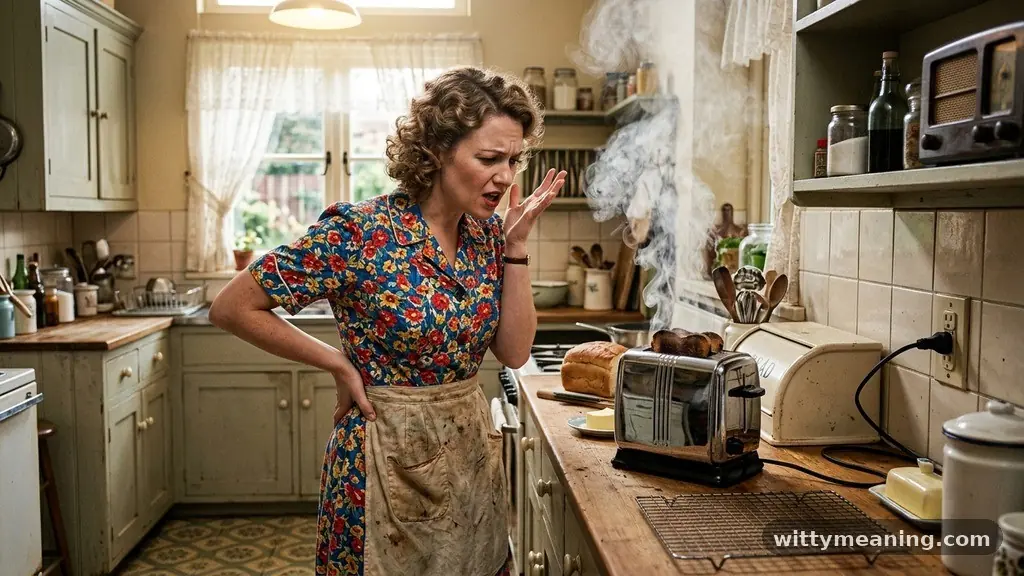
The proliferation of home appliances in the 1920s and 1930s provided the perfect environment for the phrase to flourish. Before this era, mechanical equipment was largely industrial and maintained by professionals. As washing machines, radios, and irons entered the average home, ordinary people had to deal with their own mechanical failures for the first time.
When these early appliances began to malfunction, people needed a way to describe the problem that didn’t sound overly technical. “On the fritz” was the perfect fit. It was punchy, easy to remember, and carried a lighthearted tone that took the sting out of a broken appliance.
It became a way to vent frustration without sounding like you were dealing with a major catastrophe. You can find more historical context on how common household items shaped our language by visiting the Library of Congress digital archives regarding 20th-century American culture.
Addressing Topical Gaps: Why “Fritz”?
A common question that arises is why the name Fritz specifically was chosen over any other name. While there is no definitive historical record of a single “Fritz” whose machine broke and started the trend, linguistic experts point to the frequency of the name in the German-American community. Because it was a common nickname, it was a household word in many neighborhoods.
It is also possible that the sound of the word contributed to its adoption. The sharp “f” and “z” sounds give the word a sense of energy or agitation.
In linguistics, this is sometimes referred to as sound symbolism, where the phonetic structure of a word mirrors the feeling it describes. The word “fritz” feels a bit jagged and erratic, which perfectly aligns with the experience of using a piece of faulty equipment that starts and stops at will.
Repair and Maintenance in Context
When you label something as being on the fritz, you are implicitly suggesting that it is worth fixing. This is an important part of the phrase’s utility.
If something is truly destroyed, you don’t call it on the fritz; you throw it away. The term carries an optimistic undertone that the item is merely experiencing a temporary setback.
This has implications for how we treat our belongings. In an era where many people are quick to replace broken items, using a phrase that implies a potential for repair is actually quite significant.
It frames the problem as a “glitch” rather than a “death sentence.” Whether you are talking about a vintage watch or a modern computer, the phrase encourages a mindset of maintenance rather than immediate disposal.
Linguistic Patterns and Dialectal Variation
The usage of this phrase is not uniform across all English-speaking countries. In some regions, you might hear “on the blink” more frequently, while in others, “on the fritz” is the standard.
This variation is a natural part of language development. Dialects often adopt different terms for the same concept based on the cultural influences present in that specific area.
- Regional variations often depend on the dominant immigrant groups of the 19th century.
- The spread of mass media in the mid-20th century helped standardize the phrase across the United States.
- Modern internet culture has allowed these phrases to be used globally, regardless of their original regional roots.
- The flexibility of the phrase allows it to be used in both formal writing and casual conversation.
These lists demonstrate that even simple phrases are subject to the same forces of change that govern the rest of our language. As we move further away from the era where “Fritz” was a common name, the word is becoming more of a purely functional term, losing its connection to its German-American roots.
The Future of Vintage Slang
Will the phrase continue to survive as technology becomes more complex? It is highly likely.
Even as our devices become smarter and more integrated, the human experience of dealing with a technical glitch remains the same. When your smart home system fails to respond to a voice command, the frustration you feel is identical to the frustration someone felt in 1930 when their radio wouldn’t tune correctly.
As long as we rely on machines that can and do act up, we will need a way to describe that behavior. “On the fritz” provides a perfect, human-centered way to articulate the unpredictable nature of our tools. It may evolve further, or it may be joined by new slang as technology changes, but the core meaning will likely remain a staple of our vocabulary for generations to come.
Frequently Asked Questions
What is the primary fritz meaning in modern English?
The phrase is used to describe a piece of equipment or machinery that is acting up, malfunctioning, or not working with its usual consistency. It implies that the item is not completely broken but is experiencing a temporary, often annoying, technical glitch that requires attention.
Is the term fritz related to the German name Friedrich?
Yes, the term is widely considered to be a diminutive of the name Friedrich. In the early 20th century, using this common nickname to personify and describe stubborn or malfunctioning objects became a popular colloquialism, eventually sticking in the English language as a standard idiom for faulty equipment.
Why do we say something is on the fritz instead of just broken?
Saying something is “on the fritz” provides a specific nuance that “broken” lacks. It suggests a state of intermittent failure or an erratic performance rather than a total, permanent cessation of function. It is a way to describe a device that is struggling to operate correctly.
Does the phrase have any connection to specific types of appliances?
While the phrase can apply to any machinery, it became most popular during the rise of household appliances like radios, washing machines, and irons in the 1920s. These devices were among the first complex, mass-produced machines that regular people had to troubleshoot and maintain themselves at home.
Final Thoughts
The enduring nature of the fritz meaning is a testament to how language adapts to meet our needs. What began as a simple nickname for a common name transformed into a vital tool for describing the frustrations of living in a technological age. By understanding the history behind the phrase, you gain more than just a definition; you gain a window into how cultural exchange and industrial progress have shaped our daily communication.
Next time you find yourself staring at a flickering screen or a misbehaving appliance, you will know exactly why the words “on the fritz” come to mind. It is a bridge between the past and the present, a small piece of history that helps us navigate the inevitable quirks of the machines we rely on. If you enjoyed this look into the origins of common idioms, consider sharing this history with others who appreciate the hidden stories behind the words we use every day.