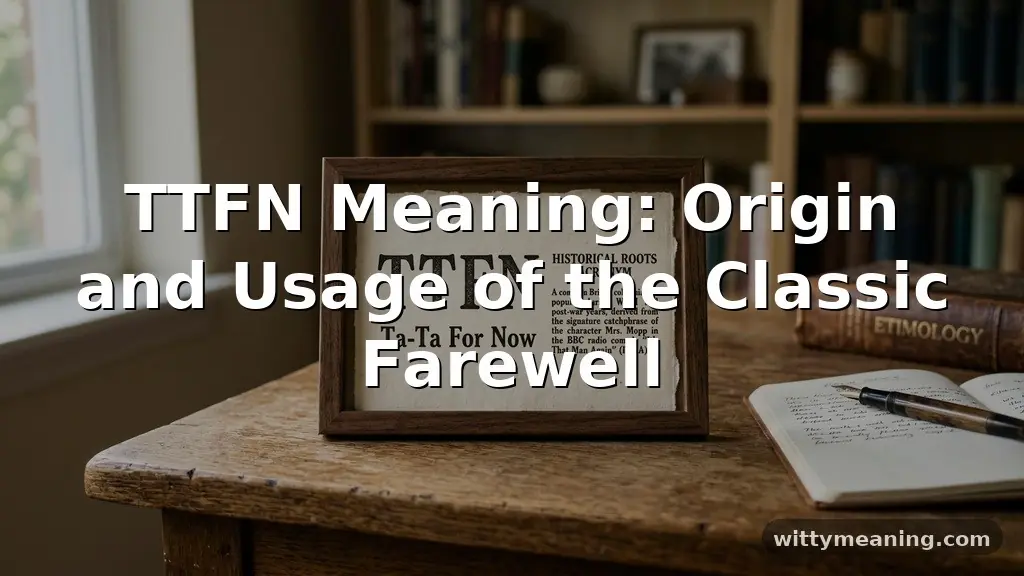

You have likely stumbled across the acronym TTFN in a text message or online forum and wondered what it implies. While it feels like a modern piece of internet slang, the truth is that the ttfn meaning has deep roots in 20th-century history and pop culture.
It serves as a lighthearted, slightly whimsical way to say goodbye, often used when you intend to see someone again soon. Understanding where this phrase originated and how it fits into your daily digital communication helps you use it with the right tone, ensuring your messages come across as friendly rather than dismissive.
The Historical Roots of the Acronym
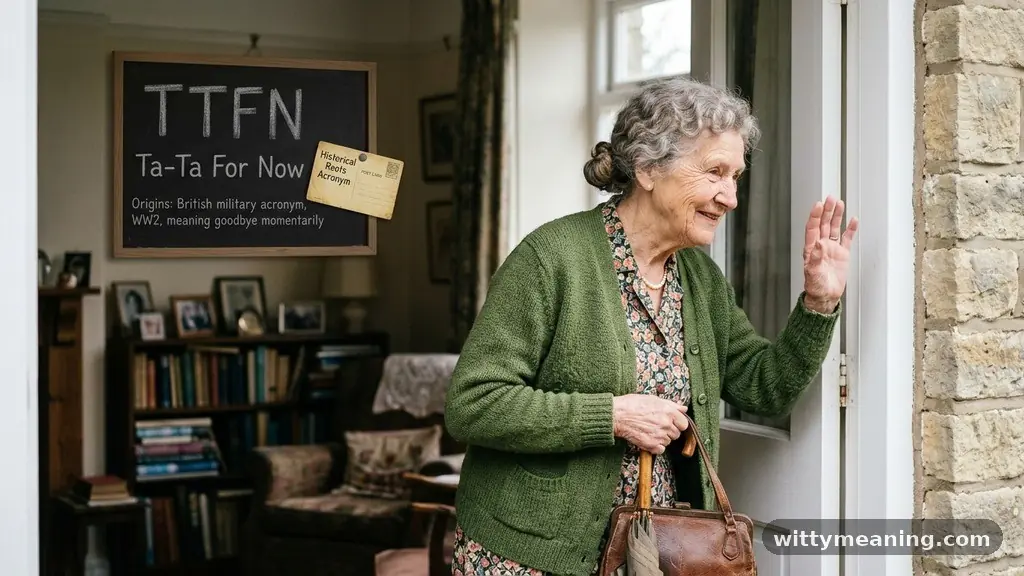
The phrase actually predates the digital age by several decades, finding its most famous early usage during the Second World War. In British English, it became a common colloquialism used to maintain spirits during times of uncertainty. The acronym stands for “Ta-ta for now,” a phrase that blends the informal British “ta-ta” for goodbye with a qualifier that implies the separation is only temporary.
During the mid-20th century, the term gained significant traction through the BBC. It was frequently used by radio personalities and in public broadcasts to signal a cheerful farewell to listeners.
Because it was short, punchy, and distinctly British, it permeated the cultural consciousness of the era. It wasn’t just a way to end a conversation; it was a linguistic bridge that kept people feeling connected despite the physical distance forced by the war effort.
Tigger and the Pop Culture Connection
For many people, the most recognizable association with this term comes from the Hundred Acre Wood. Tigger, the exuberant character from A.A.
Milne’s Winnie the Pooh series, adopted the phrase as his signature sign-off. His use of the term solidified its place in pop culture, transforming it from a general British idiom into a warm, playful expression associated with childhood nostalgia and optimism.
When Tigger bounces off into the forest, he rarely says a formal goodbye. Instead, he shouts “TTFN!” to his friends, signaling that while he is leaving for the moment, his return is inevitable.
This context is crucial because it colors the modern usage of the term. Using it in a message today often carries a hint of that same playful energy, making it far less formal than a standard “goodbye” or “see you later.”
The Evolution into Digital Communication
As we moved into the era of instant messaging and early chat rooms, the acronym found a natural home in textspeak. Because early digital communication was often limited by character counts or the desire for speed, users naturally gravitated toward shorthand to represent longer phrases. It joined the ranks of other chat abbreviations like LOL, BRB, or TTYL, serving as a functional tool for quick, informal sign-offs.
However, unlike some colder acronyms that evolved purely for efficiency, this one retained its personality. It didn’t just shorten a sentence; it kept the “ta-ta” spirit alive.
In the early days of AOL Instant Messenger and IRC, it was a staple for people who wanted to end a chat session without sounding like they were slamming the door. It remains a fixture in our lexicon because it bridges the gap between digital brevity and genuine human warmth.
Contextual Usage in Modern Texting
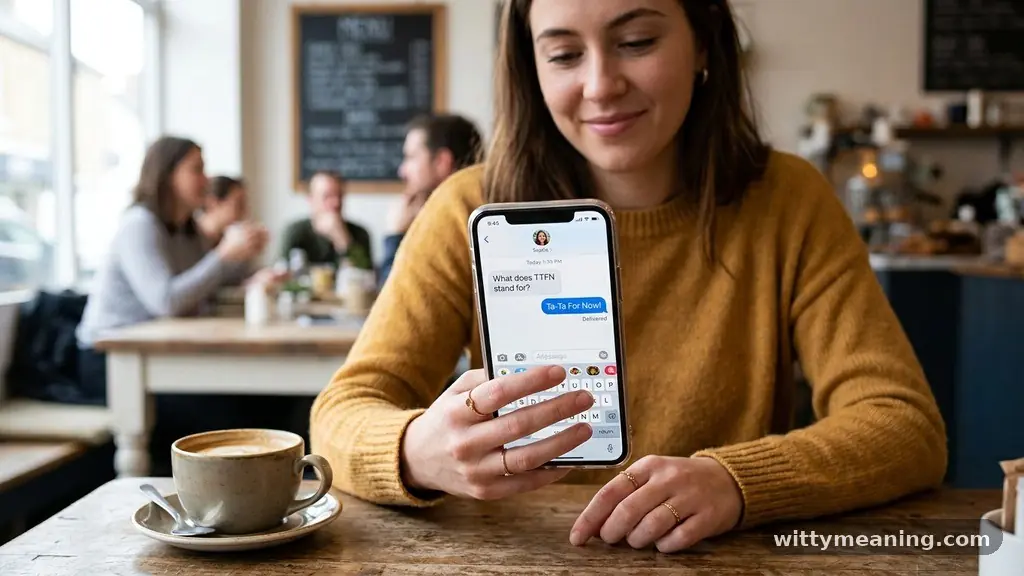
Deciding when to use this acronym depends heavily on the relationship you have with the recipient. Because it carries a slightly vintage or whimsical vibe, it works best in casual conversation. If you are texting a close friend, a family member, or a colleague with whom you share a relaxed rapport, it serves as a perfect, low-pressure exit.
| Context | Appropriateness | Tone |
|---|---|---|
| Casual text to a friend | High | Playful/Warm |
| Formal work email | Low | Unprofessional |
| Social media comment | Medium | Lighthearted |
| Texting a stranger | Low | Confusing |
You should avoid using it in professional settings where a clear, concise, and standard sign-off is expected. If you send this to a client or a manager, they might find it confusing or overly informal. It is best reserved for platforms where the rules of linguistic evolution are fluid, such as group chats, direct messages, or social media threads where a bit of personality is encouraged.
Comparing TTFN to Other Farewell Abbreviations
The digital landscape is crowded with ways to say goodbye, and each carries a slightly different weight. Understanding how this specific acronym differs from others helps you choose the right tone for your message.
For instance, “TTYL” (Talk To You Later) is purely functional and focuses on the timing of the next interaction. In contrast, the term we are discussing focuses on the feeling of the departure.
- TTYL: Focuses on the future time of the next conversation.
- BRB: Indicates a temporary absence rather than a formal end.
- TTFN: Offers a whimsical, slightly old-fashioned, and friendly tone.
- CYA: A very casual, sometimes blunt, shorthand for “see you.”
- Bye: The standard, neutral, and universally understood farewell.
While “Bye” is safe and “TTYL” is efficient, this specific acronym stands out because it lacks the clinical feel of modern textspeak. It doesn’t sound like a machine-generated shortcut.
Instead, it feels like a deliberate choice to end a conversation on a high note. It is an informal sign-off that prioritizes charm over extreme brevity.
Is the Term Considered Rude or Outdated?
One common question is whether using this acronym in the current decade makes you sound out of touch. While it is certainly a retro term, it is rarely considered rude.
In fact, most people view it as a harmless, slightly quirky way to say goodbye. The only way it could be perceived negatively is if it is used in a moment that requires sincerity or gravity.
If you are ending a serious conversation—perhaps one involving bad news or a conflict—using a “ta-ta” sign-off would be tone-deaf. It would minimize the weight of the discussion. However, in the vast majority of daily interactions, it is a polite dismissal that keeps the mood light.
It is much like using a classic slang term; it shows personality, provided you know your audience. If your recipient is tech-savvy but prefers modern slang, they might find it quaint, but they won’t find it offensive.
Linguistic Evolution and Social Media
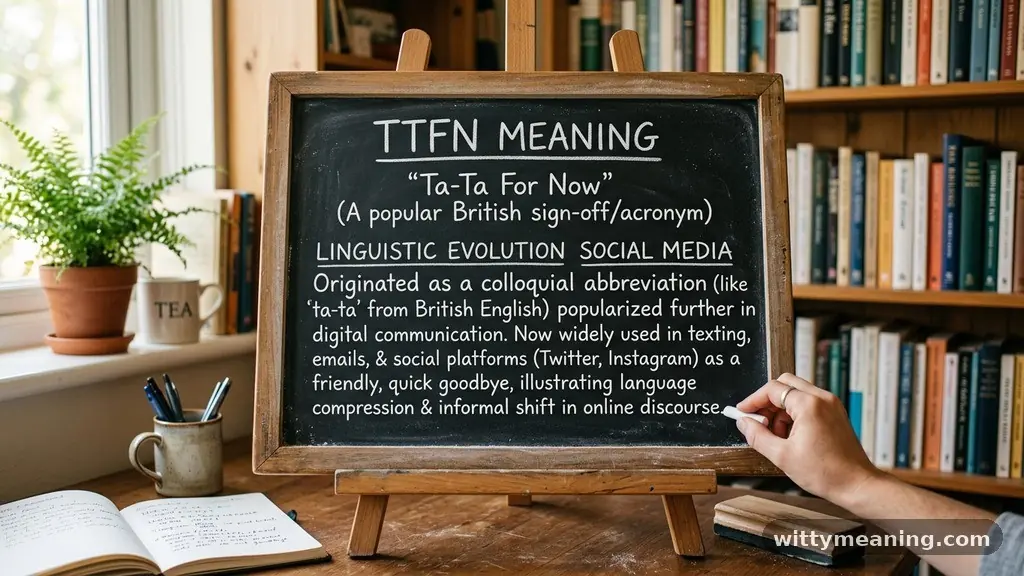
The way we use language changes as platforms shift. On social media, where character limits are often generous but attention spans are short, this acronym serves as a quick way to sign off from a thread. It is frequently used in comments sections or as a final line in a post to signal that the author is stepping away from the keyboard for a while.
The beauty of this term is its resilience. It has survived the transition from radio broadcasts to WWII letters, and from early chat rooms to modern social media.
This longevity proves that people are always looking for ways to inject warmth into their digital communication. As we continue to use more emojis and stickers, the presence of an acronym that relies on a classic British idiom is a reminder of how our language adapts while holding onto its roots.
Answering Common Misconceptions
There is occasionally confusion regarding whether this term is an acronym for something more technical or complex. Because it looks like a standard piece of internet code, some users have asked if it relates to specific software or network protocols.
To clarify, it is strictly a linguistic shorthand. It has no hidden technical meaning in the world of computing or data science.
Another misconception is that it is a regional term that only British people use. While its origins are undeniably British, the popularity of the Winnie the Pooh franchise ensured its global reach.
Children in the United States, Australia, and beyond grew up reading about Tigger, making the phrase recognizable across English-speaking nations. It isn’t a regional dialect marker; it is a shared cultural artifact that has transcended borders.
The Role of Tone in Digital Communication
Writing is often stripped of the vocal inflections that help us interpret meaning in person. When you type “Goodbye,” it can be read as cold, final, or even angry depending on the context. When you use a phrase like this, you are manually adding a layer of warmth back into the text.
By choosing to use a term that is inherently playful, you are sending a signal to the receiver. You are telling them that the conversation was pleasant and that you aren’t leaving in a huff. This is the power of colloquialisms in digital spaces.
They act as emotional signposts that help the reader understand your state of mind. Using the right acronym can prevent misunderstandings and keep the digital environment feeling like a human space rather than a transactional one.
Practical Tips for Using TTFN
If you want to incorporate this into your own messaging, start by testing it with friends who appreciate a bit of nostalgia. Don’t force it into every conversation; let it be a tool for when the mood is right. If you’ve just had a long, fun chat about childhood memories or pop culture, it fits perfectly.
Always keep an eye on the context. If you are in a group chat where the conversation is moving at a breakneck speed, a short, snappy sign-off like this is perfect. It allows you to exit the conversation without requiring a long-winded explanation of where you are going.
It is the digital equivalent of a friendly wave and a smile as you walk out of a room. Keep it light, keep it brief, and keep it genuine.
Frequently Asked Questions
Is it rude to use TTFN in a text message?
Not at all. It is generally seen as a friendly, lighthearted way to say goodbye. As long as the conversation you are ending isn’t serious or sensitive, using this acronym is a perfectly acceptable way to sign off with a bit of personality.
Did Tigger actually say TTFN in the books or movies?
Yes, Tigger famously uses the phrase in the Winnie the Pooh stories and various adaptations. His frequent use of the term is the primary reason it remains well-known in modern pop culture, as it became his signature way of leaving his friends.
Can I use this acronym in a professional email?
It is highly recommended that you avoid using it in a professional context. Because it is so informal and carries a whimsical, nostalgic tone, it is best kept for personal messages, social media, or casual chats with friends and family members.
Is there a difference between TTFN and TTYL?
While both are used to end conversations, TTYL (Talk To You Later) is more functional and focuses on the timing of the next contact. TTFN (Ta-ta for now) is more about the tone of the departure, emphasizing a light and temporary separation.
Final Thoughts
The enduring nature of this acronym is a testament to our desire for warmth in an increasingly digital world. What started as a cheerful British colloquialism during a time of global hardship evolved into a pop culture staple, eventually finding its place in our daily text conversations. By understanding the history and the intended tone of the phrase, you can use it to add a touch of whimsy to your digital interactions.
Whether you are a fan of classic literature or simply looking for a friendly way to sign off from a chat, this acronym serves as a perfect, low-pressure farewell. Next time you find yourself needing to step away from a lively conversation, consider giving it a try.
It is a simple, effective way to remind the people on the other side of the screen that while you are signing off for now, you’ll be back soon. Feel free to experiment with it in your next casual message to see how it changes the vibe of your digital goodbye.