


When you encounter the acronym TDY in a message or professional document, its significance often depends entirely on the environment in which you find it. While one person might be referencing a standard business travel status, another could be firing off a quick text using it as a shorthand for something completely different.
Understanding the TDY meaning requires a quick look at both the formal origins of the term and its evolution within digital communication. By distinguishing between these two worlds, you can avoid confusion and ensure your interpretation aligns with the sender’s actual intent.
The Formal Roots: Temporary Duty in Professional Settings
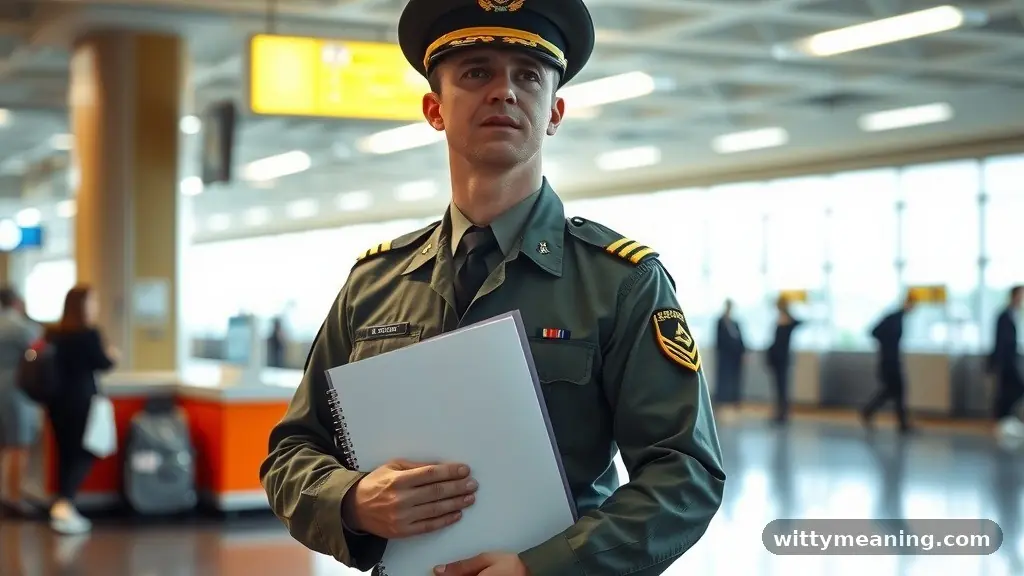
In the professional world, particularly within government and military sectors, the primary definition of TDY is Temporary Duty. This is a formal designation used to describe an employee or service member who is assigned to perform duties at a location other than their permanent duty station.
It is a strictly administrative term that triggers specific travel orders, reimbursement protocols, and logistical arrangements. When a colleague tells you they are on TDY, they are informing you that they are physically absent from their primary office for a set period to complete a specific task elsewhere.
This usage is deeply embedded in organizational culture. It is not slang; it is a functional piece of institutional language. Because it involves government funding and travel regulations, the accuracy of this term is paramount.
When you see this on an official schedule or in an email from a human resources department, you can be certain it refers to a professional deployment. The Department of Defense Travel Regulations provide the definitive framework for how these assignments are managed, ensuring that personnel are properly supported while away from home.
Casual Messaging: Modern Shifts in Text Shorthand
Outside of the office, the digital landscape has transformed how we use abbreviations. In the realm of casual messaging, including platforms like WhatsApp, Snapchat, and various text-based apps, the TDY meaning often shifts away from its military roots. In these environments, it frequently functions as a simple text shorthand for the word “today.”
This transformation is a classic example of how Gen Z linguistics and internet culture prioritize speed and message efficiency. When a friend sends a message saying they are busy “TDY,” they are almost certainly referring to their current daily schedule rather than a government assignment.
This drift in meaning is common in the evolution of language. As social media slang becomes more pervasive, three-letter combinations are often repurposed to save keystrokes. While some might find this confusing, the context clues provided by the rest of the conversation usually clear up the mystery instantly.
If the sentence is about a party, a deadline, or a social meeting, you can safely assume the sender is referring to the current day. This usage is particularly popular on platforms where brevity is rewarded, such as TikTok or mobile texting interfaces.
Navigating Contextual Ambiguity in Communication
The difficulty arises when the professional and casual worlds collide. If you work in an environment where people use both formal military acronyms and casual shorthand, you might find yourself briefly puzzled. Navigating contextual ambiguity is a necessary skill in modern communication.
To decipher the meaning, look at the sender’s role and the nature of the platform. A message from a supervisor on a secure work platform almost always points toward the formal definition, whereas a quick note from a peer on a personal messaging app leans heavily toward the “today” interpretation.
Always consider the surrounding text before reacting. If the acronym is followed by a location or a date range, it is likely the formal “Temporary Duty” designation. If it is used as an adverb or a standalone time marker, it is likely just a shortcut for “today.”
Learning to scan for these patterns helps you process information faster and reduces the likelihood of awkward misunderstandings. When in doubt, a simple follow-up question is the most effective way to eliminate uncertainty without appearing unprofessional.
Common Interpretations of TDY Across Platforms

Different digital spaces carry different expectations for language. On platforms like Instagram or Twitter, character limits and the desire for quick engagement drive the adoption of creative abbreviations. While “TDY” as “today” is the most common casual usage, it is worth noting that slang dictionaries are constantly evolving.
What is considered standard usage in one group of friends might be completely foreign to another. Staying aware of these platform-specific trends is part of being a fluent participant in modern internet culture.
| Context | Primary Meaning | Usage Frequency |
|---|---|---|
| Professional/Government | Temporary Duty | High |
| Casual Texting | Today | High |
| Social Media Slang | Today | Medium |
Why Military Acronyms Permeate General Language
It is fascinating how terms originating in highly structured, high-stakes environments like the military eventually bleed into civilian life. Many common phrases we use daily—like “roger that,” “snafu,” or “full court press”—have roots in organized, operational settings. The TDY meaning follows this same trajectory.
As more people rotate through government service or interact with military-adjacent industries, these terms become part of their everyday vocabulary. Eventually, they get stripped of their rigid definitions and repurposed for the sake of convenience.
This process is a testament to how language adapts to the needs of its speakers. We rarely adopt a term because we enjoy the history behind it; we adopt it because it works.
If a term is short, easy to type, and broadly understood within a community, it will survive. The transition of this specific acronym from a formal travel designation to a quick way to say “today” shows that even the most bureaucratic language is subject to the forces of linguistic evolution.
The Role of Gen Z Linguistics in Shortening Language
The influence of younger generations on digital communication cannot be overstated. By prioritizing speed, Gen Z linguistics has accelerated the trend of shortening long words into acronyms or truncated versions. This is not about laziness; it is about message efficiency.
When you are juggling multiple conversations across several apps simultaneously, every second counts. Using “TDY” instead of “today” saves two keystrokes, which might seem trivial, but it adds up during a long conversation.
This trend has forced older generations to adapt or risk being left behind in the conversation. Understanding these shorthand forms is now a requirement for effective participation in modern digital discourse. While some purists might lament the loss of formal spelling, the reality is that language is a living, breathing entity.
It changes to fit the environment. Whether you approve of the shift or not, recognizing the shorthand is essential for maintaining clarity in your daily interactions.
How to Respond When You Are Unsure
If you receive a message containing this acronym and you genuinely cannot tell which definition the sender intended, do not panic. The best approach is to mirror the sender’s tone. If the message is casual, a quick, lighthearted question like “Do you mean today or are you traveling?” is perfectly acceptable.
If the message is professional, you can be slightly more formal by asking for clarification regarding the schedule. Most people are happy to clarify if they realize their shorthand caused a moment of confusion.
It is also helpful to keep track of your own usage. If you find yourself using the term frequently in casual settings, be mindful of who is receiving those messages.
If you are texting a colleague you also work with professionally, you might want to spell out the word “today” to avoid any confusion with their potential work travel plans. Being intentional about your communication style is the best way to ensure that your meaning is never lost in translation.
Distinguishing Intent Through Context Clues

Context clues are the secret weapon of the effective communicator. When you see an acronym, look at the verbs and nouns surrounding it. If the sentence includes words like “travel,” “orders,” “per diem,” or “deployment,” you are clearly in the territory of the formal definition.
If the sentence includes words like “later,” “coming over,” “busy,” or “plans,” you are firmly in the casual territory. The brain is remarkably good at pattern recognition, and after a few exposures, you will likely stop having to consciously think about the difference.
Another layer of context is the medium itself. An email from a company domain carries different weight than a DM on a social media app. Even if the person is the same, their tone is often dictated by the platform.
Adjust your expectations accordingly. By treating the platform as a primary context clue, you can filter out the noise and identify the intended meaning of ambiguous terms with much higher accuracy.
Addressing the Topical Gaps in Common Knowledge
One common gap in understanding is why the military uses such specific, often confusing terminology in the first place. These terms are designed to be precise and unambiguous in high-pressure situations where lives or significant assets are at stake. When a soldier is on “Temporary Duty,” there is no room for misinterpretation.
The term is standardized across the entire organization. When civilians adopt these terms, they are essentially “borrowing” the brevity of the term without the rigid operational framework that keeps it consistent.
Another gap is the perception that this term is only used by specific subcultures. While its roots are military, its use as a shorthand for “today” is now so widespread that it is becoming standard internet slang.
You don’t need to be part of any specific demographic or career field to use it. Recognizing that the term has effectively bifurcated into two distinct meanings is the key to mastering its usage in the modern era.
Future Trends in Digital Abbreviations
As our digital lives become more integrated, the rate at which we create and adopt new slang will likely increase. We are moving toward a future where “text-speak” is no longer just for teenagers; it is the standard for everyone.
This means that acronyms will continue to evolve, with some falling out of favor while others—like this one—become permanent fixtures in our vocabulary. The challenge for future communicators will be staying updated on these shifts while maintaining a baseline of professional clarity.
The best strategy is to be adaptable. Language is not a static set of rules; it is a fluid tool that we use to connect with one another.
By embracing the evolution of terms like this one, you become a more effective and versatile communicator. Whether you are writing a formal report or sending a quick text to a friend, understanding the dual nature of your words will always serve you well.
Frequently Asked Questions
Is TDY always an acronym for Temporary Duty?
No, it is not. While “Temporary Duty” is the formal, professional definition used by the military and government agencies, it is very commonly used in casual text messaging and social media as a shorthand for the word “today.” Context is the only way to know which meaning is intended.
How can I tell if someone is using TDY as slang or professional terminology?
Look at the context of the conversation and the platform being used. If the discussion involves business travel, military orders, or professional schedules, it almost certainly refers to Temporary Duty. If it is used in a casual text, a social media comment, or a general conversation, it likely means “today.”
Does the use of TDY as “today” bother professional audiences?
It can, especially if you are in a field that heavily relies on the formal definition. If you are communicating with military personnel or government contractors, it is usually safer to spell out “today” to avoid any potential confusion or the appearance of being overly casual with professional language.
Are there other meanings for this acronym?
While “Temporary Duty” and “today” are the two primary definitions, you might occasionally see it used in niche gaming communities or specific sports contexts. However, these are rare compared to the two main usages. Always rely on the surrounding words in the sentence to clarify the specific intent.
Closing Thoughts on Modern Language
The journey of the term TDY from a rigid military designation to a casual text abbreviation is a perfect example of how our language constantly adapts to our needs. Whether you are dealing with official travel orders or just trying to organize a quick meetup with a friend, understanding the context behind these letters is essential. It is all about meeting the sender where they are and using your intuition to bridge the gap between professional precision and casual convenience.
As you move forward, keep a close eye on how the people around you use these types of abbreviations. You will likely notice that the most effective communicators are those who can switch between these modes effortlessly.
If you have any further questions about how to interpret specific slang or professional jargon, feel free to reach out and keep the conversation going. Understanding these nuances is a small but powerful way to improve your digital interactions every single day.