


When you come across an acronym like DDF, your first instinct is often to check the context because the letters rarely mean the same thing in every situation. Whether you are browsing a profile on a mobile application or looking at the side of a heavy-duty power tool, the ddf meaning shifts drastically based on where you are reading it.
This ambiguity is common with three-letter abbreviations, which often emerge organically in niche communities or technical fields before they gain wider recognition. Understanding these variations helps you avoid confusion, whether you are trying to interpret a social interaction or selecting the right hardware for a construction project.
DDF Meaning in Online Dating and Social Apps

In the world of modern romance and social networking, the most common interpretation of this acronym is Drug and Disease Free. You will frequently encounter this in the bio sections of platforms like Grindr, Tinder, or other location-based chat apps.
It serves as a shorthand for users to communicate their sexual health status or their expectations regarding potential partners. By including this in a profile, a user is signaling that they are prioritizing safe sex practices and want to establish a standard of health transparency before meeting up.
The usage of such abbreviations is widespread because dating profiles often have limited character counts, forcing people to be concise. When someone writes that they are DDF, they are essentially stating that they do not use recreational drugs and are free from sexually transmitted infections. However, it is vital to remember that this is a self-reported status.
Relying solely on a profile acronym is never a substitute for direct, honest communication or personal responsibility regarding health. Always prioritize your own safety and verify information through open dialogue rather than assuming a label on a screen guarantees a specific health outcome.
Navigating Context in Modern Chat Slang
Acronyms like DDF often find their way into casual conversation through urban dictionary culture or general internet shorthand. When you see these letters pop up in a chat box, it is almost always a reference to the dating scene, but the nuance can vary.
Some users might adopt the term to mean something entirely different within a private friend group, which is why context-dependent terminology is so tricky to pin down. If you are ever unsure, the best approach is to ask for clarification rather than guessing, as misinterpreting slang can lead to awkward or misleading social situations.
Using abbreviations in digital communication is a double-edged sword. While it keeps the conversation moving quickly, it also strips away the tone and detail that prevent misunderstandings. When you are dealing with sensitive topics like health or personal boundaries, it is usually better to type out the full phrase.
Relying on shorthand can make your intentions seem ambiguous, especially to someone who might not be familiar with the specific lexicon of a particular app or subculture. Clear communication will always be more effective than a clever acronym.
Makita Power Tools and the DDF Series
If you shift your focus from social apps to a hardware store, the meaning of these three letters changes entirely. In the context of industrial equipment, DDF refers to a specific line of tools produced by the brand Makita.
Specifically, you will often see this on a cordless drill or a hammer drill model. The DDF designation is a key part of their technical specifications, helping contractors and DIY enthusiasts identify the capabilities of the tool they are holding.
For example, a Makita DDF484 is a high-performance cordless drill known for its reliability and power. These tools are engineered with a brushless motor, which provides more torque and a longer lifespan compared to older, brushed designs. When you see the DDF label, it tells you that the device is built for professional-grade tasks.
It is a signal of quality that distinguishes these tools from entry-level consumer models. Understanding these product codes is essential for anyone trying to build a collection of reliable power tools that can handle tough materials like steel or masonry.
Technical Specifications and Brushless Motor Technology
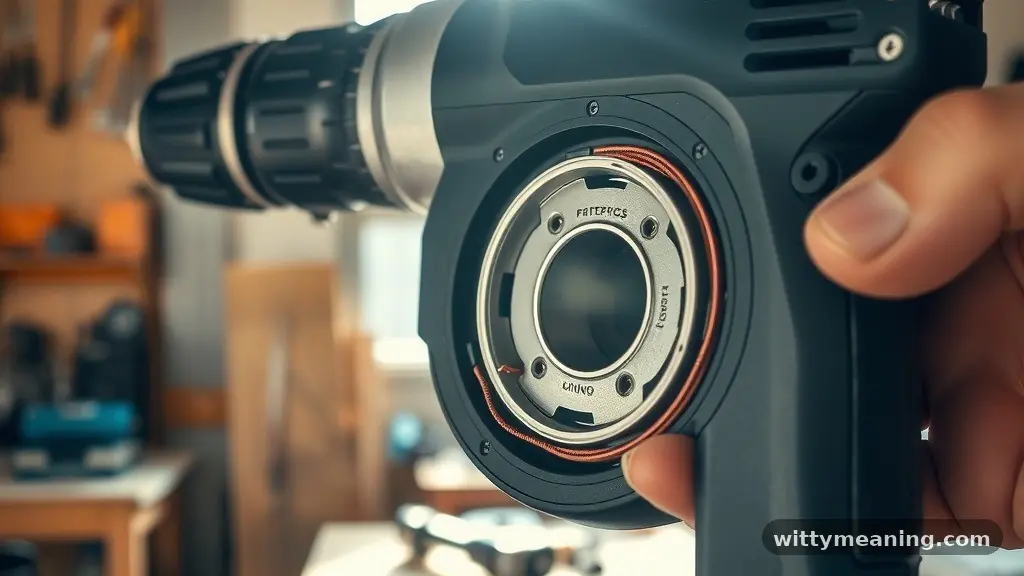
The shift toward brushless motor technology in the Makita DDF series represents a major leap in hardware engineering. Unlike traditional motors that use carbon brushes, which wear out over time and create friction, a brushless motor uses electronic controllers to manage energy delivery.
This makes the tools significantly more efficient, cooler to the touch, and much more compact. When you are shopping for a drill, the DDF prefix is your indicator that you are looking at a machine designed for high-efficiency operation.
The benefits of these technical improvements extend beyond just the motor. Because the motor is more efficient, the battery life of the tool is extended, allowing you to work for longer periods without needing a recharge. This is a massive advantage on a busy job site where downtime equals lost money.
If you are interested in the specific engineering behind these tools, you can explore the official Makita product portal to see how different model numbers compare in terms of torque, weight, and battery compatibility. This level of detail is what separates a casual hobbyist from a serious tradesperson.
DDF in Finance and Data Distribution
Beyond dating and power tools, the acronym takes on a more formal, structural meaning in the worlds of finance and information technology. In finance, you might occasionally hear the term used when discussing debt-to-debt-service ratio calculations, although it is less common in everyday conversation than the other definitions. In these high-level discussions, clarity is paramount, and the term is usually defined within the context of a specific report or financial document to avoid any potential acronym ambiguity.
In the IT sector, DDF can stand for a digital distribution framework or a data distribution facility. This refers to the network architecture that allows software to move information across various nodes or databases. In large-scale software development, a data distribution facility is a critical piece of infrastructure that ensures information remains consistent and accessible.
It is the backbone of many enterprise applications, working quietly in the background to keep systems synchronized. While this meaning is far removed from the social or hardware definitions, it highlights how limited the pool of three-letter combinations is, leading to inevitable overlap across industries.
Comparing the Diverse Meanings
Because DDF is used in such vastly different fields, it is helpful to visualize how these meanings diverge. The following table highlights the primary contexts where you will encounter this term to help you distinguish between them quickly.
| Field | Common Meaning | Primary Use Case |
|---|---|---|
| Dating Apps | Drug and Disease Free | Health status transparency |
| Hardware | Makita Cordless Drill | Identifying tool specifications |
| IT/Computing | Data Distribution Facility | Network architecture and software |
| General Slang | Urban dictionary shorthand | Casual, context-dependent chat |
Addressing Topical Gaps and Misconceptions

A common issue when searching for the meaning of this term is the overwhelming amount of conflicting information. Many people assume there is one “correct” definition, but in reality, the meaning is entirely dependent on the ecosystem you are in.
A frequent gap in existing content is the failure to acknowledge the confusion caused by this overlap. Users often land on a page about software architecture when they were actually looking for dating advice, or vice versa, leading to a frustrating experience.
Another misconception is that these acronyms are static. Language evolves, especially online. Terms that meant one thing five years ago can shift as apps change their policies or as new technologies enter the market.
It is important to stay flexible and look for context clues before assuming you know what someone is talking about. By focusing on the environment—whether it is a hardware catalog or a dating profile—you can almost always deduce the intended meaning without needing a dictionary.
Why Acronyms Like DDF Persist
The persistence of three-letter acronyms is driven by human efficiency. In a fast-paced world, we gravitate toward the shortest possible way to convey complex information.
Whether it is a contractor wanting to specify a drill model or a person wanting to disclose their health status quickly, the DDF label provides a rapid bridge between the sender and the receiver. It is a linguistic shortcut that saves time, even if it creates occasional confusion.
However, this efficiency comes at the cost of precision. As we have seen, the same three letters can represent a health status, a power tool, or a network component. This is why it is essential to remain critical of where you see these terms.
If you are in a professional environment, never use an acronym unless you are certain your audience shares your specific vocabulary. In casual settings, it is usually fine to use them, provided you are prepared to explain yourself if the other person hasn’t encountered that specific usage before.
Best Practices for Using Abbreviations
If you find yourself using DDF or similar terms, follow a few simple rules to ensure your message is received correctly. First, always assess your audience. If you are posting on an app where the term is common, it is likely understood.
If you are writing a professional email, avoid it entirely. Second, be prepared to define the term if asked. Being able to explain your choice of words shows that you are communicating intentionally rather than just throwing around jargon.
Third, stay aware of the potential for offense or misunderstanding. In the context of sexual health, using an acronym can sometimes come across as impersonal or dismissive if it is the only thing you say. It is always better to pair these labels with actual conversation.
Treat the acronym as an opener rather than a summary. This approach builds trust and ensures that you are actually being understood rather than just checking a box on a profile.
FAQ
Is DDF always used in the context of health?
No, it is highly context-dependent. While it is commonly used to denote a drug and disease-free status on dating apps, it is also a standard product code for Makita power tools and a technical term in network architecture for data distribution.
What should I do if I see DDF on a dating app?
If you see it on a profile, it indicates that the user is expressing their health status regarding drugs and STIs. However, you should treat this as a starting point for a conversation rather than a verified medical fact, as it is self-reported information.
Does the Makita DDF series refer to all their drills?
No, the DDF prefix is specific to their cordless drill and hammer drill lines. Other Makita models may use different prefixes like DHP for hammer drills or DTD for impact drivers. Always check the model number to confirm the specific tool’s capabilities.
Why is there so much confusion about what DDF means?
The confusion arises because there are only a limited number of three-letter combinations available in the English language. When different industries adopt the same acronym for their own specific jargon, it creates overlapping meanings that depend entirely on the environment where the term appears.
Final Thoughts on Interpreting Acronyms
Navigating the various meanings of a term like DDF serves as a reminder of how much we rely on context to make sense of our digital and physical worlds. Whether you are identifying a high-quality power tool for a renovation or understanding the social norms of a dating platform, the key is to look beyond the letters and pay attention to the environment. By staying observant and keeping communication open, you can easily bypass the confusion that often accompanies shorthand and jargon.
If you ever feel uncertain, a simple question to clarify the meaning is always the best way to move the conversation forward. Feel free to share your own experiences with confusing acronyms or ask about other technical terms you have encountered.