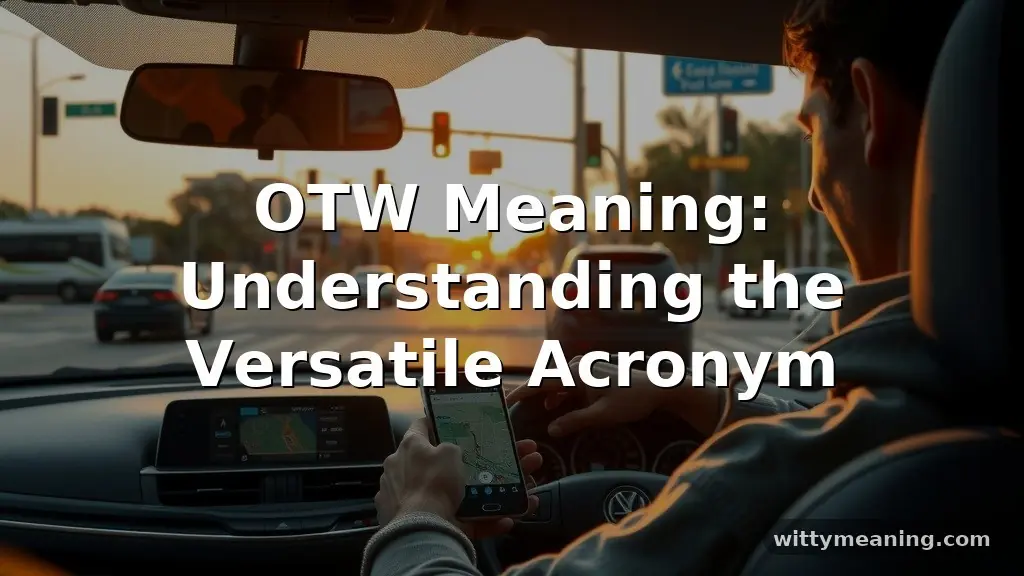

You have likely encountered the acronym OTW while scrolling through your favorite social media apps or checking incoming notifications. While it might seem like a simple piece of digital shorthand, the OTW meaning can shift significantly depending on whether you are talking to a friend about your commute or discussing literature in an online community.
Understanding how this term functions across different platforms is essential for mastering modern digital communication. By breaking down its common uses in casual texts, professional environments, and niche creative spaces, you can avoid potential misunderstandings and ensure your messages always land exactly as intended.
The Core Definition of OTW
At its most basic level, the OTW meaning is simply an abbreviation for the phrase “on the way.” It serves as a quick, efficient status update for someone who is currently in transit to a destination.
In the fast-paced world of mobile messaging, using three letters instead of nine saves time and keeps the conversation flowing smoothly. It is a staple of modern digital communication, functioning much like other directional or status-based shorthand.
When you send a message stating you are OTW, you are signaling to the recipient that your travel is in progress. This provides immediate clarity without requiring a full sentence.
Because it is so brief, it is perfect for people who are currently navigating traffic, walking to a meeting, or moving between appointments. It functions as a functional anchor in a text thread, letting the other person know that your physical presence is imminent.
OTW vs. OMW: Distinguishing the Nuance
One common point of confusion arises when comparing OTW to OMW, which stands for “on my way.” While they are often used interchangeably, there is a subtle distinction in their intent.
Using OMW is highly personal; it emphasizes that you, specifically, are currently moving toward the destination. It implies a direct, individual commitment to arriving at a specific time.
Conversely, OTW is slightly more descriptive of the state of travel. You might say, “The pizza is OTW” or “The package is OTW.” You would rarely say “The pizza is OMW,” as that would imply the food itself is independently traveling.
Because OTW is context-dependent, it is the more versatile choice for both personal and logistical updates. Mastering this distinction helps you choose the right term for the specific situation, ensuring your intent is clear to whoever is reading your message.
Using OTW in Professional Environments
While many people view shorthand as strictly casual, the acronym has found its way into professional environments as well. In fast-paced offices or remote teams that rely heavily on Slack or Microsoft Teams, using OTW is common when letting a colleague know you are heading to a meeting room or grabbing a coffee before a sync. It remains efficient, though it is best reserved for internal communication rather than formal emails.
If you are communicating with a client or a senior executive, it is usually safer to spell out “I am on my way” to maintain a polished tone. However, in the context of project management or logistics, using OTW is perfectly acceptable.
It conveys that a deliverable or a team member is currently in transit, which helps keep workflows moving. Always gauge the culture of your workplace before adopting too much shorthand, as clarity should always take precedence over speed in a professional setting.
The Unique Role of OTW in Fan Fiction Communities
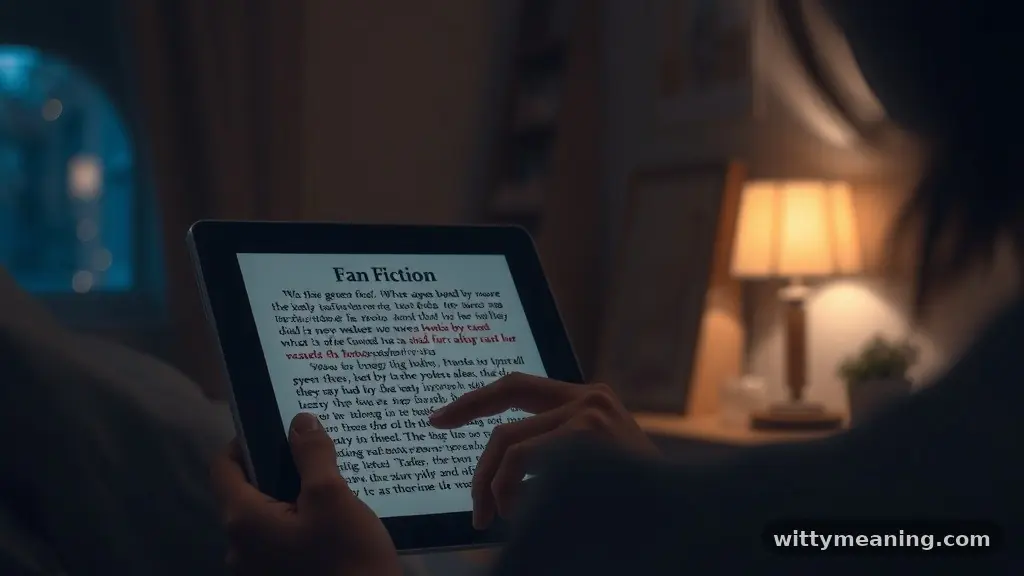
If you spend time on platforms like Archive of Our Own, commonly known as AO3, you might see OTW used in an entirely different way. In this specific niche, the acronym often stands for “Original to Work.”
This refers to creative content that is not based on existing intellectual property or established fandoms. It is a vital distinction for writers and readers who want to categorize their work correctly within the site’s tagging system.
This usage highlights how a single acronym can have vastly different meanings depending on the community. For a fan fiction writer, OTW is a badge of originality.
It tells the reader that the characters, setting, and plot are entirely the product of the author’s imagination. This is a far cry from the transit-related meaning used on social media, demonstrating how language evolves to fit the specific needs of different subcultures.
Regional Variations and Cultural Context
Language is rarely static, and the OTW meaning changes based on where you are in the world. In some regions, particularly in the Philippines, OTW is used extensively in daily conversation and social media posts. It is deeply embedded in the local way of communicating, often appearing in memes, tweets, and casual texts to describe anything from a commute to a long-term plan.
This regional adoption shows how digital slang can become part of a local dialect. When you see it used in these contexts, it often carries a more casual, friendly vibe.
It is less about the technicality of travel and more about maintaining a connection. Understanding these regional variations prevents you from being confused when you see the acronym used in ways that do not strictly align with your own local usage.
Common Misunderstandings and How to Avoid Them
Because the acronym is so versatile, it is easy to assume everyone is using it the same way you are. The biggest risk is using it in a context where the recipient might be confused. For example, if you are discussing a fan fiction project with a friend and you drop an “OTW” message regarding your commute, they might momentarily wonder if you are talking about a specific piece of literature.
To avoid these awkward moments, always consider your audience. If you are communicating with someone who is not familiar with the specific niche you are in, it is better to be descriptive.
A quick glance at how the term is used in the current conversation usually provides enough context to avoid any mix-ups. When in doubt, simply spelling it out eliminates any possibility of an incorrect interpretation.
OTW in Social Media Slang

Social media platforms like Twitter and Instagram have accelerated the lifespan of abbreviations. OTW has become a staple of status updates, often used to build anticipation.
When someone posts, “OTW to the concert!” they are sharing a moment of excitement with their followers. It acts as a bridge between the anticipation of an event and the event itself.
| Context | Primary Meaning | Typical Usage |
|---|---|---|
| Casual Chat | On the way (transit) | “I’m OTW, be there soon!” |
| Fan Fiction (AO3) | Original to Work | “Tagging this as OTW for the archive.” |
| Logistics | In transit/delivery | “Your order is OTW to the warehouse.” |
This usage is less about providing a precise ETA and more about engaging with a community. It is a way to say, “I am participating in this experience, and I am excited to get there.” When you use it this way, you are tapping into a shared social language that values brevity and communal updates.
Addressing Topical Gaps
Many people ask if OTW is considered “proper” English. It is important to clarify that it is not a formal term, but rather a form of shorthand or slang.
It sits outside the rules of standard grammar because its primary purpose is efficiency in digital communication. You should never use it in a formal report, academic essay, or official letter.
Another gap in common knowledge is whether or not to capitalize the letters. In most modern messaging apps, capitalization is optional. You will see “otw,” “OTW,” and even “otw…” used interchangeably.
The choice usually comes down to the user’s typing style or the auto-correct settings on their device. There is no strict rule, as the meaning remains clear regardless of the casing.
Tips for Effective Digital Communication
If you want to use shorthand effectively, consistency is key. If you use it with one person, they will likely start using it back.
However, you should always be mindful of the “digital divide.” Some people simply prefer full sentences and find abbreviations like OTW to be informal or even lazy.
- Assess the formality of the person you are messaging before using slang.
- Use context clues to determine if the recipient understands the specific meaning of the acronym.
- Avoid using multiple obscure acronyms in a single sentence, as this can make your message unreadable.
- When in a high-stakes professional setting, prioritize clarity over the speed of typing.
- If you are unsure if someone will understand, just type out the full phrase to be safe.
By following these simple steps, you can navigate digital conversations with confidence. You will appear more tech-savvy while still maintaining a high level of respect for the person on the other end of the screen.
The Future of Digital Shorthand
As our communication habits continue to evolve, it is likely that acronyms like OTW will remain a permanent fixture. We are moving toward shorter, faster, and more visual forms of interaction.
However, the core need for clarity will never go away. Even as new terms emerge, the fundamental goal of messaging remains the same: to convey information quickly and accurately.
The longevity of terms like OTW is a testament to their utility. They solve a specific problem—the need to communicate movement and status in a fast-paced environment. As long as we continue to use mobile devices to coordinate our lives, these types of abbreviations will continue to serve as the building blocks of our digital interactions.
Frequently Asked Questions
What is the most common way to use OTW?
The most common use of OTW is as a shorthand for “on the way” when someone is traveling to a destination. It is frequently used in text messaging and social media status updates to provide a quick update on a person’s current physical status and location.
Is OTW considered rude in professional settings?
Using OTW is not necessarily rude, but it is often considered too informal for professional communication. In a workplace, it is generally better to use full sentences to ensure your message is clear and appears professional, especially when communicating with clients or senior management.
Does the meaning of OTW change on different platforms?
Yes, the meaning is context-dependent. While it usually means “on the way” in general chat, it has a completely different definition in creative writing communities like AO3, where it stands for “Original to Work.” Always consider the platform and the conversation topic.
Should I capitalize OTW when texting?
Capitalization is entirely a matter of personal preference. You can use “OTW,” “otw,” or even “otw…” without changing the meaning of the acronym. Most people simply use whatever is easiest to type on their specific device or follow the formatting style of the person they are messaging.
Conclusion
Navigating the nuances of digital language is a constant learning process. Whether you are using OTW to update a friend on your arrival time or identifying an original project in a creative archive, the term serves as a versatile tool for quick, efficient communication. The key to using it well lies in understanding your audience and the specific context of your conversation.
By recognizing when to be casual and when to be professional, you can ensure that your messages are always understood correctly. As you continue to interact with others online, keep an eye on how these terms evolve and adapt to new social settings. If you have any other questions about digital shorthand or want to share how you use these terms in your own life, feel free to join the conversation and let us know your thoughts.