
If you’ve ever found yourself scrolling through a text thread or browsing a social media feed and stumbled across the letters “ikr,” you aren’t alone. Understanding the ikr meaning is a rite of passage in modern digital communication, serving as a cornerstone for how we express solidarity online. Essentially, it functions as a shorthand for “I know, right?” and is used to signal strong agreement with someone else’s observation.
By mastering this simple acronym, you gain a clearer window into how people bond, vent, and connect across various messaging platforms. This breakdown will help you navigate the nuances of using it correctly in your own digital interactions.
The Core Definition and Linguistic Origins

At its heart, the ikr meaning is rooted in the phrase “I know, right?” It acts as an acronym that bridges the gap between the speed of text messaging and the emotional weight of a shared realization. When someone shares a sentiment—perhaps complaining about the weather or expressing excitement about a new movie—using this term is the digital equivalent of nodding your head in vigorous agreement. It’s not just a passive acknowledgment; it’s an active form of validation.
Historically, this term emerged as the internet became the primary hub for human connection. While linguistic purists might argue that text speak degrades language, it actually serves a vital purpose in digital communication.
By condensing a three-word question into a punchy, three-letter string, users save time and maintain the flow of a fast-paced conversation. You can trace its rise to the early days of chat rooms and instant messaging services, where character limits and the desire for brevity pushed users to innovate their own shorthand.
How Ikr Functions as Conversational Filler
In spoken language, we use fillers like “um,” “like,” or “you know” to buy ourselves time or soften a statement. In the realm of internet slang, this term functions as a conversational filler that keeps the rhythm of a text exchange alive.
It’s a low-effort, high-reward way to keep a conversation moving without having to construct a long, detailed response. If a friend sends you a long paragraph about their day, replying with “ikr” tells them you heard them, you agree, and you’re fully present in the conversation.
Using this shorthand also serves to lower the barrier to entry for social interaction. Not every message requires a thoughtful, paragraph-long analysis. Sometimes, the best way to support a friend is to simply mirror their energy.
By providing this quick emphatic agreement, you demonstrate that you are on the same wavelength as the person on the other end of the screen. It’s a subtle tool of chat etiquette that helps avoid the social anxiety of leaving someone on “read” while also steering clear of an awkward, forced conversation.
The Role of Sentiment Analysis in Digital Interaction
When we look at the broader landscape of online discourse, the use of acronyms like this provides a fascinating case study for sentiment analysis. Algorithms and social researchers often track these terms to gauge how people feel about specific topics.
Because the term almost exclusively denotes positive reinforcement or shared frustration, it acts as a clear indicator of alignment between two users. It turns a one-sided statement into a shared experience.
This emotional resonance is why the term remains so popular across different generations. While it is often categorized under Gen Z slang, its utility transcends age groups. Anyone who has engaged in mobile messaging understands that digital text often lacks the nuance of body language and tone of voice.
By using specific shorthand, we compensate for that lack of physical cues. It helps ground the conversation, ensuring that the receiver understands exactly how the sender feels without needing to add extra punctuation or emojis to clarify the intent.
Navigating Gen Z Slang and Cultural Context
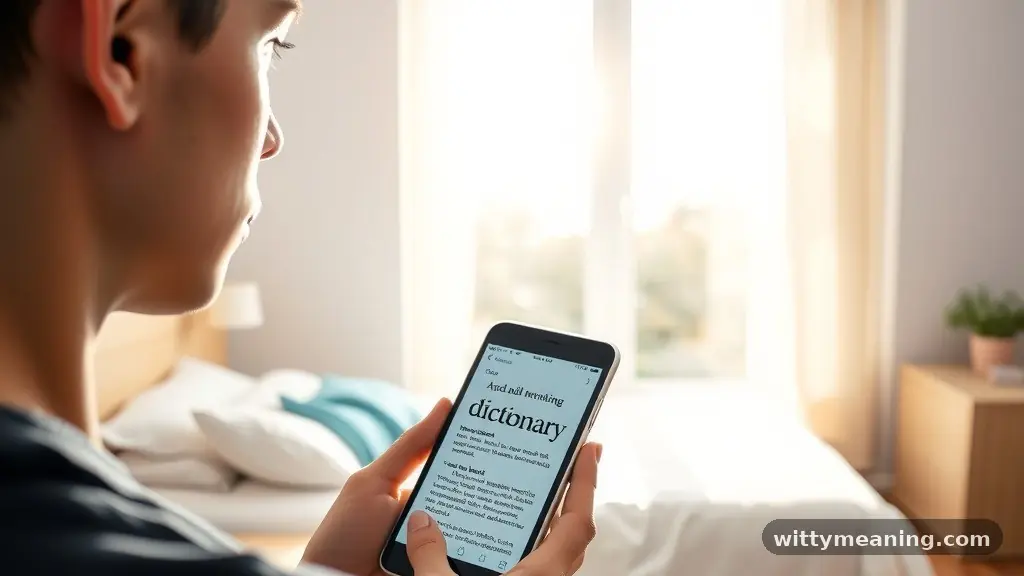
It would be a mistake to view this term as merely a static definition found in a reference like Merriam-Webster’s guide to language. It is a living, breathing part of internet culture.
While it started as a simple way to agree, its usage has evolved. Depending on the context, it can be used sarcastically to mock someone’s obvious statement, or it can be used with genuine warmth to console a friend who is going through a tough time.
The flexibility of the term is what keeps it relevant. Younger generations, in particular, use it as a foundational element of their daily digital vernacular. It’s not just about the words; it’s about the vibe.
If you are communicating with someone younger, using this term correctly can make your messages feel more natural and less like you are trying too hard. It’s a subtle signal that you understand the rules of the road in the digital world, making your communication feel more authentic and less formal.
Comparing Common Texting Abbreviations
To truly master your texting game, it helps to see how this term stacks up against other common abbreviations. Each serves a distinct purpose in your reply strategies. While some abbreviations are used for laughter or confusion, this one is strictly for alignment.
| Abbreviation | Primary Function | Tone/Nuance |
|---|---|---|
| IKR | Agreement | Emphatic, validating |
| LOL | Humor | Lighthearted, social |
| TBH | Opinion | Honest, transparent |
| IDK | Uncertainty | Neutral, passive |
As you can see, the table highlights how different acronyms serve different social functions. While “LOL” builds a bridge through shared humor, “IKR” builds a bridge through shared perspective.
Understanding these differences prevents you from misusing them. For instance, using “IDK” when you should be using “IKR” could lead to a significant misunderstanding in your conversation, as one signifies a lack of information while the other signifies total comprehension.
The Etiquette of Using Ikr in Professional Settings
One of the most common questions revolves around whether it is ever appropriate to use this term in a professional environment. The short answer is: proceed with extreme caution. While casual conversation is the natural habitat for this acronym, professional instant messaging—like Slack or Microsoft Teams—sits in a gray area.
If you have a close, established relationship with a colleague, using it can humanize your interaction. However, if you are communicating with a client or a supervisor, it is generally safer to avoid it.
Professionalism often relies on clarity and a lack of ambiguity. While this term is clear to most, it still carries the weight of informal language.
Overusing it in a work context can make you appear disengaged or overly casual. When you want to convey agreement in a professional setting, consider using slightly more formal alternatives such as “I agree completely,” or “That’s a great point.” This maintains a balance between being approachable and keeping your communication focused and professional.
Addressing the Topical Gaps

Many people search for whether this term is considered rude. The answer depends entirely on the context. If you use it to dismiss someone’s point by implying it was obvious, it can come across as condescending or passive-aggressive.
This is where the lack of tone indicators in text can cause friction. Because the recipient cannot hear your voice, they might interpret your “ikr” as a sarcastic “well, obviously.”
To avoid this, consider the history of the conversation. If you and the other person are in a supportive exchange, the term will almost always be read as a positive sign of agreement.
If you are in a debate, however, using it might be perceived as a way to shut down the conversation or mock the other person’s input. Being aware of the emotional state of the person you are messaging is the best way to ensure your use of this internet slang is received as intended.
The Evolution of Reply Strategies
Your reply strategies are a reflection of your personality in the digital space. Some people are verbose, while others prefer the efficiency of short, punchy responses.
Integrating this term into your lexicon allows you to be more efficient without sacrificing the quality of your connection. It’s part of a broader shift toward “low-friction” communication, where the goal is to keep the conversation flowing smoothly.
Consider these ways to integrate the term effectively:
- Use it to validate a friend’s frustration after a long day at work.
- Use it when you and a partner are both thinking the exact same thing about a situation.
- Use it to quickly acknowledge a shared observation during a fast-paced group chat.
- Use it as a bridge to move the conversation from a complaint to a solution.
By using the term in these ways, you become more adept at managing the ebb and flow of digital dialogue. It’s not just about the acronym itself, but about how it helps you build rapport with the people you care about most.
Common Misconceptions and Urban Dictionary Influence
Sites like Urban Dictionary have played a massive role in how we perceive and use slang. While these platforms are excellent for keeping up with the rapid pace of language change, they can also lead to confusion.
Because anyone can submit a definition, you might find entries that claim the term has a secret, hidden, or even negative meaning. It is important to remember that the vast majority of users rely on the standard definition: agreement.
Don’t overthink the slang. If you find yourself spending hours wondering if someone used an acronym with a secret motive, you’re likely reading too much into it.
In 99% of cases, the person on the other end is simply trying to say, “I agree with you.” Keeping this in mind will save you a lot of mental energy and prevent unnecessary misunderstandings in your digital life. The beauty of language is that it’s intended to be a tool for connection, not a riddle to be solved.
Impact on Emotional Resonance in Digital Spaces
We often hear that technology makes us less connected, but the clever use of texting abbreviations proves otherwise. By creating a shared language, we are finding new ways to express empathy and support from across the globe.
When you send an “ikr” to someone who is venting, you are providing a digital hug. You are saying, “I am here, I hear you, and I feel what you are feeling.”
This level of emotional resonance is critical in a world where we spend so much of our time staring at screens. We are constantly searching for ways to make our digital interactions feel as real and as human as possible. Acronyms like this one are the building blocks of that effort.
They allow us to cut through the noise, bypass the formality of traditional writing, and get straight to the heart of the matter. It’s a simple, elegant solution to the complex problem of communicating complex human emotions through a keyboard.
Frequently Asked Questions
Is using ikr considered rude in a text message?
It is generally not rude, but context matters. If used in a supportive, friendly conversation, it is perfectly acceptable. However, using it to be dismissive or sarcastic in an argument can be perceived as condescending by the recipient, so be mindful of the situation.
Does ikr have a different meaning in medical contexts?
No, the term is strictly a piece of social slang. In medical or scientific writing, acronyms often have specific, technical definitions, but “ikr” does not appear in standard medical terminology. If you see it in a medical document, it is likely a typo or an informal note.
Is ikr strictly for Gen Z users?
While it originated in digital spaces often frequented by younger generations, it is now widely used by people of all ages. Because it is so efficient and commonly understood, it has become a staple of general internet communication rather than being limited to a single age group.
Can I use ikr in professional emails?
It is highly recommended that you avoid using it in professional emails. Emails typically require a higher level of formality. Even in modern, casual workplaces, it is usually better to express your agreement with full sentences to maintain clarity and professionalism in your communication.
Final Thoughts
Mastering the use of this common acronym is a simple yet effective way to improve your digital fluency. It bridges the gap between casual thought and formal expression, allowing you to show empathy and alignment with just three letters. As you continue to navigate the digital world, keep in mind that the best communication is always rooted in authenticity.
Whether you are texting a close friend or chatting in a group, using this term effectively can make your interactions feel warmer and more connected. Feel free to incorporate it into your own messages when you want to show that you are truly on the same page. Keep the conversation going, and remember that the most powerful tools in our linguistic arsenal are often the simplest ones.